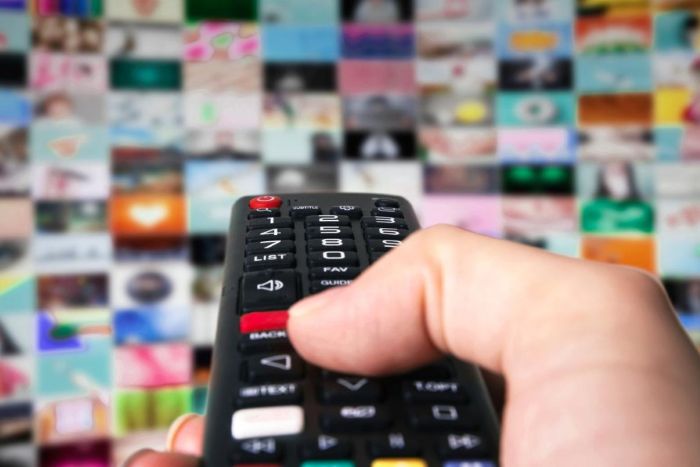
In an era dominated by digital platforms, many marketers question the relevance of traditional television advertising. Yet data from recent industry reports reveal a different story. Television continues to command significant attention and deliver measurable returns, even as viewing habits evolve. As households continue relying on devices like the RCA TV remote system to navigate smart TVs and streaming platforms, television remains deeply embedded in everyday entertainment habits. With global ad revenues projected to climb steadily, TV’s ability to reach vast audiences and build lasting brand impact remains unmatched. This analysis explores the key metrics underscoring TV’s ongoing effectiveness.
Key Takeaways
- Television advertising remains relevant, capturing significant viewer attention and delivering strong returns, despite evolving viewing habits.
- TV commands a vast audience, with over five hours of daily engagement, and effectively reaches diverse demographics, especially older adults.
- Efficiency metrics indicate that TV ads outperform digital platforms, providing higher ROI and completion rates on connected TV ads.
- Television excels in brand awareness and emotional resonance, enhancing purchase intent and cross-channel performance for advertisers.
- Connected TV is on the rise, with significant growth projected; advertisers are increasingly confident in its targeting capabilities and effectiveness.
Table of Contents
The Vast Scale of Television Viewership
Television’s reach is one of its most compelling strengths. Americans spend more than five hours daily engaged with TV content, surpassing time spent on mobile devices by nearly an hour. This figure highlights TV’s role as a primary source of entertainment across demographics.
Older adults, particularly those aged 65 and older, account for 26 percent of all TV viewers. They control about half of U.S. household wealth and drive 22 percent of consumer spending. Such economic influence makes this group a prime target for advertisers seeking high-value returns.
Younger generations are not abandoning TV either. Millennials and Gen Z favor streaming options, but they still prefer large screens for immersive experiences. Data shows 87 percent of adults choose TV over smaller devices for movies and long-form content.
Overall, TV ads can connect with 70 percent of the adult population in a single day. This broad exposure ensures brands achieve widespread visibility, a feat harder to replicate in fragmented digital spaces.

Measuring Efficiency Against Digital Competitors
Efficiency metrics further affirm TV’s value. Television advertising proves to be 16 percent more efficient than skippable YouTube ads and 3.9 times more efficient than those in Facebook feeds. These comparisons stem from studies of attention quality, in which TV captures undivided attention in home environments.
Cost per mile (CPM) trends also favor TV in certain contexts. While digital platforms boast lower entry costs, TV’s premium positioning often yields superior engagement. For instance, completion rates for connected TV (CTV) ads exceed 95 percent on streaming services.
Return on investment stands out as a critical indicator. TV advertising generates an average ROI of $2.20 for every dollar invested. This outperforms many digital channels, especially for long-term brand loyalty.
Global ad spend data reinforces this. Total TV revenues are expected to reach $170.8 billion in 2026, marking a 2.1 percent increase from the previous year. Despite a slight decline in market share to 13.9 percent, absolute growth indicates sustained advertiser confidence.
Brand Awareness and Emotional Resonance
Data-driven analysis shows TV excels at fostering brand awareness. Well-crafted commercials embed messages in viewers’ memories, creating associations that endure beyond the initial viewing.
Studies indicate that TV drives higher purchase intent than other media. Its audiovisual format taps into emotions, making campaigns more memorable. This emotional pull is why brands, such as major consumer goods companies, allocate substantial budgets to TV.
Incremental reach is another quantifiable benefit. Advertisers report 92 percent confidence in TV’s ability to extend audience exposure beyond digital efforts. Cross-channel lift, where TV boosts performance in other media, is noted by 74 percent of marketers.
In high-stakes events, TV’s impact amplifies. The 2026 calendar includes the Winter Olympics, Super Bowl, FIFA World Cup, and U.S. midterm elections. These draw massive live audiences, offering unique opportunities for real-time engagement.
The Rise of Connected TV and Hybrid Models
Connected TV represents the evolution of traditional television. Ad spend in this segment is projected to hit $38 billion in 2026, reflecting a 14 percent year-over-year growth. By 2028, CTV is forecasted to surpass linear TV in revenue.
Streaming now accounts for 45.2 percent of total TV usage, slightly edging out cable and broadcast. This shift is fueled by cord-cutting, with streaming capturing over 47 percent of viewing time.
Advertisers are responding accordingly. 83% express confidence in TV’s outcomes for 2026, with 77 percent planning to increase budgets. CTV’s data-powered targeting capabilities enable precise audience segmentation.
AI integration is accelerating this trend. By 2027, AI-driven personalization could handle 80 percent of CTV ads, enhancing relevance and effectiveness. Retail media integration adds another layer, with projections of $10 billion by 2028.
Challenges and Adaptations in a Shifting Landscape
Despite strengths, TV faces hurdles. Linear advertising spend is set to drop 3.9 percent in 2026, while CTV rises 13.6 percent. This divergence requires marketers to balance strategies between traditional and streaming formats.
Measurement gaps persist, particularly in CTV. Industry experts call for better data normalization and cross-funnel frameworks to bridge awareness and conversion metrics.
Television advertising pricing pressures are evident, too. CPMs for streaming are rising slightly, reflecting increased demand. Linear TV, still commanding $48 billion in spend, sees modest price upticks.
Adaptation is key. Programmatic tools are democratizing access, enabling smaller brands to enter the space. New formats, such as interactive ads, are emerging to boost viewer engagement.