The visual effects industry has evolved rapidly over the last decade. Modern films, animated productions, commercials, and gaming projects rely heavily on high-quality CGI and detailed visual effects that require enormous computing power. As audience expectations continue to rise, production studios face growing pressure to deliver realistic visuals faster while maintaining high production quality. One of the biggest challenges in this process is distributed rendering.
Rendering transforms complex 3D scenes into final images or animations, but it is also one of the most time-consuming stages of production. Traditional rendering methods that rely solely on local workstations often struggle to keep up with demanding production schedules. This is where distributed rendering becomes an essential solution for VFX studios and independent artists alike.
Key Takeaways
- The visual effects industry relies on distributed rendering to enhance speed and efficiency during production.
- Cloud rendering allows studios to access scalable resources, reducing the need for expensive in-house render farms.
- Improved rendering speeds shorten project timelines, enabling artists to make quicker adjustments and meet tight deadlines.
- Distributed rendering fosters better collaboration as teams can manage rendering tasks remotely, improving coordination across locations.
- As VFX technology advances, distributed and cloud rendering will become essential for handling complex projects with high-quality standards.
Table of contents
- Understanding Distributed Rendering in VFX Production
- The Role of Cloud Rendering in Modern Workflows
- Faster Rendering Speeds Improve Project Delivery
- Reduced Hardware Pressure for Artists and Studios
- Better Scalability for Large Productions
- Improved Collaboration Across Production Teams
- Enhanced Creative Freedom for Artists
- The Future of Distributed Rendering in the VFX Industry
- Conclusion
Understanding Distributed Rendering in VFX Production
Distributed rendering is a rendering process where multiple computers work together to complete rendering tasks. Instead of relying on a single workstation to render an entire animation or scene, rendering jobs are distributed across many systems. Each machine processes a portion of the workload, dramatically reducing overall render time.
In VFX production, rendering can involve millions of polygons, high-resolution textures, realistic lighting simulations, particle systems, and advanced visual effects. These elements require significant computational resources. Rendering a single frame of a detailed animation may take hours on one computer. For projects containing thousands of frames, the total rendering time can become overwhelming.
The Role of Cloud Rendering in Modern Workflows
Cloud rendering has transformed how VFX studios manage production pipelines. Instead of maintaining large in-house render farms, many studios now rely on cloud-based services that offer scalable rendering resources on demand.
Cloud rendering provides flexibility because users can increase or decrease computing power depending on project requirements. During peak production periods, studios can access thousands of render nodes instantly without purchasing additional equipment.
Fox Renderfarm is a professional cloud rendering service used for animation and VFX workflows. By using cloud rendering services, artists can focus more on creativity and less on hardware limitations.
Faster Rendering Speeds Improve Project Delivery
One of the biggest benefits of distributed rendering is the dramatic improvement in rendering speed. Faster rendering directly impacts project timelines and production efficiency.
In traditional workflows, rendering delays can slow down the entire production process. Artists may need to wait hours or even days before reviewing final outputs. This delay reduces productivity and limits the ability to make creative adjustments quickly.
Distributed rendering minimizes these delays by processing multiple frames simultaneously. Large animation sequences can be completed in a fraction of the time required by a single machine. This speed allows studios to meet tight deadlines while maintaining visual quality.
Reduced Hardware Pressure for Artists and Studios
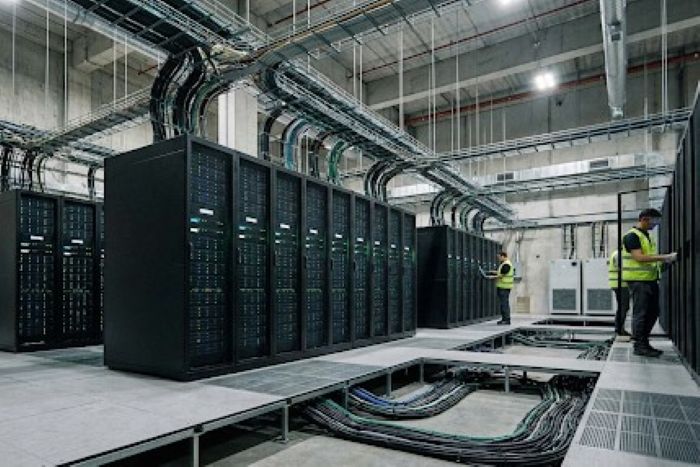
High-end rendering demands powerful CPUs, GPUs, large amounts of RAM, and advanced cooling systems. Building and maintaining a local render farm can be extremely expensive, especially for small studios and freelance artists.
Distributed rendering significantly reduces this hardware burden. Instead of relying entirely on local machines, artists can use external rendering resources through cloud rendering platforms. This approach allows creators to work on lightweight systems while remote servers handle heavy rendering tasks.
Better Scalability for Large Productions
VFX projects vary greatly in size and complexity. Some productions may only require a few render nodes, while others need thousands of systems working simultaneously. Distributed rendering provides the scalability necessary to handle these changing demands.
Traditional in-house render farms often face limitations during large productions. Expanding local infrastructure requires significant investment, installation time, and ongoing maintenance. Cloud rendering eliminates these barriers by offering instant scalability.
Studios can increase rendering capacity whenever necessary without long-term commitments. This flexibility is particularly useful for seasonal projects or productions with fluctuating workloads.
Improved Collaboration Across Production Teams
Modern VFX production often involves teams working across different locations and time zones. Distributed rendering supports collaborative workflows by centralizing rendering resources in the cloud.
Artists, animators, compositors, and supervisors can upload files, review outputs, and manage rendering tasks remotely. This accessibility streamlines communication and improves production coordination.
Cloud rendering platforms also simplify asset management because files remain accessible online. Teams can share resources more efficiently without transferring massive data files between local systems repeatedly.
Enhanced Creative Freedom for Artists
Rendering limitations can sometimes restrict artistic creativity. When rendering takes too long or hardware resources are limited, artists may simplify scenes or reduce visual quality to meet deadlines.
Distributed rendering removes many of these restrictions. Artists can create more detailed environments, realistic lighting effects, higher-resolution simulations, and advanced particle systems without worrying as much about rendering bottlenecks.
Cloud rendering provides the computing power necessary to experiment with complex creative ideas. Faster rendering feedback also allows artists to iterate more quickly, improving overall visual quality.
The Future of Distributed Rendering in the VFX Industry
As VFX technology continues to advance, rendering demands will only increase. Real-time ray tracing, AI-assisted workflows, virtual production, and ultra-high-resolution content require even more processing power than traditional rendering methods.
Distributed rendering and cloud rendering are expected to become even more essential in future production pipelines. Studios are increasingly adopting hybrid workflows that combine local systems with cloud-based infrastructure for maximum efficiency.
Conclusion
Distributed rendering has fundamentally transformed VFX production by improving rendering speed, reducing hardware limitations, supporting collaboration, and enabling scalable workflows. As visual effects projects become increasingly complex, efficient rendering solutions are essential for meeting production deadlines and maintaining high-quality standards.