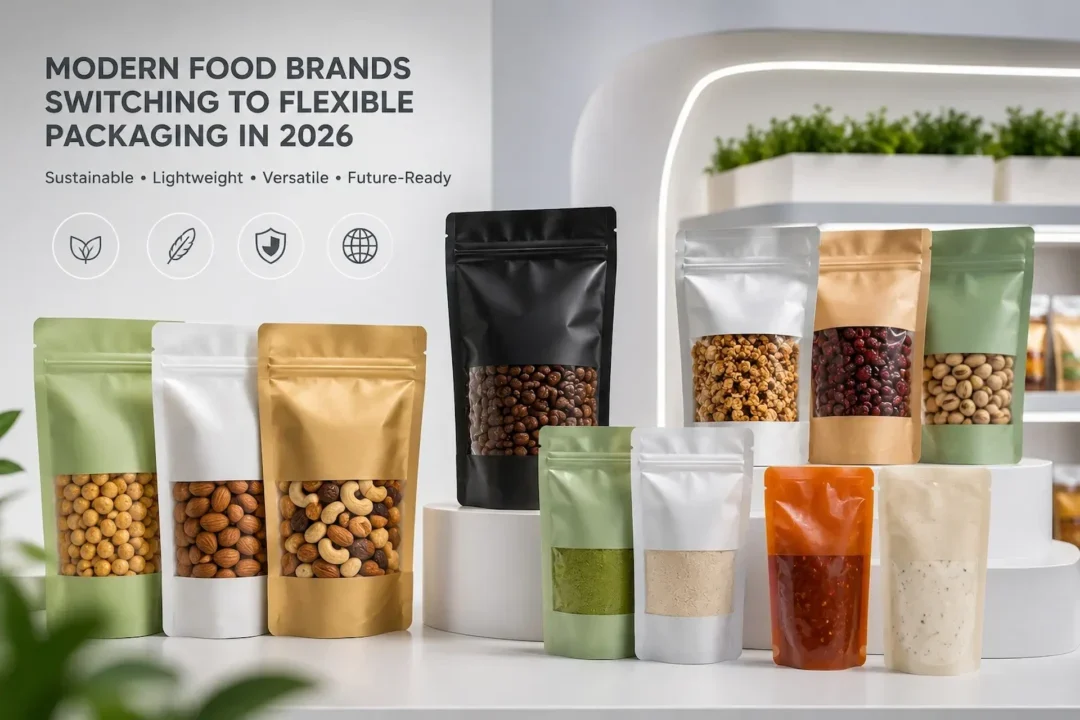
Food packaging is no longer just about protecting a product. Today, it plays a major role in preserving freshness, improving storage efficiency, reducing shipping costs, attracting customers on retail shelves, and enhancing the overall customer experience. As consumer expectations continue to evolve, food brands are rethinking their packaging strategies to stay competitive.
In 2026, flexible packaging has become one of the most practical solutions for food companies. From coffee and snacks to spices, dry fruits, sauces, powders, and pet food, flexible pouches offer better product protection, attractive branding opportunities, and greater convenience for both businesses and consumers. At the same time, artificial intelligence is helping brands make smarter packaging decisions by optimizing package sizes, testing designs, and predicting consumer demand.
Table of contents
- The Big Packaging Shift in the Food Industry
- What Makes Flexible Packaging Different from Traditional Packaging?
- Flexible Packaging vs. Rigid Packaging
- Best Food Products for Flexible Packaging
- What Food Brands Should Consider Before Switching
- How Flexible Pouches Helps Food Brands
- Conclusion
- Ready to Upgrade Your Food Packaging?
- FAQs
The Big Packaging Shift in the Food Industry
The food packaging industry has changed significantly over the past few years. Rising transportation costs, increasing environmental concerns, crowded retail shelves, and rapid growth in e-commerce have encouraged brands to adopt lighter and more efficient packaging solutions.
While traditional containers such as glass jars, metal tins, and rigid boxes still have their place, many food companies now prefer packaging that occupies less storage space, reduces material usage, and performs well in both physical stores and online marketplaces. Flexible packaging meets these needs while offering brands greater customization and cost efficiency.
What Makes Flexible Packaging Different from Traditional Packaging?
Unlike rigid packaging, flexible packaging can bend, fold, and adjust to the shape of the product. Traditional packaging, including bottles, jars, cans, tubs, and boxes, is generally heavier and occupies more storage space, making shipping and handling more expensive.
Flexible packaging includes stand-up pouches, flat pouches, sachets, rollstock, and spout pouches. These formats provide brands with greater flexibility in choosing the right size, material, finish, closure, and printing options while maintaining strong product protection and visual appeal.
1. AI Is Making Flexible Packaging Smarter
AI is becoming useful in food packaging because brands now want smarter decisions, not just good-looking pouches. In 2026, food companies can use AI to understand which pack sizes sell better, which designs attract more attention, and which packaging formats work best for retail or online delivery. This shift is accelerating across the industry. According to McKinsey, more than 80% of packaging leaders said their companies had generative AI initiatives under consideration, in development, or already launched in 2025, up from just 30% in 2024. This growing adoption reflects how AI is becoming a practical tool for improving packaging strategy and business performance
AI can help brands test packaging ideas, forecast demand, plan seasonal packs, reduce waste, and choose better pouch formats before placing large orders. It can also support smart packaging features like QR codes, product information, traceability, and customer engagement.
2. Food Brands Want Lighter Packaging That Reduces Costs
Packaging weight directly affects transportation expenses. Flexible pouches weigh considerably less than glass jars, bottles, or metal tins, allowing brands to reduce shipping costs while improving warehouse efficiency. Their lightweight structure also simplifies handling during production and distribution, while reducing the likelihood of product damage during transportation.
As shipping costs continue to rise globally, many food companies see flexible packaging as an effective way to improve operational efficiency without compromising product quality.
3. Shelf Life and Product Freshness Are Major Priorities
Maintaining freshness is one of the most important responsibilities of food packaging. Consumers expect coffee to retain its aroma, snacks to stay crispy, powders to remain dry, and bakery products to maintain their texture.
Modern flexible packaging uses advanced barrier materials that help block moisture, oxygen, light, and external contaminants. These protective layers preserve product quality, reduce spoilage, minimize customer complaints, and decrease product returns. Since every food product has unique preservation requirements, brands should carefully select the appropriate barrier properties based on their specific product category.
4. Sustainability Is Now a Business Requirement
Sustainability has become an important purchasing factor for both businesses and consumers. Many customers actively look for brands that reduce packaging waste without sacrificing product protection.
Flexible packaging generally requires less material than rigid containers, helping reduce overall resource consumption. In addition, recyclable mono-material pouches and biodegradable packaging options are becoming increasingly available, allowing brands to support their environmental goals while meeting evolving consumer expectations.
5. Flexible Pouches Improve Shelf Appeal
A food product has only a few seconds to catch attention. Flexible pouches give brands more design space, which helps products look clear and professional.
Stand-up pouches create an attractive retail display, while matte finishes, glossy coatings, transparent windows, and premium printing techniques help products stand out among competitors. Even smaller food businesses can achieve a premium appearance through professionally designed flexible packaging.
6. Consumers Prefer Packaging That Is Easy to Use
Modern consumers appreciate packaging that adds convenience to their daily lives. Flexible pouches often include practical features such as resealable zipper closures, tear notches for easy opening, hang holes for retail display, and convenient closures that keep products fresh after opening.
These user-friendly features improve customer satisfaction and encourage repeat purchases by making products easier to store and use.
7. Flexible Packaging Supports Faster Product Launches
Food trends change rapidly, making speed an important competitive advantage. Flexible packaging allows brands to test new flavors, seasonal products, and limited-edition releases without committing to large packaging inventories.
Shorter production runs enable startups, private-label manufacturers, and established brands to introduce products faster, gather market feedback, and respond quickly to changing consumer preferences.
8. E-Commerce Food Brands Need Smarter Packaging
As online food sales continue to grow, packaging must withstand multiple handling stages before reaching customers. Flexible pouches are lightweight, durable, and compact, making them easier to pack and less susceptible to breakage than glass containers.
They are especially suitable for subscription boxes, sample packs, refill products, and direct-to-consumer brands seeking efficient shipping solutions.
9. Flexible Packaging Offers Greater Format Flexibility
One of the biggest advantages of flexible packaging is the variety of available formats. Brands can choose packaging styles that best match their products, filling methods, storage conditions, retail display requirements, and customer preferences.
Stand-up pouches work well for snacks, coffee, and dry foods, while flat pouches are ideal for samples and smaller products. Flat-bottom pouches provide a premium shelf appearance, stick packs suit single-serving products, and spout pouches are commonly used for sauces, liquids, and refill packs. Resealable options are particularly valuable for products that customers use multiple times.
10. Packaging Has Become a Marketing Tool
Packaging now serves as an important marketing asset rather than simply a protective container. Before customers taste a product, they evaluate its appearance, branding, colors, claims, and overall presentation.
A professionally designed pouch communicates freshness, quality, and reliability while helping consumers quickly understand the product’s benefits. Effective packaging strengthens brand recognition and influences purchasing decisions both in retail stores and online marketplaces.
Flexible Packaging vs. Rigid Packaging
| Packaging Type | Best For | Main Benefit |
| Flexible Packaging | Snacks, coffee, powders, spices, dry fruits, pet food | Lightweight, customizable, lower shipping costs |
| Rigid Packaging | Beverages, glass-packed foods, heavy sauces, premium products | Strong structure and traditional appearance |
Both packaging types offer advantages depending on the product. However, flexible packaging is often the preferred option for brands seeking lower transportation costs, improved shelf appeal, and greater customization.
Best Food Products for Flexible Packaging
Flexible packaging is suitable for numerous food categories, including:
- Coffee and tea
- Chips and snacks
- Granola and cereals
- Nuts and dried fruits
- Protein powders
- Spices and seasonings
- Frozen foods
- Pet food and treats
- Sauces and condiments
- Bakery products
What Food Brands Should Consider Before Switching
Choosing the right pouch requires more than selecting an attractive design. Food companies should evaluate their product type, desired shelf life, moisture and oxygen protection requirements, filling process, storage conditions, retail environment, printing quality, and minimum order quantities before making a final packaging decision.
Working with an experienced packaging supplier ensures the selected materials and pouch design meet both product protection and business objectives.
How Flexible Pouches Helps Food Brands
Flexible Pouches helps businesses select packaging solutions that match their products, branding goals, and operational requirements. Whether working with startups, private-label manufacturers, or established food companies, the company provides custom printed pouches, stand-up pouches, flat pouches, rollstock films, and environmentally friendly packaging options designed to support both product protection and market success.
Conclusion
Food brands are increasingly adopting flexible packaging in 2026 because it addresses many of today’s biggest business challenges. It improves freshness, lowers shipping costs, enhances shelf presentation, increases consumer convenience, and supports sustainability initiatives.
For companies looking to modernize their packaging while remaining competitive, flexible pouches provide a practical and cost-effective solution. With the right materials, design, and packaging format, brands can protect their products, strengthen their identity, and create a better customer experience.
Ready to Upgrade Your Food Packaging?
If your food brand is looking for protective, attractive, and professionally designed packaging, flexible pouches can help you achieve your goals. Choosing the right pouch style, selecting suitable barrier materials, and investing in high-quality printing can significantly improve both product performance and brand perception.
Visit FlexiblePouches.com to explore packaging solutions designed specifically for modern food brands.
FAQs
1. Why are food brands switching to flexible packaging in 2026?
Food brands are choosing flexible packaging because it is lightweight, cost-effective, customizable, and helps preserve product freshness while improving shelf appeal.
2. Is flexible packaging suitable for food products?
Yes. Flexible packaging is safe for many food products when the appropriate food-grade materials and barrier properties are selected.
3. Can flexible packaging improve shelf life?
Yes. High-quality barrier materials help protect food from moisture, oxygen, light, and external contaminants, extending product freshness.
4. Are flexible pouches recyclable?
Many flexible pouches are recyclable, particularly mono-material options. Brands should verify the material specifications before ordering.
5. Which food products work best in flexible pouches?
Coffee, snacks, spices, powders, nuts, dried fruits, frozen foods, bakery products, sauces, pet food, and ready-to-eat meals are all excellent candidates for flexible packaging.