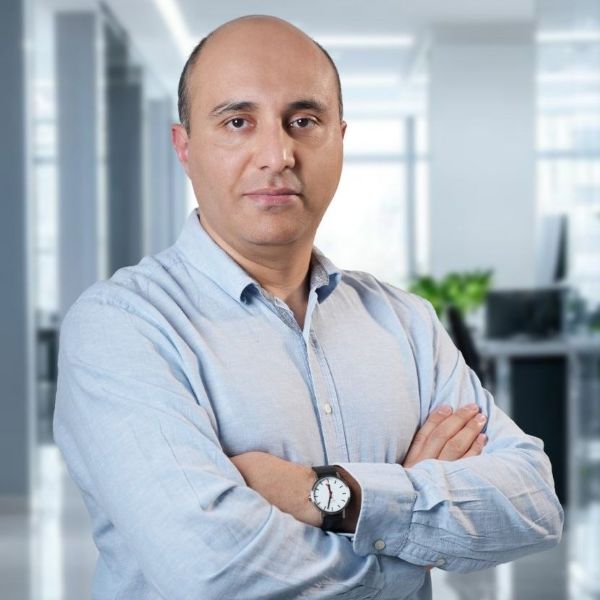
Mustafa Alamir is a Senior Software Engineer, technology consultant, and founder of Sky Wise IT Solutions in Dubai, with more than 15 years of experience developing and modernizing enterprise software systems. His work focuses on workforce-management platforms, scalable full-stack development, legacy-system modernization, Azure DevOps, CI/CD automation, and practical AI integration.
Mustafa began his software career in Switzerland, where he spent more than a decade developing enterprise time-management solutions before moving into broader modernization and consulting work. Over the course of his career, he has worked extensively with Angular, TypeScript, ASP.NET Core, Web APIs, Entity Framework Core, SQL Server, and automated deployment pipelines, helping organizations modernize business-critical systems without compromising stability.
Today, through Sky Wise IT Solutions, Mustafa works with international clients on enterprise software architecture, modernization, DevOps, and AI-enabled systems. Alongside his consulting work, he contributes to the wider technology community as a mentor, speaker, and judge for AI and innovation programs. His current focus is on bridging established enterprise engineering practices with AI agents and large language models that can operate reliably in real production environments.
[Q U I C K N O T E S]
Position: Founder & Senior Software Consultant
Industry: Software Engineering, Enterprise Technology & AI
Location: Dubai, United Arab Emirates
LinkedIn: Mustafa Alamir
Website: Skywise
Instagram: N/A
Mustafa, can you start off by telling us about yourself and why you chose engineering and entrepreneurship as a career?
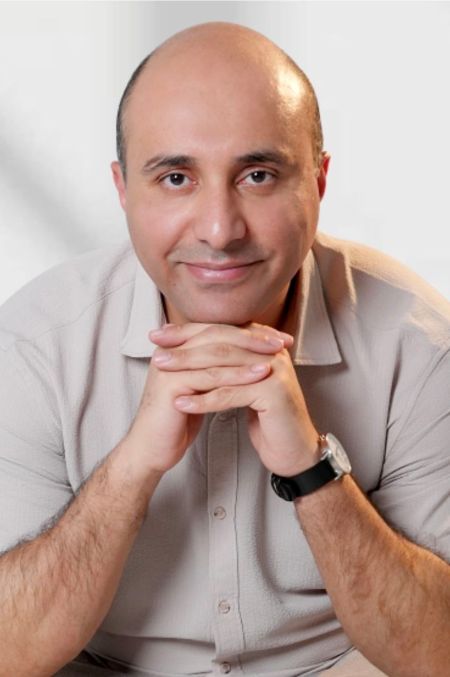
I’m a software engineer by background, and most of my career has been spent working on enterprise systems that organizations depend on every day.
I started my professional career in Switzerland, working on workforce- and time-management software. That taught me very early that engineering is about much more than writing code. When you work on business-critical systems, you have to think about reliability, data integrity, scalability, compliance, and how the software will continue to evolve many years into the future.
That long-term problem-solving aspect is what attracted me to engineering.
Entrepreneurship came naturally later. After spending years working deeply within enterprise systems, I wanted more ownership over how projects were approached and the kinds of technical problems I could solve. I founded Intelliware in Switzerland and later Sky Wise IT Solutions in Dubai.
For me, engineering and entrepreneurship are closely connected. Engineering teaches you how to solve complex problems, while entrepreneurship makes you responsible for ensuring those solutions create real value.
Can you tell us what drives you to be successful as an entrepreneur?
What drives me most is creating something that has lasting value.
In enterprise software, clients rarely need only a feature that works today. They need systems that remain reliable as their businesses grow, requirements change, and technology evolves.
For me, success means making good architectural decisions, reducing unnecessary complexity, improving how teams build and deploy software, and creating systems that other engineers can continue developing confidently.
I also value the accountability that comes with entrepreneurship. Technical quality, client relationships, delivery, and long-term trust are all connected.
Tell us about your vision of your business in the next 2–3 years.
Over the next few years, I want to continue developing Sky Wise IT Solutions around enterprise software modernization and practical AI integration.
There is enormous interest in AI agents and large language models, but many organizations are still working out how to integrate them into real production environments.
My focus is not simply on adding AI to an application. I’m interested in the engineering foundation that allows AI to work reliably: good APIs, clear system boundaries, secure access to data, automated delivery, observability, and strong business rules.
I believe enterprise AI will increasingly become part of existing software ecosystems rather than remain a separate experiment. My goal is to help build that bridge between traditional enterprise engineering and the next generation of AI-enabled systems.
What are one or two accomplishments that you’re particularly proud of?
One of the accomplishments I’m most proud of is the modernization work I’ve done on enterprise workforce-management systems.
Modernizing a live production system is very different from building something completely new. You have to introduce better architecture and new technologies while protecting existing users and business processes.
Moving core solutions toward modern Angular and ASP.NET Core architectures while maintaining stability required both technical depth and a disciplined approach to change.
I’m also proud of leading development environments toward Azure DevOps and automated CI/CD. That transformation affects much more than deployment. It improves collaboration, testing, release control, and ultimately how confidently an organization can continue evolving its software.
What advice do you have for up-and-coming engineers?
Build strong fundamentals.
Technology changes very quickly. Frameworks, languages, and AI tools will continue to evolve, but understanding how software actually works will always remain valuable.
Learn how APIs are designed. Understand databases, authentication, authorization, testing, deployment, observability, and how systems fail in production.
I would also encourage engineers to understand the business problem behind the software they are building. A technically elegant solution is not necessarily useful if it does not solve the real problem.
AI is becoming an important part of software engineering, but it should accelerate your understanding rather than replace it. Being able to judge whether generated code or an architectural suggestion is actually correct will become increasingly important.
Are you active on social media professionally? If so, what platforms work best for engaging your followers?
LinkedIn is currently my main professional platform.
It works well for the areas I focus on because it brings together software engineers, technology leaders, founders, consultants, and people working on enterprise transformation.
I’m particularly interested in discussions around software architecture, modernization, AI-assisted development, DevOps, and enterprise technology.
For me, professional social media is most valuable when people exchange practical experience rather than simply follow technology trends.
Who was your biggest influence?
A significant part of my professional outlook was shaped by the engineering environments I worked in during my years in Switzerland.
Working for many years on enterprise systems teaches you to think beyond the immediate implementation. You begin to understand why maintainability matters, why deployment discipline matters, and why seemingly small decisions can become major architectural constraints years later.
I’ve learned from many engineers, colleagues, and technical leaders throughout my career rather than from one individual person.
The strongest influence has probably been the experience of solving real production problems over a long period of time.
What is the most challenging part of your work as an entrepreneur?
One of the biggest challenges is balancing different levels of responsibility.
As an engineer, you may spend hours concentrating deeply on one technical problem. As an entrepreneur and consultant, you also have to understand the client’s business priorities, communicate with stakeholders, think about delivery, maintain relationships, and make decisions about your own company.
Moving between those perspectives can be demanding.
At the same time, I think it makes you a better engineer because you become much more aware of the impact technical decisions have outside the codebase.
What do you have your sights set on next?
I’m particularly focused on the practical integration of AI agents into enterprise software.
The interesting question is no longer simply whether an AI model can generate a response or automate a task. We already know it can.
The more important question is how you make that capability dependable inside a real business system.
How should an agent access enterprise data? Which operations should it be allowed to perform? How should permissions be enforced? How do you trace its actions? Where should deterministic business rules remain?
Those are the kinds of problems I’m most interested in working on next.
What is a day in your life like?
My days are usually a combination of hands-on engineering and higher-level technical work.
I may spend part of the day reviewing architecture, working on APIs, investigating an issue in an existing system, improving a CI/CD pipeline, or discussing requirements with a client.
Because I work with enterprise systems, there is usually a strong focus on understanding how one technical change will affect the wider platform.
I also spend time exploring AI-assisted development and agent-based workflows, as well as mentoring and reviewing new technology ideas.
No two days are exactly the same, and that variety is one of the things I enjoy most about the work.
Do you have any hobbies?
A lot of my interests naturally overlap with technology.
I enjoy following developments in software architecture, AI, automation, and new approaches to building software.
Mentoring is also something I genuinely enjoy because it gives me an opportunity to work with people who approach problems from different perspectives.
Outside of purely technical work, I value having time to step away from day-to-day development and return to problems with a fresh perspective.
What makes you smile?
Seeing a difficult problem become manageable.
That could be a technical issue a team has struggled with, an architecture that finally becomes simpler, or a deployment process that becomes predictable after previously requiring a lot of manual work.
I also enjoy seeing teams I’ve mentored take an idea and turn it into something that actually works.
There is something very satisfying about seeing progress move from an abstract discussion into a working system.
What are you never without?
From a professional perspective, I’m rarely without access to the tools I use to capture ideas, review technical work, or stay connected with the projects I’m working on.
Engineering ideas do not always appear at convenient times, so being able to document something when it comes to mind is useful.
More broadly, I try to never lose curiosity. In technology, especially today, there is always something new to understand.
What scares you?
From an engineering perspective, one of the things I take very seriously is complexity that nobody fully understands anymore.
Enterprise systems can live for many years. When architecture, dependencies, or business rules become too opaque, even a small change can have unexpected consequences.
That is why I care so much about explicit architecture, automated delivery, testing, and observability.
The same applies to AI. Adding intelligence to a system without understanding the controls around it can create more uncertainty rather than less.
For me, the answer is not to avoid new technology. It is to understand it well enough to introduce it responsibly.
What is your favorite vacation spot?
Switzerland is closely connected to a large part of my professional and personal journey.
I studied there and spent many years building my career there, so it remains a place I know very well and associate with an important stage of my life.
Today I’m based in Dubai, which offers a very different environment and has also become an important part of my journey.
For me, travel is valuable because it creates distance from the normal routine and gives you a chance to return to work with a fresh perspective.
Other work, published articles, interviews or accomplishments:
In May 2026, Mustafa was featured by The AI Journal in an interview discussing enterprise workforce modernization, scalable software architecture, DevOps transformation, CI/CD automation, and practical AI integration.
In August 2025, he participated as an Expert Speaker at Software Architecture Conference 2025, presenting “From Legacy to Resilient: Modernising High-Compliance Workforce Platforms Without Breaking Production.” His session focused on enterprise platform modernization, scalable architecture, Azure DevOps, CI/CD, and operational resilience.
Since September 2024, Mustafa has also served as a mentor with Maximally, supporting participants in international hackathons and innovation programs across enterprise software engineering, AI-assisted development, scalable system architecture, technical feasibility, and production-ready delivery.
In January 2025, he served as a jury member for Astra Global × Gold Ventures’ “Artificial Intelligence (AI/AR/VR): What’s Next?” competition, evaluating startups across innovation, scalability, enterprise readiness, business viability, and AI implementation.
In February 2026, Mustafa was selected as an official judge for AITEX Summit Winter 2026, where he evaluated AI-powered analytics platforms, predictive systems, operational-intelligence products, and enterprise AI applications.
~Mustafa