Car and spatial audio is no longer judged only by volume, bass, or brand prestige. Drivers now expect a cabin that can deliver detail, direction, and a stronger sense of presence. That demand is turning the vehicle into a more sophisticated environment for entertainment and communication.
People have become used to immersive listening at home, and they increasingly want that same realism during daily travel. In the car, that expectation is pushing interest toward systems built for layered, dimensional playback rather than a simple left right spread. What matters is not novelty alone, but whether the system makes music, spoken audio, and prompts feel clearer and more natural on the road.
Key Takeaways
- Car audio expectations are evolving beyond volume and bass to focus on immersive, clear sound quality.
- Drivers want a listening experience that rivals home audio systems, leading manufacturers to view car cabins as serious listening environments.
- Car acoustics present challenges; effective design and technology must address these issues for optimal sound reproduction.
- Usability and intuitive controls enhance the in-car audio experience, making advanced systems more accessible to everyday users.
- Future developments aim to personalize audio systems for better performance, focusing on clarity and response in real driving conditions.
Table of contents
Why the cabin now matters more
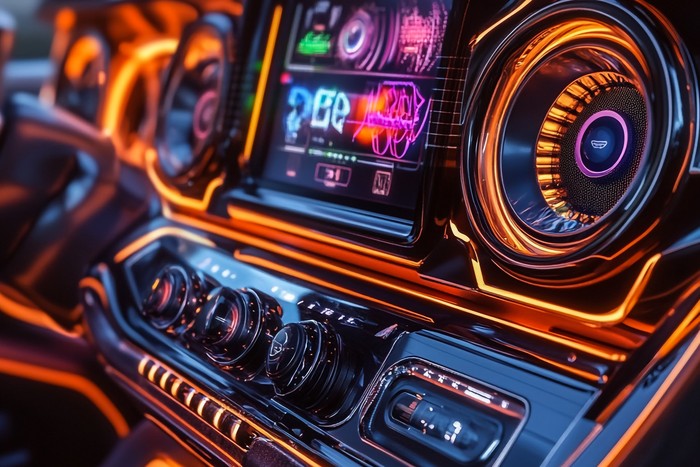
The car has become one of the most consistent places where people consume media. Commutes, school runs, and long highway drives all create time for playlists, podcasts, audiobooks, and navigation. Because of that shift, your expectations inside the cabin no longer stop at basic convenience. If headphones and living room speakers can reveal texture and placement, a vehicle system that flattens everything can feel dated fast. Automakers and aftermarket designers are responding by treating the interior as a serious listening zone instead of an afterthought.
That change is also tied to the way modern drivers judge quality. You are not only hearing whether a track gets loud enough, but whether a vocal stays centered and whether instruments remain distinct. On spoken content, you notice if dialogue sounds thin, smeared, or buried by road noise. A stronger system keeps separate elements intelligible without demanding constant adjustment. This is where the appeal of a Dolby Atmos car stereo becomes easier to understand, because spatial playback is designed to create a more precise sense of placement around the listener.
What makes immersive playback hard with spatial audio
A car cabin creates acoustic problems that do not exist in a dedicated media room. Seats are offset, windows reflect sound, and every surface is close to the listener. Add changing road conditions, tire noise, and engine vibration, and delicate cues can disappear quickly. A convincing presentation depends on software, speaker placement, and calibration working together. Without that coordination, immersive formats can sound exaggerated in one seat and confusing in another.
Engineers compensate by shaping timing, level, and equalization to suit the vehicle rather than forcing one generic profile on every cabin. They also tune for different materials, because leather, fabric, glass, and trim all affect reflections differently. Good processing helps stabilize the soundstage so voices and instruments do not seem to wander as speed changes. For passengers, that can make the cabin feel less cluttered and more intentional. The result is often subtle in the best way, because you notice ease and coherence before you notice effects.
Why usability shapes the real spatial audio experience
Hardware matters, but the day to day success of in car audio often comes down to control and consistency. Most drivers do not want to dig through deep menus every time they switch from music to a phone call. They want a system that responds intelligently when the cabin gets louder or when content changes from a dense mix to spoken directions. Clean presets and responsive interfaces help advanced sound processing feel approachable. If the setup is frustrating, even excellent acoustic performance can be overshadowed by poor usability.
This is one reason aftermarket brands still attract attention from drivers who want more than stock equipment offers. Products from Pioneer Audio appeal to buyers looking for modern connectivity alongside careful tuning and format support. Features such as touch control, smartphone integration, and cabin aware calibration are valuable because they translate technical capability into everyday use. When the technology fades into the background, the listening experience becomes the focus. That is the standard immersive car audio now has to meet.
Read Next
A few related pieces worth your time:
- The Technology Behind Modern Crash Reconstruction and What It Means for Accident Claims
- How StarknightMT Built a Tech-Driven UTV Aftermarket Model
- What the Sensors Inside a Modern Truck Actually Record
Where spatial audio listening goes next
The next step for in car sound is likely to be smarter personalization rather than just more speakers. Systems are improving at recognizing seat position, balancing output, and adapting to changing background noise in real time. That benefits music, yet it can also improve navigation prompts, calls, and passenger entertainment. In practice, a more responsive system makes the cabin feel tailored instead of fixed. You hear not only more detail, but a presentation that remains usable under real driving conditions.
Adoption will still depend on cost, content availability, and whether drivers can hear the benefit quickly. Even so, immersive playback is moving beyond niche curiosity and into mainstream product planning. For both manufacturers and upgrade shoppers, the benchmark is changing from raw loudness to believable placement and clarity. As that standard rises, the best systems will be judged by how naturally they turn routine travel into a better listening session. That is a practical shift, and it is already reshaping what people expect from the modern car.