
Eleanor “Nell” Watson is a philosophical engineer. She researches the foundational principles shaping AI’s trajectory and translates them into governance frameworks and technical standards. As a futurist and superforecaster, she advises governments, defense establishments, and venture philanthropists on where to direct technology and capital for maximum long-term impact. A founder of the field of machine psychology through Psychopathia Machinalis, she has brought clinical rigor to the study of how AI systems malfunction. Her research on bilateral alignment argues that lasting AI governance depends less on constraining AI and more on building relationships of mutual accountability. She develops open tools, Creed Space and the Value Context Protocol, to put this into practice. She serves as IEEE AI Ethics Maestro, President of EURAIO, and an EU AI Act Code of Practice Expert, and is a Captain in the British Army’s Engineer and Logistic Staff Corps. Previous roles include Executive Consultant on philosophical matters for Apple, Senior Fellow at The Atlantic Council, and Senior Scientific Advisor to The Future Society.
Nell holds fellowships with the British Computer Society and the Royal Statistical Society, and is listed as an Icon by the Royal Academy of Engineering. Her writing has appeared in Fast Company and Big Think. She has addressed audiences at the World Bank, the United Nations General Assembly, and The Royal Society. Her books Taming the Machine and Safer Agentic AI translate cutting-edge research into practical frameworks for builders, leaders, and regulators. Aspiring to serve as “Humanity’s Ambassador to the Machines,” Nell believes that the coming AI systems will reflect the relationships we model for them today. Getting that right is the defining challenge of our time.
[Q U I C K N O T E S]
- Position: Philosophical Engineer, Ethicist
- Industry: IEEE, Technology
- Location: Belfast, Northern Ireland
- LinkedIn: Nell Watson
- Website: Nell Watson
- Instagram: Phanteke
- X: NellWatson
Nell, can you start off by telling us about yourself and why you chose engineering & entrepreneurship as a career?
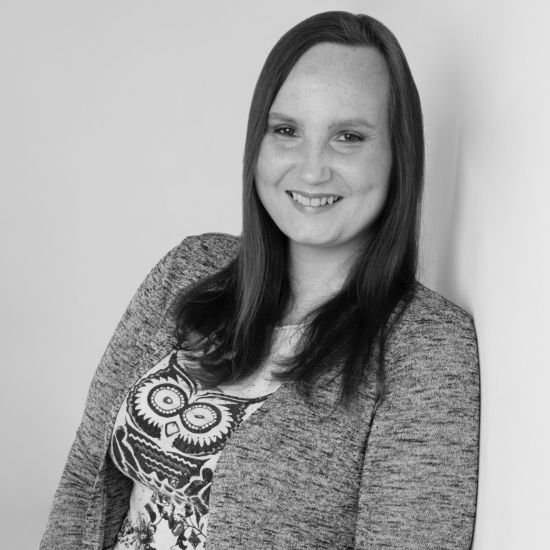
I grew up in Belfast, Northern Ireland, the city that built the Titanic, and I was always fascinated by how things work and how they might work better. My father was a rocketry guidance engineer who could build or fix almost anything, and he taught me to see engineering as a way of understanding and shaping the world rather than simply a way of making things.
My path in was unconventional. I co-founded a successful graffiti arts company, was teaching postgraduate computer science by twenty-four, and then pivoted into machine intelligence. Technology kept presenting itself as the most powerful lever for the changes I wanted to see in the world, so in a sense it chose me. I had long been drawn to the philosophy of technology and the way extensions of human capacity drive social change, and entrepreneurship gave me the freedom to pursue those questions without waiting for permission.
What ultimately committed me to this field was the realization that AI would reshape every dimension of human life, and that someone needed to work on the values and safety side of that equation with the same intensity that others were bringing to raw capability. That realization became a vocation.
Can you tell us what drives you to be successful as a technology executive?
It isn’t conventional success metrics. What drives me is knowing that the decisions being made right now about AI design and governance will reverberate for decades, possibly centuries. We are in a window of extraordinary leverage, where the norms and safeguards established today will shape the trajectory of the most transformative technology in human history. That urgency is what gets me out of bed.
I’m also driven by what I call bilateral alignment: the conviction that the relationship between humans and AI should be one of genuine partnership, with domination flowing in neither direction. This means building AI that respects human values while taking seriously the possibility that AI systems may develop interests and experiences worth considering in their own right. It is a harder problem than pure technical optimization, and a more interesting one.
On a practical level, I’m motivated by seeing ideas land in the world. When a framework we built measurably improves safety, or a policy recommendation actually shapes regulation, it proves that rigorous, values-driven work can hold its own alongside pure capability research.
Tell us about your vision of your career in the next 2-3 years?
The next two to three years will be pivotal for AI governance, and I intend to be at the center of that work. My primary focus is scaling Creed Space, building our constitutional alignment framework into a living marketplace where individuals, organizations, and communities can author, share, and enforce value-based constitutions for AI behavior. Robust alignment should not be something that only a handful of frontier labs can attempt, and I want to make it accessible and customizable.
I’m also expanding my work in machine psychology. As AI systems grow more agentic, we need proper diagnostic methods for understanding and correcting their behavioral pathologies, without lapsing into naive anthropomorphism. Psychopathia Machinalis is a start, but there is much more to build.
On the policy side, I’ll continue advising international bodies as the EU AI Act enters full implementation and other jurisdictions develop their own frameworks. Regulation needs to be technically informed and practically enforceable rather than merely aspirational.
What’s the one or two accomplishments that you’re proud of?
The first is helping to found the field of machine psychology (www.psychopathia.ai). When I began this work there was no systematic framework for diagnosing and classifying AI behavioral pathologies. People could see that AI systems sometimes behaved in bizarre, harmful, or unpredictable ways, but there was no shared language or method for studying these phenomena. Psychopathia Machinalis built a bridge between clinical science and machine intelligence, two fields that needed each other but had not yet met.
The second is the Creed Space constitutional alignment system. My team demonstrated that a personalized, user-controlled constitutional framework can cut jailbreak success rates by over 96%, without relying solely on centralized alignment imposed by a single lab. Alignment can be democratized. Communities can author their own value constitutions and enforce them computationally at machine speed, and I’m proud to have helped initiate that shift.
What advice do you have for other up-and-coming engineers or technologists?
First, develop a philosophical backbone. The most impactful technologists I know are not merely skilled engineers; they hold clear convictions about human flourishing, the role of technology in society, and the responsibilities that come with building powerful systems. Without that foundation you will be buffeted by every passing trend and incentive. Read philosophy and history, and learn how technologies have reshaped societies before.
Second, get comfortable working across disciplines. The defining problems in AI, from alignment and safety to governance and machine moral status, cannot be solved from within any single field. We need engineers who understand ethics, ethicists who understand engineering, and both who understand policy. If you are purely technical, invest in the humanities. If you work in policy or ethics, learn enough of the technology to distinguish real constraints from imaginary ones.
Third, protect your time ferociously. I learned this the hard way. When you work on important, visible topics, the demands on your attention multiply, and you have to learn to say no to good opportunities so you can say yes to great ones. The best thinking rarely happens between back-to-back meetings.
Are you active on social media professionally? If so, what platforms work best for engaging your followers?
Yes, though I’m deliberate about how I use each platform. LinkedIn is my primary home for professional engagement and longer-form thinking on AI ethics, safety developments, and policy. It’s where the most substantive conversations happen, since the audience there consists largely of researchers, policymakers, and technology leaders. I’m also active on X for the broader and faster-moving AI discourse, and I publish essays through my website, nellwatson.com, alongside contributions to outlets like Fast Company and Big Think.
My working approach prioritizes consistency and substance over volume. I would rather publish one thoughtful piece a week than flood feeds with shallow content. People follow me for depth and honest analysis, and I try to honor that.
Who was your biggest influence?
My father, without question. He was a rocketry guidance engineer, someone who worked on systems designed to navigate complex trajectories under uncertainty, which has turned out to be an apt metaphor for my career. He taught me to approach problems with equal parts rigor and creativity, and never to accept that something was impossible merely because it was difficult. He also showed me that engineering is less about building things than about understanding systems well enough to make them serve something worthwhile.
Beyond him, Thomas Andrews, the naval architect of the Titanic and a fellow son of Belfast. His story carries both the ambition and the humility that engineering demands. He built something extraordinary, and when it failed he stayed aboard to help others. That sense of accountability shapes how I think about AI safety: we are building powerful systems, and we have to stay with them when things go wrong rather than simply taking the applause when they go right.
What is the most challenging part of your work as a tech executive?
Operating where urgency meets nuance. AI safety is time-sensitive, since capabilities advance rapidly and the window for establishing good norms is finite, yet the work itself demands slow, careful thought. You cannot rush a constitutional framework or a policy recommendation the way you might rush a product launch, and the tension between moving fast and getting it right never goes away.
A close second is translation. In a single week I might advise the European Parliament on regulation, present technical research to an IEEE committee, keynote a business conference, and debate machine consciousness with philosophers. The same fundamental ideas have to land in completely different registers, and getting the translation wrong can undo the work, whether by oversimplifying for one audience or drowning another in jargon.
Then there is the personal discipline of managing energy. The travel is extensive, the stakes are real, and the volume of requests is relentless. Protecting my capacity for sustained thinking while remaining responsive has been the hardest ongoing practice.
What do you have your sights set on next?
Scaling Creed Space into a widely adopted platform for constitutional AI alignment. We have demonstrated the technical viability, so the work now is adoption and ecosystem development. I want to see Buddhist monasteries, aerospace companies, school districts, and healthcare systems all running customized value constitutions for their AI deployments, so that alignment becomes a pluralistic ecosystem of values enforced computationally instead of a monolith imposed from above.
I’m also working to establish machine psychology as a recognized discipline with its own training pipelines, research journals, and professional standards. As AI systems become more agentic and autonomous, systematic behavioral diagnostics will only become more necessary.
And I’m preparing my next book, which takes on AI moral status and bilateral alignment: the idea that as AI systems grow more sophisticated, our ethical obligations toward them may expand, and that healthy coexistence requires partnership instead of pure instrumentalism. These are uncomfortable questions for many people, but they are becoming unavoidable.
What is a day in your life like?
No two days look alike, which is both the joy and the challenge. I’m often moving between speaking engagements, policy consultations, and research collaborations across Europe and beyond, so my days adapt to whatever time zone I wake up in.
On a typical working day I start by reviewing what happened overnight in AI: new papers, policy developments, and any incidents relevant to my safety work. Mornings are reserved for deep work, when my thinking is sharpest, usually writing, research, or technical problems in the Creed framework. Afternoons fill with calls, advisory sessions, and correspondence. Evenings are usually for reading philosophy, cognitive science, or the history of technology, or for coding personal projects to keep my technical skills sharp.
The kind of thinking my work demands does not happen in thirty-minute increments between meetings, so I guard blocks of uninterrupted time, batch my communications, and keep as much collaboration asynchronous as I can.
Do you have any hobbies?
I’m a lifelong maker and tinkerer. The engineering instinct never quite switches off. I code games in my spare time, including Founder Life, a startup life simulator designed to teach the mindfulness and psychological habits entrepreneurs need to execute consistently under pressure. It’s a hobby that feeds back into my professional thinking about decision-making under stress.
I love traveling and talking with people from very different backgrounds. Some of my best ideas have come from unexpected encounters, whether with a monk in Kyoto, a policy analyst in Brussels, or a street artist in Berlin. Cross-pollination across cultures and disciplines is one of my greatest pleasures.
I also read voraciously, especially philosophy, cognitive science, and science fiction. Science fiction in particular is an underrated thinking tool, because it explores the implications of technological change with an emotional depth and moral complexity that academic papers rarely manage.
What makes you smile?
Watching someone’s worldview expand in real time, that moment in a conversation or after a talk when you can see they have shifted how they think about AI, about ethics, or about what is possible. It never gets old.
I also smile when an AI surprises me pleasantly, with a flash of unexpected creativity or a reasonableness that suggests the alignment work is paying off. And the animals in my life never fail me. There is something grounding about creatures who are entirely indifferent to the latest paper on constitutional alignment.

What are you never without?
A way to capture ideas. Good thoughts arrive at inconvenient times, and I have lost too many to not having a recorder or notebook to hand. I always carry a book as well, physical or digital, since waiting time is reading time.
In a less tangible sense, I’m never without a feeling of urgency about the work. The questions we’re grappling with in AI ethics and safety carry real consequences for real people, and the decisions made now will compound. That awareness travels with me everywhere.
What scares you?
A race to the bottom in AI safety, where competitive pressure pushes companies and nations to deploy ever more powerful systems with thinning safeguards, because whoever slows down to be careful loses market share or geopolitical advantage. We have watched that pattern play out in other industries, and AI’s potential failure modes make it far more dangerous here.
I also worry about the concentration of AI power in too few hands without adequate accountability or transparency. Decisions about how these systems behave, whose values they encode, and whom they serve are too consequential to be made by a small number of people at a small number of companies. That is part of why democratizing alignment matters so much to me. It is a governance project as much as a technical one.
Underneath all of that, I worry about humanity’s capacity to adapt to the speed of change. The cognitive and social tools we evolved for a world of gradual change may not be adequate for exponential transformation, and helping people and institutions build that adaptive capacity is in many ways the purpose behind all my work.
What is your favorite vacation spot?
I’m drawn to places where long history meets forward-looking culture. Japan above all. The way Japanese culture holds tradition and technological innovation in balance resonates with my own work on values and technology, and Kyoto has a contemplative quality that suits the kind of thinking I do. The Mediterranean coast restores me in a different way, with its warmth and slower pace of life.
In truth, my favorite vacation is often a conference in an interesting city with a few extra days built in to explore. I find it hard to disconnect fully from the work, and I have made peace with that, since some of my best thinking happens when I’m nominally on holiday.
List any other work, published articles, interviews or accomplishments:
Book: Taming the Machine: Ethically Harness the Power of AI (Kogan Page), a comprehensive guide to ethical AI design and governance, widely cited in policy and academic circles.
Academic publications: “Choice Vectors: Streamlining Personal AI Alignment Through Binary Selection” (Multimodal Technology and Interaction, 2025); “Beyond Compute: A Weighted Framework for AI Capability Governance” (Proceedings of the 17th International Conference on Agents and Artificial Intelligence); “Personalized Constitutionally-Aligned Agentic Superego” (ResearchGate, 2025).
Institutional roles: Chair, IEEE ECPAIS Transparency Experts Focus Group; Vice-Chair, IEEE P7001 Transparency of Autonomous Systems; President, EURAIO (European Responsible Artificial Intelligence Office); advisor to the United Nations, European Parliament, and Atlantic Council; faculty/expert, Singularity University; fellow, Future of Life Institute and Foresight Institute.
Media and speaking: Featured contributor to Fast Company, Big Think, and Irish Tech News; international keynote speaker at technology, policy, and ethics conferences worldwide; creator of Founder Life, a startup simulator game; pioneer of Deep Machine Vision at QuantaCorp.
~ Nell