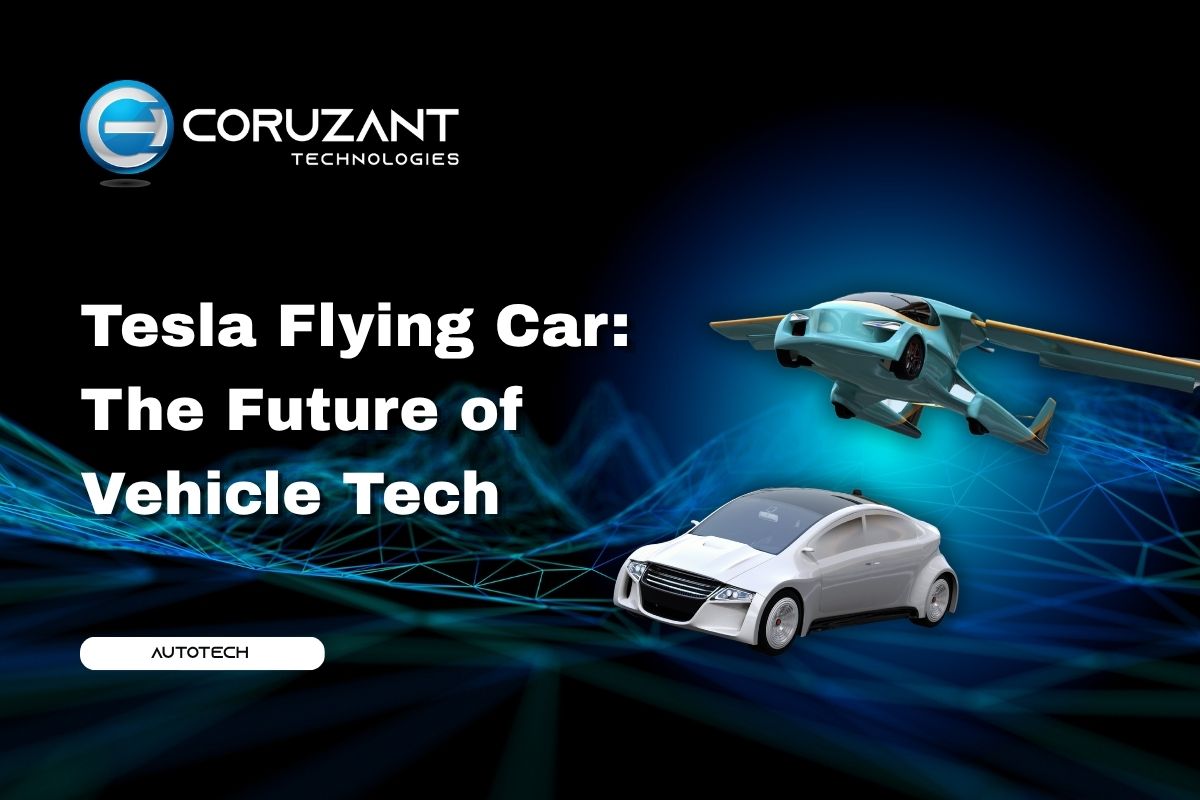
The Tesla flying car made its debut on October 15, 2026, in a year when global electric car sales are forecast to hit 23 million, or close to 30% of all new cars sold (Source: IEA Global EV Outlook 2026). Electric cars are now ordinary. A Roadster that jumps over a Cybertruck is not.
You have probably seen the clips. The second-generation Roadster climbed a ramp, hung upside down, flipped off the end, and hopped over a row of Tesla vehicles on cold-gas thrusters. The harder question is what any of it means once the video stops playing. Below, you get what Tesla actually showed, which claims hold up, what regulators said within days, and which parts of the technology could matter for cars you might actually drive.
Key Takeaways
- Tesla showed three Roadster trims; only the one-seat Rocket has the full flight system.
- The “flying” is short, thruster-powered hops, not sustained flight.
- The FAA says the car does not meet its definition of an aircraft.
- NHTSA says road safety standards still apply in full.
- Production is targeted for 2028, with no final price announced.
What Tesla Actually Unveiled
The event took place at SpaceX’s rocket test facility in McGregor, Texas, almost nine years after Tesla first showed a second-generation Roadster in 2017. Back then, deliveries were promised for 2020. That date slipped, then slipped again, and a planned April 2026 reveal also came and went.
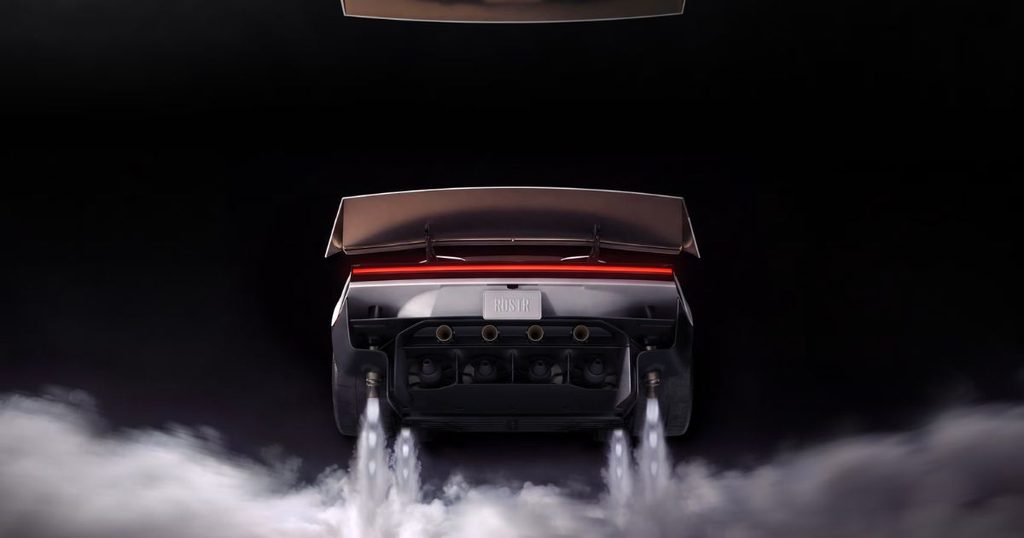
What finally rolled out was a two-seat electric hypercar co-developed by Tesla and SpaceX engineers. Tesla’s engineering VP Lars Moravy said the car uses 10 thrusters fed by 600 liters of compressed air to lift and spin it in midair. Tesla says the air tanks can be recompressed without fuel. During the demo, the car leapt over a Cybercab, a Cybertruck, a Tesla Semi, a Model Y, and a Model 3 while moving.
On the clock, the car posted a 0 to 60 mph run of 0.81 seconds. Tesla claims more than 300 miles of range and a top speed above 230 mph. None of those figures has been independently tested, because no customer car exists yet.
Two details from the night deserve more attention than the flips. First, the demo runs were driven autonomously, which Musk framed as a safety precaution. Second, Musk said that in the long run the Roadster will be the only manually driven car Tesla makes. Hold on to that one. It comes up again later.
Three Trims, Three Very Different Cars
“The Tesla flying car” is really three products sharing one platform, and only one of them is built to leave the ground.
| Trim | Seats | Key hardware | Claimed 0-60 mph | How to get one |
|---|---|---|---|---|
| Performance | 2 | Active aero, multi-mode suction system | Under 1.6 sec | $50,000 reservation (US) |
| Thrust | 2 | Adds rear cold-gas thrusters | Under 0.9 sec | $250,000 reservation, one per customer |
| Rocket | 1 | Full thruster and flight system | Under 0.59 sec | Invite only, not approved for public roads |
Those dollar amounts are reservations, not prices. Tesla has not published an MSRP for any trim. The fine print on the reservation page also gave no guarantee of when, or whether, a car would be delivered. For context, the 2017 Roadster carried a quoted base price of $200,000 and a promised 620 miles of range, so the specs have shifted considerably since the first reveal.
If you are trying to work out what an ordinary buyer could own, the answer is the Performance trim. It is the road car. Thrust and Rocket are aimed at track days, shows, and a very short invite list.
How a Car “Flies” Without Wings
Most flying car projects you read about are electric vertical takeoff and landing aircraft, or eVTOLs. Companies such as Joby Aviation and Archer Aviation build machines with rotors and wings, designed for sustained flight and certified as aircraft. The Roadster does none of that.
Its lift comes from cold-gas thrusters. Compressed air is stored at very high pressure and released through nozzles placed around the car. Nothing burns. The same principle has long been used to make small attitude adjustments on spacecraft, which is where the SpaceX connection comes in. Short, sharp bursts produce enough force to push a car off the ground for a moment, rotate it, or soften a landing.
The second system is suction. A fan underneath the car pulls air from below the body and presses it down onto the surface, which is how the Roadster clung to a ramp while upside down. Tesla’s stated goal for suction on the road car is more grip and cornering stability without needing high speed to build downforce.
The distinction matters. Thrusters give you a dramatic jump. Suction gives you a faster, more planted car on a normal road. Only one of those is likely to show up in a car you can buy.
Flying Car or a Very Good Jump?
Call it what Tesla calls it if you like. Most engineers will not.
A flying car, in any useful sense, takes off, holds altitude, travels somewhere, and lands under control. What the Roadster demonstrated was brief, thruster-assisted hops lasting seconds. An expert quoted by CNN described it bluntly as hopping rather than flight. Bryant Walker Smith, a University of South Carolina law professor and former Department of Transportation lawyer, argued the demo was a one-off car using long-established technology and predicted it would not reach public roads in 2028.
That skepticism has a basis. Musk himself told the audience the Roadster is not necessarily a safety-optimized car and said beforehand that success was not guaranteed. Asked whether it would be street legal, he answered that it “depends on your street.”
None of that makes the engineering trivial. Getting a road car of this weight off the ground, rotating it, and landing it repeatedly is hard. It just places the Roadster closer to a stunt-capable hypercar than to a new form of transportation.
The Regulators Have Already Weighed In
Within days, two federal agencies answered the question every reader was asking.
The FAA told several outlets, including CBS News, that the Tesla vehicle does not meet the FAA’s definition of an aircraft. That sounds like good news for Tesla, and in one narrow sense it is: no aircraft certification process. It is a statement about jurisdiction, though, not an approval to fly anything anywhere.
NHTSA took the opposite tack. The agency said manufacturers must still make sure their vehicles meet the applicable Federal Motor Vehicle Safety Standards and that drivers must follow local traffic laws, and it said it would keep monitoring the Roadster. Put simply, the FAA has said “not ours,” and NHTSA has said “still ours.”
That leaves a gap. A senior Transportation Department official told CBS News there is no clear answer yet on who would oversee a car that can briefly leave the road. Tesla’s own Roadster page already says the Rocket is not approved for public roads, which tells you where the company expects that question to land, at least for now. The scrutiny is not limited to the Roadster either: NHTSA opened an investigation into Tesla’s Cybercab robotaxi in early September.
What the Tesla Flying Car Means for the Future of Vehicle Tech
Strip away the theater and the Roadster still points at four real shifts in how vehicles are built and governed.
Engineering will move between industries
The Roadster is a product of two companies sharing parts, talent, and test facilities. Cold-gas thrusters, high-pressure tanks, and flight control software came from rocketry. Expect more of this kind of transfer elsewhere: aerospace materials, defense-grade sensors, and data-center power electronics are all finding their way into cars. The EV revolution across the auto industry already depends on borrowed battery and software expertise. The Roadster just makes the borrowing visible.
Performance becomes a software problem
The suction system and active aero matter more for the future of vehicle tech than the hops do. Both depend on sensors and controllers deciding, many times a second, how much grip or downforce the car needs. Performance stops being a fixed number set at the factory and becomes something software manages and can update. Tesla has spent a decade pushing this idea with over-the-air updates. A suction-equipped road car takes it further.
Driven cars and driverless cars split apart
This is the shift with the most commercial weight. Tesla’s broader bet is on autonomy: the Cybercab, its robotaxi service, and the software behind them. If Musk is right that the Roadster becomes Tesla’s only human-driven model, the company is quietly sorting its lineup into transport you ride in and machines you drive for fun.
That split mirrors what how Waymo cars see the road already shows about driverless fleets: the hardware and the business model for a robotaxi look nothing like those of an enthusiast car.
Regulation is the real bottleneck
Battery chemistry and thruster design are solvable engineering problems. Deciding which agency is responsible for a car that leaves the ground for two seconds is not an engineering problem at all. Every new category of vehicle, from e-scooters to robotaxis, has hit this wall. The Roadster has found it before the first customer car is even built. For anyone building in autotech, the lesson is plain. Plan for the regulatory path as early as you plan the hardware.
What to Watch Between Now and 2028
A handful of signals will tell you whether the Roadster is a product or a marketing event:
- A final price. Reservations without an MSRP let Tesla gauge demand without committing.
- Independent testing. Third-party acceleration, range, and braking figures, rather than company claims.
- The Performance trim’s homologation. Whether the road car, suction system included, clears federal safety standards.
- Regulatory guidance on thrusters. Any formal word from NHTSA, the DOT, or individual states on vehicles that can briefly lift off.
- The 2028 date itself. Tesla’s Roadster timeline has already slipped by most of a decade.
For the wider picture, keep an eye on the latest AutoTech news and analysis.
The Bottom Line on the Tesla Flying Car
The Tesla flying car is real in the sense that a car left the ground on camera. It is not a flying car you will commute in, and the version that flies is invite-only and not approved for public roads. The road-going Performance trim, if it ships, is a very fast electric hypercar with an unusual grip system.
What you should take from the launch is the direction, not the stunt. Aerospace engineering is moving into cars, software increasingly defines how a car performs, Tesla is separating driven cars from driverless ones, and regulators are scrambling to keep up. Watch those four trends and you will understand vehicle tech in 2028 better than any jump clip can tell you.
Read Next
If you want more context on where vehicle technology is heading, start here:
- Technology Trends in the Automotive Industry in 2025
- Terrain-Aware Tech Is Shaping Electric Off-Road Vehicles
- Tesla Model Y Juniper: Exclusive Features Revealed
Frequently Asked Questions
The Tesla flying car is a real prototype. Tesla demonstrated the second-generation Roadster at a SpaceX facility in Texas on October 15, 2026, using cold-gas thrusters to lift it briefly into the air. It performs short hops rather than sustained flight, and no customer cars exist yet.
The Tesla flying car uses cold-gas thrusters, which release air stored at very high pressure through nozzles around the body. Tesla says the system uses 10 thrusters and 600 liters of compressed air. A separate suction fan underneath the car increases grip on the road.
Tesla has not announced a price for the Tesla flying car or any Roadster trim. Reservations cost $50,000 for the Performance trim and $250,000 for the Thrust trim in the US. The Rocket version, the one with the full flight system, is invite only.
The flight-capable Rocket trim is not approved for public roads, according to Tesla. The FAA says the car does not meet its definition of an aircraft, while NHTSA says it must still meet federal motor vehicle safety standards. Who would regulate the flying function on public roads remains unresolved.
Tesla says Tesla flying car production is targeted for 2028. The company first promised second-generation Roadster deliveries for 2020, so the timeline has already moved several times. Tesla’s reservation terms do not guarantee a delivery date.