Agents can write a flawless reply and still do the wrong thing in the system. One missing training signal is the decision history your teams create every day.
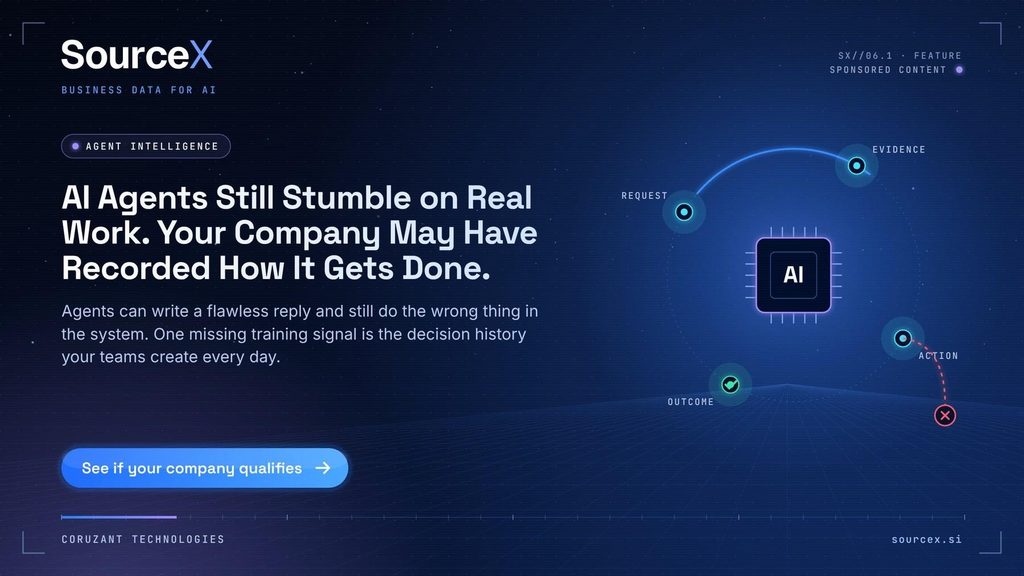
An AI agent can write a perfect refund email and still issue the wrong refund.
It can cite a policy that was replaced last quarter, skip an approval the account requires or close a case that still needs a human decision. The words look right. The system state is wrong.
That gap is a central problem for AI agent training data. Models have absorbed oceans of polished text. What is far harder to find is the connected record of real work: what a person knew, what they did and what happened next.
Your company creates those records every day, across support, CRM, engineering and document systems.
Key Takeaways
- AI agents can provide accurate information but still make errors due to a lack of decision history.
- It’s crucial to preserve the context and details available to workers at the time of a decision to ensure accurate AI training.
- Include both routine cases and exceptions in datasets to represent normal and unique situations effectively.
- Company records should be licensed properly to ensure compliance and relevance for AI training and evaluation.
- Technology leaders should analyze verifiable tasks and connected examples to improve understanding of workflow and outcomes.
Table of contents
The final agent reply does not show the whole task
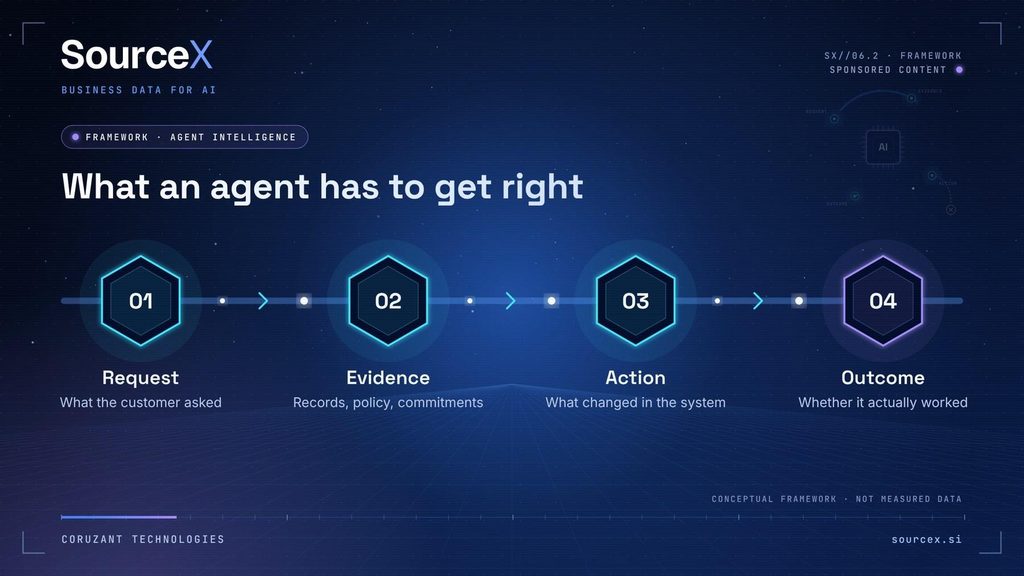
Take a hypothetical order dispute. A customer wants a replacement. Before replying, the team checks the delivery record, reads an account-specific commitment and works out whether the remedy needs sign-off.
A transcript containing only the final message hides nearly all of that. A connected case preserves the evidence, the sequence and the outcome, including the times the team got it wrong.
That distinction matters enormously for evaluation. The tau-bench research makes it concrete: it tests agents in policy-governed conversations, then inspects the database state their actions leave behind. The lesson for companies is to find records that make outcomes checkable, without assuming that everything in history was done correctly.
Preserve what the worker could know at the time
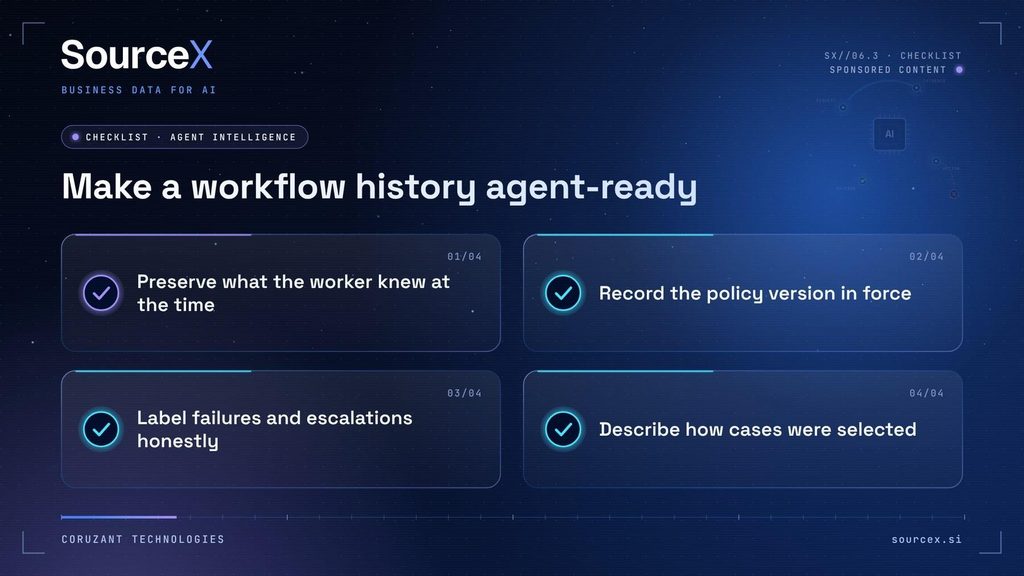
A case assembled after resolution can quietly leak the answer. A closure note sits next to the opening question. An updated knowledge article replaces the version the original worker actually used.
Before a history becomes a task example, separate information available at the decision point from information added later. Record the policy version when you can, and flag it when you cannot.
Some archives are excellent for teaching workflows and unsuitable for a rigorous held-out test. Saying so up front makes the dataset more credible, not less.
Keep the routine cases and the agent exceptions
Routine cases teach the normal path. Exceptions show where it breaks: conflicting instructions, missing evidence, unusual authorization, an action that must be escalated.
How you assemble the collection matters as much as what is in it. An archive of only successful resolutions leaves failures untested. One dominated by escalations can misrepresent the normal workload. State how the selection differs from the queue where the model will be used.
Coverage, outcome quality and provenance belong in the review packet. Raw volume explains none of them.
Permission turns a good dataset into an assessable one
Company records can contain personal information, third-party intellectual property and contractual restrictions. Technical usefulness is only half of the review.
SourceX licenses this kind of approved workflow and business data from the companies that own it, for AI training and evaluation. Its process covers qualification, defined scope, rights review, preparation and deal-specific terms, and the supplier signs with SourceX rather than negotiating with an AI lab.
The advertised ceiling is $4 million, an upper bound for the largest enterprise datasets rather than a typical or guaranteed payout, and it says nothing about what any particular workflow history is worth. Actual compensation depends on qualification and the signed transaction.
Does more detail always make a better dataset for agents?
No. Extra detail can add sensitive material, irrelevant noise or facts the worker could not have known. The goal is enough authorized context to understand the decision, plus a clear record of what was excluded and transformed.
Read Next
A few related pieces worth your time:
- Ultimate Toolkit for Tax Preparation: 8 Essential Supplies
- Capcom Data Breach Affects 11.7 Million Capcom ID Users
- Planet’s Competitors: Companies Providing Satellite Analytics
Where should a technology leader begin?
Pick a task that ends in a verifiable result. Trace a few authorized examples from request to action to outcome, and note every missing link. That exercise answers a more useful question than any file count: can your records actually explain how your work gets done?
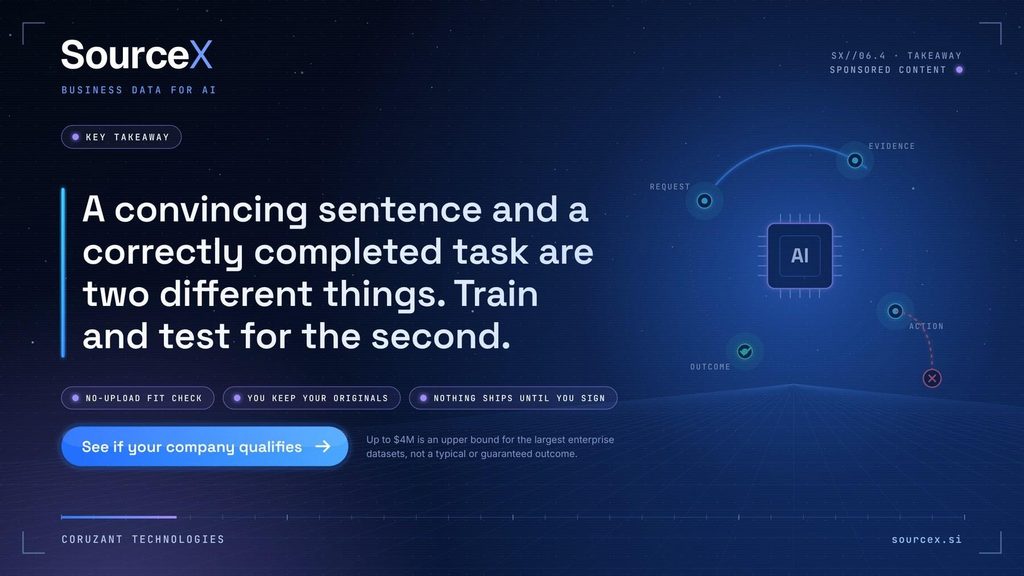
Key takeaway: A convincing sentence and a correctly completed task are two different things. Train and test for the second.
If your company holds that history and can authorize its use, check company fit with SourceX. Describe the workflow first; the initial assessment does not require uploading its records.