Off-road terrain-aware tech rarely stays consistent for long. Within a few minutes, a rider might move from hard-packed dirt to loose gravel, then encounter a climb, deep ruts, or softer ground. Traditionally, riders have had to read those changes themselves and respond through throttle, braking, and body position. As electric vehicles rely more heavily on controllers and software to manage power delivery, another possibility is coming into focus: could sensors and software help a vehicle identify changes in its own state and in the conditions beneath it?
That is the basic idea behind terrain-aware control. It does not mean turning an electric dirt bike into an autonomous vehicle. Instead, the system could use real-time inputs such as wheel speed, motor load, vehicle motion, and battery status to make more precise adjustments to power delivery. The rider would still choose the line and control the bike; software would help the electric drivetrain respond more precisely to those inputs.
Key Takeaways
- Terrain-aware control uses real-time data to enhance electric vehicle performance on varying terrain.
- It leverages sensor inputs like wheel speed and battery status, improving power delivery without replacing the rider.
- Adaptive control remains distinct from autonomy, focusing on assisting the rider’s decisions rather than taking over control.
- As electric off-road vehicles evolve, understanding their sensor integration and control algorithms becomes essential for performance evaluation.
- Future performance comparisons may shift from traditional metrics to a focus on how effectively vehicles use available power.
Table of contents
- Ride Modes Already Show That Power Is Not Defined by Hardware Alone
- Terrain-Aware Control Depends on Real-Time Data
- What Does the Software Actually Need to Know?
- Terrain-aware Adaptive Control Is Not About Replacing the Rider
- More Sensors Do Not Automatically Make a Terrain-aware Vehicle Smarter
- Future Performance Comparisons May Go Beyond Bigger Numbers
- Electric Off-Road Vehicles Create a New Use Case for Software Control
Ride Modes Already Show That Power Is Not Defined by Hardware Alone
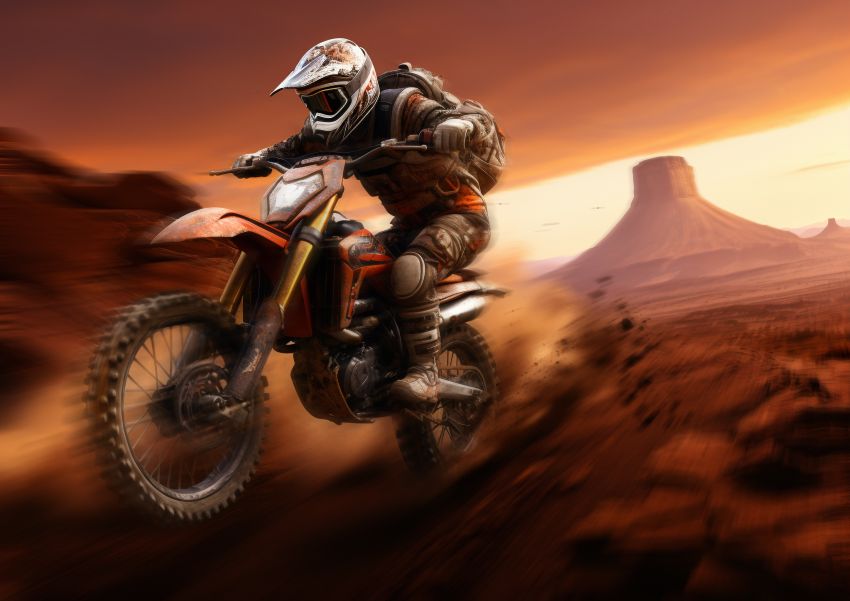
Power delivery in a modern electric vehicle is more complex than a battery simply sending electricity to a motor. When the rider applies the throttle, the controller manages current and power response according to a programmed control strategy. That means the same battery and motor can behave differently depending on how the software is configured.
Preset ride modes are a common example. The Qronge X1 Spark M, a mini electric dirt bike, uses a 4,500W peak mid-drive motor and offers ECO, Sport, and Turbo modes, allowing the rider to select different power responses as needed.
These are still preset power maps chosen manually by the rider. The bike is not automatically switching modes based on terrain or real-time vehicle state. Even so, they illustrate an important shift: power delivery can already be shaped electronically rather than being determined by mechanical specifications alone.
Terrain-Aware Control Depends on Real-Time Data
Moving from preset modes to adaptive control is not primarily about adding more modes. It is about giving the vehicle more real-time information.
Differences between front and rear wheel speeds, for example, can serve as one input for estimating wheel slip. An inertial measurement unit can provide acceleration and angular-rate data that can be used to estimate vehicle attitude and motion. Motor speed, current, and load can indicate how hard the drivetrain is working, while the BMS can continuously provide information about battery voltage, current, and temperature.
Any one of these signals provides only a limited view. Their real value comes from evaluating several inputs together. If the rider continues to request power while the driven wheel suddenly begins behaving differently, the control system might identify potential wheel slip or a change in traction and then use other sensor data to confirm what is happening.
The principle is similar to sensor fusion elsewhere in automotive technology. A vehicle does not rely on a single sensor to describe its entire operating environment. Multiple data sources are combined so that software can estimate the current state more reliably.
What Does the Software Actually Need to Know?
Terrain awareness can include external perception systems such as cameras, but for an electric off-road vehicle, another direct approach is to estimate the vehicle’s current state using wheel speed, IMU, motor, and battery data.
What matters most to the control system is what the vehicle is doing at that moment.
Unusual changes in wheel-speed data may indicate potential slip. On a sustained climb, motor load and current demand may rise. Through a longer technical section, the battery, motor, and controller may remain under higher load for an extended period, changing their temperature and operating conditions.
If software can identify these state changes consistently, they can become new inputs for power control. In many cases, knowing whether the vehicle is slipping, whether the load is increasing, and how the drivetrain is operating may be more useful than first deciding whether the surface should be labeled mud, gravel, or something else.
Terrain-aware Adaptive Control Is Not About Replacing the Rider
Off-road riding differs from autonomous driving in one important way: the rider’s body movement and judgment are part of the control process. When to stand, how to shift weight, and which line to take through an obstacle are not decisions that can simply be handed over to software.
For a future electric motorcycle, a more realistic role for intelligent control is not deciding where the bike should go, but helping the drivetrain respond more effectively to the rider.
If the system detects a potential slip or a change in traction, for example, the controller could adjust the torque request or power-response strategy. If sustained high load is detected or temperatures approach predefined limits, the system could also adjust output based on the state of the battery, motor, and controller. The rider would still control the throttle and direction; the software would determine how the drivetrain executes that request.
That remains far removed from fully autonomous driving, but it still requires sensors, data processing, and real-time control to work together.
More Sensors Do Not Automatically Make a Terrain-aware Vehicle Smarter
In automotive technology, collecting more data is often not the hardest part. The real challenge is interpreting that data correctly and responding in a stable, timely way.
Off-road environments make that especially difficult. Traction, gradient, and surface impacts can change repeatedly along the same section of trail. If an algorithm mistakes a brief change in wheel speed for sustained slip, or if a control response arrives too late, it could interfere with an input the rider would otherwise handle naturally.
Terrain-aware control therefore has to solve more than the question of what a vehicle can measure. It also depends on data filtering, state estimation, control response, and clearly defined safety limits. The system must behave predictably enough that the rider understands how the bike will respond rather than encountering unexpected changes in power delivery.
This is why modern AutoTech increasingly focuses on hardware-software integration. Sensors collect information, software interprets it, and the controller and motor act on the result. Improving any one layer in isolation does not automatically make the entire vehicle more intelligent.
Future Performance Comparisons May Go Beyond Bigger Numbers
When consumers compare the fastest electric dirt bike, top speed and peak power are still among the most visible performance figures. As electronic control develops, however, “how much power is available” and “how that power is used” may become two separate questions.
Two electric off-road bikes with similar peak outputs could respond differently on loose climbs, soft ground, or repeated elevation changes if their control strategies differ. Adding real-time vehicle data could make those differences even more noticeable.
That does not make peak power or top speed irrelevant. It simply adds another technical layer to performance evaluation. Where buyers once focused mainly on motors, batteries, and mechanical design, they may increasingly need to understand what sensors a vehicle uses, how it estimates vehicle state, how its control logic works, and how software manages the underlying hardware.
Electric Off-Road Vehicles Create a New Use Case for Software Control
Electric drivetrains already provide much of the foundation needed for more advanced control. The battery, BMS, controller, and motor continuously generate and exchange operating data, while preset ride modes have already shown that software can alter power response without changing the main hardware.
Whether this develops into mature terrain-aware control will depend on sensor costs, algorithm reliability, safety validation, and whether riders actually find the technology useful. From an engineering perspective, however, the progression is easy to see: fixed power maps can lead to rider-selected modes, and those could eventually lead to systems that adjust their response using real-time vehicle-state data.
For electric off-road vehicles, “intelligence” may not mean letting the machine ride in place of the rider. A more realistic goal is to estimate the vehicle’s state more accurately so the battery, motor, and controller can respond more appropriately as terrain and load change.
If this type of control matures, sensors, state estimation, and control algorithms could become as much a part of evaluating an electric off-road vehicle’s technical capability as its battery and motor.