Waymo cars are often called “self-driving cars,” but that phrase hides how much technology works at once. A Waymo vehicle is a rolling computer system. It uses maps, sensors, software, and prediction models to decide where to go, how fast to move, when to stop, and how to avoid danger.
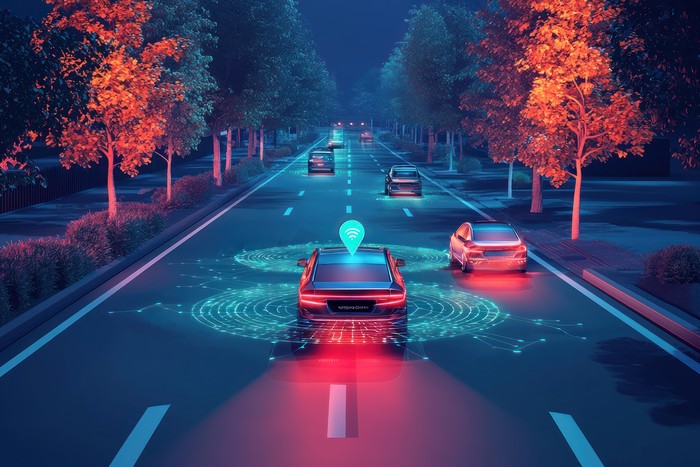
Waymo says its system uses detailed maps, lidar, cameras, radar, and onboard computers to drive without a human behind the wheel. Lidar sends out laser pulses to build a 3D picture around the car. Cameras help the system read traffic lights, signs, lane markings, construction zones, people, bikes, and vehicles. Radar helps measure distance and speed, including in rain, fog, or low light. The car’s computer combines the data and plans a path through traffic in real time.
The basic process has four steps. The car figures out where it is. It detects what is nearby. It predicts what other road users might do. Then it chooses its next move, such as braking, changing lanes, yielding, pulling over, or continuing through an intersection.
Key Takeaways
- Waymo cars function as complex computer systems, using maps, sensors, and software to navigate and make decisions.
- Prediction is challenging for automated driving due to unpredictable human behavior and unexpected road conditions.
- Waymo claims fewer accidents compared to human drivers, emphasizing that their vehicles don’t suffer from human flaws like distraction or impairment.
- Edge cases, where unpredictable scenarios occur, can lead to failures, such as incidents with cyclists or odd vehicle movements.
- Legal complexities arise in crashes involving Waymo due to the need for detailed data and context analysis, impacting liability discussions.
Table of contents
Why Prediction Is the Hard Part
Prediction is one of the hardest parts of automated driving. Streets are full of people who do unexpected things. A pedestrian may step out from between parked cars. A cyclist may move around a truck. A driver may run a red light. A construction worker may wave traffic through a temporary lane. A police officer may give hand signals that do not match the traffic lights.
Human drivers struggle with these situations too. When an automated vehicle makes a mistake, the failure can look different. The car may see an object but classify it incorrectly. It may understand where an object is but predict the wrong path. It may follow the map too closely when the street has changed.
Waymo’s strongest argument is that its cars do not get drunk, tired, distracted, angry, or reckless. Waymo says its vehicles have had fewer serious injury crashes, injury-causing crashes, and airbag deployment crashes than average human drivers over the same distance in the cities where it operates. A 2024 analysis reported that Waymo and Swiss Re found fewer property damage and bodily injury claims for Waymo vehicles compared with human-driven vehicles over 25.3 million fully autonomous miles.
Where the Waymo Cars Technology Can Fall Short
A self-driving car can still fail when the world does not look the way its software expects. These rare or unusual situations are often called edge cases. An edge case can involve an odd vehicle movement, a blocked view, a confusing construction zone, an emergency scene, or a road feature the system does not handle well.
Some Waymo incidents show where these weak spots can appear. In December 2023, two Waymo vehicles struck the same pickup truck that was being towed backward in Phoenix. The crashes were low speed and no injuries were reported, but Waymo issued a recall and updated the software for 444 vehicles. The issue involved how the system understood the movement of the towed truck.
In 2024, Waymo recalled 672 vehicles after one struck a wooden utility pole in Phoenix while making a low-speed pullover move. No injuries were reported, but the crash showed that the car needed a better way to detect and respond to pole-like objects near the edge of the road. Waymo responded with a software update and a map update.
Cyclists create another major test. Bikes are smaller than cars and move differently. They often travel near parked vehicles, open doors, trucks, and curbs. In 2024, a Waymo vehicle hit a cyclist in San Francisco after the cyclist was blocked from view by a truck, according to reports. That kind of crash raises a hard technology question: how should the car act when it cannot fully see what may be coming from behind another object?
Why These Crashes Can Be Legally Complex
A Waymo crash may involve more evidence than a normal car crash. Investigators may need sensor data, camera footage, lidar records, trip logs, software versions, map data, remote support records, repair history, and company safety policies.
This is where personal injury lawyers can play an important role. A lawyer handling this type of case may need to look beyond the crash scene and ask what the vehicle detected, how it classified the danger, what it predicted, and whether Waymo had seen similar problems before. The legal question may turn on a software decision made seconds before impact.
Passenger behavior can also complicate a claim. A Waymo may drive itself, but passengers can still open doors into bike lanes, distract others, damage the vehicle, or create unsafe conditions. If a cyclist is hit by a door from a robotaxi, the case may involve where the vehicle stopped, whether the car warned the rider, and whether the design helped passengers exit safely.
The Map Problem
Waymo does not rely only on GPS. It uses detailed custom maps and compares those maps with what its sensors see. That helps the car understand where lanes, curbs, crosswalks, and signs should be.
Cities change constantly. Construction crews close lanes. Workers place cones in new spots. Temporary signs appear. Curbs, paint, and road edges may be hard to read after repairs or bad weather. A human driver can sometimes understand the scene from context, while a machine has to process the scene through map data, sensor readings, and software rules.
Emergency scenes are another challenge. Human drivers often understand a scene by combining many clues at once: sirens, gestures, blocked lanes, police movement, and other drivers slowing down. A robotaxi has to turn those clues into data. If it misreads the scene, it may stop in the wrong place, block traffic, or move when it should wait.
Read Next
A few related pieces worth your time:
- Diesel Performance in the Software-Defined Vehicle Era
- Truck Bed Protection Fleet and Tech-Savvy Owners Should Know About
- Ford Mustang Tesla Screen: Everything You Need to Know Before You Upgrade
What Waymo Accidents Show
The lesson is not that Waymo cars are unsafe by default. Self-driving safety is different from human driving safety. Humans crash because they speed, text, drink, fall asleep, or make bad choices. Robotaxis fail for different reasons: sensors miss things, software predicts the wrong path, maps need updates, or rare street events fall outside the system’s training.
Waymo accidents will likely become more important as robotaxis expand in Los Angeles, San Francisco, Phoenix, and other cities. The technology may reduce many common crashes, especially those caused by distracted or impaired driving. When a crash does happen, the central question will often be technical: what did the vehicle detect, what did it believe was happening, and why did it choose the move that led to injury?