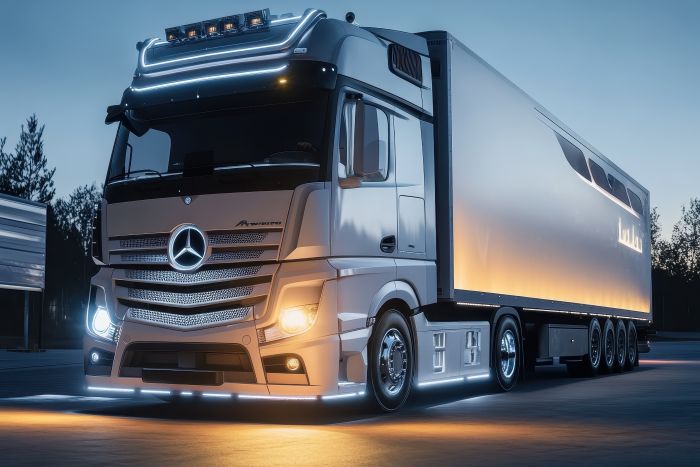
A long-haul truck used to be a simple machine: an engine, a trailer, and a driver. Today it is closer to a rolling sensor platform. Electronic logging devices, telematics units, dashcams, and driver-assist hardware run constantly, capturing speed, location, braking force, and steering input many times a second. The modern big rig produces a stream of data that did not exist a decade ago, and that data is changing how engineers, fleets, and investigators understand what happens on the road.
Here is what is actually running inside the cab, and why the output matters.
Key Takeaways
- Modern trucks are advanced machine systems equipped with sensors and data collection tools like electronic logging devices (ELDs) and driver-assist technologies.
- ELDs track driving time, speed, and braking events, helping fleet managers monitor safety and maintenance needs.
- Advanced driver-assistance systems utilize data to enhance safety by logging occurrences and reacting to road conditions.
- Telematics platforms analyze the collected data to improve maintenance and predict potential failures, reducing risks on the road.
- As trucks become more autonomous, data integrity and preservation become critical when assessing incidents involving these vehicles.
Table of contents
- The Electronic Logging Device is the Foundation
- Driver-assist Turns the Modern Truck into a Witness
- What Modern Fleets Do with the Stream
- Connected Modern Trucks Talk to the Road
- Autonomous Freight Raises the Stakes on Data
- Data Integrity Becomes Its Own Problem
- The Data Has a Short Life
- Smarter trucks, sharper data trails
The Electronic Logging Device is the Foundation
Every commercial truck on an interstate route carries an electronic logging device, or ELD. The unit connects to the engine and records driving time automatically, replacing the paper logbooks drivers once filled in by hand. It exists to track the hours-of-service limits set by the Federal Motor Carrier Safety Administration: no more than 11 hours of driving after 10 hours off duty, with the workday capped at 14 hours.
The ELD does more than count hours. It logs speed, engine status, and hard-braking events, each one time-stamped and tied to GPS coordinates. Fleet managers read this output to spot fatigue patterns, schedule maintenance, and flag risky driving before it leads to a wreck. The same record becomes the clearest account of a trip when something goes wrong.
Driver-assist Turns the Modern Truck into a Witness
Newer trucks layer advanced driver-assistance systems on top of the ELD. Automatic emergency braking, lane-keeping assistance, and adaptive cruise control use radar, cameras, and sometimes lidar to watch the road and step in when the driver does not react in time. Most rigs blend several of these feeds together, a method engineers call sensor fusion, so the truck builds one picture of its surroundings from many inputs at once.
These systems log their own activity. Let’s break it down. When automatic braking fires, the truck records the moment the sensor detected an obstacle, how hard the system braked, and whether the driver was already responding. That log can show a safety feature working as designed, or it can show a sensor that failed to see what sat in front of it. The hardware that prevents crashes also documents the ones it cannot.
What Modern Fleets Do with the Stream
Capturing data is only half the story. The other half is what happens after it leaves the truck. Telematics platforms pull the feeds off each vehicle and send them to servers, where software grades driver behavior, ranks the riskiest routes, and predicts part failures before they strand a load.
Predictive maintenance is the clearest payoff. Sensors track brake wear, tire pressure, and engine temperature across thousands of miles, and the system flags a component that is trending toward failure. A worn brake caught in a maintenance bay never becomes a runaway truck on a downhill grade. Fleets that read their own data well cut both repair costs and crashes, which is why the major carriers now treat their telematics dashboard as standard equipment rather than an add-on.
Connected Modern Trucks Talk to the Road
The next layer moves the data off the truck and into the space around it. Vehicle-to-everything communication, often shortened to V2X, lets a truck trade messages with other vehicles and with roadside infrastructure. A rig can warn the cars behind it about sudden braking, learn that a traffic light is about to change, or pick up an alert about a stalled vehicle past the next curve.
This matters most for modern heavy trucks, which need far more distance to stop than a passenger car. A few seconds of early warning can be the gap between a close call and a pileup. As more of this hardware reaches the road, the truck stops being an isolated machine and becomes one node in a wider safety network, and every message it sends or receives adds another line to the record.
Autonomous Freight Raises the Stakes on Data
Self-driving trucks are no longer a demo. Aurora has run autonomous freight between Fort Worth and El Paso, and Kodiak began driverless operations on West Texas roads at the end of 2024. These trucks carry redundant systems for braking, steering, and computing, and they record far more than a human-driven rig.
Take the driver out of the cab, and the data becomes the only witness. A crash involving an autonomous truck spreads the question across the whole tech stack: the carrier that put the truck on the road, the company that wrote the driving software, and the maker of the sensors that were supposed to see the road. Sorting that out depends entirely on the logs the system produced in the seconds before impact. The engineering is ahead of the rulebook, and the data is what everyone will study.
Data Integrity Becomes Its Own Problem
The more a truck depends on data, the more the security of that data matters. A telematics unit is a connected computer, and connected computers can be tampered with, spoofed, or simply fail. Engineers now have to prove that a log is authentic, that a timestamp is accurate, and that no one altered the record between the crash and the analysis.
That is a harder problem than it sounds. Data moves from the truck to a server to a dashboard, and each handoff is a place where a record can be corrupted or lost. The firms building these systems spend real effort on encryption, tamper-evident logging, and chain-of-custody tracking, because a record nobody can trust is worth nothing when it counts. As modern trucks lean harder on automation, the integrity of the log becomes as important as the sensors that fill it.
The Data Has a Short Life
Here is the catch that surprises people. The modern truck captures all of this, but the carrier controls it, and a lot of it does not last. Many ELD and dashcam systems overwrite their records on a rolling cycle, often around 30 days. Crash footage, speed logs, and maintenance history can be gone before anyone thinks to ask for them.
That short shelf life makes preservation a race. Once a crash becomes the subject of a dispute, the parties who move first to request and lock down the telematics record are the ones who can reconstruct what happened. That group runs from fleet safety teams to specialists who work directly with this data, including firms such as Texas Truck Accident Lawyer, a Houston-based practice that pulls ELD and dashcam data from commercial-vehicle systems before the cycle erases it. Whoever secures the data controls the record.
Smarter trucks, sharper data trails
The technology arc is clear. Modern trucks keep gaining sensors, autonomy keeps creeping onto highways, and each new system leaves a more detailed trail. That makes roads safer and crashes easier to reconstruct, and it also packs the whole story into a data file with an expiration date.
The hardware will keep improving. The lesson for anyone who builds, runs, or studies these systems stays the same. The truck now records the truth of what happened on the road. The only question is whether someone captures that record before the system writes over it.