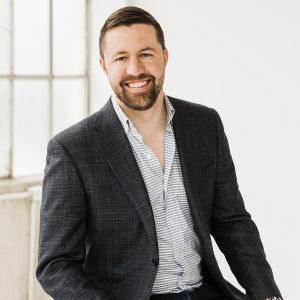
Aaron Vaccaro Podcast Transcript
Aaron Vaccaro joins host Brian Thomas on The Digital Executive Podcast.
Brian Thomas: Welcome to Coruzant Technologies, Home of The Digital Executive Podcast.
Do you work in emerging tech, working on something innovative? Maybe an entrepreneur? Apply to be a guest at www.coruzant.com/brand.
Welcome to The Digital Executive. Today’s guest is Aaron Vaccaro. Aaron Vaccaro is a world class visionary leader, venture capitalist, investor and executive known for building businesses at the intersection of innovation, experience, and culture.
He currently serves as a partner at the venture capital firm, west River Group, and as president of Singularity University as a partner at West River Group, Aaron has helped visionary founders bring bold ideas to life by investing in what he calls the inevitable and enduring. The technology shaping the future and the timeless human experiences that connect us.
Early in his career, he helped grow internationally claimed Topgolf from a niche concept into a cultural movement. This experience shaped his business and leadership philosophy by teaching him how to scale businesses without losing their soul.
Well, good afternoon, Aaron. Welcome to the show.
Aaron Vaccaro: Thank you so much for having me, Brian. It’s great to be here.
Brian Thomas: Absolutely my friend. I appreciate it. You’re in Sacramento, California. I’m in Kansas City. Appreciate the traversing of time zones and calendars and I know your group getting you scheduled and stuff sometimes can be challenging, so I appreciate it. And Aaron, I’m gonna jump into your first question.
You’ve built a career across venture capital, experiential businesses and global leadership platforms like Singularity University. What key experiences shaped your journey to where you are today?
Aaron Vaccaro: That is a great question. I wanted to be a, first, wanted to be a, a professional basketball player and then wanted to be a nuclear physicist.
And in both of those areas, I think naturally fell pretty far short in what was necessary. But I always I’ve always been competitive, but also more importantly, I’ve always been really curious and entrepreneurial and so. I didn’t really, I, I guess coming more into my adulthood and then out of college, I didn’t really have a plan for exactly what I wanted to do.
I wanted to do something where I could grow as much as possible, like as where there was potential to continue learning and growing without really having a ceiling on it. And so the firm that I ended up at and the, the industry of investing kind of provided that where it was, it was a little bit, the sky was the limit.
But I’d say specific experiences. I mean, my sophomore year of college I slept through physics lab or physics midterm actually. And that set me back a little bit on my physicist path. And then I caught up and was basically just so. Not, I don’t wanna say un achieving, but I really had a hard time in, in labs and doing science where I was like, you know what, I’m, I think I’m not meant to be a scientist.
And so that kind of caused me to reset my whole plan, life plan and expectation. And then the thing that really changed my life was when I was a senior in college trying to figure out what I was gonna do. I was gonna graduate with a math major and I was gonna go to grad school for a master’s in finance, but that was kind of it.
And I met. This guy Eric Anderson through mutual, mutual Connection, who basically introduced me and was like, I know this guy in Seattle. I think he, he has, he’s an investor of some sort. I don’t really know what he does or what you wanna do. I just have this feeling like you guys will get along well.
And that introduction became, turned into basically my first job and, and my whole career ever since. And it was more about the connection of, the person I was working for and. Having a shared sense of curiosity and principles and ambition than it was about the specific thing that we were working on.
And so that, that was a big lesson and was super formative, is like, I’ve heard before, you should pick your first pick, your first boss, don’t pick your first job. And for me, that was like a hundred percent true. I could not have described to you the job or jobs that I’ve done over the last 10 or 12 years.
But I can tell you the one thing across all of them that’s been consistent is the guy that I was doing it with, which is, has, has been my mentor and is, is now my partner. I’ve had a lot of formative experiences along the way. I mean, we, the big thing I worked on for the first six years was building Topgolf, which was at the time I really small company that turned into a bigger company.
I learned a ton everything from strategy to finance to marketing and leadership across the board. Then since then I’ve had some opportunities to jump into leadership situations myself and sit in the CEO or COO kind of seats. And now I get to do that full-time at Singularity, which, which we’re an investor in.
And, and Eric is, is executive chairman of, so lots of learning opportunities without a necessarily consistent throughline, except that I had good partners and it was an opportunity to learn and do something new. Hopefully make an impact.
Brian Thomas: Thank you. Appreciate the backstory. And it’s funny how that all works.
I, like you, I wanted to be a professional basketball player. I could play ball well, but I’m five 11 maybe on a good day. But I appreciate the backstory, nuclear physicist and, and that trajectory sometimes changes on us. So just what I really took away was you being always curious and entrepreneurial, wanted to grow and learn beyond the typical career ceiling that we always see in, in our lives and jobs.
Again, a simple introduction and I, I’m gonna take this away. Pick your first boss, not pick your first job. I thought that was pretty cool. So again, thanks for the backstory. And Aaron, at Singularity University, you’re helping leaders understand and apply exponential technologies. What are the biggest misconceptions leaders have when approaching innovation at that level?
Aaron Vaccaro: Yep, yep. That’s a good question. Well, one of the misconceptions that we often see is that innovation is. The job of a single team or department or chief innovation officer? I think the best innovative cultures have developed a sense of distributed and, and kind of grassroots in innovation. Like in a way everyone in the company is, is in the innovation department.
It’s not just like a thing that exists over on, on the edge and it, it has to be infused throughout the whole culture and. Importantly for that to work, everyone has to be empowered by leadership to actually innovate. So that’s something that we try to champion is how do you, how do you build systems and build a culture where everyone can be innovating because they actually know best the problems that they’re working on every day on the front lines, whether it’s serving customers or in the engineering department or in HR, top down innovation, which is kind of, the standard in most, in most places.
Is not the best informed innovation and is, I think a lot less successful than taking a more grassroots approach. Now, you don’t want chaos, right? You can’t just let everyone go crazy using whatever tools and, letting your data run wild and spending money. But you certainly, the best organizations have a, a mindset and a culture of celebrating innovation and always looking for better ideas from everywhere rather than just, rote. Repetition and waiting for the new thing to come down from on high.
Brian Thomas: Thank you. Appreciate that. You’re absolutely right. We have this thing and, and I’ve been in organizations where you hire, an innovations team or a department or a, an innovation officer, and again, it just kind of siloed there.
Not always, but a lot of times, and you talked about that misconception where innovation sometimes is limited to that person or department, and it needs to be infused in the whole culture, which I absolutely agree with. Everyone is empowered. Everyone’s a leader. This top down innovation I’ve seen too many times and, and I’m glad you’re sharing this here with our audience, ideas need to come from everywhere, so I really appreciate that.
And Aaron, the next question here, you often speak about making the aspirational accessible. How do you translate complex future-focused ideas into something actionable for founders, executives, and organizations?
Aaron Vaccaro: Hmm. That is an interesting lens on that question. Usually when we talk about making the aspirational accessible.
At least when I talk about it it’s usually focusing on the another side of our investment business where we really invest in consumer experiences and brands where, an example of that was Topgolf, where we tried to take something that was aspirational but had high barriers to entry like golf and make it more accessible by creating a consumer brand where an experience where you just had to show up as you were.
We put a beer in one hand and a golf club in the other and just let you try it with no risk and no funny clothes and no tee times and no buying golf clubs. Right. And we’ve, we’ve taken a similar approach with different types of aspirational and timeless concepts, whether it be wine or. Making cocktails or soccer, other things.
So that’s, that’s what I usually work on when I think of making the aspirational accessible. But it is certainly true on the SU side. I mean, one of the foundational concepts at Singularity is we call the six Ds and one of the Ds of, technological acceleration. The, the last one in fact is democratization.
Because what happens with technology over time is, is as it gets digitized. It then gets dematerialized and demonetized and ultimately democratized that, that’s, this framework was coined by Peter, Peter Diamandis, who you know, was the founder of Singularity. But, over time, the, the hope and, and our hope is that these advanced technologies like AI and robotics and genetic engineering and, and all these things.
Which you could say are aspirational when they first start out, as they’re super expensive and require a ton of infrastructure or power or whatever over time they become accessible. And the classic example is like your iPhone, you know, has more computing power than the computer that put the first astronauts on the moon and everyone has one in their pocket.
And so, so that kind of naturally happens with technology over time. Now, I think the, that is inevitable in a way. What’s not inevitable is how we, the choices that we make with these technologies and how we set people up to build a better society with them versus worse. And so, when I think about the democratization of technology, it’s not necessarily about let’s decide what’s best for everybody and then spread it out everywhere and give it to everyone.
It’s more about using these, the democratization of these technologies to create opportunities and access for people to solve their own problems. And so if we can make these aspirational technologies accessible to civilizations, societies all around the world, they all have their own cultural context, their own history, their own problems they’re trying to solve on which they’re the experts.
Right. They’re the experts on their own problems. We are not, and if we can make all the tools we have available, accessible to empower everyone to sort of build their own solutions and build their own innovations and, and businesses, to me that that would be how I’d describe Singularities view of making the aspirational accessible.
Brian Thomas: Thank you. I appreciate you sharing some examples there. You know, you talked about the Topgolf, which I think is amazing. Your. Innovation around that, your experiment with Topgolf lowering that barrier to entry. We all know this. I think every guy has tried golf. And I’m so competitive that I decided to drop golf early on, which I’m glad.
But you talk about also democratization of technology really to, in your view, to create access and opportunities to help people solve their own problems since they are the experts at their problems. So I think that’s awesome. I like how you put that. And then Aaron, the last question of the day, as we look ahead to the future, how do you see the relationship between exponential technology and human-centered leadership evolving, and what will define a future that is both innovative and worth inheriting?
Aaron Vaccaro: Oh, man. Well, that is it’s kind of a central question right now, at, at least in our, in our world you’re, I believe, and I think, my organization believes that technology should be built to serve humanity and human, ultimately human flourishing and not, not the other way around. Maybe that’s a human-centric approach, but, we’re talking about human centered leadership. There’s been some discourse from the, you know, big company and AI leaders about.
Like, and you know, the growth of in intelligence and super intelligence and it’s like, well, maybe, humans were here as a stepping stone to create an even greater intelligence and like I just don’t believe that. Right? I think that whatever we build it, it will be very important and continually more important clearly to remember who, who and for what are we building, you know, these exponential technologies.
I think the time of the humanities is coming back around, right? I’m on, I’m on the board of a, a liberal arts college called Whitworth University, and although it’s been a difficult time for private liberal arts institutions the last 10 years I, I’m very hopeful and excited because what we really need is more people and more, more leaders thinking about the humanities and asking those questions.
Rather than just how much more computing power can we build, right? It’s about like the whys and the what. Like what should we, what should we want? What should we be building? And not just how much and how fast can we build? So, I mean, to answer your question, I think human-centered leadership has to be the future.
And it’s certainly where we’re focusing. And at Singularity, we’ve, as an example, I’d say we’ve evolved from 10, 15 years ago, kind of evangelizing exponential technologies and their power to, impact and change the world to recognizing like, okay, yeah, those exponential technologies are, are inevitable.
Instead, what we’re focusing on is, the choices that we make and how we build and implement these technologies is not inevitable. Like we have real choices to make in terms of what we prioritize and the guardrails that we build. And so that’s what I’m focused on when, when we work with CEOs and government leaders and military leaders.
It’s, it’s like we’re, I’m, I’m more, more thinking about and teaching about, wisdom and judgment and philosophy half the time, more, more even than technology.
Brian Thomas: Thank you. I appreciate that and it is really important. I, I talk to founders and C-suite executives every day on the podcast here.
We talk a lot about these things in the future, and I appreciate what you said. Technology should be built to serve and help humanity and not for other means like profit, et cetera. And really. You talked about the who and for what we are building the technology for what’s the why behind it.
And the, the big takeaway for me was that human-centered leadership must be part of that future. So I appreciate the insights and I know my audience will as well. And Aaron, it was such a pleasure having you on today and I look forward to speaking with you real soon.
Aaron Vaccaro: Absolutely. Thank you. Thanks for the, the great questions.
I mean, really, I’m gonna keep thinking about a couple of these as you’ve, you’ve really, you’ve got my wheels turning, so thank you for that.
Brian Thomas: Bye for now.
Aaron Vaccaro Podcast Transcript. Listen to the audio on the guest’s Podcast Page.