Brian Peret Podcast Transcript
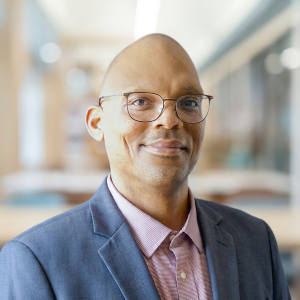
Brian Peret joins host Brian Thomas on The Digital Executive Podcast.
Brian Thomas: Welcome to Coruzant Technologies, Home of The Digital Executive Podcast.
Do you work in emerging tech? Working on something innovative? Maybe an entrepreneur? Apply to be a guest at www.coruzant.com/brand.
Welcome to The Digital Executive. Today’s guest is Brian Peret. Brian Peret is the director of CodeBoxx Academy, where he leads the company’s mission to transform untapped potential into tech-driven career success.
With a background in a chemical and biomedical engineering, Brian combines academic discipline with deep operational expertise to deliver one of the most outcome-focused technology programs in North America. A former educator turned workforce innovator, he has been instrumental in shaping CodeBoxx’s human-centered approach, one that values accountability, adaptability, and business-first results.
Under his leadership, the academy serves as a launchpad for individuals from all walks of life to enter and thrive in the modern digital economy. Brian is a driving force behind CodeBoxx’s commitment to redefining how tech talent is developed, measured, and deployed.
Well, good afternoon, Brian. Welcome to the show.
Brian Peret: Thank you very much. Happy to be here.
Brian Thomas: Awesome. I appreciate it, Brian. You’re hailing out of St. Petersburg, Florida today. I’m in Kansas City. Appreciate you making the time. Uh, sometimes challenges with calendars and time zones get in the way, but, uh, we were able to get this successfully scheduled. So, jumping right in, Brian, your path to becoming director of CodeBoxx Academy is one of the more remarkable journeys I’ve come across.
From chemical and biomedical engineering to a career pivot during the 2008 recession, some hardships, to leading one of the most outcome-focused tech programs in North America. Walk us through that arc. What were the inflection points that shaped how you lead today?
Brian Peret: Certainly, and thank you for the opportunity to share my story for, in retrospect, my story gives me hope, and I find it gives inspiration to others because I witnessed the death and the rebirth of the American dream in my life.
I graduated from the University of Wisconsin with a bachelor’s degree in chemical engineering and a master’s degree in biomedical engineering. By any metric, I was ready to start and be a leader in my career. But I hit the job market in two thousand and eight with no skills to get a job, no skills to perform in an interview, and no skills to set myself out, set myself apart from people in the industry.
When the recession came in two thousand and eight, I was left wallowing. Downward spiral, I found myself comfort in a bottle, and by two thousand and fourteen, I was a full drunk, and this bottomed out with me actually going to prison. I spent twenty months in prison. I was released from prison July 1st, 2020, with no job, no prospects for the future.
And yet, this is a story of hope because through technology, with an internship and a laptop, I was able to pave my own way to the American dream. Now you ask me, what are the inflection points that shaped who I am and how I lead today? First inflection point: recognition that my college degree had nothing to do with me getting a job.
My college degree was insufficient for me starting a career in tech. Two, how did I actually find my career in tech? It wasn’t through my college degree. It was through the people I know. Somebody I knew saw the potential in me. They gave me a laptop, they gave me an internship, and they gave me the guidance that I needed to be a developer where I could earn an income that could sustain me.
And with that kind of income, with that kind of security, I had the opportunity to learn who I was, to develop my superpowers and to, to contribute fully to the tech community. Let’s move on. Where are we next?
Brian Thomas: Awesome. Thank you so much. I appreciate that. That is, uh, and, and that’s why I love this podcast.
Usually we start out with kind of a backstory on the guest, and gosh, you went through… Your story is just filled with a lot of trial and tribulation. Um, and totally understand the 2008, uh, recession was, was really hard on a lot of Americans here. But your story of, uh, the, as you said, uh, the death and rebirth of the American dream is exactly that with you.
You, uh, pivoted 180 degrees, went through some personal challenges, and now leading one of the best, uh, really leadership roles at CodeBoxx Academy, and I think that’s just, an amazing success story, so thank you. And Brian, CodeBoxx has built a human-centered approach grounded in accountability, adaptability, and business-first results, and the numbers back it up.
There’s 300 plus graduates, over 80% graduation rate with a 79% placement rate. What are bootcamps and traditional CS programs getting wrong that you’ve intentionally built around?
Brian Peret: Brian, when I was given this leadership role, I was given a mandate, a clear mandate. I was to develop a program that fulfilled two goals.
The first goal, every graduate from CodeBoxx Academy is to stand out from the crowd. They are to be the one that is attractive, they get the interview, and they have the communication skills and the experience to kill the interview. Two, once a CodeBoxx graduate gets on the job, they know how to perform the job.
It is with these two goals and nothing else that we define and we redefine our program. As somebody who is a veteran of the academic system, I have seen the legacy practices and philosophies that hold that institution back. Every day I deal with people in education and boot camps who are so focused on getting this certification or a diploma, this piece of paper that used to confer so much meaning in the tech world.
At CodeBoxx, in my role as the director of CodeBoxx Academy, I actually speak to VPs of engineering, chief architects, directors of technology, the people who build teams and lead teams every day, and I hear their growing frustration with people who have all these pieces of paper but cannot do the job.
CodeBoxx is built first and foremost as a business simulation. We don’t have lectures. We don’t have teachers. We don’t have paper. We have deliverables and requirements. We have resources. We have coaches that give students what they need to succeed, and it’s that. It’s that idea of having a business simulation, having a goal, struggling to get to that goal, having your team get you to that goal, and communicating your result to your leadership.
That is what it takes to succeed today. The traditional forms of education miss that. In this world, education first and foremost needs to be a way to set up our young people for adulthood. In modern culture and the modern economy, the best way we can do that is to set them up to gain and to succeed in a career that is sustainable.
The only place that I see doing that in all of industry is in tech. Anything that we do that drives outcomes that don’t go directly towards having our communities leveraging tech to better their careers is fundamentally flawed
Brian Thomas: Thank you. Really appreciate your insights there. And, and just kind of cover a couple things.
You know, you were hired and mandated to develop a world-class development learning program which had to include, one, every grad had to stand out from the crowd and, uh, can speak to that and, and taught some of those soft skills that we all need. And then once a CodeBoxx grad, uh, obviously knows how to perform the job once they’re in that seat, and I thought that was important, uh, to ensure the success of those, those candidates that are getting out there in the workforce.
And you’re absolutely right. You, you kind of flipped that academic script. You know, we’re taught, uh, we all did it. We went to college, uh, some of us got even, uh, advanced degrees, and we spent a lot of money, and I see, and I see this today where a lot of people are not even working near, uh, the field that they were educated on.
And, and it’s kind of sad that we do that. Uh, but CodeBoxx is, uh, absolutely flipping the script, and I love that. And the next question for you, Brian. CodeBoxx’s flagship presence at the Arc Innovation Center puts you right at the intersection of Tampa-based startups, investors, and employers. How are you aligning what local businesses need with the talent coming through the academy, and what does that loop between education and economic development look like when it’s working?
Brian Peret: Yeah. Brian, one thing that I’ve learned in working in tech and working in community is that modern problems are huge. There used to be a time where one brilliant person could sit in their garage or their basement, and they could develop the technology that would change the world. Today, modern systems and modern tools are so complicated that no one person, no one team, and I would argue not even one sector of the economy, can fully address the problems that we have.
In order for us to leverage technology, we need true cross-sector collaboration, and that is what is happening here at Arc Innovation Center. We have nonprofits, we have startups, and we have training providers all working together to provide outcomes for the community. Let me tell you a little bit why it’s important to have all of these different profiles working together towards a common goal, that goal being spurring the innovation economy of Tampa Bay.
It’s because each one of us entities, we all have different motivations. They’re all good motivations, and they’re all required for us to have a success. Let me tell you some of our motivations When I speak to a nonprofit, their motivation is generally the mission that they serve, the people, the, the societal impact they want to advance.
When I speak to a small company, inevitably, their goal is existential. They want to survive, and for that, they need to meet the bottom line. Us at CodeBox, our goal is a mixture of the two. We meet the bottom lines of our clients. That existential pressure really drives us to the results that we need. But the human-centered approach, making sure that we are leveraging human potential towards real business outcomes, is what drive us in that end.
So how are we aligning with local businesses? That’s my job. Part of what I do is I go out into the community, and I ask our leaders what we need. In addition to being the director of CodeBoxx Academy, I also hold the chair of the Workforce and Talent Committee for the Saint Pete Area Chamber of Commerce.
So, all in all, I’m speaking to no less than one hundred different companies per quarter. Companies that span the entire gamut from tech companies in med tech, fintech, and edtech who need developers, need tech-savvy teams to advance their goals. Training providers who are really trying to take the individuals in the neighborhood and give them the skills that they need.
But sometimes they’re so busy imparting the skills that they’re not making the connection to the companies. These companies who know what they need but don’t have time to train the people. And most importantly is the people in all of this, the people who live in our neighborhoods, the people who need good jobs, the people who will be the future of what we do.
Here at Arc Innovation is set right in the middle of the neighborhoods in Saint Petersburg. We have intentional connections to the actual source of fuel, which is the people who live next door to me. It’s this three hundred and sixty degree environment that we need to suc– to propel ourselves today
Brian Thomas: That’s awesome.
Thank you. Um, obviously working in technology, a lot of these modern tools are complex, much like the problems we’re trying to solve. Um, but you broke down, uh, really just quickly is all the folks you work, uh, with in, in your community there, nonprofits, businesses, training providers, et cetera. Um, this cross-collaboration, uh, and this talent and economic ecosystem, as I call it, working together on the same goal to improve the Tampa Bay community and, and thrive in that community, uh, I think that’s awesome.
And it’s important. One thing I did highlight, it’s important that you’re leveraging humans to deal with real business outcomes. You know, there could be all the, the most advanced tech in the world, but at the end of the day, humans need… are part or, or really the center of the solution. So, I appreciate that.
Brian Peret: Brian, that is at the core of what I’ve learned, right? One thing that I’ve learned from my narrative, ’cause I started materially from nothing, and I’ve built a beautiful life, and I’ve done it by converting my human capital to business value and extracting the outcome on the back end. That’s what we do at CodeBoxx.
We value potential over privilege. My favorite bullet item in my job description is that I am to create momentum in people where it does not yet exist. Here at CodeBoxx, we bet on you before you bet on yourself, and we will never give up on you because we recognize that within everybody is greatness. We recognize that tech is vast, and it’s only getting bigger.
When we take those two observations together, we make the assumption, and I challenge anybody to challenge me on it, I make the assumption that there is a place for everybody in tech. There is a way for every single person listening to my voice to take their superpowers, to take what’s weird, to add innovation to it, and find a way to contribute to our economy, to our society, and to our culture.
That’s what wakes me up and motivates me every single day
Brian Thomas: That’s amazing. I really appreciate that. And Brian, the last question of the day, looking ahead maybe five years or plus out, how do you see the relationship between humans, AI, and work evolving? And what’s CodeBoxx’s role in shaping that future, not just responding to it?
Brian Peret: This is the most amazing part, right? Just yesterday, I am onlining automations to streamline my email inbox and help me with my inbound filter to the academy. CodeBoxx, we are in a very unique, beautiful position to address this, uh, in part because of the history that CodeBoxx has had, uh, with AI. You know, we are a tech academy, and so when ChatGPT came online in late twenty-twenty-two, our started– our students started using it, and without much direction, they often found themselves in difficult positions.
And our coaches at CodeBoxx found we were spending most of our time un-un-undoing mistakes that they had made. It was then that we recognized that we had to be intentional with how we train AI. Now, you mentioned the three hundred plus graduates that we’ve had. Each one of those is, a private on the line at– of the…
You know, there’s this battle going on between the AI tools. Each one of them is a use case. They are a researcher. They are an explorer. They are taking their experiences, their successes and their failures, and they’re combining them to CodeBoxx’s intelligence. From that, we take the successes and failures, and we’ve learned what best practices are.
Those best practices bubble up into philosophies. At CodeBox, we have determined the philosophies that are translating to real return on investment for the businesses that we work on. So, what does that look like as we go into the future, as AI automates more, and as people become more important in making sure we inject humanity into this?
AI is always gonna handle the simpler tasks. It’s gonna do all the automation for it. Anything that we can tell it to do; it will faithfully do for us. So, what does that mean? What kind of skills do we need in the future? We need the skills of a leader who is speaking to a very faithful and very intelligent assistant, an assistant who will do exactly what you tell it to and no more.
We need to develop leaders who can lead these automated assistants. We need to develop people that can perform the most valuable skill in the age of AI When I was a developer coming up, if we wanted to create a project, the first thing we do, we had to write the code. We had to write all of these lines of code before we could even compile and see our idea on a screen.
In that process was required– we were required to gain so much knowledge about the internal workings of syntax, of code, of file structure, of best code practices, and best documentation. Now with AI, I can literally tell my AI what I want to see, give it a picture of what I want it to see, and it can output that to me.
But the code is still there. I still need to know how to assess this code. That’s why the most important skill in the age of AI is what I call curation, curating the output of this AI tool. What does a curator do in a museum? If a random artifact is placed in front of your curator, it is their job to look at it, to assess it, to see the quality of it, to see why it might be ninety percent accurate as opposed to a hundred percent accurate, to see its flaws and to understand how to take it from its flaws to ideality.
That is the skill that we need to develop in the age of AI. We need people who can look at the outputs of these AIs, not as a faithful sycophant who will take AI as the Lord and follow them like lemmings off the cliff. We need critical thinkers, people with analysis, people who are collaborative yet skeptical to look at the outputs of these AI, to be able to understand where they are strong, understand where they are weak, and be able to create a path for us from weakness to strength.
That is how we are going to succeed in the future. That is what we are doing right now at CodeBoxx. And we see three levels of partners at CodeBoxx. One, the ones I love to work with, they see it. They wanna do it. They can’t get it ahead of the curve fast enough. There are more and more of these individuals.
They keep me so busy. It is a beautiful blessing of a problem. Two, the people who really wanna do it, but are scared. They’re hesitant. They think they don’t have enough time. They think they don’t have enough knowledge. They think they don’t have enough money. This population of people is getting smaller and smaller as the opportunity cost of missing out on these AI tools is getting larger and more apparent.
And then there’s the third group of people, the deniers. Those are too scared to even get involved, or those who are not even connected enough to be aware of what is going on in the world. For those people, I pray
Brian Thomas: Amazing. Thank you so much. I appreciate that. Uh, and you talked about a few things here.
CodeBoxx obviously is in a unique position to automating desktop and personal activities, leveraging AI and agents, as you mentioned. You’re integrating at the academy there the AI technology into your learning and your curriculum, which I thought was amazing. And then one thing I wanna highlight is you called the most important thing, uh, with using AI is being that curator of the AI output.
It’s, it’s so important that we don’t just blindly, uh, you know, put in a prompt and expect, uh, everything to be perfect, and I, I, I think that’s so important that you highlighted that. And Brian, it was such a pleasure having you on today, and I look forward to speaking with you real soon.
Brian Peret: Brian, it’s a pleasure talking to you, sir.
Brian Thomas: Bye for now.
Brian Peret Podcast Transcript. Listen to the audio on the guest’s Podcast Page.