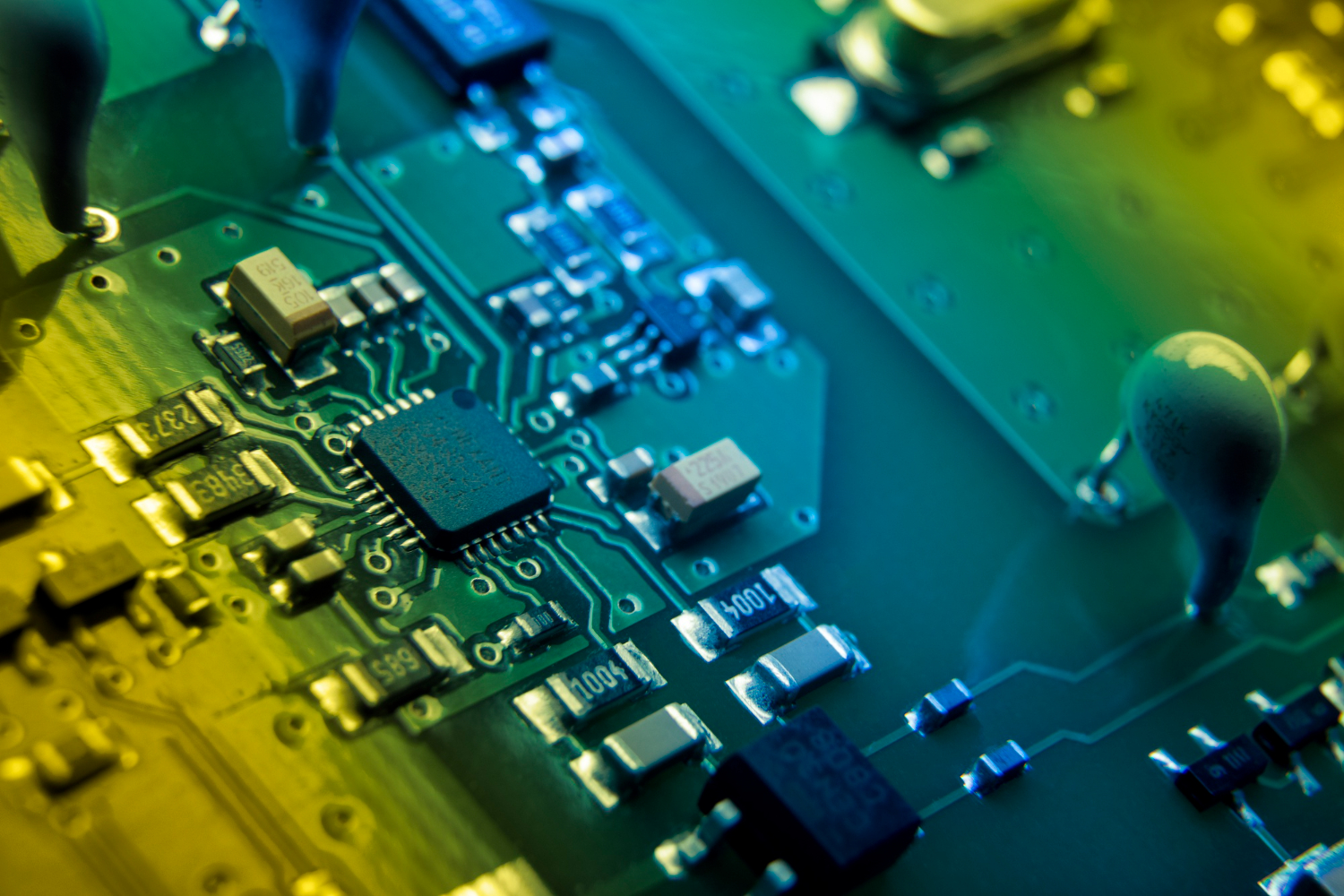
Artificial Intelligence (AI) and Machine Learning (ML) are reshaping nearly every industry, and printed circuit board (PCB) manufacturing is no exception. From automated defect detection and predictive maintenance to intelligent supply chain optimization and process control, AI is enabling manufacturers to improve quality, reduce costs, and accelerate production timelines. As electronic devices become increasingly complex, PCB manufacturers face growing challenges related to miniaturization, component density, quality assurance, and production efficiency. Traditional manufacturing methods, while effective, often struggle to keep pace with the demands of modern electronics. AI-powered systems are helping bridge this gap by introducing data-driven decision-making throughout the PCB manufacturing lifecycle.
In this article, we explore how AI and Machine Learning are revolutionizing PCB manufacturing and why companies offering high-performance PCB assembly services are increasingly integrating these technologies into their production environments.
Key Takeaways
- AI and Machine Learning are transforming PCB manufacturing by improving defect detection, predictive maintenance, and process optimization.
- Traditional methods face challenges like miniaturization and quality assurance, which AI helps to overcome through data-driven decision-making.
- High-performance PCB assembly services increasingly rely on AI to ensure precision in complex products, resulting in better reliability and efficiency.
- AI technologies streamline supply chain management by forecasting demand, optimizing inventory, and reducing operational costs.
- The future of PCB manufacturing includes deeper AI integration with autonomous systems, digital twins, and real-time quality predictions.
Table of contents
- Understanding AI and Machine Learning in Manufacturing
- AI-Powered Defect Detection
- Predictive Maintenance Reduces Downtime
- Process Optimization Through Data Analytics
- Enhancing PCB Assembly Operations
- Intelligent Supply Chain Management
- AI and Digital Twins
- Quality Improvement Through Continuous Learning
- AI in High-Density and Advanced PCB Designs
- Challenges of Implementing AI in PCB Manufacturing
- The Future of AI in PCB Manufacturing
- Conclusion
- Frequently Asked Questions (FAQs)
- What is AI in PCB manufacturing?
- How does machine learning improve PCB quality?
- What are high-performance PCB assembly services?
- Can AI replace human inspectors in PCB manufacturing?
- What industries benefit most from AI-driven PCB manufacturing?
- Is AI only useful for large PCB manufacturers?
- What is the future of AI in PCB manufacturing?
Understanding AI and Machine Learning in Manufacturing
Artificial Intelligence refers to systems capable of performing tasks that typically require human intelligence, such as pattern recognition, decision-making, and problem-solving.
Machine Learning is a subset of AI that enables systems to learn from data and improve performance over time without explicit programming.
In PCB manufacturing, these technologies analyze massive amounts of production data to identify trends, detect anomalies, and optimize manufacturing processes.
Common AI applications include:
- Automated optical inspection (AOI)
- Predictive equipment maintenance
- Process optimization
- Quality control
- Supply chain forecasting
- Yield improvement
- Intelligent production scheduling
AI-Powered Defect Detection
One of the most significant applications of AI in PCB manufacturing is automated defect detection.
Traditional inspection systems rely on predefined rules to identify defects such as:
- Missing components
- Solder bridges
- Misaligned components
- Open circuits
- Short circuits
While effective, rule-based systems can generate false positives and often require frequent manual adjustments.
AI-powered inspection systems use computer vision and deep learning algorithms to recognize complex defect patterns. These systems continuously improve as they process more images and production data.
Benefits include:
- Higher inspection accuracy
- Faster defect identification
- Reduced false alarms
- Lower labor costs
- Improved product reliability
Expert Opinion
“Deep learning has dramatically improved visual inspection accuracy in electronics manufacturing. Modern AI systems can detect subtle defects that would be difficult or impossible for traditional inspection software to identify consistently.”
— Senior Manufacturing Automation Engineer
Predictive Maintenance Reduces Downtime
Production downtime is one of the highest hidden costs in manufacturing.
Machines such as:
- Pick-and-place systems
- Reflow ovens
- CNC drilling machines
- Screen printers
generate large amounts of operational data.
Machine learning algorithms analyze sensor readings, temperature profiles, vibration signatures, and operational history to predict potential equipment failures before they occur.
Instead of waiting for a machine to fail, manufacturers can perform maintenance proactively.
Benefits include:
- Reduced downtime
- Lower maintenance costs
- Increased equipment lifespan
- Higher production efficiency
Predictive maintenance helps ensure continuous operation while minimizing costly interruptions.
Process Optimization Through Data Analytics
PCB manufacturing involves numerous interconnected processes.
Small variations in:
- Solder paste deposition
- Reflow temperature
- Component placement
- Drill accuracy
can significantly impact product quality.
These process-control principles also apply to precision CNC drilling for custom metal and plastic components.
AI systems continuously monitor production parameters and identify correlations that human operators may overlook.
For example, machine learning models can determine:
- Optimal reflow profiles
- Ideal stencil thickness
- Best placement speeds
- Environmental conditions affecting quality
This level of optimization leads to:
- Improved yields
- Reduced scrap
- Better consistency
- Faster process tuning
Expert Opinion
“Manufacturers are moving away from reactive process control. AI allows engineers to make adjustments before quality issues appear, significantly improving overall yield.”
— Electronics Production Consultant
Enhancing PCB Assembly Operations
PCB assembly is one of the most critical stages of electronics manufacturing.
Modern products often contain:
- Fine-pitch components
- Ball Grid Arrays (BGAs)
- High-density interconnects
- Miniature passive devices
These assemblies demand exceptional precision.
Companies providing high-performance PCB assembly services increasingly rely on AI-driven systems to maintain quality while handling complex assemblies.
AI can optimize:
- Component placement accuracy
- Feeder management
- Production scheduling
- Solder quality analysis
- Inspection workflows
The result is improved reliability, particularly for industries such as:
- Aerospace
- Medical devices
- Automotive electronics
- Industrial automation
- Telecommunications
Intelligent Supply Chain Management
Supply chain disruptions have become a major concern for electronics manufacturers.
Machine learning models can analyze:
- Historical purchasing trends
- Supplier performance
- Inventory levels
- Market demand forecasts
These insights help manufacturers make informed decisions regarding procurement and inventory management.
Benefits include:
- Reduced shortages
- Improved inventory control
- Better forecasting accuracy
- Lower operational costs
AI-driven forecasting is especially valuable when managing long lead-time components and global supply chains.
AI and Digital Twins
A digital twin is a virtual representation of a physical manufacturing process.
By combining real-time production data with AI analytics, manufacturers can simulate production scenarios before implementing changes on the factory floor.
Digital twins allow engineers to:
- Test process modifications
- Predict production outcomes
- Evaluate equipment utilization
- Identify bottlenecks
without interrupting actual production.
This capability reduces risk while accelerating innovation.
Expert Opinion
“Digital twins combined with machine learning are becoming one of the most powerful tools available to modern manufacturing engineers. They provide visibility that was previously impossible to achieve.”
— Smart Factory Solutions Architect
Quality Improvement Through Continuous Learning
Traditional manufacturing quality systems often rely on periodic audits and corrective actions.
AI systems continuously learn from production data and quality results.
Over time, machine learning algorithms become increasingly effective at:
- Predicting defects
- Identifying root causes
- Optimizing manufacturing parameters
- Improving process stability
This continuous learning approach creates a feedback loop that drives ongoing quality improvement.
The more data the system receives, the better its recommendations become.
AI in High-Density and Advanced PCB Designs
Advanced PCB technologies continue to push manufacturing limits.
Examples include:
- HDI boards
- Flexible PCBs
- Rigid-flex designs
- RF and microwave circuits
- High-speed digital boards
These technologies require tighter tolerances and more sophisticated manufacturing processes.
AI assists by:
- Monitoring process variations
- Predicting manufacturing risks
- Optimizing fabrication parameters
- Improving first-pass yield
As design complexity increases, AI becomes an increasingly valuable manufacturing tool.
Challenges of Implementing AI in PCB Manufacturing
Despite its advantages, AI implementation is not without challenges.
Common obstacles include:
Data Quality
Machine learning models require large volumes of accurate data.
Poor-quality data can reduce model effectiveness.
Initial Investment
AI systems often require investments in:
- Sensors
- Data infrastructure
- Computing resources
- Training
Workforce Adaptation
Engineers and operators must learn how to work alongside AI-powered systems.
Training and change management are important considerations.
Cybersecurity
As factories become more connected, protecting manufacturing data becomes increasingly important.
Despite these challenges, the long-term benefits often outweigh the initial implementation costs.
The Future of AI in PCB Manufacturing
The future of PCB manufacturing will likely involve even deeper integration of AI technologies.
Emerging developments include:
- Autonomous manufacturing systems
- Self-optimizing production lines
- Advanced robotics
- Real-time quality prediction
- AI-assisted design for manufacturability (DFM)
As computing power increases and AI models become more sophisticated, manufacturers will gain unprecedented visibility and control over production processes.
Companies that adopt AI early will be better positioned to compete in an increasingly demanding electronics market.
Conclusion
Artificial Intelligence and Machine Learning are transforming PCB manufacturing from a reactive process into a proactive, data-driven operation.
From automated defect detection and predictive maintenance to intelligent process optimization and supply chain forecasting, AI delivers measurable improvements in quality, efficiency, and reliability.
As electronic products become more complex, manufacturers offering high-performance PCB assembly services are increasingly leveraging AI to maintain precision, improve yields, and reduce production costs.
The combination of advanced manufacturing techniques and intelligent automation represents the next major evolution in PCB production. Organizations that embrace these technologies today will help define the future of electronics manufacturing tomorrow.
Frequently Asked Questions (FAQs)
What is AI in PCB manufacturing?
AI in PCB manufacturing refers to the use of artificial intelligence technologies to improve production processes, quality control, defect detection, and operational efficiency.
How does machine learning improve PCB quality?
Machine learning analyzes production data to identify patterns and predict defects before they occur, helping manufacturers improve yields and product reliability.
What are high-performance PCB assembly services?
High-performance PCB assembly services focus on producing complex, high-reliability electronic assemblies using advanced manufacturing processes, quality control systems, and precision equipment.
Can AI replace human inspectors in PCB manufacturing?
AI can significantly enhance inspection processes, but human expertise remains important for validation, process improvement, and handling unusual production scenarios.
What industries benefit most from AI-driven PCB manufacturing?
Industries such as aerospace, automotive, telecommunications, industrial automation, medical devices, and defense benefit significantly from AI-enhanced manufacturing processes.
Is AI only useful for large PCB manufacturers?
No. While large manufacturers often implement AI first, smaller manufacturers can also benefit from AI-powered inspection systems, predictive maintenance tools, and process optimization software.
What is the future of AI in PCB manufacturing?
Future developments include autonomous production lines, digital twins, AI-assisted design optimization, advanced robotics, and real-time manufacturing intelligence systems.