Most people picture energy independence as a roof covered in solar panels. The panels get the credit, but the bigger shift is happening in quieter hardware and software that decides when power is stored, used or sent back. Together, these tools are making homes far less on the grid-dependent, and most of it goes unnoticed.
Key Takeaways
- Energy independence involves smart hardware and software, not just solar panels.
- Home batteries are becoming advanced, intelligently storing solar energy and optimizing usage to reduce grid dependence.
- Hybrid inverters manage energy flow and maintain system responsiveness, preventing reliance on the grid during demand spikes.
- Software enhances energy management, scheduling loads for when solar energy is abundant and providing insights for better usage habits.
- Virtual power plants enable homes to contribute energy back to the grid, supporting demand while reducing costs.
Table of contents
- Why Solar Panels Are Only Half the Story
- Batteries Are Getting Smarter, Not Just Bigger for Less Grid-Dependent Homes
- The Inverter Is the Real Brain
- Software Does the Heavy Lifting for Less Grid-Dependent Homes
- Virtual Power Plants Connect the Dots for Less Grid-Dependent Homes
- What It Means for Your Home
Why Solar Panels Are Only Half the Story
Panels generate electricity when the sun is out, not when a household needs it. Output peaks around midday, yet the busiest hours at home are mornings and evenings, when ovens, air conditioners, laundry and screens all switch on. Without a way to shift that energy, a house still leans on the grid for the hours that matter most. That mismatch is why so many solar homes still see hefty power bills. The hidden tech fills that gap.
Batteries Are Getting Smarter, Not Just Bigger for Less Grid-Dependent Homes
Home batteries sit at the centre of this shift, storing surplus daytime solar so you can use it after dark. Upfront cost is usually the biggest hurdle, so many households start by checking whether a solar battery offer or rebate is available before comparing capacity and inverter options. Understanding incentives early can change the whole business case for an upgrade, especially when state or territory programs reduce the cost of a system.
Modern batteries are not passive storage tanks. Built-in controllers track household usage, weather forecasts and electricity tariff windows, then decide whether to charge, hold or discharge. A battery can fill up on free midday solar, wait through the afternoon and release power during the expensive evening peak without anyone touching a single setting.
Chemistry has moved on too. Lithium iron phosphate cells have become a popular choice for homes because they handle heat well, last through thousands of charge cycles and carry a lower fire risk than older lithium formulations. That durability matters when homeowners want a system that keeps performing year after year, and when a battery is expected to cycle every day for a decade or more without losing much capacity.
The Inverter Is the Real Brain
Every solar system relies on an inverter to convert the direct current from panels into the alternating current that appliances use. Hybrid inverters do far more than that. They manage the flow of energy between panels, battery, home and grid, and they react within fractions of a second when conditions change.
That response time is what lets a home ride through a cloudy patch or a sudden spike in demand without pulling heavily from the grid. It also means a single piece of hardware can coordinate solar, storage, and an electric vehicle charger as one connected system, cutting wasted energy and simplifying daily control instead of three separate gadgets that never talk to each other.
Smart inverters also help keep the wider network steady. The US Department of Energy explains that these devices can ride through small voltage and frequency disruptions and adjust their output to help restore normal frequency. Grid-forming inverters go further, generating their own timing signal, which means a home system can keep supplying power when the grid drops out.
Software Does the Heavy Lifting for Less Grid-Dependent Homes
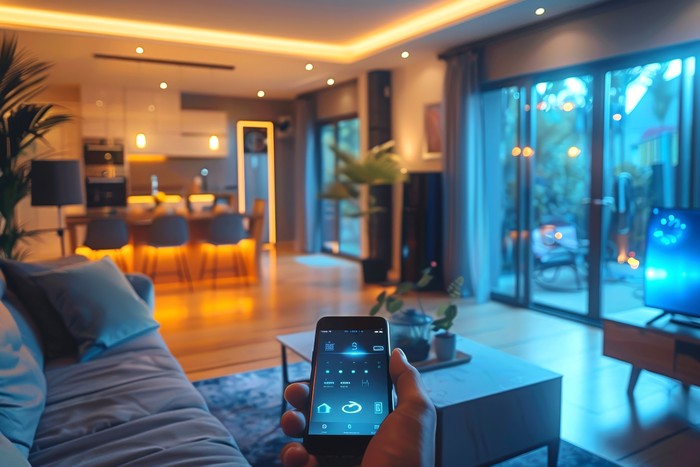
The most overlooked layer is the software. Home energy management systems monitor every circuit and shift flexible loads to the times when solar is abundant. Hot water systems heat during the middle of the day, pool pumps run on surplus power and dishwashers can be scheduled to match sunshine rather than the clock.
Forecasting is the next step. Newer platforms now pull in local weather data to predict how much solar a home will produce tomorrow, then adjust battery behaviour in advance. If a storm front is coming, the system can hold more charge in reserve, so households keep the lights on without leaning on the grid, even during several gloomy days in a row.
Monitoring apps give homeowners a clear view of all this. Live dashboards show what is being generated, stored, and consumed, helping households spot wasteful appliances and understand how much grid power they are really avoiding. Visibility often leads to better habits, such as running the washing machine at lunchtime, which stretches the hardware’s benefits even further and reduces what is drawn from the grid.
Virtual Power Plants Connect the Dots for Less Grid-Dependent Homes
Less grid dependence does not mean disconnecting entirely. Many households now join virtual power plants, where thousands of home batteries are coordinated to support the network during peak demand. Owners are typically rewarded for the energy they contribute, and the grid gains flexible capacity without anyone building a new power station, which can also help ease pressure on power prices.
This model only works because batteries have become so capable and affordable. The International Energy Agency describes battery storage as the fastest-growing clean energy technology on the market in the power sector. Home systems benefit from the same trend driving large utility projects, putting once-expensive technology within reach of ordinary households.
Read Next
A few related pieces worth your time:
- FPV Drones: The Technology Behind Real-Time Flight and Imaging
- Digital Tools and Human Judgement in Ship Chartering
- Smart Technology and Sensor-Based Design Are Transforming the E-Trike Riding Experience
What It Means for Your Home
The path to a less grid-dependent home is not one big gadget. It is a stack of smart batteries, capable inverters, forecasting software and flexible loads working together. Households that understand how these layers fit are better placed to cut bills, ride out outages and choose a system that suits the way they actually live, rather than simply buying the biggest battery on the market.