
Industrial operations are transforming rapidly as the Internet of Things (IoT) and artificial intelligence dictate how companies plan and execute maintenance. Rather than reacting to failures, organizations can now predict problems before they occur using advanced analytics and real-time data. Keep reading to understand the shift toward predictive maintenance and how it helps organizations make cost-effective operational decisions.
Table of contents
AI and IoT in Modern Industrial Operations
Before the emergence of IoT and AI, industrial operations relied heavily on scheduled/reactive maintenance strategies. Regardless of the equipment’s actual condition, servicing or repairs were often performed after failure and at fixed intervals. For that reason, many companies experienced costly downtime, inefficient use of resources and unexpected breakdowns. Techniques such as vibration analysis explained for rotating machinery were often used despite being time-consuming, manual-operated and limited in scope. It was hard to optimize performance across sophisticated systems or to detect early warning signs of failure, since most maintenance teams relied on historical data and routine inspections.
Today, artificial intelligence and the Internet of Things have revolutionized the industrial landscape by enabling intelligent decision-making and real-time monitoring. The two technologies work hand in hand, where IoT sensors collect data non-stop from the machines, while AI models analyze performance patterns to detect failures before they occur. Therefore, companies are now leveraging predictive rather than reactive maintenance, improving operational efficiency and reliability and reducing downtime. To stay competitive, industries like transportation, manufacturing, oil, gas and energy are adopting these technologies at a rapid pace. AI and IoT enhance accuracy, simplify maintenance processes and facilitate faster, data-driven decisions through automation of data collection and analysis.
The Role of Data Collection and Sensors
Data collection systems and IoT sensors are the basis of predictive maintenance by providing continuous visibility into machine performance. These technologies allow companies to move beyond base maintenance and assumptions by offering real-time operational data.
Acquiring Real-Time Data Through IoT Sensors
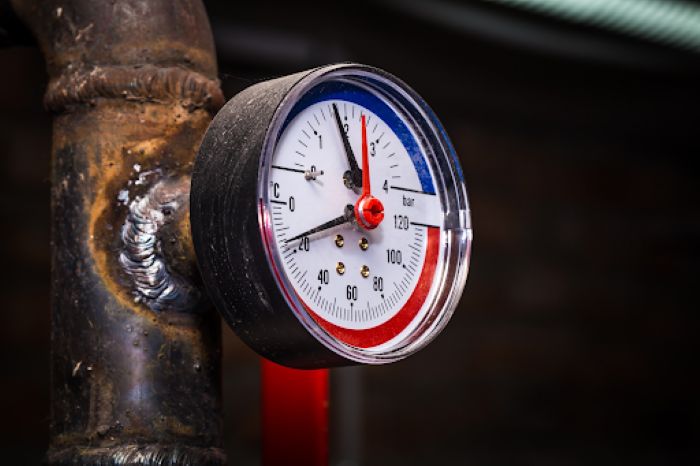
IoT sensors form the foundation of modern predictive maintenance systems. These sensors are added in machinery to capture critical parameters like rotational speed, vibration, temperature and pressure in real time. Traditional inspection methods rely on periodic checks, while IoT devices connect platforms by streaming data continuously. Because of that, operators get a flow of information on machine health that allows them to detect irregularities as they occur instead of after failure develops.
Data Quality
Predictive maintenance systems are as good as the quality of collected data. Incomplete, inaccurate or inconsistent data can lead to poor decision-making and false predictions. With the rise of advanced systems, cloud integration and edge computing have become vital to processing, filtering and validating data before analysis.
Systems that use clean and well-structured data allow artificial intelligence systems to generate actionable insights and identify meaningful patterns. Because of that, companies reduce unplanned downtime, make precise maintenance decisions and optimize overall operational efficiency.
Type of Data Collected
The types of sensors deployed depend on the operational requirements and equipment. For instance, pressure sensors monitor inefficiencies or fluid systems for leaks, temperature sensors identify overheating components, while vibration sensors detect misalignment or imbalances in rotating machinery. Each data point plays an essential role in understanding asset performance and when combined, they reveal patterns that indicate potential faults, wear and/or stress. Accurate data collection and high frequency ensure that even small deviations are detected and captured, forming the foundation of a reliable predictive analysis.
The Benefit of Cloud Platforms and Data Integration
Where different machines generate continuous information, data integration forms an essential part of the modern industrial environment. Cloud-based systems act as a centralized hub for collecting and storing data from different systems and sensors across operations. This is a unified strategy that eliminates data silos and allows advanced analytics, where artificial intelligence models process large datasets to detect anomalies, generate predictive insights and identify patterns. Cloud consolidation of data offers a complete, real-time view of assets, enhancing accuracy in operational decision-making and maintenance planning.
Remote asset and real-time monitoring improve efficiency by allowing teams to oversee equipment from any location. Through mobile interfaces and connected dashboards, operators can receive instant alerts, track machine performance and respond to issues without necessarily being on-site. This enables faster response times, reduces the need for constant manual inspections and allows better resource allocation.
In a Nutshell
IoT and AI are reshaping predictive maintenance by turning machine data into actionable insights. With connected systems, real-time monitoring and advanced analytics, organizations can reduce downtime, optimize performance and prevent failures. Predictive maintenance continues to be more efficient and precise as industries continue to adopt these technologies.