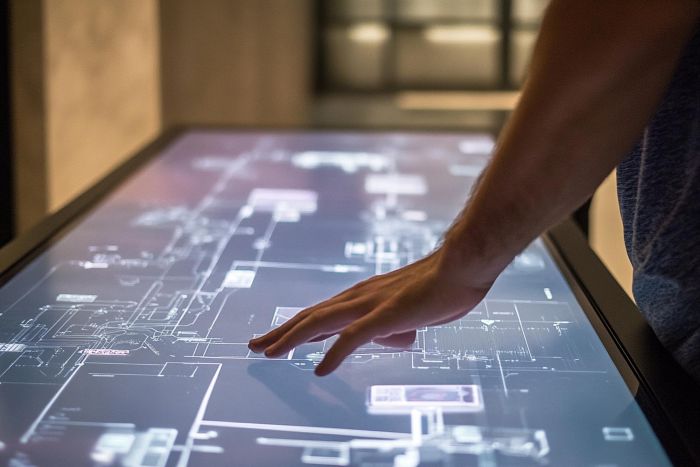
There’s a strange gap that anyone who has ever tried to renovate a home, design an office, or even just rearrange a stubborn living room knows intimately. You can picture the spatial design perfectly in your head. You know the couch should float a little off the wall, that the kitchen island wants to be longer, that the hallway is wasting six feet of perfectly good square footage. And yet, the moment you try to get that vision onto paper, everything falls apart. The pencil sketch looks like a child drew it. The measurements never add up. And the professional software, the kind architects swear by, feels like it was designed to punish you for not having a degree.
I’ve spent a good part of my career writing about design tools, and if there’s one complaint I hear more than any other, it’s this: the distance between having an idea and seeing it rendered properly is still absurdly large. We’ve automated almost everything else. We can summon a car with our thumbs and have groceries appear at the door, but laying out a simple two-bedroom apartment still requires either a steep software learning curve or a check to a professional. For decades, that was just the cost of doing business. Lately, though, that cost has started to crumble.
Key Takeaways
- There’s a significant gap between having a spatial design idea and rendering it accurately.
- New AI-driven tools are closing this gap by simplifying the design process and understanding spatial relationships.
- These tools enable non-experts to create usable layouts without the steep learning curve of traditional software.
- Despite their advantages, AI tools may produce flawed designs that still require human judgment for final decisions.
- The future of spatial design tools may include real-time features that blend design with physical considerations, making the process even more intuitive.
Table of contents
The Quiet Revolution in Spatial Design
What’s changed isn’t any single breakthrough so much as a convergence. Machine learning models have gotten good at understanding spatial relationships, the kind of contextual reasoning that lets a tool know a bathroom probably shouldn’t open directly into a kitchen, or that a bedroom needs a sensible path to a door. Pair that with interfaces simple enough for a first-timer, and suddenly the bottleneck isn’t the software anymore. It’s just your imagination.
I started paying closer attention to this shift after a friend, a small-business owner with zero design training, showed me a layout she’d put together for her new café. It was clean, proportional, and genuinely usable, the sort of thing I’d have assumed cost a few hundred dollars from a freelancer. She’d made it herself in an afternoon. When I asked how, she pointed me toward an AI-driven tool. I was skeptical, because I usually am. Most tools that promise to make design “effortless” really just hide the complexity until the moment you need it most, and then dump it all on you at once.
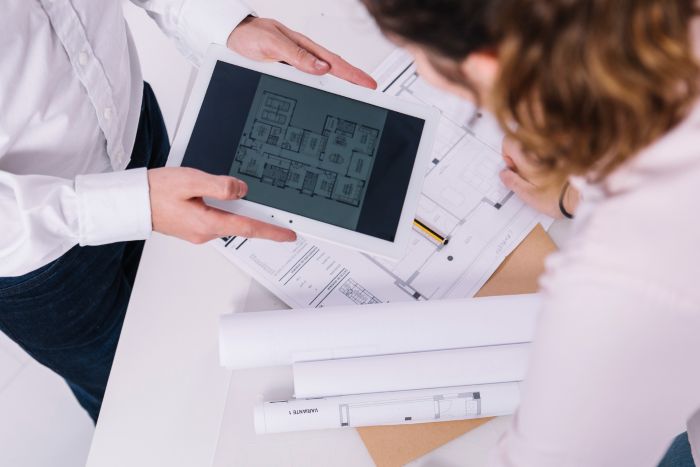
So I went looking, and one of the platforms I ended up spending real time with was floor plan AI, which approaches the problem from the angle I’d been hoping someone would: start with what the user actually wants to communicate, and let the machine handle the technical translation. You describe or sketch the space, and the heavy lifting, the alignment, the proportions, the tidy rendering, happens behind the scenes. It’s the difference between needing to speak a language fluently and simply having a good translator standing next to you.
Why Spatial Design Matters Beyond the Obvious
It would be easy to file all this under “convenience,” another small luxury for people who don’t want to learn a skill. But I think that undersells what’s happening. When you lower the barrier to creating something, you don’t just make life easier for the people who were already going to do it. You invite in everyone who was sitting on the sidelines.
Think about who doesn’t draw spatial design right now. The retiree reorganizing a home for accessibility. The teacher planning a classroom layout that actually works for thirty kids. The volunteer mapping out a community space. The renter who just wants to know, definitively, whether that sectional will fit before they pay for delivery. None of these people are going to invest forty hours learning CAD. But every one of them has a spatial problem worth solving, and most of them have simply been doing it badly, in their heads or on napkins, because the proper tools were never built for them.
That’s the part that genuinely excites me. We tend to measure technology by what it lets experts do faster. The more interesting metric is what it lets non-experts do at all.
The Catch, And It’s a Real One
I’d be doing you a disservice if I painted this as some frictionless utopia. It isn’t, and the honest truth is that AI design tools still have rough edges. They can be confidently wrong. They’ll occasionally produce a layout that’s technically valid but practically ridiculous, a door that swings into a toilet, a window where a load-bearing wall ought to be. The machine doesn’t know your local building codes, and it certainly doesn’t know that your mother-in-law is moving in next spring and needs the guest room on the ground floor.
What these tools are good at is the first ninety percent: getting a coherent, proportional draft in front of you fast, so you have something real to react to. The last ten percent, the judgment calls, the code compliance, the lived-in knowledge of how a space actually gets used, still belongs to humans. Anyone who tells you otherwise is selling something. The smart way to use any of these platforms is as a tireless first-draft machine, not a final authority. Let it do the tedious part, then bring your own brain to the parts that require one.
Where I Think Spatial Design Goes
If I had to bet, I’d say we’re only at the beginning of this. The current generation of tools is impressive precisely because it’s so unglamorous, it just quietly removes a chore that used to require expertise. The next generation will likely fold in things like real-time cost estimation, material suggestions, and tighter integration with the actual physical world through phone-based room scanning. The line between “sketching an idea” and “ordering the furniture to fill it” will keep getting blurrier.
But I want to resist the temptation to oversell the future, because the present is already quietly remarkable. The fact that a café owner with no training can lay out her own space in an afternoon, the fact that a renter can settle a furniture argument before the truck arrives, these are small things, and small things are where real change usually starts. Not with a dramatic headline, but with a thousand ordinary problems getting just a little easier to solve.
For most of human history, drawing spatial design accurately was a specialized craft. We’re watching it become something closer to a basic literacy, available to anyone with an idea and a few minutes to spare. And honestly, it’s about time the tools caught up with the way we’ve always thought about the spaces we live in.