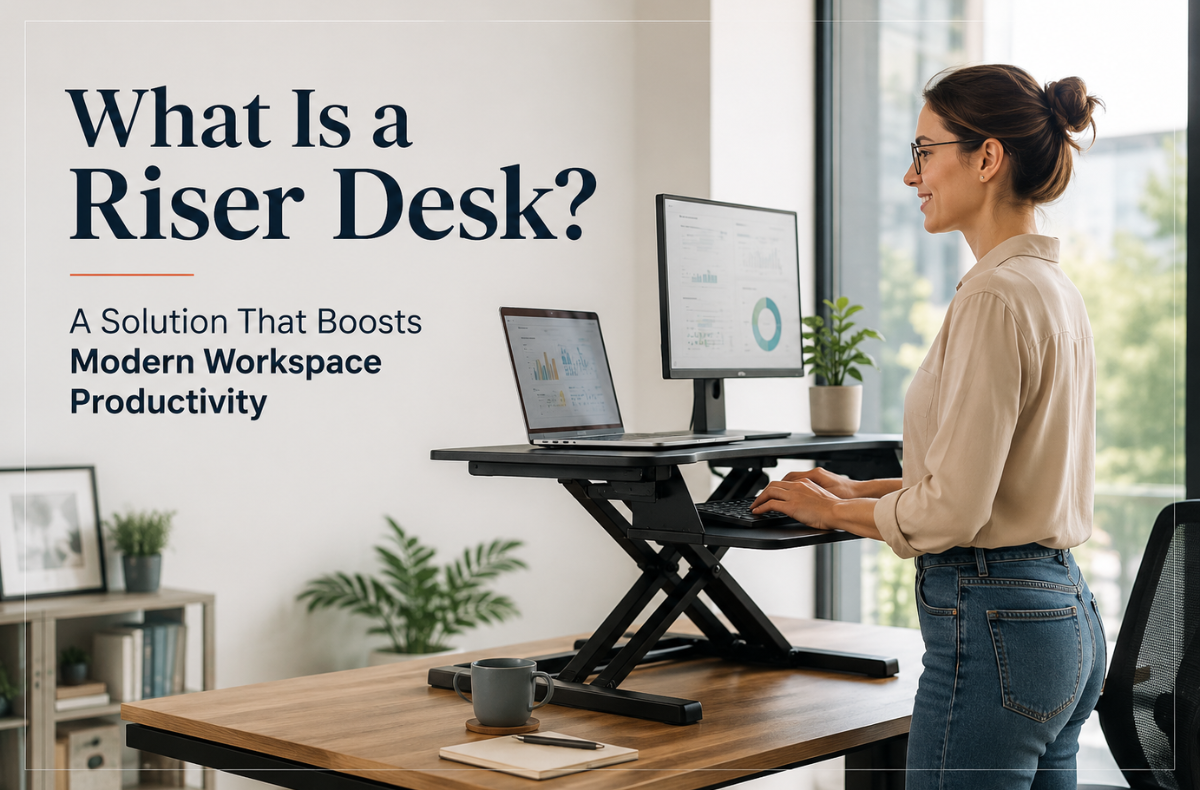
The modern workspace often traps professionals in a sedentary loop. Prolonged sitting is an occupational hazard linked to back pain, poor posture, and cardiovascular risks. As awareness of these health impacts grows, individuals search for modern workspace solutions to improve their daily routines. Many professionals also ask what is a riser desk and whether it can fix this problem.
For anyone wondering what a riser desk is, the answer lies in its ability to transform a static workspace environment. Integrating this tool is a simple way to implement healthy work habits. Rather than overhauling an entire office, workers can upgrade their existing surfaces.
This guide explores exactly what a riser desk is, how it operates, and if it is worth it. After going through this guide, professionals can make personalized findings about whether to include a riser desk in their workspace. Generally, desk risers offer a versatile, cost-effective, and ergonomic solution to enhance productivity and well-being across various work environments.
Key Takeaways
- A riser desk is an adjustable platform that sits on a regular desk, allowing users to easily switch between sitting and standing positions.
- It helps improve posture, reduce back pain, and enhance workplace ergonomics, making it suitable for various environments including corporate offices and home setups.
- Different types include gas spring, manual, crank, and electric risers, each with unique adjustment mechanisms.
Table of Contents
What is a Riser Desk?
A riser desk, also called a desk riser, standing desk converter, or adjustable desk converter, is a platform that sits on top of your current desk, raising your screen and keyboard to standing height. Think of it as a desk on top of a desk.
You push it up when you want to stand. You lower it when you want to sit. Your original desk stays exactly where it is.
Key Distinctions from Traditional Standing Desks
When evaluating a riser desk versus a full standing desk, the primary difference is scope. A full standing desk replaces the entire piece of furniture. A desktop standing riser simply augments the current desk surface.
Primary Components of a Quality Riser Desk
To fully grasp what a riser desk is, one must look at its parts. Most models feature:
- An upper platform (the desk monitor stand riser).
- A lower tray (the keyboard riser).
- A lifting mechanism (pneumatic, manual, or electric).
- A weighted base for stability.
The Core Purpose: Flexibility and Health
The main goal of an adjustable desk riser is flexibility. Workers can raise the laptop desk riser to stand and lower it to sit. This movement directly supports workplace ergonomics.
What Are the Types of Riser Desks?
Those researching desk risers will quickly find multiple variations. Finding the right fit requires understanding the available mechanics and configurations.
Adjustment Mechanisms
1. Gas Spring (Pneumatic) Risers
A gas-spring computer riser for a desk uses a nitrogen-filled cylinder. Users squeeze a lever, and the platform lifts smoothly in seconds. This mechanism requires no power cables.
2. Manual Spring or Lever Risers
Manual units utilize a mechanical lever or locking pin. They represent a cost-effective sit-stand desk solution, though they require more physical effort to operate.
3. Crank Risers
Crank models require turning a handle to adjust the height. They offer precise adjustments but lack the speed of a pneumatic desk riser.
4. Electric Risers
An electric desk riser uses a small motor for push-button adjustments. These models are ideal for individuals who use heavy equipment or change positions frequently.
Design Configurations
1. Single-Tier Risers
A single-tier laptop riser for a desk provides a single flat surface. It works best for minimal setups.
2. Dual-Tier Risers
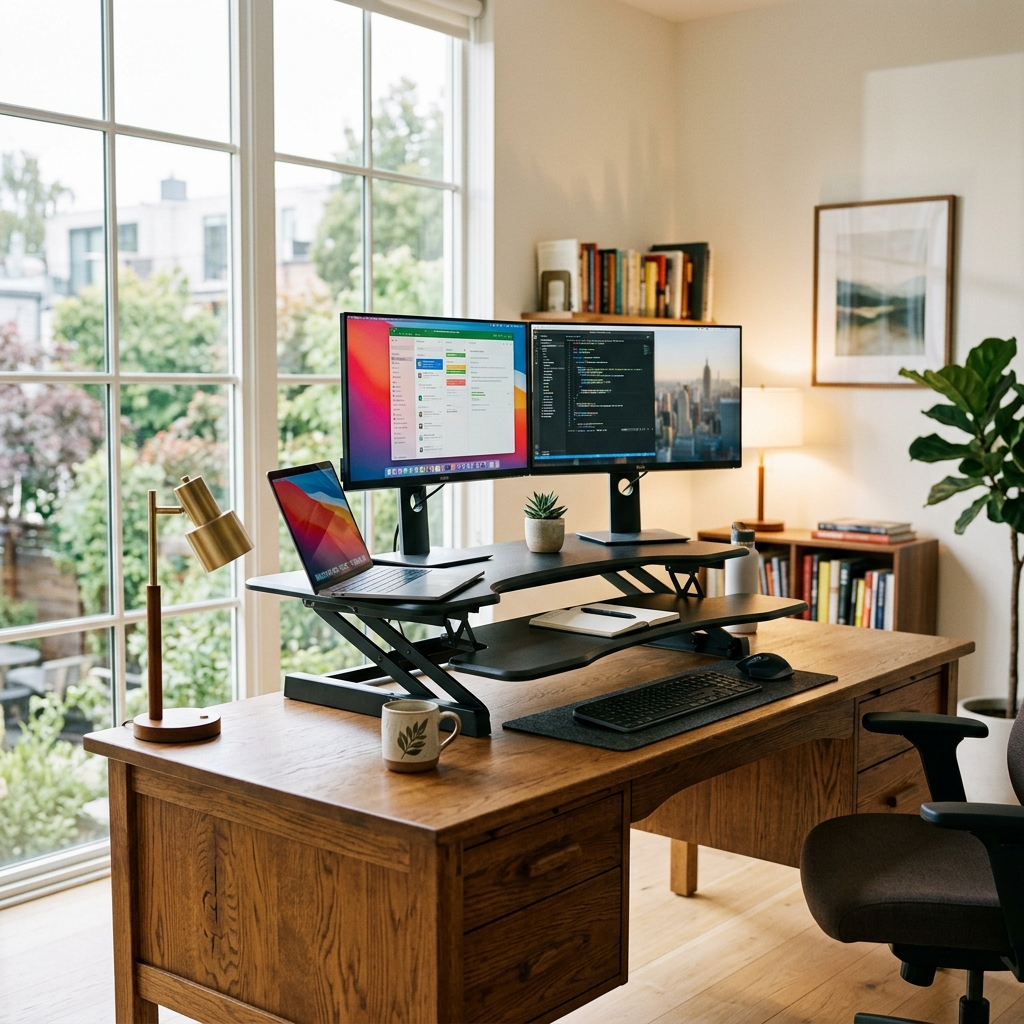
The dual-tier design is the standard ergonomic workstation setup. The top holds the screen, while the bottom holds the keyboard.
3. Full-Width Risers
A full-width model spans the entire desk surface, easily accommodating a dual-monitor setup.
4. Motorized/Electric Risers
Electric models often feature memory presets. Users can program their exact sitting and standing heights.
Here is a quick comparison of desk riser mechanisms.
| Mechanism Type | Speed of Adjustment | Effort Required | Power Needed | Price Range |
|---|---|---|---|---|
| Gas Spring | Fast (2-3 seconds) | Low | No | Medium |
| Manual | Medium | Medium-High | No | Low |
| Electric | Fast | Zero | Yes | High |
What Are the Undeniable Benefits of Integrating a Riser Desk?
Why exactly do professionals ask what a riser desk is? Because the desk riser benefits directly impact daily health and output.
Health and Well-being Enhancements
Reduced Pain and Improved Posture
Sitting puts up to 90% more pressure on the intervertebral discs than standing. A properly positioned computer monitor riser for desk keeps screens at eye level. This prevents “Tech Neck” and cervical spine strain.
Calorie Expenditure and Metabolic Health
Standing burns approximately 50-100 more calories per hour than sitting. Additionally, research shows standing for 30 minutes after lunch can reduce blood sugar spikes by up to 43%.
Addressing Sedentary Behavior
Alternating positions addresses occupational overuse syndrome. Using a standing desk converter breaks the cycle of continuous sitting.
Boosted Productivity and Focus
Enhanced Alertness and Cognitive Function
Standing increases blood flow and oxygen to the brain. This physical change mitigates the afternoon slump and improves focus.
The 20:8:2 Rule for Optimal Engagement
Ergonomic experts recommend the 20:8:2 rule: sit for 20 minutes, stand for 8 minutes, and move for 2 minutes. A desk monitor riser makes this rotation seamless.
Workspace Optimization and Cost-Effectiveness
Space-Saving Solution
A dual-monitor riser for a desk elevates equipment, creating usable space underneath for notebooks or phones.
Cost-Effective Ergonomic Upgrade
Replacing an entire desk costs hundreds or thousands of dollars. An adjustable monitor riser for a desk provides similar ergonomic benefits at a fraction of the price.
Who Benefits Most from a Desk Riser?
Understanding what a riser desk is helps clarify its target audience. Various groups find immense value in this tool.
Corporate Office Environments
Businesses implementing office ergonomics tips use risers to upgrade cubicles quickly.
Home Office Setups
A desk riser for home office use is perfect for remote workers. It fits onto existing dining tables or fixed desks to create a hybrid work setup.
Creative Studios and Specialized Workspaces
Designers require a computer monitor desk riser that can support heavy monitors or drawing tablets.
Individuals Focused on Health Management
Anyone combating back pain relies on standing desk ergonomics to manage their physical well-being.
What Are the Practical Considerations and Expert Recommendations?
Before purchasing, professionals must evaluate technical specifications to ensure their chosen unit functions correctly.
Weight Capacity and Safety Margins
Most risers support 30-35 pounds. When building a dual-monitor setup, calculate the combined weight of both screens and accessories. Always leave a 20% safety margin to prevent instability.
Compatibility with Monitor Arms
Not all risers handle monitor arms well. Ensure the top platform is thick enough to support a clamp mount safely.
The Evolution of Standing Desk Solutions
When analyzing whether a riser is right for you, consider long-term needs. Choose a riser if budget and existing furniture preservation are priorities. Choose a full desk if maximum surface area is required.
Ergonomic Setup
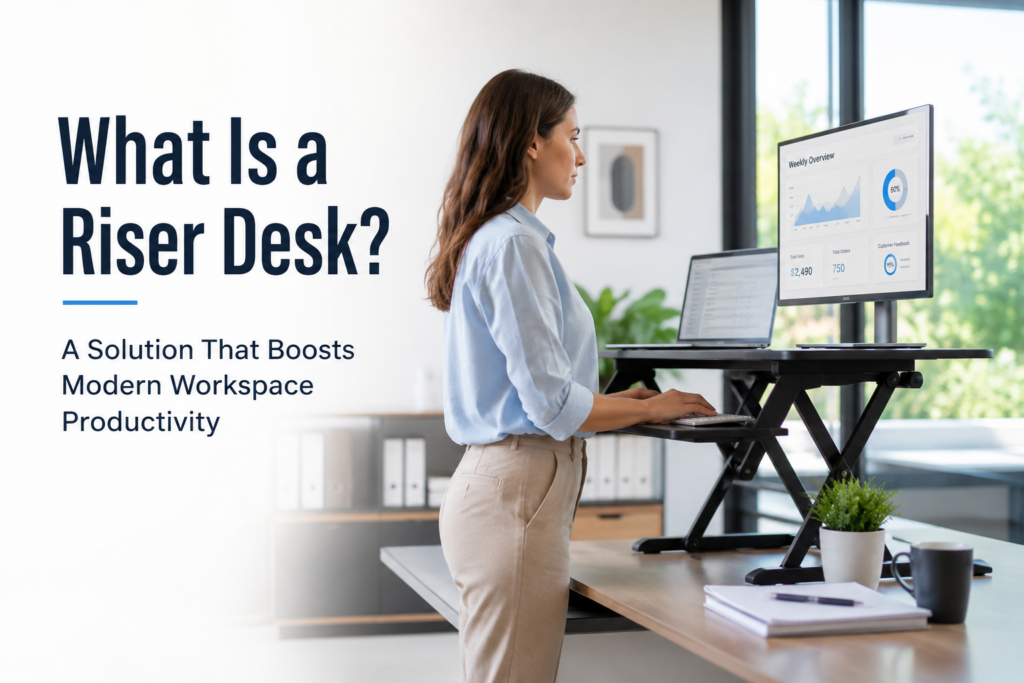
Monitor and keyboard positioning is vital. The top of the monitor must remain at eye level. The keyboard riser for desk should allow the elbows to rest at a 90-degree angle.
What Are the Future Trends in Workspace Ergonomics?
The definition of what a riser desk is continues to evolve as manufacturers introduce new features.
Smart Features
Expect to see productivity workspace ideas integrated directly into the hardware. Future electric models will feature USB-C charging ports, wireless charging pads, and app-connected memory presets.
Design Customization and Materials
Sustainability drives modern manufacturing. Bamboo and recycled steel are replacing virgin plastics.
Integration into Hybrid Work Models
As companies refine the hybrid work setup, lightweight, portable risers will allow professionals to carry their ergonomic setups between the office and home.
Elevate the Workday
A riser desk fundamentally changes how professionals interact with their environment. By elevating screens and keyboards, workers protect their posture, increase their energy, and streamline their focus. Evaluate specific weight capacities, choose the right adjustment mechanism, and instantly transform a static desk into a dynamic workstation.
FAQs
A riser desk is an adjustable unit placed on top of a fixed desk. It uses pneumatic, manual, or electric mechanisms to lift a computer, monitor, and keyboard to standing height, enabling a sit-stand workflow.
Yes. A dual monitor riser features a wider top platform designed to hold two standard monitors. Buyers must check the manufacturer’s weight limit to ensure it safely supports both screens.
An adjustable desk converter should be elevated until the top third of the monitor is at eye level. The lower keyboard tray should align with the user’s hands so elbows remain at a comfortable 90-degree angle.
Choose an electric desk riser if you frequently adjust heavy equipment or if physical limitations make lifting difficult. Gas spring manual risers are highly effective for most users and do not require power cords.
No. High-quality desktop standing riser models feature rubberized feet or felt pads. These protect the existing desk surface from scratches and prevent the unit from slipping during height adjustments.