
Distribution has always depended on speed, accuracy, and coordination. However, as supply chains become more complex and customers expect faster service, traditional processes can make it difficult for distributors to keep pace. Automation is increasingly providing a practical solution.
Rather than simply replacing manual tasks, automation can connect different parts of a distribution business, improve access to information, and help employees make better decisions. From warehouse operations to sales and customer service, the technology is likely to play an increasingly important role in how distributors compete and grow.
Key Takeaways
- Automation enhances distribution by connecting processes, improving decision-making, and reducing repetitive tasks.
- It can streamline warehouse operations, enhance inventory tracking, and minimize manual checks.
- Sales teams benefit from automation, as it organizes customer data and manages follow-ups more efficiently.
- Faster access to data helps businesses respond to challenges and meet rising customer expectations quickly.
- Incorporating automation will prepare distributors for future demands while allowing them to focus on complex tasks.
Table of contents
- Reducing Time Spent on Repetitive Distribution Tasks
- Creating Smarter Warehouse Operations
- Improving Sales and Customer Management
- Supporting Faster and More Accurate Decisions
- Meeting Higher Customer Expectations
- Building More Resilient Distribution Businesses
- Preparing for the Automated Future of Distribution
Reducing Time Spent on Repetitive Distribution Tasks
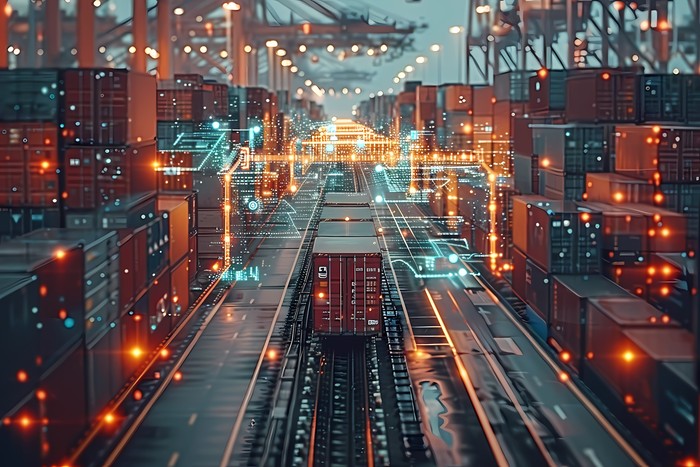
Many distribution businesses still rely on employees to complete repetitive administrative work. Entering orders, updating customer records, preparing reports, and checking stock levels can consume valuable time.
Automation can handle many of these routine processes with minimal manual involvement. An order, for example, may automatically trigger inventory updates, documentation, and notifications for relevant teams.
Removing unnecessary data entry allows employees to spend more time on activities that require judgment, expertise, and personal communication. It can also reduce errors caused by information being entered incorrectly or transferred manually between systems.
Creating Smarter Warehouse Operations
Warehouses are one of the areas where automation can have the greatest impact. Modern warehouse technology can assist with picking, packing, sorting, inventory tracking, and replenishment.
Automated inventory systems can monitor stock movements as they happen. When quantities fall below predetermined levels, the system can alert employees or initiate a replenishment process. This provides distributors with a clearer picture of available stock while reducing the need for repeated manual checks.
As technologies such as robotics and intelligent warehouse management systems become more accessible, automation could also help distributors increase throughput without placing the same level of pressure on employees.
Improving Sales and Customer Management
Automation is not limited to physical distribution operations. It can also transform how sales teams manage customers and opportunities.
Sales representatives frequently handle large numbers of accounts, making it difficult to remember every follow-up, quotation, or customer interaction. Using CRM software for distributors can help businesses centralize customer information while automating activities such as reminders, lead management, and sales reporting.
This gives representatives more time to concentrate on conversations and relationships rather than administrative work. It can also help managers understand where opportunities exist and which accounts may require additional attention.
Supporting Faster and More Accurate Decisions
Distribution businesses generate significant amounts of information through orders, inventory, pricing, sales, and customer interactions. The challenge is turning this information into something useful.
Automation can collect and organize data much faster than traditional manual reporting. Instead of waiting for someone to compile spreadsheets at the end of the week or month, managers can access up-to-date dashboards and reports.
This improved visibility can support decisions about purchasing, inventory levels, staffing, and sales priorities. As artificial intelligence develops further, automated systems may become increasingly capable of identifying patterns and highlighting potential problems before they have a significant impact.
Meeting Higher Customer Expectations
Customers increasingly expect accurate information and quick responses. They may want to know whether a product is available, when an order will arrive, or whether there has been a change to their delivery.
Automation can make this information easier to provide. Order confirmations, shipping notifications and delivery updates can be sent automatically, while connected systems can give customer service teams access to current order and inventory information.
The objective is not to eliminate human customer service. Instead, automation can handle straightforward communications and information retrieval, leaving employees more time to deal with unusual requests and complex problems.
Building More Resilient Distribution Businesses
Unexpected demand, supplier delays, and transportation problems can create major challenges for distributors. Businesses that rely heavily on disconnected spreadsheets and manual processes may struggle to respond quickly when conditions change.
Automated systems can improve visibility across operations and make it easier to identify disruptions. For example, inventory monitoring may highlight unusual changes in demand, while automated reporting can reveal delayed orders or declining stock levels.
Having access to this information sooner gives decision-makers more time to respond and adjust their plans.
Read Next
A few related pieces worth your time:
- Better Documentation Can Reduce Repetitive Work and Team Confusion
- Why a Hybrid Model is the Future of Language Learning
- How Waymo Cars See the Road, and Why They Still Crash
Preparing for the Automated Future of Distribution
The future of distribution is unlikely to involve completely autonomous businesses with no human involvement. Instead, successful distributors will find the right balance between technology and human expertise.
Automation is particularly valuable when applied to repetitive, predictable, and data-heavy processes. Employees can then focus on areas where relationships, problem-solving, negotiation, and experience matter most.
Distributors also do not need to automate everything at once. Starting with processes that create the most delays or administrative work can deliver measurable improvements before automation is expanded elsewhere.
As customer expectations rise and distribution networks become more sophisticated, the ability to operate efficiently will become increasingly important. Businesses that use automation thoughtfully can create faster workflows, improve visibility, and give their teams better tools to serve customers. In that sense, automation is not simply about doing more with technology. It is about building distribution operations that are better equipped for what comes next.