In an era of rising energy costs, increasing global temperatures, and stricter sustainability requirements, industrial organizations are rethinking how they manage their production environments. Climate control in warehouses, factories, and manufacturing plants is no longer just a mechanical challenge; it has become a data-driven technology opportunity.
Modern industrial facilities are increasingly adopting software-powered climate management systems that combine artificial intelligence (AI), Internet of Things (IoT) sensors, cloud computing, and automation to optimize temperature, humidity, and air quality. These intelligent solutions allow businesses to reduce energy consumption, improve operational efficiency, protect equipment, and create safer working environments.
As industries move toward Industry 4.0, smart climate control has become an important part of digital transformation strategies, helping companies balance productivity with sustainability.
Table of contents
- The Growing Challenge of Managing Industrial Heat
- The Shift From Traditional Cooling to Smart Climate Management
- AI and IoT: The Foundation of Next-Generation Climate Control
- Sustainable Cooling Through Intelligent Software Solutions
- The Business Advantages of Smart Industrial Climate Control
- The Future of Industrial Climate Control in Industry 4.0
- Read More
The Growing Challenge of Managing Industrial Heat
As factories expand their production line scales and introduce advanced mechanical equipment, while also facing constantly changing environmental conditions, the complexity of industrial thermal management continues to rise.
Overheating not only causes discomfort to employees but also directly undermines production and operational performance.
In manufacturing scenarios such as metalworking, electronics manufacturing, food processing, and logistics centers, temperature fluctuations can harm employee productivity, product quality, and equipment reliability.
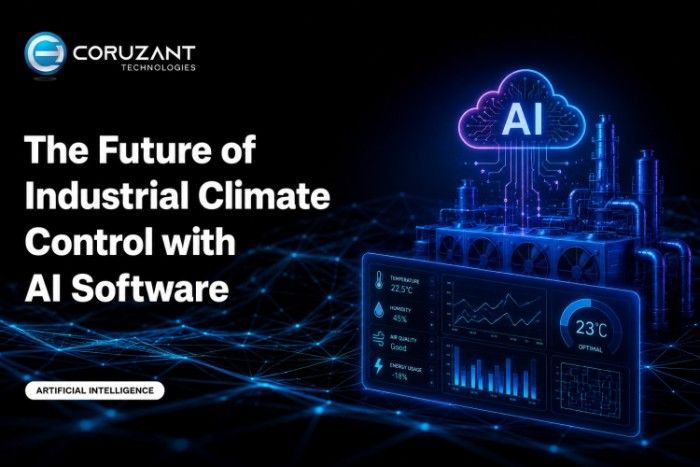
Heat stress increases workplace risks, while unregulated humidity may damage sensitive materials and trigger production instability. Most traditional solutions rely on manual monitoring and fixed cooling schedules, which easily lead to energy waste and delayed responses. In contrast, smart climate control platforms use networked sensors and real-time analysis to continuously visualize and track the environmental conditions across a factory site. Internet of Things (IoT) sensors can collect six categories of data: temperature and humidity, air flow, air quality, equipment performance, and energy consumption. After processing by smart software, this data helps managers identify problems, predict upcoming needs, and automatically adjust the climate system according to actual on-site conditions.
The Shift From Traditional Cooling to Smart Climate Management
For decades, industrial facilities have relied on traditional mechanical refrigeration systems that operate based on pre-set parameters.
While these systems are still widely used today, they have core drawbacks: high power consumption and insufficient flexibility. The future of industrial refrigeration is moving toward smart energy management.
Through software platforms, enterprises can remotely monitor and adjust temperature control systems, and use automation and analytical technologies to optimize operational efficiency.
Building Management Systems (BMS) and Energy Management Software (EMS) can integrate multiple on-site operation and maintenance functions into a single digital platform. These systems analyze sensor data, production schedules, weather forecasts, and energy consumption patterns to develop the most efficient refrigeration strategies. For example, an AI-powered temperature control system can automatically increase ventilation during peak heat production periods, reduce cooling output in unused areas, and adjust energy consumption according to real-time demand. This cuts ineffective operation and helps enterprises lower operational costs. If the temperature control system is connected to broader industrial systems such as Manufacturing Execution Systems (MES), enterprise software, and industrial Internet of Things platforms, enterprises can fully grasp the overall operational performance of their entire plant.
AI and IoT: The Foundation of Next-Generation Climate Control
Artificial intelligence is transforming industrial climate control from a reactive process into a predictive technology. Instead of waiting for temperature issues or equipment failures to occur, AI algorithms can analyze historical and real-time data to forecast future conditions.
Machine learning models can identify patterns in energy usage, production activity, weather changes, and equipment behavior. Based on these insights, automated systems can optimize cooling performance before problems affect operations.
Key technologies driving this transformation include:
IoT-Based Environmental Monitoring:
Connected sensors continuously collect environmental data throughout industrial facilities. These sensors provide real-time insights into temperature changes, humidity levels, and air quality, enabling faster decision-making.
Predictive Analytics:
Advanced analytics platforms use historical data to predict cooling requirements, identify energy waste, and detect potential equipment issues before failures occur.
Digital Twin Technology:
Digital twins create virtual models of industrial facilities, allowing companies to simulate climate conditions, test efficiency improvements, and optimize operations without disrupting production.
Edge Computing:
Edge-based processing enables faster responses by analyzing sensor data closer to where it is generated, reducing delays and improving automation performance.
Together, these technologies create smarter industrial environments that continuously adapt to changing conditions.
Sustainable Cooling Through Intelligent Software Solutions
Sustainability has become a major priority for industrial organizations, and technology plays a critical role in achieving environmental goals. Advanced climate control software helps companies reduce their carbon footprint by improving energy efficiency and minimizing resource waste.
One sustainable approach gaining attention is two-stage adiabatic cooling, a form of evaporative cooling that uses water evaporation to reduce temperatures while requiring less energy compared with traditional refrigeration-based systems.
When combined with smart software, adiabatic cooling systems become even more efficient. Automated controllers can regulate water usage, fan speeds, airflow, and humidity levels based on real-time environmental data.
The integration of sustainable cooling technologies with digital platforms provides several advantages:
- Lower energy consumption: AI-driven optimization reduces unnecessary cooling and improves system efficiency.
- Reduced environmental impact: Software-controlled systems support the use of energy-efficient cooling methods with fewer harmful refrigerants.
- Improved indoor air quality: Smart ventilation systems introduce fresh, filtered air while monitoring environmental conditions.
- Better resource management: Automated controls help optimize water and energy usage.
- Data-driven sustainability reporting: Digital platforms provide measurable insights for ESG initiatives.
The Business Advantages of Smart Industrial Climate Control
Investing in intelligent climate management is becoming a strategic business decision rather than simply an operational upgrade. Companies that adopt software-driven solutions gain greater control over facility performance while reducing long-term costs.
Real-time monitoring allows facility managers to quickly identify inefficiencies and make informed decisions. Predictive maintenance capabilities also reduce unexpected equipment failures by detecting performance issues before they become major problems.
Additionally, smart climate systems improve workforce conditions by maintaining stable temperatures and healthier indoor environments. This can contribute to higher employee comfort, improved productivity, and reduced workplace risks.
For organizations managing multiple locations, cloud-based climate platforms provide centralized control across facilities. Managers can compare energy performance, analyze operational trends, and implement improvements across an entire industrial network.
Forward-thinking companies are increasingly combining advanced cooling technologies with intelligent software platforms from technology providers such as Oxycom to create more efficient and sustainable industrial environments.
The Future of Industrial Climate Control in Industry 4.0
As factories become more connected, climate control systems will continue evolving into autonomous platforms capable of analyzing data, predicting demand, and automatically optimizing performance.
AI, IoT, cloud computing, and automation will enable businesses to create facilities that consume less energy, operate more efficiently, and respond faster to environmental challenges.
Industrial climate control is no longer just about cooling a building; it is about creating a connected, data-driven ecosystem that supports productivity, sustainability, and long-term business resilience. Organizations that embrace smart climate technologies will be better prepared for the demands of modern manufacturing and the future of Industry 4.0.
Read More
- How Virtual Assistants Optimize Digital Workflows
- Will AI Shopping Assistants Change the Future of E-Commerce?
- How AI and SFA Are Transforming FMCG Field Sales?