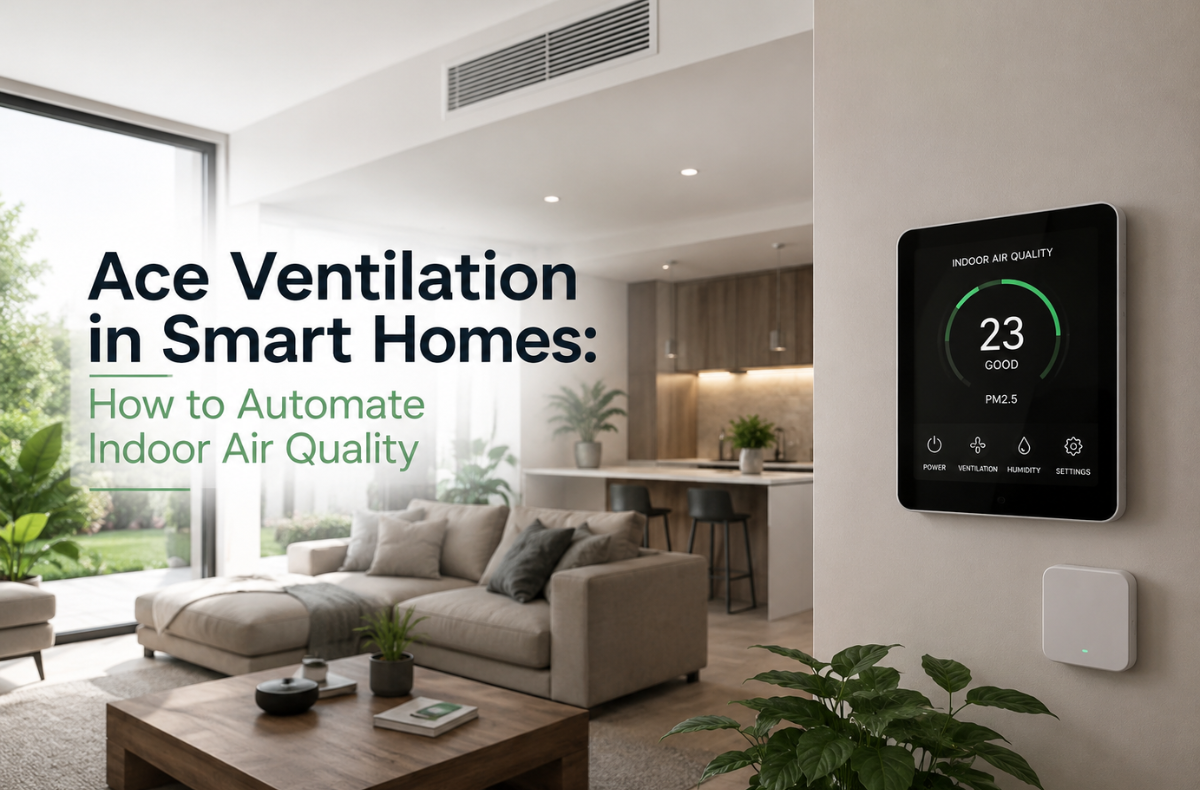
You breathe roughly 11,000 liters of air each day, and over 90% of that happens indoors. Yet most homes still rely on opening a window and hoping for the best. That gap between how much your indoor air matters and how little control you have over it is exactly what Ace Ventilation closes.
This guide breaks down how Ace Ventilation works, the sensors and systems behind it, and the practical steps to automate your indoor air quality. You’ll see real performance data, learn which technologies are right for your home, and walk away knowing how to build a healthier, more energy-efficient space.
Modern airtight construction made homes more efficient and trapped pollutants inside. Ace Ventilation answers that problem by managing airflow intelligently, so fresh air arrives when you need it and energy waste stays low. Here’s how it all fits together.
Key Takeaways
- Ace Ventilation improves indoor air quality by automating airflow based on real-time conditions and sensor data.
- It uses advanced sensors to monitor CO₂, humidity, VOCs, and particulates, providing healthier air.
- Demand-controlled ventilation automatically adjusts the air supply, achieving energy savings of up to 60%.
- Ace Ventilation integrates with smart home systems for tailored comfort and efficiency.
Table of Contents
- Why Does Indoor Air Quality Matter More Than Ever?
- What Is Smart Ventilation?
- What Technologies Power Automated Indoor Air Quality?
- What Are Heat Recovery and Energy Recovery Systems?
- How Does Ventilation Fit Into the Smart Home Ecosystem?
- How Can Automation Rules Improve Your Air Quality?
- How Much Energy Does Smart Ventilation Save?
- How Is Artificial Intelligence Transforming Home Ventilation?
- How to Get Started With Automated Indoor Air Quality
- The Future of Smart Home with Smart Ace Ventilation
- FAQs
Why Does Indoor Air Quality Matter More Than Ever?
Energy-efficient homes are increasingly airtight. That airtightness limits natural airflow and lets pollutants build up fast.
Poor indoor air quality affects how you feel every day. Elevated CO₂ slows focus and disrupts sleep. Trapped moisture breeds mold and dust mites. Chemical fumes from furniture and cleaning products irritate lungs and trigger allergies.
Common symptoms of poor indoor air quality include:
- Headaches and fatigue
- Allergy flare-ups and respiratory irritation
- Restless or broken sleep
- Reduced concentration from high CO₂ levels
- Visible mold in damp corners
Ace Ventilation tackles these problems at the source. Indoor air quality monitoring runs continuously, so the system catches issues before you notice them.
What Is Smart Ventilation?
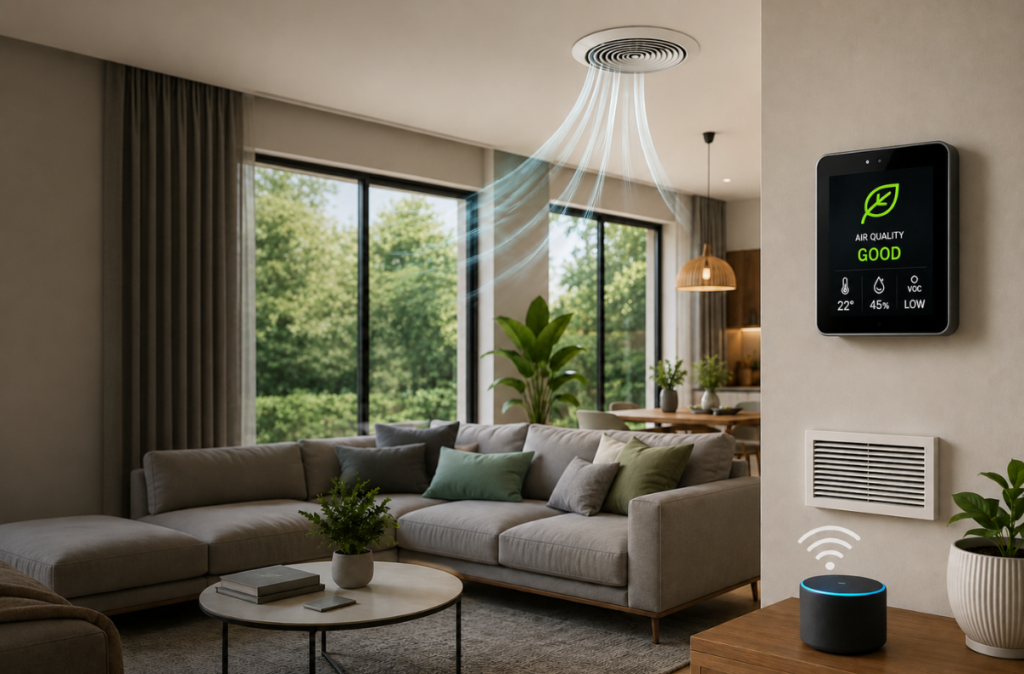
Smart ventilation replaces manual control with automated decision-making. Traditional systems run on fixed schedules or wait for you to flip a switch. Ace Ventilation reads your home’s actual conditions and responds in real time.
The system works in a continuous four-step cycle:
- Sensors measure indoor conditions like CO₂, humidity, and particulates.
- The system analyzes the collected data against your thresholds.
- Automation rules determine the right response.
- Equipment adjusts airflow automatically.
This adaptive nature is what sets Ace Ventilation apart. Instead of pushing the same volume of air all day, it scales output to match what’s actually happening in each room. You get fresh air when occupancy spikes and quiet efficiency when the house is empty.
What Technologies Power Automated Indoor Air Quality?
Ace Ventilation depends on a network of indoor air quality sensors. Each one watches a specific factor and feeds data into the system’s decision engine.
Indoor Air Quality Sensors
Smart air quality sensors form the foundation of any connected ventilation system. Here’s what each type does:
- Carbon dioxide sensors for homes: Measure CO₂ to detect when ventilation falls short, then trigger fresh-air intake to prevent fatigue and poor concentration.
- Humidity sensors: Monitor moisture levels and activate exhaust systems to prevent mold and condensation before they start.
- VOC sensors: Detect volatile organic compounds from cleaning products, paint, and furniture, prompting air-clearing ventilation.
- Particulate matter sensors (PM2.5, PM10): Spot dust, smoke, pollen, and pet dander, helping the system respond to shifting air quality.
A note on sensor accuracy
Indoor air quality monitoring is only as reliable as the sensors behind it. Research from the 2025 Intelligent Ventilation and Indoor Air Quality review found that CO₂ sensors drift ±50 to 100 ppm over 12 to 24 months, and metal-oxide VOC sensors lose 15% to 30% of their response as humidity rises from 30% to 70%.
Quality systems counter this with multi-sensor fusion, which cuts VOC measurement error to ±12%, and context-aware logic that suppresses false alarms during cleaning. Choose a system with these safeguards if long-term accuracy matters to you.
How Does Demand-Controlled Ventilation Work?
Demand-controlled ventilation (DCV) is the intelligent core of Ace Ventilation. Rather than running nonstop, DCV adjusts airflow based on real-time events:
- Cooking raises humidity and particulates, so exhaust ramps up.
- High occupancy lifts CO₂, so fresh-air intake increases.
- Cleaning releases VOCs, triggering an air-clearing cycle.
- An empty house lets the system idle and save energy.
The payoff is measurable. The 2025 intelligent ventilation review reports DCV delivers energy savings of 15% to 60% (mean 35%) and a 12% reduction in CO₂ compared to schedule-based systems. You get cleaner air and lower bills without lifting a finger.
| Control Strategy | Energy Savings (mean) | CO₂ / PM2.5 Reduction |
|---|---|---|
| Demand-Controlled Ventilation (DCV) | 35% | 12% CO₂ |
| Model Predictive Control (MPC) | 40% | 14% CO₂ |
| Deep Reinforcement Learning (DRL) | 32% | 23% PM2.5 |
What Are Heat Recovery and Energy Recovery Systems?
Mechanical ventilation systems often lose conditioned air every time they exhaust stale air. Heat and energy-recovery systems fix that leak.
- Heat Recovery Ventilation (HRV): Transfers heat from outgoing stale air to incoming fresh air during colder months, cutting heating demand.
- Energy Recovery Ventilation (ERV): Transfers both heat and moisture between air streams, maintaining comfortable humidity levels while reducing energy use.
These energy-efficient ventilation systems carry a rated sensible effectiveness of 75% to 85%. Field performance varies by ±8 to 14 percentage points due to factors such as frost and airflow imbalances, so proper installation matters. In severe cold climates, dual-core ERV designs hold effectiveness above 72% with a payback period of 4 to 6 years.
How Does Ventilation Fit Into the Smart Home Ecosystem?
Ace Ventilation doesn’t operate in isolation. It connects with the rest of your connected ventilation system and smart home devices to coordinate responses.
Integration points include:
- Smart thermostats and ventilation work together to balance temperature and fresh air.
- Mobile apps for monitoring and manual override from anywhere.
- Voice assistants like Alexa and Google Home are for hands-free control.
- Home hubs that tie sensors, purifiers, and fans into one routine.
Panasonic’s OASYS™ system shows this in action: its sensors talk to mini-splits, ERVs, dehumidifiers, and purification modules, switching to recirculation during outdoor smoke events. That’s smart home air management working as one coordinated unit.
How Can Automation Rules Improve Your Air Quality?
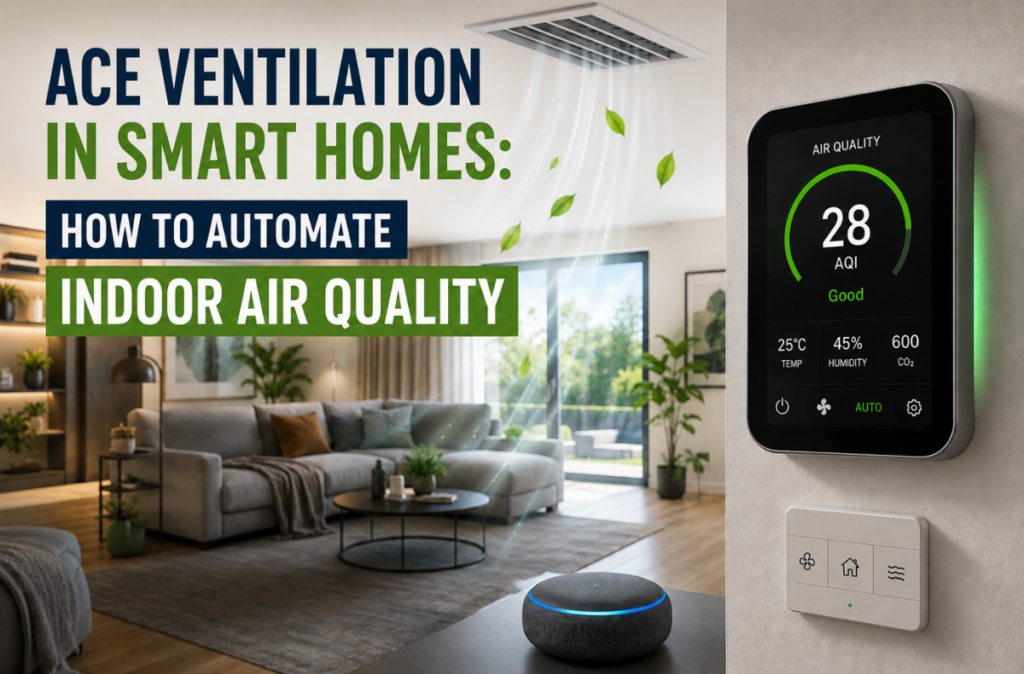
Automation rules turn Ace Ventilation from reactive to proactive. You set the thresholds; the system handles the rest. Common routines include:
- Morning fresh-air cycle: Brings in fresh air before you wake.
- Cooking ventilation mode: Activates the kitchen exhaust when humidity and particles rise.
- Sleep optimization: Adjusts overnight settings to balance temperature and CO₂.
- Allergy management: Boosts filtration and ventilation when pollen and particulate levels spike.
One caution worth knowing: research shows fully automated systems without user feedback saw energy savings drop from 32% to 18% over a year as occupants grew frustrated. Systems with real-time dashboards and manual override kept satisfaction high (4.3/5.0) and savings stable at 28%. Choose intelligent ventilation controls that keep you informed and in command.
How Much Energy Does Smart Ventilation Save?
Energy efficiency is where Ace Ventilation earns its keep. Well-designed intelligent ventilation systems achieve up to 60% in building energy savings without sacrificing air quality, according to the 2025 state-of-the-art review.
Those savings come from a few sources:
- Right-sized airflow that never over-ventilates.
- Heat and energy recovery that reclaims conditioned air.
- Real-time air quality monitoring that runs equipment only when needed.
This makes Ace Ventilation a cornerstone of sustainable, healthy home technologies, lower utility bills, and a smaller carbon footprint in one system.
Connected ventilation systems collect data and link to your home network, so security deserves attention. Treat your air quality automation like any other IoT home automation device.
Protect your system with these steps:
- Enable encryption on all device communications.
- Set strong, unique passwords and replace factory defaults.
- Install firmware updates promptly to patch vulnerabilities.
- Review data policies to understand what each vendor collects and stores.
A few minutes of setup keep your smart building technologies private and secure.
How Is Artificial Intelligence Transforming Home Ventilation?
AI pushes Ace Ventilation from reactive to predictive. Instead of waiting for CO₂ to climb, AI-driven systems forecast it and ventilate in advance.
The research backs this up. Model Predictive Control delivers 40% mean energy savings, and AI-based fault detection frameworks achieve 94% accuracy in detecting problems such as sensor drift and duct blockages before they degrade performance. One ensembled LSTM model reduced unmet CO₂ hours by 86% in simulations.
Looking ahead, AI will personalize management to your habits, predict maintenance needs, and automatically coordinate ventilation across every room. That’s the direction Ace Ventilation is heading.
How to Get Started With Automated Indoor Air Quality
Ready to automate your air? Follow these five steps:
- Assess your indoor air quality. Identify problem spots, humidity, stale air, or allergens.
- Install environmental sensors. Add CO₂, humidity, VOC, and particulate sensors where you spend the most time.
- Choose a smart ventilation system. Pick one that integrates with your existing smart home devices.
- Configure automation rules. Set thresholds that trigger automatic airflow adjustments.
- Monitor performance. Use mobile apps and dashboards to track trends and refine settings.
Start small with a single air quality monitor if a whole-house system feels like a leap. You can expand as you learn what your home needs.
The Future of Smart Home with Smart Ace Ventilation
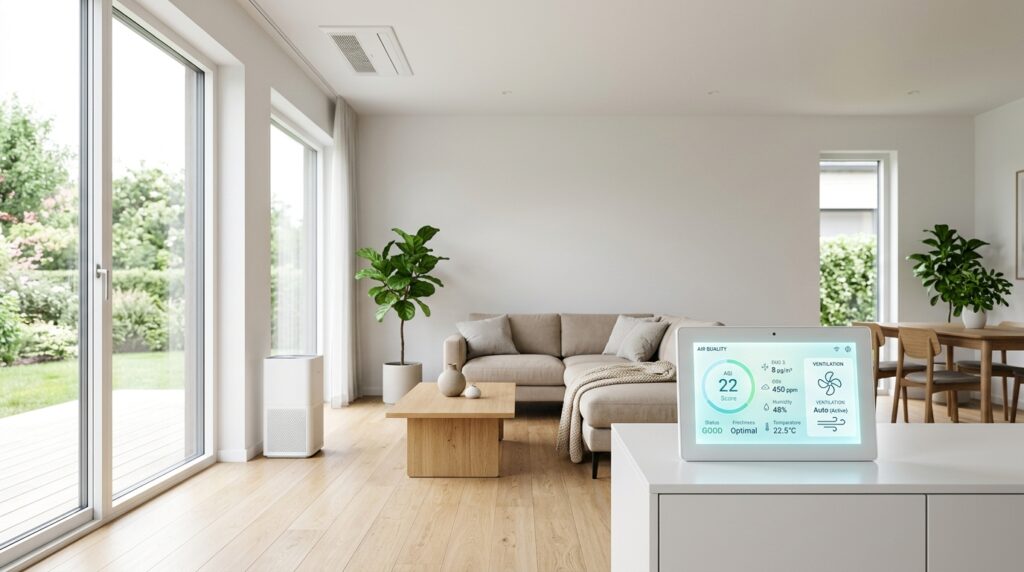
Ventilation is moving from fixed equipment to adaptive, learning systems. Several trends are shaping what comes next:
- Predictive AI that ventilates before pollutants build up.
- Advanced detection with multi-sensor fusion and finer pollutant tracking.
- Personalized controls that learn your routines and health needs.
- Whole-house ventilation systems that manage each room independently.
As these technologies mature, Ace Ventilation will become less of a gadget and more of a quiet, intelligent layer of your home.
Clean air shouldn’t require constant attention. Ace Ventilation handles indoor air quality monitoring, airflow, and energy efficiency, so you don’t have to think about it. You get healthier air, lower bills, and a home that adjusts to you.
Start with an air quality assessment, add the right sensors, and let automation do the rest. Your next breath is a good place to begin.
FAQs
Ace Ventilation is an automated approach to managing indoor air quality. It uses sensors to monitor CO₂, humidity, VOCs, and particulates, then adjusts airflow automatically through connected ventilation equipment, no manual control needed.
Well-designed intelligent ventilation systems cut building energy use by up to 60%. Demand-controlled ventilation alone averages 35% savings compared to schedule-based systems, according to 2025 research.
Start with four core sensors: carbon dioxide, humidity, VOC, and particulate matter (PM2.5/PM10). Together, they cover the main factors that affect your health and comfort.
It can be, with basic precautions. Enable encryption, set strong, unique passwords, install firmware updates promptly, and review each vendor’s data policy before connecting devices to your network.
Yes. Start with a standalone air quality monitor and a smart exhaust fan or purifier that integrates with your existing setup. Expand to a whole-house system later as your needs grow.