John LaPuma Podcast Transcript
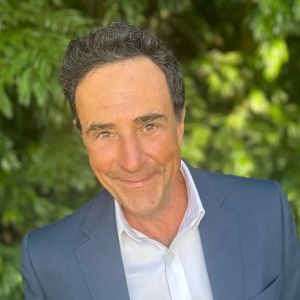
John La Puma joins host Brian Thomas on The Digital Executive Podcast.
Brian Thomas: Welcome to Coruzant Technologies, Home of The Digital Executive podcast.
Do you work in emerging tech? Working on something innovative? Maybe an entrepreneur? Apply to be a guest at www.coruzant.com/brand.
Welcome to The Digital Executive. Today’s guest is Dr. John La Puma. Dr. John La Puma is a physician, author, and systems thinker working at the intersection of human biology and modern performance.
A board-certified internist and two-time New York Times bestselling author, he is also a professionally trained chef and regenerative farmer. He pioneered culinary medicine, co-teaching the first course in a US medical school, an approach now integrated into the majority of medical schools nationwide and globally.
Dr. La Puma has hosted over 120 episodes of Lifetime TV’s Health Corner as Chef MD, and has been featured by Fast Company, Healthline, PBS, The Washington Post, and The Wall Street Journal. In his new book, Indoor Epidemic, which was released in March 2026, presents a practical model for reversing the physiological costs of modern indoor life and building scalable strategies for healthier, higher-performing individuals and organizations.
Well, good afternoon, John. Welcome to the show.
John La Puma: Brian, great to be here.
Brian Thomas: Awesome. Thank you, my friend. I appreciate it. I know you’re hailing out of Santa Barbara. I’m in Kansas City. I used to live in Orange County, so it’s just a little drive from you, but I love that area up there and, and I appreciate you making the time.
Two time zones, a bunch of calendars, and PR, et cetera. We’re here. So, thank you, jumping in. John, you’ve built a unique career as a physician, chef, author, and farmer. What experiences shaped your journey to pioneering culinary medicine and your broader approach to health?
John La Puma: Culinary medicine blends the art of cooking with the science of medicine to create restaurant-quality meals that help to prevent and treat disease.
I taught the first class in the country with my friend Mike Roizen, the founder of the Cleveland Clinic Wellness Center, over 20 years ago, and it’s now taught in over 80% of American medical schools. I think the same is gonna happen with nature as medicine, which, as you know, is the topic of my new book, Indoor Epidemic, which I…uses circadian biology to help people optimize and neuro-optimize for high-stakes decision-making.
Brian Thomas: That’s amazing. I appreciate that. Being food, I know I worked in healthcare on the tech side, so I got exposed to a lot of different things in that industry. But I like your message, food is health. It really should be. I know we, as a physician, John, you talked about far- you were taught a lot in pharmacology school and a, a bunch of other things, and I know you’re taking it a little bit different approach here, and I, I really, really appreciate that You were instrumental in bringing culinary medicine into mainstream and medical education. Why is food such a critical and often overlooked component of healthcare?
John La Puma: I think because people think of food as f- eating for all the reasons that we eat badly. We eat for convenience, we eat for loneliness or sadness, we eat because it’s time, we eat because it seems like fun, we eat because we need a companion.
The opposite actually is true about going outdoors for intentional reasons. We fear going outside. A quarter of people are afraid of spiders, and people who do go outside think, “Oh, I’m already outside, I don’t need it.” But, you know, your listeners built the digital economy, and they’re paying for it with their biology because they’re not optimizing this digital transmit- formation that they’ve created.
It has a blind spot. Your companies optimize AI and cloud and automation, but they ignore the biology of the people who are running it, and that’s the failure point, and both outdoors time and culinary medicine hit that.
Brian Thomas: Thank you. You touched on some, some foundational things, the basics, right? And humans need to get back to that.
Biology is such an important foundational piece of our entire livelihood, and I get it. And you’re, as a physician, I’m in the tech space. As an executive- it was go, go, go, and-
John La Puma: Yeah …
Brian Thomas: -we, we build the digital economy, like you said, but there, there are so many things that we forget to do, and being outside is so important.
And it’s hard to do in some areas of the country, but we get it done.
John La Puma: It is. Right. I lived in Chicago for 16 years. I spent 10 years in New York as well. I know what bad weather is. And yet what we’d miss is that having our morning light reset, having reinforcement of that during the day, and having evening time off screens and away from screens is not just kind of a wellness perk.
It’s an essential part of high-stakes decision-making. You can focus on how light and air and timing directly regulate cortisol and heart rate variability and executive function for sharp decision-making if you know how to do this. So, this is “Indoor Epidemic”, my new book, is actually a clinically grounded framework for improving resilience and energy for high-up routines, but without the need for apps or more supplements.
Those things are great, but they don’t get to the core issue, and the core issue is what’s really hurting workers who I- are not just burned out, they’re digitally saturated and have a recovery deficit.
Brian Thomas: Thank you for sharing. Appreciate that. John, in your latest book, Indoor Epi- Indoor Epidemic, you just mentioned that, you argue that modern indoor lifestyles are driving chronic disease.
What are the most surprising findings that led you to this conclusion?
John La Puma: It’s that indoor time where we are 93% of the time is actually a hidden driver of productivity loss, especially in tech-centric organizations. In many ways, presenteeism is costing more money than absenteeism because employees are so focused on some hitting their numbers, some just getting through the day to, to crank out the next task, that they don’t have any time for re-restoration.
And that’s not an employee-employer failing, it’s the non-recognition of how biology works. With indoors all the time, you have stale air that doesn’t circulate, CO2 builds. You have static light, you– which is 25 to 50 times less bright than outdoor light, which is what you need to set your circadian rhythm and to align every cell in your body that way.
You have a lot of cognitive over-consumption without biological recovery, so your decision quality goes down. And yet, if you even go to a window a minute, an hour to reset your vision, your eyes need distance like your lungs need air. That scrunch around your eyes goes down; your headache goes down. You can go back and function and do the Precor-prefrontal cortex work, the decision-making work that we actually need to do in front of screens but have a little bit of restoration during the day.
Brian Thomas: Thank you. I appreciate that. And you highlighted some things that I think are pretty simple. You know, like you said, go to the window get some several minutes of light that way because the light indoors is absolutely at least half of that. But resetting that circadian rhythm like you talked about, I think it’s really, really important.
We just– we get caught up in this crazy world called work is, is first, right? So I appreciate that. And John, as we look ahead to the future, how do you see medicine evolving to incorporate lifestyle, environment, and nature-based interventions? And what role will concepts like outdoor Rx play in the future of healthcore? Healthcare, I’m sorry.
John La Puma: Well, I think that as culinary medicine started over twenty years ago with us teaching the first class at SUNY Upstate in New York, and now it being taught in 80% of medical schools nationwide and actually worldwide, I think nature as medicine will evolve that way too with this chronobiological circadian underpinning.
We’ve actually tested this in a burnout test here for a health services organization, giving people alternatives about going outside versus taking care of plants versus funny texts about nature versus aromas and other natural sensory inputs and found that even five minutes outdoors made a difference during the day, but not for the reasons you would think, not because you’re away from work.
It’s instead because your brain is getting other information that you’re often missing if you’re just simply indoors. So I think medical curricula are already beginning to integrate this. I just spoke with a reporter for NPR who asked me about forest bath- forest bathing, which has a whole chapter in the book, which is not taking a bath in the forest.
It really should be called neural optimization in a high sensory environment instead of forest bathing. And she was going to a class at the Harvard Arboretum. So, there is a real interest and passion for knowing a little more about our environment. But what most people don’t get is that indoor life is breaking our workers and breaking us in a way that hurts us instead of adds to productivity.
And just specific targeted outdoor doses, really microdoses of recovery for your team, specific nature interventions can be a high yield, zero cost kind of intervention that improves presenteeism and reduces absenteeism in ways that I think we’re beginning to understand the biology of in medicine and that business is beginning to adopt already.
Brian Thomas: That’s amazing and thank you for sharing. You did mention several times; I just want to highlight, improving presenteeism and reducing absenteeism. I thought that was interesting kind of the theme a little bit throughout the podcast here. But I love what you talked about today.
Getting outdoors is gonna help fix the individual human, but also I, I really think will help society as well as a whole. There’s just a lot of toxic things coming at us at all angles. So, I appreciate that, and definitely gonna pick up your book, Indoor Epidemic. So, thank you. And John, it was such a pleasure having you on today, and I look forward to speaking with you real soon.
John La Puma: Thanks so much. The protocol is in the book. There are 250 ways to do this. Pick it up and check it out.
Brian Thomas: Bye for now.
John La Puma Podcast Transcript. Listen to the audio on the guest’s Podcast Page.