


Sean Hehir Podcast Transcript
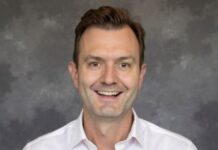
Sean Hehir joins host Brian Thomas on The Digital Executive Podcast.
[PASTE TRANSCRIPT HERE]Brian Thomas: Welcome to The Digital Executive. Today’s guest is Sean Hehir. Sean Hehir is the CEO of BrainChip, a leading provider of ultra-low power, high-performance artificial intelligence technology, and the world’s first commercial producer of the neuromorphic AI chips. He joined the company as CEO in November 2021 to lead the first commercialization of its Akida neuromorphic computing platforms, working from its North American headquarters in Laguna Hills, California.
His focus has been moving BrainChip from a developer of AI technology to a supplier for markets such as automotive, transportation, consumer, aerospace, medical, and industrial IoT. Sean has spent his career building organizations, strategic alliances, and go-to-market programs that drove revenue growth for large technology organizations, including HP, Compaq, and Fusion-io.
Known as a relationship builder, he has executed programs and partnerships with companies such as Microsoft, IBM, Intel, AMD, Oracle, Cisco, SAP, and Accenture. Well, good afternoon, Sean. Welcome to the show.
Sean Hehir: Hey, Brian. Glad to be here.
Brian Thomas: Absolutely, my friend. I appreciate it. You’re hailing in the great state of California there in Orange County, my old stomping grounds, Laguna Hills.
I’m in Kansas City, so I appreciate you making the time today, two-hour time difference. So let’s jump into it, Sean. You’ve spent more than two decades driving explosive revenue growth at major technology organizations like HP, Compaq, Fusion-io, building alliances, go-to-market programs, before joining BrainChip as the CEO back in November 2021.
What drew you to a neuromorphic computing company at that stage, and what convinced you that brain-inspired AI chips were worth betting the next chapter of your career on?
Sean Hehir: It’s a wonderful way to start because what drew me to the company, I– As somebody who’s been in tech, actually, when you say two decades, but yeah, I’m actually maybe, maybe three, maybe a little more than three.
So, my career, I’ve always been attracted to really deep tech, cutting-edge tech, because technology is always about advancing. If you think about changes over several decades, the changes are, are dramatic. And when I was approached about this opportunity, the first thing I did was really focus and center in on the technology and how– where was this market gonna go?
And we have a chance to talk a little bit about that in a moment, but where was the market gonna go? And more importantly, if there’s a market, which there clearly is, and it’s accelerating, is do we have amazing technology to do this? And so at the mo- at the time, you said earlier, I’m, I’m in Southern California now.
At the time, I was living in Silicon Valley and spent many, many years and had, still do have access to some of the brightest minds in tech. And I asked them all about the company. We looked at the technology and evaluated it, came back, and everybody was very impressed with, with the capabilities. Then I went to look and talk to the team, and when I met here with some of the most dedicated professionals I’ve ever met in my entire career, with passion to move this forward over, you know, not only in the next year but in several years.
We’re building a company here that’s gonna last, we believe, for, for many, many years. So strong tech, strong people. Looked at some of the customers we were engaged with. You put that all together, I couldn’t miss on the opportunity to join this company. So, why did I think– The second part of your question, why do I think it was worth kinda going on my next chapter here?
One is just simply that, is technology is always changing. And when you think about computing, the ability to disrupt computing in a traditional way is so exciting to me, which is computing, whether you’re using your PC, your, your your phone, everything else, is traditional kinda matrix multiplication or the von Neumann architecture.
Neuromorphic, without getting technical, is just doing things differently, which is kinda neuromorphic means we, we mimic the human brain, which is the most efficient computation engine on Earth. And so the– what attracted me to kinda what you say, I think we worth bet my career on it, is it made common sense to me that the c- that the traditional compute paradigm will be disrupted by this technology.
It’s just a matter of time.
Brian Thomas: Thank you. Sean, I appreciate that. The back- I love the backstories here. You talked about your career spanning Silicon Valley, and of course, you’ve always been attracted and curious too deep in emerging tech and being part of that leading edge, so to speak. And you really wanted to be part of something that’s was disruptive, something that’s leading, and you jumped into this market there, obviously, at BrainChip really to find ways where you compute and tech can disrupt the industry and you can be part of that, and that’s exciting, and that’s what I like about emerging tech as well.
Sean, BrainChip’s whole premise is radically different from the AI everyone’s talking about. Your Akida processor mimics the human brain using spiking neural networks and only computes when something meaningful actually changes rather than constantly churning through data. For listeners here who picture AI as massive power-hungry data centers, explain how that event-based approach works and why it’s such a fundamental departure.
Sean Hehir: Sure. Let’s maybe… Let me walk it down in two steps. First of all, the characterization of AI that you, you mentioned Brian, is, is very… You’re right. Is most, that’s how most people think about it. Data center-centric, power intensive. And by the way, it’s true, so that their, their, their their perceptions are, are basically correct.
And you can’t continue doing things the way they’ve been doing for a long time, so things are changing. Now, we’re starting to see with even in the data center, different ways to do the inference side of the house, not the training as much, but inference to lower some of that. But there’s also a big movement of workloads out of the data center to the edge market, because the edge market is where we service.
So, you know, the edge market is AI outside the data center. And, and with, having technology like this is so, so critical because if you’re outside the data center, you’re probably gonna have a battery attached to, to your AI device. Not always, but probably. So what we do when you talk about event-based or neuromorphic is just what I mentioned in the first question, which is we mimic how the brain.
In von Neumann, when the architecture and matrix multiplication, if you go back for the non-technical listeners and you look at movies where a bunch of zeros and ones and all that shows in the computer screens, it’s just a lot of multiplication. Event-based, all we do is if it’s a zero, we just do nothing.
It’s just that simple. So instead of compute, we just do nothing. So unless something is changing, you’re not wasting any cycles. That alone makes it so, so efficient. Whereas, just take an example. If your use case is perhaps something with a lot of streaming data, traditional compute would be compute, compute, nothing going on, nothing going, nothing going on.
Oh, something’s going on. We just wait and watch, and when something goes on, we wake up and say, “Something’s going on, and this is what it is.” So it’s radically different it, and it’s geared perfectly for anything that requires low power. So things such as defense, wearables, industrial IoT are ideal markets for this kind of technology
Brian Thomas: Thank you. Really appreciate that. And I, y- you know, not everybody in our audience here is tech savvy, so it’s good that you kind of unpacked that for us. You talked about AI, the characterization of AI today. Generally, when you hear that, people think, gosh, you’re right, data center centric, a lot of power, et cetera, et cetera.
But you talked about that earlier in the first question that you love to be part of disrupting the industry. And this is be- really radically different, right? The edge market, and you talked about that, that’s the processing outside the data center which is more event event-based and obviously way, way more efficient, and I really like that approach.
And again, appreciate the time explaining that for our audience. Sean, the headline everyone’s fixated on is how much energy AI consumes. Your Akida Pico draws under a milliwatt, and you’re delivering a sub-watt neuromorphic compute at the edge. Why does ultra-low power change what’s actually possible, and what applications become feasible that simply weren’t practical before conventional
I’m sorry, before because conventional AI demanded too much power?
Sean Hehir: Yeah. It’s, it’s just really the things I mentioned, and I’ll get a little more specific. If it requires battery, you really don’t wanna do it with a conventional compute, and I’ll give some very specific examples, but let me give you three real drivers why people wanna do computing outside the data center.
One is it enables use cases that traditional can’t compute do well, and I’ll, I’ll talk about some in a moment. Two, perhaps they don’t want their data floating around. If you have privacy, if you’re in medical devices or something, much better to do your inference to do, instead of data floating around, keep it local.
It’s safer for everybody. And thirdly, perhaps your network goes away. That’s entirely possible. I don’t think you wanna be perhaps in a car, relying on some kind of AI activity that’s not local and lose an, an internet connection on your decision-making. Or perhaps, a field-assisted surgeon and their, their network goes away.
You wanna have the ability to do things locally. So le-let me talk about some things that are going on in the market, specifically some use cases. So what kind of things can you do? Well, the defense world right now is, is on its head. Traditionally in the past, defense has always been very large, fixed position kind of defense mechanisms.
But if you watch anything on the news currently, it’s turned towards drones or robots, and I was actually speaking at a conference in Australia last week, and they had the ambassador from the Ukraine on there who talked about the number of drones that they build and utilize and the learnings.
It, it’s a radically different kind of defense mechanisms than just, ten years ago. All that’s enabled by physical AI or edge AI at the edge, and that requires ultra-low AI, so there’s some use cases like that One of our customers re-represents a really good example of some medical stuff or wearables.
It is a company out of the Middle East in Oman that is building epileptic seizure prediction glasses, where if they can put these sensors in our chip on a set of glasses that are just on somebody’s face, and if they’re about to have a seizure within one hour, the, the chip will pick up and say, “Oh, you’re about to have one,” with ninety-eight percent accuracy, allowing that person to seek medical attention, get off the road, et cetera.
I could go on and on and on about these examples of things that were not possible, but what they have in common is people looking for greater business functionality than they ever had and form factors that they couldn’t do unless you could do AI outside the data center. Defense, wearables, IoT, things like that.
One of the thing– beauty of my job is I get to talk to customers every day, and the requirements that come in are very demanding now, and which is wonderful, saying, “I need to do this stuff,” so we know the market’s maturing dra-dramatically.
Brian Thomas: That’s amazing. Thank you so much. I appreciate that. You– Just highlighting a few things you talked about, obviously, there’s some things that a lot of use cases here for people using that, again, AI on the edge as, as we talked about here, you know.
Maybe it’s battery connected, that’s fine, but maybe you do want some data privacy behind that or you have there, there’s a potential risk of losing your network connection, which is crucial, especially during maybe a robotic-type surgery. And of course, talked a lot of different use cases around medical devices, wearables, the military, et cetera.
But allowing more flexibility, functionality, and freedom is absolutely where it’s at and again, every scenario demands a different solution, but I appreciate you breaking that apart for us. And Sean, the last question of the day, the neuromorphic computing market is projected to grow past twenty billion by twenty-thirty, and you’re deploying across automotive, aerospace, medical, and IoT.
As we look five, maybe even ten years out, where do you see neuromorphic processors having the greatest impact, and what does a world look like when brain-inspired always-on intelligence is embedded in billions of everyday devices?
Sean Hehir: I don’t think the– I do not think that is a an exaggeration by any stretch because it makes such good common sense to do it this way.
You have to ask yourself, why isn’t it being done this way now more? Other than human nature, change is hard. Traditional computing has been around for decades and but the, the value is, is so strong, the world is awakening. So, the way you set it up about very large markets by the year twenty thirty, fully agree across the markets you mentioned, and quite frankly, others as well, and everything else.
So the impact is that it unleashes so much productivity and so much feature function and products that the world looks radically different. A company like us, the goal of this company, I, I mentioned earlier, is to build a long-term, sustainable leadership position in this market. I have a, I have a CTO organization that looks very closely at model trends.
If, if a listener is not familiar with models, AI models, it’s the concept of like an application. Understanding where those models are projected to go in the two- and three- and five-year horizon, and then building the underlying technology that we, we have here to support those models or accelerate those models, that’s what we do in this company.
And so we believe we have a very good read on the market, a very good lead on read on where these models are heading. We are building multiple generations of product that will sustain and meet market demands for years to come. So I– When you ask what the world will look like, I think it’s gonna look like a better place and a much more productive place, Brian.
Brian Thomas: That’s awesome. I appreciate that. And then, of course, your vision, developing these devices that have long, can sustain long periods of life, different iterations, et cetera. Obviously, that’s, that’s a big thing. But it, it is, as you mentioned, common sense to move in this direction of edge compute with that embedded intelligence in, in all these re-remote devices.
You know, IoT has become so popular. There’s just nearly a trillion devices in the world now. Excuse me. And you’re creating it really here at your company is that long-term– being that long-term leader in this market, and I think that’s important. And obviously, your customers and your competition will look to you as a leader in this market.
So I appreciate those insights. And Sean, it was such a pleasure having you on today, and I look forward to speaking with you real soon.
Sean Hehir: Thanks so much, Brian. Re-a real pleasure today.
Brian Thomas: Bye for now.
Sean Hehir Podcast Transcript. Listen to the audio on the guest’s Podcast Page.