


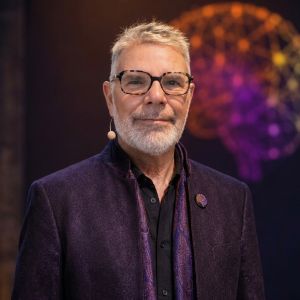
Jack Myers Podcast Transcript
Jack Myers joins host Brian Thomas on The Digital Executive Podcast.
Brian Thomas: Welcome to The Digital Executive. Today’s guest is Jack Myers. For 50 years, Jack Myers has studied change, not simply what comes next, but what technological and culture shifts do to people as they become part of everyday life. His work has taken him from studying media ecology with Neil Postman at NYU to advising senior leaders at Disney, Microsoft, General Motors, Warner Brothers, Discovery, Hallmark, and Paramount CBS.
He has earned a Peabody Award, an Academy Award nomination, spoken at TED Women, and built the Myers Report into a Substack with nearly 20,000 subscribers. He also co-hosts the Lead Human podcast on the Acast network. Well, good afternoon, Jack. Welcome to the show.
Jack Myers: Good to be with you, Brian. Thanks for inviting me.
Brian Thomas: Absolutely, my friend. I appreciate it. You’re hailing out of Tucson, Arizona. I’m in Kansas City, so thank you for jumping time zones, and Arizona flips their time around. Well, we go
Jack Myers: back and forth. We’re in Mountain Time right now, and then in the summer, we’re in Pacific Time.
Brian Thomas: Yeah, yeah. It’s crazy, but appreciate you joining.
So Jack, if you don’t mind, I’m gonna jump right in. You went from studying media ecology with Neil Postman at New York University to advising Disney, Microsoft, and General Motors. How did that path turn you into someone who studies what change does to people?
Jack Myers: Neil Postman at, at NYU led and founded media ecology based on principles developed by Marshall McLuhan, The Medium is the Message.
And he taught me one thing that really, Brian, I’ve never been able to shake and as I’ve applied throughout my whole career, and that is a new technology doesn’t only add something to a culture, it changes everything in the culture. Put television into a society, and you don’t get the old society plus television, you get a different society.
So when I started advising companies like Disney, Microsoft, General Motors and others, I, I kept noticing that the boardroom conversation was always about what the technology could do, and almost nobody was, was talking about what it was doing to the people using it. So that’s where I put my focus on people, on the, on how technology impacted attention, confidence, relationships, a sense of who’s in charge and who’s responsible and who’s accountable.
And that’s a question that I’ve really applied to every technology for fifty years. And it’s, it’s the one I think your listeners are living right now with AI. So, every executive, every company has an AI strategy, but very few are asking, what’s our human strategy? What’s AI doing to our team’s judgment or, or to our, our leaders’ willingness to trust what they know from their own experience?
So the history of every technology I’ve studied says, says the same thing, and, and that’s what I’ve really been focusing on, the people who ask, “What is the technology doing to us, to our teams, to our self-trust?” And those are the companies that have their hands on the wheel and their eyes on the road ahead.
Brian-Thomas: Thank you. And I appreciate that. You’ve got obviously a, a breadth of experience that you can contribute to this particular topic. And I thought it was interesting you said that technology is not just added to the culture, but it actually changes the culture, and we’ve seen that throughout the years, and you mentioned a couple of those, like television, of course.
But yes, at the end of the day, and we talk about it here a lot, the technology is dramatically changing right now w- especially with AI and agentic AI. It’s important that that human connection and how that is actually working, the strategy there versus, always looking at the technology.
So I appreciate the insights. Jack, your book describes a third brain, a human-machine- Yes … co-intelligence. So how is that different from simply treating AI as a very powerful productivity tool?
Jack-Myers: That’s a great question. My book, Your Third Brain, it’s, it’s powering a future of what I call unimagined possibilities, and those possibilities can be both positive and negative.
But I like to… I’m an optimist, and a productivity tool doesn’t necessarily only do the same work faster. You hand it a task, you get the task back, and that’s useful. But you’re really the same person afterwards. You have a different focus if you’re trusting it implicitly. So I think that’s really the third brain.
We have the analytical brain, we have the intuitive brain, the head and the gut. A, a third brain is what forms when you think with a machine, when you collaborate with a machine. I call it techno intelligence, techno intuition And, and, and co-intelligence. And here’s what matters. The third brain is not a tool if you use it right.
It lives in you. It’s embedded in your own processes, in your own experiences. It doesn’t live in a data center in the cloud. The machine widens what you can see, but the judgment, the values, and the decision remain yours. And here’s a simple test I, I think your listeners can apply. After you use AI, ask yourself, “Am I sharper?
Am I smarter? Or did I just finish sooner?” And if you, if you asked it for the answer only, you used it as a tool. But if you asked it to challenge your own thinking, if you ask it to show you what you missed, if you challenge it and, and ask it for a second opinion like you would a doctor then you’ve made– then you make the decision.
It’s your choice, and that’s what the third brain is. It’s using the machine to enhance your intelligence. So I, I think the risk I see in organizations that I’m working with is when they’re treating AI purely as productivity, where people quietly outsource their judgment one prompt at a time. Efficiency does go up and self-trust goes down, and that’s why the book leads what I call the seven steps of self-respect.
Co-intelligence only works if the human is half of what shows up
Brian Thomas: That’s amazing. Thank you for unpacking some of those insights especially ar- around your book. And, and I, I, I, I really do like what you said around this third brain. The machine does absolutely improve, especially nowadays, the efficiency and the productivity, but are you challenging yourself?
Is the human really showing up as you talked about to be part of that co-intelligence? And that is so important, so thank you for sharing the human side of that and, and where that lands in this whole equation. Jack, with The Myers Report on Substack, the Lead Human podcast, and now a novel, The Kissinger Conspiracy, how has storytelling shaped the way you get complex ideas about the future across?
Jack Myers: I love that you mention my, my novel. It’s the first novel I’ve written, and it’s, it’s, it’s really about power and how power is applied. And, and we’re looking at, Henry Kissinger as having applied power in the government. And, and I really look at how we apply power in the organization, and that, that the very definition of power is changing, authority is changing, who’s the smartest person in the room as a leader is changing, the authority of a leader is changing, and that’s one of the fundamental shifts that we’re seeing with AI, and Your Third Brain is really designed to help you navigate this.
I, in terms of storytelling, I, I learned early on that you can show a leader 40 slides on the future, and they’ll nod and go back to what they were just doing. And t- but tell them a story about w- just one person facing a hard choice, something that they may identify with, and they see it in themselves.
So I use different forms for different jobs. The Myers Reports, where I make the case with evidence. In my interviews and YouTube videos, I tell the truth about what’s hard and what’s challenging. I- in terms of stories s- some, and, and every chapter in Your Third Brain starts with a story and ends with a story.
Some are real, some are apocryphal to get a point across. But they let me do something that, that facts and evidence can’t do. You don’t just tell readers or listeners that their world, their business, their opportunities, their power, or, or just their technology is changing. You let them feel it through the experiences of others and, and the stories of others and how they navigated and responded.
And then they can identify themselves in that story and, and draw the conclusion for themselves. Storytelling, though, we think of it as a soft skill. It’s not at all a soft skill. It, it’s… I’ll, I’ll, so I’ll give you two quick stories a friend of mine ha- had a baby recently and was very proud to tell me that the, that his son’s first words, first word was Alexa.
And I did not think it was as funny as he did, but I, I thought it was kinda concerning. But it tells you about a generation that’s being born with AI as part of their embedded lives, and that’s why I think it’s so important to understand the third brain. And then another story is I was in a boardroom recently.
They asked me to come in and work with them on a project that hadn’t worked, and they’d used AI, and they had the team in the room, and the leader said, “Well, who was ultimately responsible for the decision?” And it was quiet, and then someone said, “Well, the AI told us to do it.” And I think that’s a real issue and problem.
And needless to say, the leader s- said, ” Every decision made from here on in has to have a human that can, can be accountable for it.” And so I think those are lessons and stories that we can apply that people can identify with
Brian Thomas: Absolutely. I appreciate that. And what I really took away, Jack, is the fact that you do a lot of media.
You, you write, you’ve got your Substack, your podcast, your obviously you wrote a novel. And you talk about how you can get a point across, and sometimes, to someone that’s very analytical, maybe the, the, the data, the statistics, the facts, they’re gonna get you right there. But sometimes you gotta tell a story and, and I appreciate how you kinda traverse the different media here to get your point across, to get people engaged in the future and the technology- Thank you
and what’s changing. Yeah, absolutely. And Jack, the last question of the day, as we look ahead maybe 10 years, if, if we can go that far with the technology, what would make you hopeful that the intelligence era widened human possibility, and what would you tell … And what would tell you we have given up our agency instead?
Jack Myers: It is hard to look 10 years ahead. It’s hard to look two weeks ahead with the speed with which AI is evolving and, and we hear- we have recursive self-improvement that’s already there embedded in AI, where it’s feeding itself knowledge and advancing itself and teaching the next stages. So it’s very difficult to
But we can look ahead and, and I’d, I’d be hopeful if 10 years from now a 20-year-old who grew up with AI, a Gen Nexus, what I call Gen Nexus, has better questions, has better judgment, and is more confident in their own minds than we had at that age, at 20. If we, if we used abundant intelligence to make human qualities like empathy, presence listening, belonging and the moral imagination more valuable, creativity more valuable, more accessible to everyone not less.
And, and if we had- If, if we could be developing and implementing solutions thanks to AI, to the climate crisis, to health and wellness issues, to political polarization, to bias, to poverty, I mean, those are the hopes that I bring to the discussion and the evolution of AI. I think the warning signs for failure won’t be dramatic, anything we can really point to, like we could a major advance in medicine.
And I don’t think a machine or robot takes over suddenly but it will be quiet. We’ll hear people say what I just said before, “Hey, that’s what AI recommended,” and we treat it like that’s the end of the conversation. When we’re stopped being able to explain or, or be accountable for our own decisions, and instead we turn it over to AI, we’ll have convenience.
We won’t remember actually giving anything up. But as we lose control, we also lose trust in our own decisions and in ourselves. And, and I think that’s where, we’ll, we’ll begin to see the challenges, the problems, and we’ll begin to see AI feel the freedom itself to take over more and more. So I think it’s important for everyone, every leader, every team member, everyone really to ask when they’re using AI, do I accept it, the answer, or do I question it?
Do I challenge it? Do I make this call, or do I let AI do it? And that’s why, Brian, my work centers more and more on self-respect and on self-trust and on what I call the human, H-U-M-A-N philosophy that I write about in, in Your Third Brain. So agency isn’t something that’s taken away from us. I think we give it away a little at a time, or we make the conscious effort to keep our agency and make our own choices for ourselves and be accountable
Brian Thomas: Thank you. Appreciate the insights. That’s powerful. Obviously, if we really took the time to think about how we’re building the technology today and really laser-focusing it into healthcare research things that are truly gonna make the world a better place. But again, this comes back to our human nature.
We’re, we’re a bit lazy, and so, oh, it’s convenient. I can get things done in half the time. Mm-hmm. I can do this. I can spend more time watching television, whatever that is. Yeah. It’s, it’s, it’s, it’s amazing how you step through all that, and, and you’re absolutely right. We’re gonna need people like you to stand up and make sure that we are moving forward in the right direction and not just doing it the light speed, and then who knows wh- where humanity will be in 10 years. So, thank you.
Jack Myers: Well- And- … if, if I may add one thought, Brian, quickly. We’ve been in the industrial age for over 100 years, well over 100 years, and we’re at the very early stages of the intelligence age, which is going to be with us for the next 100 years. Think of what an extraordinary opportunity it is for all of us, and especially leaders in organizations and corporations, to recognize that we are the ones who are writing the books that’ll be written about, like Peter Drucker’s book was written about in 1952 on the concept of the corporation.
The books are going to be written about the leaders today.
Brian Thomas: Absolutely. Thank you for sharing that. And Jack, it was such a pleasure having you on today, and I look forward to speaking with you real soon.
Jack Myers: It’s mutual. Thank you, Brian.
Brian Thomas: Bye for now.
Jack Myers Podcast Transcript. Listen to the audio on the guest’s Podcast Page.