

Michael Herron Podcast Transcript
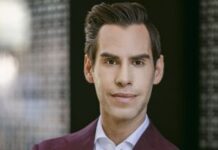
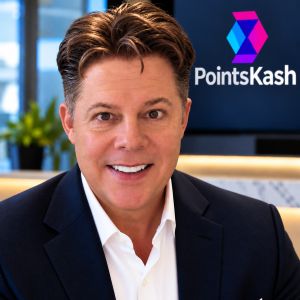
Michael Herron joins host Brian Thomas on The Digital Executive Podcast.
Brian Thomas: Welcome to The Digital Executive. Today’s guest is Michael Herron. Michael Herron is the chief executive officer and president of PointsKash, a financial technology company focused on expanding how consumers access, move, and use money across physical and digital environments. He leads the company’s strategy as it builds a nationwide financial services ecosystem, connecting retail locations, payments, cash access, and digital financial services.
Herron brings decades of experience across financial services, payments, technology, and capital markets, including experience with leading financial institutions such as Vanguard, Fidelity, and Merrill Lynch. His background also includes building and operating businesses at the intersection of financial infrastructure, technology, and consumer services.
Well, good afternoon, Michael. Welcome to the show.
Michael Herron: Thanks for having me, Brian. Pleasure to be here.
Brian Thomas: Absolutely, my friend. I appreciate it. And you’re hailing out of Scottsdale, Arizona. I’m in Kansas City. So, before the time zone change, it was two hours, but now we’re only an hour apart, I believe. Or no, it was…
I had, I had it opposite, but it’s all good. You got here. I know it’s hard to make calendars work, so I appreciate that. Michael, if you don’t mind, let me jump right into your first question here. Sure. You’ve got more than three decades across financial services, payments, technology, and capital markets, including time at major institutions like Vanguard, Fidelity, and Merrill Lynch.
You then served as president and CEO, COO of PointsKash before stepping into the CEO role in 2026 as the company prepares its national launch. What drew you from the world of established Wall Street firms to a fintech startup building cash to digital infrastructure?
Michael Herron: Well, that, that’s a great question, Brian.
Well, as you said, I, I spent a good part of my career working with some extraordinary people at some of the most respected financial institutions in the country. And along the way, I learned an awful lot about things. Now, the, the one thing I think, Brian, that always stuck with me though was just how much our financial system has evolved technologically.
But yet how many everyday Americans still struggle to access some of the most basic financial services? I mean, if you, if you think about it for a second, I mean, we can move millions of dollars around the world in, in seconds, trade securities from our phones, and do things today that would’ve been unimaginable 20 years ago.
But there are still millions of people who have to go to three or four different places just to cash a check, pay a bill, send money to a family member, or even access their own cash. And to me, Brian, that’s never made much sense to me. I guess what attracted me to PointsKash was the opportunity to actually do something about it.
We’re, we’re not trying to reinvent money, we’re trying to simply make everyday financial services more accessible and more convenient, and ultimately more affordable for the people who need them. Like you said, after spending decades in the financial industry, the opportunity to help build something like that from the ground up was incredibly compelling.
And at this stage in my career, it’s, it’s just not simply about building another successful company. It’s about something… It’s about building something that can genuinely make a difference in, in everyday people’s lives. And, and I think we got a tremendous opportunity to do exactly that. I, I, I’ve spent over 30 years learning how the financial system works for Wall Street, and now I have the opportunity to make it work for Main Street
Brian Thomas: That’s awesome.
Thank you so much. I appreciate that. And y- looking back, we just highlighted some of your career, but you take some incredible experience, and you’re bringing it to this market where you can actually give back, help people. And as I like to say on this podcast, we’re making the world a better place because of the work that people like you are doing.
So I appreciate that. Michael- Sure … PointsKash isn’t just consumer-facing. It offers partners, merchant partners, a universal loyalty cashback and payments program, and you recently acquired assets like Keating Rewards and Chainbytes to strengthen loyalty and crypto capabilities. How do you make the model work for both the underserved consumer and the retailer at the same time?
Michael Herron: Well, that’s, that’s actually one of the most exciting parts of our business model because we are creating value on both sides of the transaction. So let, let’s start with the consumer. Imagine, Brian, you’re stopping at your neighborhood convenience store to pick up a gallon of milk or fill gas up in your car, and while you’re there, you can also cash a check, pay your electric bill, maybe send money to a family member, or even put cash in a digital wallet.
You don’t have to go ahead and make another trip across town. You don’t have to take off time from work. You don’t have to figure out which financial service provider handles which transaction. It’s simply all available in one familiar location. And now you look at the same situation from the retailer’s perspective.
The store is already paying rent. They’re keeping the lights on. They’re serving customers every day, and what we’re doing is we’re giving that retailer an opportunity to offer additional services, attract more customers, encourage repeat visits, and even participate in obviously new revenue streams. So when you layer in our loyalty programs, our, our rewards and digital payments, it becomes even more interesting ‘ cause now we’re not just helping somebody complete a financial transaction, we’re creating opportunities for that customer to come back, spend money in the store, and, and build an ongoing relationship with the merchant.
And that, Brian, I, I really think is the beauty of the model. The consumer gets convenience and access, the retailer gets additional revenue opportunities and customer engagement, and PointsKash provides the technology and infrastructure that brings those two together. And I think when everybody’s involved and has a reason to participate, that’s when you really have the foundation for a really scalable business
Brian Thomas: Thank you.
That’s awesome. And you did explain, you impact that basically the value that you bring on both sides there, the consumer and the retailer. But I, I really like this thing called convenience. It, it can be kind of a, a, a, a crutch for us these days, but it is really good because you’re saving people a lot of time from having to do other things when it’s hard enough to balance their finances.
So thank you. Michael- Sure … Points, PointsKash is building KashPoint kiosks, self-service financial hubs placed in retail and community locations offering everything from ATM access and check cashing to bill pay, money transfers, and even buying crypto or getting a debit card on the spot, which is pretty cool.
Why put all that into a kiosk at a store people already visit rather than an app or a branch?
Michael Herron: Well, first of all, again, we’re, we’re obviously big believers in digital technology. In, in fact, our BK Pay digital wallet is a very important part of what we’re building. Brian, here’s the reality. I, I mean, you can’t put a $20 bill into your smartphone, and that’s something that I think gets overlooked in a lot of conversations about the future of banking.
There’s millions of Americans who still use cash regularly. Maybe they’re paid in cash, maybe they prefer cash. Maybe they simply don’t even have the same access to traditional banking and services that others, maybe like ourselves, take for granted. And whatever the reason, we believe they deserve access to modern financial technology just like everybody else does, and that’s where our KashPoint kiosks come in.
I, I guess rather than asking consumers to change their habits or travel somewhere else, we’re bringing those financial services directly to the places that they’re already visiting. So like you said, convenience stores, grocery stores, hotels, fuel stations, places that are part of every, every day routines.
And instead of having to visit the one location to cash a check or another to pay a bill or somewhere else to send money, our, our goal is to bring those services together through one platform, one ecosystem. But here, Brian, I think is, another point to point out that’s even more interesting, the kiosk is just one part of the equation.
Once somebody puts the cash into their digital wallet, they can begin using that money digitally, whether that is making payments, sending money, or a- accessing other financial services. So we’re, we’re not choosing between physical and digital, we’re, we’re simply connecting the two, and I think that’s a pretty important distinction because the future of financial services, we believe, shouldn’t require people to abandon the way they’ve always managed their money just simply to participate in the digital economy.
We’re not trying to change where people go. We’re, we’re trying to change what they can accomplish while they’re already there
Brian Thomas: That’s awesome. Again, that just, really h- highlights what you’re doing for people, especially people that may have some other financial struggles. You’re leveling that playing field- Sure
and making it more accessible for everybody, which is awesome. And of course, you’re leveraging technology, and I love the fact that you’re a, a thinker and innovator. Of course, you can’t put a $20 wallet into your phone, right? So you gotta, you gotta be creative, and that’s what you’re doing, so thank you.
And Michael, the last question of the day, your guiding principle is that technology should expand cus- consumer choice rather than dictate how people manage their money. And you’ve said the future isn’t simply cashless. It’s about giving people the freedom to move easily between physical and digital. If, if we look five years, maybe even 10 years out, what does that bridged financial system actually look like, and what has to happen for cash reliant and underbanked Americans not to get left behind?
Michael Herron: Well, I, I think you know we’re obviously gonna see a lot of extraordinary changes in financial services over the, the next five to 10 years. And frankly, I believe we’re just scratching the surface today. You got artificial intelligence, digital wallets, real-time payments, cryptocurrency, and technologies that haven’t even reached the mainstream yet, we’re going to fundamentally change how people interact with their money.
And I think there’s a really important question we need to ask ourselves. And that is are, are we, are we building a financial system that works better for everybody, or are we simply making it more convenient for the people who already have access to everything? Because Brian, those, those things are two entirely different things.
I don’t believe the future is necessarily a cashless society. I believe the future is a society where people have more choices about how they access, manage, and use their money. If somebody wants to use cash, great. I mean, if they wanna use a digital wallet, that’s great, too. And if they wanna move between the two, that should be simple, convenient, and, and affordable.
It shouldn’t matter whether you live in Manhattan or a small town in rural America. It shouldn’t matter whether you have a traditional bank account or not. We believe you should have access to the financial tools that you need to manage your everyday life, and that’s really the vision behind PointsKash.
We’re building that infrastructure to help connect those two worlds using the physical locations that people already know and trust, and combine that with the convenience and capabilities of modern financial technology. Now, none of this obviously happens overnight. It, it takes the right technology, strong banking, financial partners, responsible regulatory oversight, and a, and a business model that clearly has to make sense for everybody.
But I, I personally believe the opportunity’s enormous. And, and if we do this right, we’re not just building a network, a kiosk, or launching another digital wallet. Rather, we’re helping create a financial system where access no longer is determined by where somebody lives or how much money they have, or whether they happen to have a relationship with a traditional bank.
I mean, the future isn’t about eliminating cash. It’s about eliminating the barriers between cash and digital money. And to me, Brian, that’s what financial inclusion should really mean, and that’s what gets me excited about coming to work every morning
Brian Thomas: That’s awesome. And that’s what gets me excited, getting to share your story to the world and, and, and more people get to hear it.
Of course, just love the fact that you’re trying, well, you’re not just trying, you’re staying ahead. You’ve got that vision to innovate and align the technologies with the future, which you’re, which you’re doing now, which is amazing, and of course leaving that accessibility to everybody. So it’s very inclusive there as far as no matter if you’re Wall Street or Main Street, so I appreciate that.
Michael- Yes … it has been such a pleasure having you on today, and I look forward to speaking with you real soon.
Michael Herron: Thank you very much, Brian. It’s a pleasure you having me.
Brian-Thomas: Bye for now.
Michael Herron Podcast Transcript. Listen to the audio on the guest’s Podcast Page.