Charles Lambert Podcast Transcript
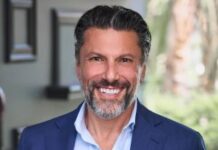
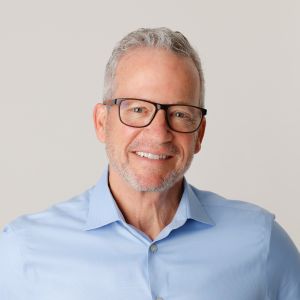
Charles Lambert joins host Brian Thomas on The Digital Executive Podcast.
Brian Thomas: Welcome to The Digital Executive. Today’s guest is Charles Lambert. Charles Lambert is a technology executive, entrepreneur, and former CIO with decades of experience leading global IT operations and technology transformation. From the executive chair to his consulting work through ITOMAC, Charles witnessed firsthand how difficult it can be to understand what’s really happening inside IT operations, identify hidden risks, and turn those insights into actionable roadmaps that reduce risk, protect the business, drive operational improvement, and enable better investment decisions.
That experience led him to create OpsAlign, a business intelligence platform for IT operations that helps organizations expose operational blind spots, quantify financial exposure, and develop prioritized actionable improvement plans Well, good afternoon, Charlie. Welcome to the show.
Charles Lambert: Thanks, Brian. It’s actually really good to be back again.
Brian Thomas: Absolutely, my friend. I appreciate it. Again, making the time, traversing many time zones to get here. You’re f- hailing from Malaga, Spain, originally from my neck of the woods, Kansas City and Denver. I appreciate that, really do. And Charlie, if you don’t mind, I’m gonna jump in, right into your first question here.
Your path runs from IT leadership at companies like Embark, AT&T, Cricket Wireless, and TruConnect, where you were a chief information officer, to founding ITOMAC. What moments shaped your path to building OpsAlign?
Charles Lambert: Well, good question. So in all of the work that I’ve done, I started I started in the 1980s in development and support at Citibank, and from that point, even to the last year or so, operations always seems to be the underfunded afterthought.
So, back when we were shipping software on floppy disks, the support looked like one thing, but, then as I became, moved more into project management, program management on these very large telecom programs, like $100 and million programs, I noticed that nearly all budget went to features and infrastructure, and almost nothing went to supporting operations.
I mean, other than buying infrastructure, of course. But, I watched outages and fire drills and all of that from the outside. Eventually, though, I crossed over. I was recruited by a guy named Clint Sharp, who founded the wildly successful company called Cribl, and he asked me to come to Cricket Wireless and build an application operations team.
And suddenly I wasn’t just watching the outages, I was, I was living them every day, right? Especially on Fridays. And when AT&T acquired Cricket, I saw the same issues, but now in silos b- and at a, just, like, a much larger scale. Eventually, I became CIO at TruConnect, as you mentioned, which is a, an MVNO, a telecom.
It was a smaller company which had many vendor dependencies, so I started seeing, how vendor performance impacts operational risk as well. From there, I went to leading a global operations effort for a company called Afiniti, which was one of the, first AI-native companies that was commercially successful.
And even there, money obviously went into the AI models and the data scientists and engineers, and operations got what was left, which was very little. And for that lack of investment, every company gets the same risk, right? They’re, they’re hidden all over the operations and- The risk impacts revenue, it impacts cost, it impacts brand compliance, and it’s also very hard to articulate and put on a roadmap.
So, you know what I was seeing, Brian, the, the point of bringing up my whole history is that no matter where I was within the IT world, the same patterns repeat over and over, no matter the size of the industry, the size of the company or the industry that it’s in. So, you know, and in each one, and this, this is not a joke, the internal customers like the sales teams or the retail leadership would quietly pull me aside and totally vent, right?
Like, “Customers are finding technology problems before IT did. And when I call IT, I don’t get good answers, and my customers are threatening to leave,” and all of that kind of stuff. So that’s when I knew I could be more effective from the outside, and I started ITOMIC, which is IT Operations Management Advisory and Consulting.
The methodology and IP I use to surface those gaps for my clients is the same methodology that became Opsoline. I get paid a lot of money to help those companies, but I thought if I could use current AI capabilities to model my own methodology, I could do even more analysis than me or my teams could ever do, and faster and much cheaper with better product.
And so I thought it would be a great product. So we built it, and I believe it really is
Brian Thomas: That’s awesome. Appreciate that. Living in the trenches as a CIO myself, I see this plagues every company that I’ve, I’ve been with over the years, but-
Charles Lambert: Right …
Brian Thomas: loved your story, moving into some of those large– managing those large programs and IT ops, you noticed that budget went to features and infrastructure, but really nothing to ops, right?
And you talked about that risk, how it impacts everything and, and you saw things that failed and of course, that gap right there, you found that you could fix that gap, and that’s where Itomic came into play. So I really appreciate that. And then of course, now OpsAlign, which is really your bread and butter.
This is where you, you excelled in, in your career, of course. So Charlie, OpsAlign is described as business intelligence for IT operations. So how does it differ from the monitoring ITSM and observability tools most organizations already have?
Charles Lambert: Well, it’s definitely not a replacement. This is a, it’s a significant complement to whatever tools are deployed in production right now.
So that’s a really good point, Brian. Picture the CIO as you are. Dashboards are green. Yeah, this is just something that, that I… It’s almost become, become a joke, but we’ve got green dashboards, but behind every green dashboard is this angry mob. Every tool they bought is apparently doing its job, but then the head of sales calls like I said earlier, a customer is not gonna renew a contract or the retail operations are saying, “Hey, I’ve got customers lined up two, three, four deep and they’re walking out of the store and going to our competitors next door.”
So, customers threaten to leave over problems that IT never saw or don’t see until after the customers do. So the tools are essential, but they can’t tell you how well the operations are running around that. They can’t tell you where the risk is coming from, whether it be revenue risk or OpEx or brand risk or whatever.
And certainly, those tools don’t tell you what that risk is costing the business, and that’s where OpsAlign complements the operation. So oftentimes, the natural move by the CIO is to bring in a team of consultants at significant cost to help figure out what’s going on, or maybe they buy more diagnostic tools.
But that’s not really always the answer either. In fact, I’ve seen companies With overlapping tools doing the same job, including one that is gonna be nameless but they purchased two million dollar licenses of ServiceNow in two different departments primarily because of internal politics. But again, that’s where not really understanding how things operate and work lead to this operational cost risk.
I’ve actually seen companies with both JSM, Jira Service Management and ServiceNow, but they still can’t do root cause analysis and problems keep recurring. So my Itomic clients hire us to explain those green dashboards and angry customers. And, you know, the answer wasn’t to bring another tool in from the outside.
The answer was already in the building. Typically what we do is we interview… And for my clients, I’ve interviewed hundreds of people who actually do the work and getting that information from them is really at the heart of how we work OpsAlign. So the, the, the boots on the ground really are glad to be heard, right?
They will tell you things, they’ll describe what’s going on, and to me, they describe often the same things. And the problems are typically things that tools can’t fix, whether it’s tools being underutilized, tools that overlap things like CMDBs really not tying infrastructure to services or customer transactions or you name it.
Disaster recovery never tested or the one that really got me the, a few, a few months ago was 30-year-old services that only one person can support, and he’s not gonna be around much longer. So none of that shows up on a dashboard or tells the CIO that the next breach or outage could cost millions of dollars and make a really bad headline.
So, OpsAlign captures what those people know across the domains that run an operation and gives the CIO what they were missing, which is where’s the risk? What’s it costing? And what do we fix first? I, I, I’m sure, Brian, as a CIO, you don’t stay up at night wondering what your CMMI maturity level is or your capability, whether it’s a two point four or three point five.
But you are concerned about what can go wrong and what, what that’s gonna cost, and that’s what we help with. That’s what I mean by business intelligence for IT operations.
Brian Thomas: Thank you. It’s amazing. And just to highlight, OpsAlign is not a replacement. It actually complements some of these other observability tools, which-
Charles Lambert: Mm-hmm
Brian Thomas: you did point that out. Today, current tools just don’t tell you some of that real time, some of the real-time issues and what the risk is truly costing the business. I thought that was interesting. But again, at the end of the day, there’s incredible investment in all these different tools and softwares.
And in one case, you mentioned that the silo that was going on between departments, all that could be circumvented just by having insights that are already available there within the organization. So thank you. Charlie, quantifying financial exposure is a core promise of OpsAlign. So how do you turn- Yeah
operational risk into dollar figures that a CFO or board will trust and act on?
Charles Lambert: Yeah, and here’s what makes OpsAlign different. It shows you where the weak points are and explains in detail why they exist across every domain. We have fifteen domains from event management to incident management, problem management, all the way to AI operations and data governance.
We run that understanding through our own risk range models that’s part of our IP. So every answer that comes from your team, every answer carries a risk profile, and that’s the heart of OpsAlign IP. Everything else exists to arrive at that risk range for the current state of each domain. So we might ask somebody thirty questions about event management.
Their answers then are tied to, are mapped to various risk states and risk profiles. And we we generate thousands of data points off of these these conversations we have with your resources. So we generate a, a risk range, not, not a false precision, but an estimate built on experience, our own benchmarks, and essentially the profile of a company.
So a CFO can actually see the reasoning and challenge the assumptions, and that’s why we believe they trust it. From there, we, we break all of those pieces into bite-sized remediation plans. We prioritize by severity and by how many dollars of risk each of those items removes. We generate roadmaps ready for a board to approve and for a PMO to execute.
We also look at something that other tools miss, and that is the effect of the workforce on operational risk which ticketing and monitoring tools don’t show. If you are running teams from multiple continents with different tenures, maybe some are merged in, maybe you’ve in– inherited teams from some other reorg.
That introduces risk in and of itself. We consider that when we actually assess risk, ’cause sometimes, you know, people are like, “Man, that, that manager is performing really poorly. We should probably put them on a pit.” But when you have the context of why that manager is having those issues or why that domain has so much risk in it, you really have to understand the workforce context around it as well.
So we do that. We even derive suggested KPIs, SLAs, performance goals, performance goals from the CIO, all the way down to individual contributors. So accountability goes with the plan when you use OpsAlign.
Brian Thomas: Thank you. Appreciate that. Love the tool. You kind of unpacked quite a bit there. Obviously, it shows insights to all the domains within the IT ops, which I think is really cool, but you have this risk range model for all the domains.
Mm-hmm. And each domain, obviously there’s a bunch of questions and answers there, and every answers carries a risk score, and I thought that was pretty cool. Really is. Shows some insights that help you be proactive and, and mitigate a lot of the risks. So thank you. You bet. Charlie, looking ahead, last question here.
How do you see AI automation and growing businesses pressure reshaping IT operations over the next five years? And what should technology leaders do now to prepare?
Charles Lambert: Well, this might sound cliché. People like you, you spend a lot of time in AI and blockchain, so we all know this intuitively, right? That AI is going to reward organizations whose operations are well understood But it conversely, it’s going to punish the ones that aren’t.
Used well, I’m excited about AI in operations. It can kinda become the backbone of IT operations. Think about like known issues databases, for example, and RCAs. Just think how strong those can be. Or of course, AI operations and observability type projects. That’s gonna explode. Think about a CMDB that stays current so you actually know and configuration settings are exactly in production as they are in in your, let’s say, your Bible.
Guardrails on what reaches production, et cetera. Better testing. I mean, I’m super excited about AI in this space. But AI built on bad process and bad data is, as we all know, a recipe for a much larger pro… problem at scale. So automation doesn’t fix broken processes, it just makes bad stuff work faster.
So for me, I think what people should be doing is assessing first and assessing regularly. You need to find out where the leaks and risks are today before you start piling on new initiatives. Which, we all have pressure to bring on new initiatives, particularly ar-around AI. So assess first, find out where your risks are, find out where your gaps are, bring those foundations up, then launch the programs not only in IT ops, but across the enterprise.
I know, like I mentioned, boards are already asking whether the organization is ready, and you need evidence, not instinct. Answers like, “We think so,” won’t hold up. So OpsAlign creates that evidence that you can execute against. Then importantly, once you improve that operations performance, you need to keep checking for drift and governance gaps.
That’s very important for AI because drift does happen. So it’s why with OpsAlign, you can do multiple assessments whenever you want. Because preparing for AI means running strong operations, but that also takes constant attention. Otherwise, things, as we know, Brian, tend to revert to the norm.
And you, you can’t just do like one assessment and leave. You constantly have to be in assessment mode, continuous process improvement, and that’s, that’s what OpsAlign supports fully. So that’s a great question
Brian Thomas: Thank you. Appreciate that. You mentioned, Charlie, that AI has some amazing promise in IT ops, right?
For reporting and doing those things, like we all look for those RCAs, et cetera. You did highlight something important. Obviously, AI built on bad data and bad processes just accelerates the, the bad processes and, and outcomes. Right. So appreciate that. Obviously, you need to access, assess, rather first to gather all the risk, and you need evidence there, not instinct, and I thought that was important, and so I highlighted that.
Charlie, it was such a pleasure having you on today, and I look forward to speaking with you real soon.
Charles Lambert: Thanks, Brian. And if your listeners wanna see their own operation this way, there’s a free eight-question mini assessment and a live demo on the website, which is opsalign.ai. And I appreciate you having me on, Brian.
Always good to talk to you.
Brian Thomas: Absolutely. Bye for now.
Charles Lambert Podcast Transcript. Listen to the audio on the guest’s Podcast Page.