Justin & Travis Maderia Podcast Transcript
Justin & Travis Maderia joins host Brian Thomas on The Digital Executive Podcast.
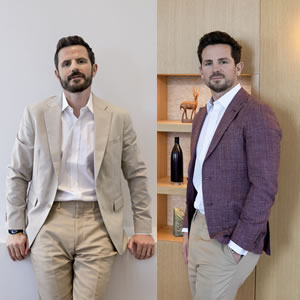
Brian Thomas: Welcome to The Digital Executive. Today’s guest is Justin and Travis Maderia. Justin and Travis Maderia are fourth-generation lobstermen and the co-founders of Lobster Boys, a seafood company working to transform how lobster gets from ocean to the consumer. Raised in Connecticut and growing up working the waters of Long Island Sound, the brothers saw firsthand the decline of their family’s fishery and the challenges facing independent fishermen.
They founded Lobster Boys in 2016 with a mission to build a more sustainable, transparent, and equitable seafood supply chain. By working directly with licensed commercial lobstermen and eliminating layers of middlemen, Lobster Boys focuses on fair compensation for lobstermen, full traceability, and responsibility-harvested premium hard-shell lobster.
Well, good afternoon, Justin and Travis. Welcome to the show.
Justin: Good morning, Brian. Nice to- Hi, Brian … nice to be on here.
Brian Thomas: Thanks for having us on. Absolutely. I appreciate it, guys. Really do. I don’t typically have two guests, so this is fun, dynamic, and we’ll just jump right into this. I know you guys are hailing out of Huntington, New York.
I’m in Kansas City, so I appreciate you all making the time today. Justin, if we could start with you. You’re a fourth-generation lobsterman and entrepreneurs who grew up working the waters of Long Island Sound, and then you watched nearly all of the local lobster fisheries, including your own family’s, collapse over about 25 years due to insufficient regulation, pesticide use, unsustainable practices, et cetera, et cetera.
What was it like to witness your family’s fishery decline firsthand, and how did that loss turn into the decision to found Lobster Boys in 2016 rather than walk away from the industry entirely?
Justin: You know, it was as you can imagine, it was devastating on the family. It really broke us apart. As, finances crumbled, our family crumbled, went through some really hard times, divorces, tough, adolescent period of time for all of us.
And me and Travis just stuck together through it, and we started marching up through the northeast and fishing with other fishermen and making, friends at the time because we were just talented fishermen. We had been doing it since we were eight years old. And when you work the deck of a boat, you can basically go on anyone’s boat and, and make a name for yourself.
So that’s what we did. And we eventually got our talents to a little island called Grand Manan in Canada. And we noticed that as soon as we got across the border, the regulations were different, the quality of lobsters were different. And we started bringing these lobsters across the border to our existing customer base that we had in Connecticut to start, and it just spiraled from there.
We started buying lobsters from, directly from fishermen, and we grew so fast, so big that we started buying lobsters from, who we didn’t know at the time, but were other businesses in Canada, because we just didn’t have the infrastructure. I mean, we didn’t have two nickels to rub together at the time. And we started buying lobsters from businesses who at the time, we, like I said, we didn’t know, but we call them the mafia now.
And that the reason we call them that is because they control the fishery. They say, “You know, we stay in Canada, you guys stay down in the US, and we sell you the lobsters.” And the whole Maine lobster fishery has been branded over a long period of time. But all the live trade lobsters that come down into the US, they primarily come from Canada because their regulations are to target the hard shell lobsters.
And this is something that me and Travis are extremely passionate about, to re-regulate the, the, the lobster fishery in America because they’re targeting a soft shell species, and that basically goes into processors to pull the meat out. And, me and Travis just basically went through a war with them, which ended in us getting put up in, in, into a Subchapter V bankruptcy just two years ago, and we fought through that.
I mean, we’ve been through a lot of stuff together as brothers, best friends. We do everything together, so we’ve been through a lot together, and now we’re on the other side of it, and we’ve built a direct-to-consumer business from our fishermen that we buy from directly to consumers. And we’ve cut out all the middleman, mafia that we call them, and we’re really passionate about restoring the independent fishery and the the live lobster industry as a whole.
We’re, we’re extremely passionate about it.
Brian Thomas: That’s awesome. I can tell you’re very excited and passionate. I love the backstory. Obviously, you had to struggle a lot over the years, but your resiliency stands out in your story, and I just appreciate the persistence that you guys both stuck through really to fight a lot of the…
And again, I won’t get into corruption, but a lot of middlemen really hike up the prices in every industry, and we need to– we need more entrepreneurs like you. So I appreciate the backstory. And so Travis, you’ve split the leadership naturally. Justin focuses on empowering independent harvesters and understanding the challenges on the docks, while you, Travis, own the transparency and traceability side.
What’s it like building a company with your brother? How do you divide the work, and what does each of you bring that the other doesn’t?
Travis: Yeah, I would say that there’s nothing like trying to build a, a company like ours with your brother. As Justin alluded to, we’ve kind of done this really since day one, being best friends, going through everything we’ve been through.
I mean, you can imagine trying to go through from the start, someone actually… When Justin alluded to we were down in Gra- we were up in Grand Manan fishing with the fishermen, someone had actually burned our boat down at our, at our, our wharf in Stonington, Connecticut, where we started. So that was the start of it.
You, you can imagine going through something like that. Then when we took over the, the fishing side and started buying from all the fishermen, we had, majority of… We were, we became, just say, one of the biggest buyers in Canada in the matter of a few years, really three years. And what that did is Justin alluded to the mafia, and they really put a lot of pressure on the banks, which they had a tremendous amount of money flow with them, billions of dollars.
And we were forced into a, a bankruptcy right after Thanksgiving before the start of the season. And the re-resiliency it takes from, from two men to go from a fishing boat to the biggest, corporate buying through, through mafia middlemen like, like the Canadian and US buyers or, or, or wholesalers, I mean, it, it takes a lot out of you and, and you gotta have people that you trust on your side.
And, and now, you know, on, on the, the US sale side, we’re basically fighting a food crisis from, we, we call them the mafia in the United States wholesale side, like the food service companies and, and really all the grocers that are commercialized buying, profit food so to say that is not really the greatest.
And, you know, this food crisis, it starts with, it’s great to start with something like a lobster where it’s, it can only be wild caught. It’s it’s really the superfood of, of proteins where you talk about, a trusted, trusted source, comes direct from fishermen like us. So we’re trying to lead the way and to turn the tables of something like we’re trying to do from the ground up.
You, you can’t go through it by… It’s tough to do it by yourself and, and never mind even with the both of us, you know, stick handling it. So it’s really something that is, is… I’d, I’d advise like anybody that’s starting a business to have a trusted partner, a team, whatever the case may be, to go through and, and, and fight through something like me and him have gone through from, from start, from day one.
Brian Thomas: Amazing. Again, just goes to show the resiliency that you all displayed. You know, your boat being burned down going through a bankruptcy, and of course you all complement each other. You’re very strong. You have a very strong obviously family bond here, but, but the, the brotherhood of what you’re doing is just amazing, so thank you.
I, I, I appreciate that. Justin, let’s switch back here. You’ve made 100% traceability central to the company, ensuring every lobster is traceable to its source, and that the person who caught it is recognized. You’ve even said, “If a seller can’t tell you who caught your lobster, don’t buy it.” How do you actually build that traceability into the operation, and why should a consumer care as much about it as you do?
Justin: Right. Yeah, we, we innovated that space in the business from a truth and transparency perspective because, whether it’s the, the big corporate Red Lobster that has a TV commercial on the Super Bowl, just ’cause they have the money to go get the footage or whatever, we actually buy from the fishermen directly, and we grade their lobsters through our grading line of, of individuals in Canada by fisherman’s lot.
So we actually don’t just bring in a bunch of different product from a bunch of different places and just grade it all out as one lot. We actually grade Brian’s lobsters, and we tell him what his grade report was for his lobsters. And then we do hi- we do individual grading reports on each person’s lobsters, and that allows us to take the lobsters and make sure that the fisherman is getting treated properly for what he catches, and that we can trace that lobster all the way through to when it goes out of our New York distribution center for, whoever at home.
We can basically take that lobster, run it back to our lot and say, “This came from this fisherman on this date.” And that’s a really important aspect of our business because it allows for us to say, some fishermen will try to cheat the system, or they’ll go out and they’ll haul lobsters that are on grounds that aren’t the best quality lobsters, and there’s no reason that they should get treated the same way that the shore, the in-shore fishermen, the, the small boat that catches the l- the, the, a lot less amount of lobsters, but they’re a lot better quality.
So we’ve innovated that space in the business, and it’s really important for us to continue to grow that way. So once again, this is about sustainability. The fisherman that wants to go out and, and catch hundreds of thousands of pounds and have the mentality that if it weighs, meaning if it goes across a sc- a scale and it moves, it’s, it’s a, it’s a live lobster and they should get paid for it, that’s a different kinda lobster than the guy that comes in, he’s only catching 30,000 pounds for the year, but they’re all really hard-shell sustainable lobsters.
So this is a huge aspect of our company, yep
Brian Thomas: That’s awesome. I appreciate that. Two things that I highlighted is obviously the sustainability practices that is used in the industry, but that traceability and giving recognition to the fishermen, I think that’s just, that’s amazing, and that’s what I call really integrity in this business. So, thank you.
Justin: Yeah, we go out fishing with them every year, a different fisherman. We kinda have like, not a raffle, but we kinda throw a, a, a hook out there for whoever fisherman and they all say, you know, “Who wants us to come out?” And we do footage every year with them. So it’s another thing we do to give back to them, to highlight them for the year, so.
Brian Thomas: That’s awesome. Thank you. Right. Travis, let’s wrap up. Last question of the day here. You’ve laid out a blueprint where traceability, fairness, and direct trade aren’t just differentiators, but become the new industry standard for seafood. As a direct-to-consumer model’s sustainability demands and consumer awareness all grow, where do you see the lobster industry and the broader seafood supply chain heading over the next decade?
And what has to change for working fishermen to not just survive but thrive?
Travis: Yeah, so if you bring this back to what I was talking about earlier with the food crisis that we have right now in the US, I think it just, we just have to go back to common sense practices of people like yourself. You know, just go direct to the farmer like you can.
Like, why are we going out to these corp- corporate grocery stores? There’s all this, you know, supplementation. Back years ago, just say your grandparents, no one was going to grocery stores to pick up supplements every day and, and, and glyphosate, pesticides, you know, sprayed food. It was more like we wanna get our crops straight from farmers, straight from fishermen, direct, and so we know and we can trust the source that we’re buying from.
I mean, we’ve gotten so far away from what, you know, f- good food and good practices and supporting family-owned businesses used to be, and it’s, it’s, it’s, it’s not right that we live in, one of the best countries, if not the best country in the world, and we can’t honestly say that about our food right now.
You go over to Europe, they have better regulations. They’re more strict about what is allowed in their country as, as far as e- even any food, but really just proteins in general, and we gotta get America back to that, highest level of, of playing field where we can trust our food, trust our farmers, trust our distributors.
And, and Lobster Boys, we’re taking the tough route, but we, we are gonna continue to lead the way and say, “We’ll start with lobster, but we can go direct. We can buy direct. We don’t have to feed these billion-dollar profit-taking companies to, to feed our, our families and feed our grocery stores and, and, and feed our supermarkets.”
It’s just not right nowadays, so really we wanna get back to common sense and have Americans buying direct from farmers, direct from fishermen, and really just cut out that, that toxic, profit-taking, middleman mafias that we, we harp on. It, it sounds harsh, but it’s the reality and we gotta get back to it before, you know, everybody’s ridden with all these diseases that are just climbing every year.
You hear the administration talk about autism’s over 30% now. It used to be, like, 3%. And all these foodborne illnesses, everything’s going crazy because of it starts with the food we’re putting in our bodies and, we gotta do better as Americans and in companies. And Lobster Boys, like I said, we’re gonna continue to lead the way.
Hopefully it, it makes a g- great change for, for all farmers and fishermen to do the same.
Brian Thomas: Thank you. I appreciate that. And I, I, again, I like the commitment to integrity in our food supply. Again, direct to, like, like you said, farmer… That term, farm to plate, and I like that concept, I really do.
We need to look at keeping humans healthy by starting with what we put in our bodies, so I appreciate that. And gentlemen, it was such a pleasure having you on today, and I look forward to speaking with you real soon.
Justin: Excellent. Thanks, Brian. We appreciate you having us on as well.
Brian Thomas: Bye for now.
Justin & Travis Maderia Podcast Transcript. Listen to the audio on the guest’s Podcast Page.