

Joe G. Christman Podcast Transcript
Joe Christman joins host Brian Thomas on The Digital Executive Podcast.
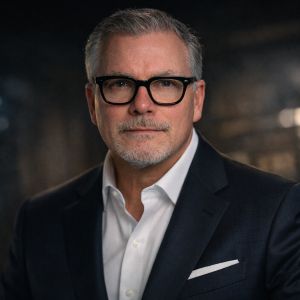
Brian Thomas: Welcome to The Digital Executive. Today’s guest is Joe Christman. Joe Christman is a seasoned executive recruiter and leadership advisor with deep expertise in the aerospace and defense industry. A retired naval aviator, Joe Christman brings a mission-driven approach to talent acquisition, helping organizations secure top-tier leadership to drive innovation and operational excellence.
Via his role in DHR Global, Joe partners with CHROs and executive teams to navigate the complex talent landscape, identifying leaders who can thrive in highly regulated and technologically advanced environments. His experience spans across Fortune 500 companies, high-growth firms, and government contractors, with a keen focus on aligning leadership strategies with long-term business objectives.
Well, good afternoon, Joe. Welcome to the show.
Joe Christman: Thanks, Brian. Good to be here.
Brian Thomas: Awesome. I appreciate it, Joe. We’ve chatted a few times, and I just appreciate you making the time to do this today. You’re in Pittsburgh, I’m in Kansas City, so we’re just an hour apart, and that makes it easy on us and our calendars, so appreciate that.
Joe, if you don’t mind, I’m jumping right into your first question. Okay. Your path is a remarkable one. You flew as a naval a- aviator, and thank you for your service, starting in the 1980s, served forward, deployed through the ’80s and ’90s, retired as a lieutenant commander in 1998, and then built a renowned s- executive search practice in aerospace and defense.
What drew you from the cockpit into the world of finding and placing leaders, and how did those years in naval aviation shape the recruiter and advisor you are today?
Joe Christman: Yeah, good question, Brian. I, I would say my, my life’s been full of basically accepting challenges. The, the naval aviator part would be interesting because I was a typical division three student playing football.
Played football in high school, wrestled. And it was a decision that I made at that time in 1980 to try, to try to do something I didn’t know that I, I could do, and that was pretty much accepting and going through the application process to aviation officer candidate school, right? I had never flown an airplane in my life.
As a matter of fact, the first time I got in the air was on my ticket to Pensacola. So I was willing to accept the challenges that, that faced me a-and also make friends and become part of a class and, and, and, work hard as a team, and that was fun. And, and that w-kind of fit my MO, right? I was, like I said, a football player and captain of the football team in college and high school.
That, that made sense. Getting through that and then going through the challenges of a, of a military career on your family, you know what that’s like. By the way, thank you for your service as well. That was fun. And leaving the service, retiring from the service and looking at, how to reinvent myself I had a, a contact in, in one of the large search firms and was looking that– for them to help me transition both my life, I was on the e- West Coast, back to Pittsburgh, family, kids, all that kind of stuff, I was offered the job with the company that interviewed me for another position, and the job was being a senior associate for about three or four partners at a major search firm.
That gave me, I thought that would give me the insight to make a transition, let’s say, to corporate, like you did. But I found myself really interested in this and, and basically said, this is pretty good. It’s a business, business to… it’s, it’s all-encompassing. It’s like a program manager, you, you have to go out and find your clients. You have to convince them that they can trust you to do it, to do the search, to handle their client, the client and handle the candidates. And then I found myself really interested in like s- succession planning assessments finding out, who are, who are these candidates, you know, at the fifteen to twenty-five-year mark, making transitions in their life to new positions.
So that became my m- my mantra, my– what I wanted to do. And, and concentrating on the aerospace and defense world, it, it, it fit my my education at that time. So I made it through there and really built the reputation of trust resilience, and accuracy for my clients so that… I had, I had candidates that would take the new position, make their announcement, and actually did the rest of their careers in the positions I placed them in
Brian Thomas: That’s awesome.
I love the backstory. And again, I, I think– I thought it was interesting I know you were up for the challenge. I think you said seeking and tackling challenges, but, to, to go into the Navy and be a naval avi- aviator is no small feat, and I know many of them. But you had a great naval career.
Obviously, it’s challenging. Been there, done that. But after you left, you had to reinvent yourself. And I thought it was cool that you, you got accepted into this firm executive search, and, and you learned a lot, obviously. A- and of course, your experience in, in the military applied to aerospace and defense, which, which made a lot of sense.
But again, you b- brought trust, accuracy, resiliency for your clients, and I think that’s really important. So thank you for, again, the backstory. Joe- Great … your n- your nonfiction book is a critical breakdown of the failure of leadership development. That’s a pretty pointed title. Where do you think that organizations are getting leadership development most wrong, and what’s the core argument you’re making about why the pipeline is breaking down?
Joe Christman: Well, yeah, you’re referring to my book called Who Will Lead? And the, the subtitle is How Speech, Safety, and Equity-Based Incentives Deformed Western Leadership Formation. And that was a interesting piece. It, it was gonna start off almost as a blog because I, I, I didn’t, I didn’t want to basically go back and look at anybody else’s work in leadership and try to define it to their way.
I, I just looked at it as a a way of examining the system, not the individual. And where I saw the system breakdown, basically, it’s in the book, that it, it kinda started with political correctness, and then it started with affirmation, and then it started with safety. So if you’re not willing to be unsafe, you have to be unsafe to be a leader, and you have to have consequences and accountability.
But we can basically dodge those things with the hijacking of language The, basically the formation of what I call derivative leadership. And then lastly, how do you, how do you, how do you fix it? And, and that is it’s not reform. It, it, it’s, it’s kind of a return to a way of a-adjusting language to where, consequences are not defined as injustice.
So from there I had a couple catchphrases. If you accept everything, you basically stand for nothing. And a couple of other things that said you can’t confuse direction for, for insult, and you have to basically be able to live with the consequences, and leadership is about making decisions and then dealing with the consequences
Brian Thomas: Thank you.
Appreciate that. Yeah, your book Who Will Lead? You certainly went in and shared some excerpts and some, some things that I think were important to leaders. You s- said it started out as a blog, but it was a way of examining the system, not the individual. And you talked a little bit about leadership, and I think it’s important that we highlight this, is as a leader you do have to take risks and be unsafe, as you said, to be a leader.
And a, a thing I highlighted here is if you accept everything, you can’t stand for anything, and, and that is so true. And gosh, leadership is not… It’s not for the, the, the weak of heart, that’s for sure. So thank you, Joe. Yeah. Joe, you’ve al- also authored a sci-fi thriller series, Singularity Drift- Yeah
exploring good and evil in the age of simulation. That’s quite a leap from executive search. What pulled you towards fiction, and how do the themes you’re wrestling with in these novels connect to what you see happening in technology and leadership today?
Joe Christman: I, I think there’s a lot of influencers there.
I was, A-again, I, I was looking at this around the COVID time when I was probably knocking out a nonfiction book a week, whether it was Jack Carr’s books or Brad Thor or, I, I decided to read almost everything Michael Crichton read. A-and I did it both reading and, and audio, because audio is an interesting way to comprehend a written book.
It, it, it’s actually quite cohesive. You, you, you get just as much out of an audio as you do out of the old wrestle with the words reading. But Singularity Drift is about the characters. I develop about five or six characters. I push it to what I would call the near future, where we’re all hearing, AI this, and we’re doing that and, Meta is being sued by, by, by people to to say, “You created an addictive substance on the internet, and it’s affecting kids.”
If you haven’t heard about that, you can look that one up, Ryan. That’s a class action lawsuit. The, the, the Singularity Drift basically it, it forms a, a group of people who try to resist, not the people that are basically running the show, if you will, from that perspective, but the the architecture.
So there’s some sabotage, there’s some military action within the framework of this this group, and they actually form a a brotherhood across the world for military leaders that, no longer wanted to serve the flags that they fought under. And, and that could be any, any country in the world.
So they, they, they form this, this cohi- coalition and they start doing some things that are, are there to head off the the AI masters that are basically doing things that you’ve heard about in the… in, in other nonfiction books, like consolidating data, taking away human agency and trying to create a one world authoritarian leadership that basically supplies safety, cohesion through, if you will, through, through technology So they’re they’re out to basically hurt the technology, but they respect the technology.
And so the, the nonfiction ends up being like, we’ll call them philosophical techno-thriller is the word that I used. On, on the big fiction– the big nonfiction book Good and Evil in the Age of Simulation, I-I-I’ll take you through it, but it’s really long, and it was a lot of research, and it’s six hundred pages, and it’s full of Chicago notes.
The bibliography is five pages long. What I did was I, I wanted to examine good and evil over the, over the course of time, going back to Plato and Aristotle, right? And then I took it through theologies, Christian theology, Hindu, Confucius the Stoics, right? The Roman, the Roman side of things.
And what I found out is you have a– th-there’s a common denominator for, for, for, for what good is. And when you find out good is, good is only as good as it’s supported by other goods. You throw a couple evils in there, things that are not cohesive to human existence, you end up not having a good. So then I take it to evil, and evil is defined by an appetite that is drives human beings that the appetite isn’t food, it’s everything that you think you want And then it went into corruption, and I got a little bit into what’s called ponderology.
And ponderology is the study of evil. A couple books reference that and a couple of authors that I referenced in the book. The pivot in the book is going to the age of simulation, and I mention that there is a class action lawsuit against social media companies, large social media companies saying that they’ve created an addictive substance on the Internet.
People are addicted to it. And, and that’s gonna be hard to prove, but, but you can see it. Our life is driven by an online situation where what you receive in your information when you’re online is different than what I get, it’s different than somebody else gets. It’s, it’s, it’s almost made to please you, right?
And that is, neural networks. So we get into that and we talk about how government uses it, how everybody’s basically feeding information and creating, we’ll call them factions of, of think, which is not the way to think. You should be an individual. You should be basing it upon your own knowledge.
The last part is human agency, and human agency comes down to the, the, the individual is the foundation. It’s the foundation of civilization. How– What affects the individual affects their family, affects their community, then it affects their local polit– poli– political structures and, when you get to the top of it, there, there’s national structure.
But you have to have a foundation to have a national structure, right? The foundation has to be the individual. And so I summarize the, the entire book by, by saying, we, we have to have what I call, you know, e-education without consequence. In other words, you, you– educators are not influencers, they are educators.
They’re, they’re forming individual minds in their classroom, and how do we do that? Well, we do it by not judging or creating your own faction when you’re, when you’re in that education process. And that’s pretty much the summary of it. So, you, you mentioned the leadership book, kind of a rant, but, but very, very pointed.
The Singularity Drift series is just stories, great characters, some military action and some philosophical pieces that drive both the protagonists and the antagonists. You get a good view of both. And then Good and Evil in the Age of Simulation is really a comprehensive viewpoint of where we’ve been for the past two thousand years or anything we can take from that.
And then, and then beware we’re, we’re under the influence of a lot of things these days, and AI hasn’t even peaked.
Brian Thomas: Wow. Lot there to unpack, but I’m excited about Singularity Drift. I think it’s, it’s amazing. I’m a sci-fi guy. I do read non-fiction as well, of course, but that’s amazing. And it’s interesting, during COVID you said you, you were reading, like, a book a week sci-fi books, and, and I think that’s pretty cool.
But, but your book… Yeah, summarize your book. I think you mentioned there’s about five or six characters. AI is, of course, like, running everything. There’s a little bit of sabotage, military action. There’s these AI masters as you mentioned. But really I just think it’s, it’s interesting because it does parallel with what we’re kind of going through now.
There’s just a lot of uncertainty around that, and I think that’s causing a lot of angst. But I appreciate you unpacking that book for us. Really do. And Joe, the last question of the day- Yeah … if you could share, between AI, autonomous systems, the commercialization of space, and a rapidly shifting defense landscape, the demands on leaders are evolving fast.
If you look five years, maybe even 10 years out, what will define the next generation of aerospace and defense leaders, and what should organizations be doing right now to build the resilient leadership teams that future will require?
Joe Christman: I think first and foremost, when we talk about, the, the, the, the modern battlefield that’s changed over the past ten years.
A-as you know, the last twenty years before that when we ended, our our, our presence in Afghanistan war has changed since then. We were fighting the let’s say a, a, a less technologically advanced group, yet we were suffering losses, as you know, in those theaters, right? So we came up with a thing called asymmetric warfare.
And how did asymmetric warfare– Well, asymmetric warfare basically said we’ve got to create precision action that doesn’t affect the population, but does, we’ll say, destroy our enemy. So precision engagement became a huge, and it’s still, y-you know, moving rapidly with with ISR being a key element and then the how to hunt and find the bad guys that you’re up against.
So that is one part of it. So the technology’s moving towards identifying your enemy and then precision striking the enemy without too much collateral damage. And that, that involves special ops, you know, Rangers. The SOCOM side of the house is, is, is gone– has gotten much, much bigger.
Special Operations Command. So what does that mean in the future? Well, we can watch, whatever we get about, let’s say Ukraine, Russia. I thought there was a couple of interesting parodies in that. One was on the Lioness where, you know, they were, they were actually on the front. And they did a good job of kinda telling you what that’s like with drones overhead, trench warfare.
I mean, that’s– it’s trench warfare in, in, in, on the front where Ukraine and Russia are basically fighting. And that’s crazy, but it has a lot of other precision weapons cheaper strike weapons drones, a-accurate, let’s say, bombing missiles and, and that are different than what we’ve seen in the past.
So, the future of it is, you know, you think that there would be a deterrence to, to conflict, and th- it’s just not happening because we have we’ll call it ideological decisions. It’s not, it’s not the technology that’s forcing us into into worse situations, it’s it- it’s it’s ideology. So how do we, how do we basically look at that?
And that kind of brings you back to the, the philosoph- the philosophical stance, where, where are human beings going? And, and, and why, why, why is conflict, armed conflict still part of the equation? That solution is out there in front of us. I don’t want it to be The, the last effort would, would be, nuclear.
We don’t wanna do that. We don’t think that that’s smart, and I don’t think we’ll see it. But the other side of it is how do we, how do we just, you know, move conflict out of the the battlefield and move it back to the we’ll say the, the, the ability of nations to actually just sit down and, and figure things out With terrorism, it’s hard to do because every time you have a terrorist, it’s usually on civilians, and that requires a nation to figure out what they’re gonna do to strike back, and it ends up in, in, in, in, we’ll call it straight, straight war conflict.
How that solution ends up is probably the reason why the, the, the, the Singularity Drift books kinda work because they, they figure it out that they don’t need to do war, they just need to do enforcement, which is more like global law enforcement. So you can take, take that and say, ” Where is it going?”
Obviously it’s going to be more information-centric and then precision strike weapons
Brian Thomas: Thank you. Appreciate that. It’s a, it’s an unfortunate thing, war and conflict but you did, walk us through kind of where we’re at, where w- we’ve been, and where we’re going. Of course, we, we did notice and again, I, I call these the forever wars, unfortunately.
Lost many of my brothers myself. Yes. Mm-hmm. So we w- we wanna g- try to get out of this. But the modern battlefield has certainly changed significantly over the past 10 years as you highlighted this asymmetric warfare. But it is getting more precise with the technology, special operations units.
But at the end of the day, it’s ideology that always drives much of these conflicts- Yeah … and it’s something that we need to focus on. I think focusing on the root cause is more important than trying to leapfrog with technological advances all the time. How do we get to the, to the root of solving these before they start?
So that’s just my two cents. But Joe-
Joe Christman: Yeah …
Brian Thomas: you were amazing.
Joe Christman: No, it’s a good two cents. We’ve, you know, you’ve been there, and, and, we don’t even understand… N- I, I think a lot of people don’t realize, you know, we, we were w- we were, since 9/11, I mean, we were at war for t- for 20 years. We had, boots on the ground in, Iraq and Afghanistan.
And after sort of the surge part of it, as you know, it became, how do you, how do you maintain order? How do you keep the radicalization of, of, of the, the male population from basically bec- creating more, battle soldiers? Or I’m gonna call them, our, our, our, our enemy, but I, I, I just look at it like this, the…
what you find out is you have to change the human condition, right? And, and that was by, you know- As a, as an occupying force, which we were, and as a a force that basically tried to maintain a new government, which we lost. And, who knows where Iraq goes, but that’s, that’s hard, that’s hard on the soldier.
That’s hard on the Amer- on, on the soldiers we put in, in harm’s way to not decisively create an outcome that people can look at and say, “That’s the outcome that I would want for the loss of the, of the, of the men and women that, that sacrificed.” So, it- it’s tough, it’s tough to do that.
Brian Thomas: Absolutely. Appreciate those insights. And Joe, it was such a pleasure having you on today, and I look forward to speaking with you real soon.
Joe Christman: Appreciate it, Brian. Appreciate everything, and, and best of luck with your your podcast and, and your, your advisory. I love it.
Brian Thomas: Bye for now.
Joe Christman Podcast Transcript. Listen to the audio on the guest’s Podcast Page.