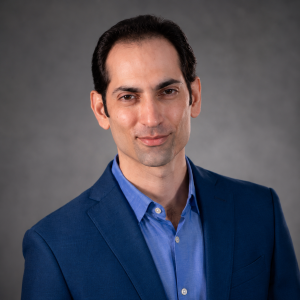
Houman Akhavan Podcast Transcript
Houman Akhavan joins host Brian Thomas on The Digital Executive Podcast.
Brian Thomas: Welcome to Coruzant Technologies, Home of The Digital Executive podcast.
Do you work in emerging tech? Working on something innovative? Maybe an entrepreneur? Apply to be a guest at www.coruzant.com/brand.
Welcome to The Digital Executive. Today’s guest is Houman Akhavan. Houman Akhavan is the founder and CEO of GCheck, a hire-to-retire screening platform built on the principle of compliance for good.
He brings more than 25 years of experience building and scaling technology businesses across retail, e-commerce, and technology, with a career defined by combining operational discipline with deep regulatory and compliance expertise. Houman is a PBSA FCR Advanced certified and serves on boards of two NASDAQ-traded companies, Outdoor Holding Company and CDON, where he contributes to audit, compensation, and corporate governance.
Earlier in his career, he served as chief marketing officer at CarParts.com, where he directed $50 million in annual budgets and helped lead the company through a significant period of digital transformation and growth. He was also part of the founding executive team that took CarParts.com public on NASDAQ and raised over $100 million, returning years later as CMO to lead its digital reinvention.
He served on Google’s Retail Advisory Council and founded Growth Rocket, a digital marketing agency, before turning his focus to background screening.
Well, good afternoon, Houman. Welcome to the show.
Houman Akhavan: Awesome, Brian. Thank you for having me. I’ve really been looking forward to this discussion.
Brian Thomas: Absolutely, my friend.
I do too. I know you’re hailing in the LA, Los Angeles area. I’m in Kansas City, so sometimes traversing calendars and time zones is a challenge, but I appreciate you going through that challenge to get here today. Thank you. And Houman, if you don’t mind, I’m gonna jump into your first question. Let’s start with your journey.
You spent twenty-five plus years scaling technology businesses, including a high-profile run as a chief marketing officer at CarParts.com. What drew you from retail and e-commerce into the world of background screening?
Houman Akhavan: That’s a great great question, Brian. On the surface, auto parts and background screening look very dr- different, but what drew me to both was the same pattern.
Both were sleepy legacy industry that needed to be built around trust. And that was very much, what Car Parts was. I mean, I’ve been with that, prior to, making the transition to background, the background screening industry, over two decades within that vertical.
There’s just so much legacy business required a digital transformation. People, operated within that industry with a very, old and outdated way of looking at the business and different things. So it was very much, you know, what excited me about that business was, the, the digital transformation that we took place there.
But also at Car Parts, the whole business really came down to one thing: Could the customer trust us enough to put a part on their car going seventy miles an hour? So, it was very much about trust. And at GCheck, the stakes are different, but they’re bigger. Think about who actually gets hired through a br- background screening system.
If you think about the home healthcare aide for your aging parent or a volunteer coach managing your kid’s after-school game, or even the nurse on the night shift at your local hospital. These are all people that, you know, go through a background screening process, but they’re very essential, you know, to, to safety and, and all these various verticals that they touch.
Further to that, every screening decision touches a real person on the other side, somebody’s kid, somebody’s parent, somebody’s patient, you know, and the gaps are real. According to the Aspen Institute, only sixty-six percent of parents could confirm their child’s youth sports coach passed a criminal background check.
Twenty-four percent said they had no idea. I mean, this is just mind-boggling. It’s, it’s not just a compliance gap, it’s a community safety gap it shows up everywhere, youth programs, healthcare, education, even industries that, that are supported through transportation. And this is really why I’m so passionate about what we’re building.
We’re monetizing a legacy industry by making trust the product, not only for the employer, for the candidate, and for the people on the other side of every hiring decision. Trust is becoming the most valuable currency in hiring, and that’s what’s driving us at G-Check.
Brian Thomas: That’s awesome. I really appreciate that.
And when I first looked at your profile and your bio, I was like, “Car parts? How does this translate to, background screening?” And, and I love it. You pull that all together, and obviously the number one thing, you talked about it, is obviously having trust and safety and, of course, you wanted to leave the world in a better place and really transforming this legacy industry.
And you’ve shared some statistics about screening and background and, and parents not knowing, who their children are exposed to as far as criminal background checks. Sometimes they’re just not as thorough, they’re not accurate, and I just really appreciate you building that trust within this industry.
Houman, G-Check is built on the principle of compliance for good. Where did that conviction come from, and what did you see in the screening industry that convinced you it was overdue for change?
Houman Akhavan: Yeah, absolutely. When… As I came out of the car parts industry, being in that industry for over two decades, and I reflected on my experiences there, yes, I had all the successes, all the accomplishments, and all that’s great, and it’s obviously what’s drives us.
I mean, at the end of the day, we wanna be successful in any craft that we’re in. But I felt like something was missing, and, and I always looked at companies that had a purpose-driven mission, right? They could obviously run a profitable business. That’s very important, too. Don’t get me wrong. I’m not, I’m not downplaying that.
You wanna run a business that could be sustainable. But if you can align it with a purpose-driven mission, then what better way that you can do some good in the world, and it’s just something that I’ve always personally been drawn to. If I could, look back on my legacy one day and say, “Hey, I did something that had an impact on people’s lives,” and I just didn’t feel that.
And the car parts industry was great, and it’s where I built my career and, and a lot of my success. So, compliance for good was the opportunity to build that. And what I came to believe is that compliance done right is one of the most underrated forces for good in business. And that’s where we came up with compliance for good.
It’s built on three pillars: transparency, fairness, and protective compliance. And it’s d- it’s dynamic, and it applies in so many different ways because it, it, it could… And that was really important to us. How could this mission be applied to across industries, right? We don’t wanna come up with something that, hey, it’s only limited to one particular industry.
So, it was very important for us to have a driving mission and philosophy that we can affect and, and have an impact on so many different industries. So to further that, it protects vulnerable populations. And we just touched on this. Whether it’s kids and youth programs, patients in healthcare, the elderly in home care, it’s really the people who depend on the integrity of who’s been hired to care for them.
And in the process, it also protects brands and organizations. Obviously, you know, one very obvious example is one bad hire can result in a negligent hiring lawsuit, a story in the news, or a sex offender slipping through onto a volunteer roster can actually do undue years of brand equity overnight.
Compliance done right protects the people that you’re trying to serve and the organization serving them. And again, the same way that I talked about how there was a legacy issue within the auto parts vertical, there’s also a legacy you know, providers that are within the background screening vertical, where they just treat compliance as a cost center.
It’s something that you, you just do so you don’t get sued, and it– and they see it as the goal to just check a box and move on. And that framing fails on both sides. Candidates can get black box rejections with no recourse. Or employers can get stuck with a consumer report that they can’t defend if a decision is challenged by a consumer.
And where we see the bigger shift happening is compliance is becoming the category. The differentiator in screening is moving away from speed and price. And you see this in a lot of verticals. Everything’s about speed and, and it’s a race to the bottom from pr- from a price perspective. But what we believe, we need to be moving towards auditability, transparency, and trust, and that’s the lane we’re building.
Just to close on that thought, compliance should build trust, not friction. That is truly what compliance for good is all about.
Brian Thomas: That’s awesome. Thank you. And you really just really impact that part around trust and how that relates in that whole c- compliance piece. And you talked about it, you’re always driven over your career and when you were…
when you founded G-Check, you talked about that importance of a mission-driven purpose, and the big thing I took away here, that compliance for good was built on three pillars: transparency, fairness, and protective compliance. And again, I appreciate you sharing that. I think there’s a lot behind that, and, and I’m glad we’re getting your message out today.
Houman, you recently partnered with Cerebrum to defend against deepfakes and synthetic identities in hiring. How serious is the fraud threat right now, and why does identity verification have to start at the very front of the screening workflow?
Houman Akhavan: Yeah. This is obviously, it’s a very serious issue, and it’s one that, that we’re taking with a lot of attention and focus.
I mean, you… the, the news headlines have been there, and this isn’t a future problem. It’s already affecting organizations today, and the projections I’ve seen are alarming. According to Gartner Research, they’re predicting by twenty twenty-eight, one in four candidate profiles globally will be fake.
And to add to that, Deloitte projects a- AI-enabled fraud losses in the US will hit forty billion by twenty twenty-seven, up from twelve billion just a few years ago. And what we’re seeing operationally, you know, in G-Check today is we’re seeing synthetic identities, we’re seeing AI-generated work samples, voice-cloned references, and deepfake video interviews, just among a few of the things that we’re seeing right now that we’re trying to combat against And it’s actually gotten so bad that federal agencies are warning employers about this.
Recently the FBI and DOJ have been i-issuing advisories. In, in one, I could share a couple startling ones. There are nationwide cases of North Korean operatives getting hired into US tech companies using stolen American identities. Further to add to that, an Arizona woman was just recently sentenced to eight years in prison for running what they call the laptop farm for these workers.
So basically, people in the US had set up laptop farms, so for people, from countries such as North Korea could, use deepfakes and apply for jobs, and they were getting hired into US, tech companies. Imagine what a breakdown of security and an intrusion is taking place. And, and further to add to that, in our own research, workers are telling us what’s driving this behavior.
As you may be aware, we recently surveyed fifteen hundred workers for automation anxiety report that was just recently res– released earlier this month. Sixty-three percent admitted to exaggerating their AI skills, and among Gen Z, it was as high as eighty percent. But the most surprising stat was that forty-eight percent told us that weak employer verification is what made it possible.
Essentially, workers are literally telling employers their verification gap is what’s driving the behavior. You know, I use the analogy of like if you leave your back door open to your house and somebody walks by, well, they’re gonna take advantage of that opportunity. And what we feel, and we talked about transparency, if the other side understands that, hey, there are systems in place and these, these are the things that we’re gonna be verifying, then they wouldn’t, they wouldn’t be embellishing and exaggerating skills that they knew were gonna be tested, right?
So even workers are saying, “Hey, well, if we knew the verification would be stronger, then maybe we wouldn’t go to the, to these extremes.” And that’s essentially why we built our partnership with Cerebrum. It’s what we call verified entry. Identity gets confirmed with biometric liveness detection before any background check begin, begins.
Here’s the thing, hiring used to be about whether the candidate was qualified. Today, it’s also about whether the candidate is really who they say they are. And that continues every downstream check, whether it’s a criminal record, sex offender registry, a nursing license, or employment verification, it’s anchored to the identity at the top of the order.
So if that identity is wrong, you’re verifying the wrong person. So essentially, if that identity… Like it has to be the first step in the process. Many years ago, people weren’t even thinking about identity because so many hiring was done in person. But obviously we’re now in this co- post-COVID era.
You have report– remote workforces that continue to be, employed. And I don’t n-necessarily see that changing anytime soon, and we have to change, the background screening industry. And I really believe that verified entry has to start at the beginning of the process.
And one final point on identity, a nurse was arrested in Pennsylvania last summer with twenty aliases and seven Social Security numbers. Running ch- background checks on the wrong identity makes everything below it meaningless. Identity has to be at the top, or none of it means anything. And I truly believe this is the direction that the industry is heading.
Brian Thomas: Wow, amazing. You shared a lot of statistics there for sure. Some of the stuff we sort of knew about, but the fact that you add some numbers behind this and the fact people are running laptop farms and nurses with multiple Social Security numbers is crazy. But at the end of the day, th- it is overwhelming and we’ve got to get it right.
And you talked about that identity being first foundationally, right? Identity care– verification with biometric qualification before any background check starts. That’s the big highlight that I took away. Obviously, security is paramount here. So, thank you. And Houman, last question of the day. As we look ahead to the future, how do you see AI reshaping background screening and hiring over the next few years?
And what should employers be doing now to build trust into that process?
Houman Akhavan: Yeah, let me start with the upside because it’s, it’s real. AI is making screening generally better. It’s faster, more accurate. It’s better at things like sorting out common names and alias matching. I, I’ll use my name as an example, Houman Akhavan.
I think in, in, in the world there’s probably three or four that have that name combination. But if you have a name like John Smith, there’s like over forty thousand John Smith in, in North America alone. So, it’s, for things like that, leveraging biometric liveness detection and other forms of AI, it can really help,
it’s gonna do it way better than a human can to just really identify, accuracy and mismatches, and the efficiency gains are real, and we see it every day in, in G- checks operations. But the bigger shift is that screening is moving away from a one-time event at hire to a continuous trust and risk function.
So, in the past, you would have always thought about background check, it’s done at the point of hire. But it’s no longer the case. Now you have continuous monitoring, you have continuous background checks, and this matters a lot in industries such as healthcare, where a nurse can lose their license tomorrow or show up on an exclusion list.
If they’re employed in a healthcare environment, you can’t only check that information at the time of hire. It’s essential to know that throughout their, the tenure of their employment in the industry that they’re in. There’s patients in their care that need someone watching for that change.
Or I’ll use another industry, a commercial truck driver. Think about a huge large semi that are on the roads. I mean, these are large vehicles that if they don’t have the right qualified drivers, and if, let’s say, a concerning red flag shows up on their motor vehicle record, that’s not something that you could check at the time of, of the hiring.
There’s obviously, the transportation industry is highly regulated, and there’s, standards and rules of when those things need to be checked. But that’s another example of continuous monitoring is something that’s also continuously changing. And, to add to that, the workforce is dynamic, and verification has to be too.
I’ll, I’ll use one more example. Social media screening is another one, where in the past, social media screening wasn’t necessarily something that’s prevalent. But now in this day and age, people are posting things on social media, and that’s something that, you know, obviously with the proper consents and all that, it’s something that could be leveraged in the background check process as well.
So, if I can, highlight three areas of what employers should be doing right now, we touched on earlier. First, verify identity at the point of the job application, not at the offer stage. Second, keep humans in the loop on adverse decisions. Sixty, and according to our research, sixty-one percent of workers want human review when AI is involved.
This is table stakes for how you defend an adverse action under the Federal Credit Reporting Act. So, it’s not only that you were doing it out of the goodness of our heart. The, the FCRA, it’s basically the federal guidelines that that oversee what consumer reporting agency, essentially background check companies can do, and you need a human in the loop.
So while you use AI as a tool, and it’s great for efficiency, automation, and all that, all of that, and, and, and use it in that regard, but you still need a human in the loop for when things go wrong and, for to be in compliance, with the Federal Credit Reporting Act. So, you absolutely need to have a human in the loop.
When we talk about AI, it’s not about a hundred percent automation, right? You still need a human in the loop to… And that’s how you preserve trust with the candidate. And third is to treat compliance as a system, not a check, checkbox. The states are diverging fast. Laws, whether it’s California, Colorado, New York, or Illinois, each of them are going their own separate ways.
So, it’s important that, you’re, you treat compliance, as a holistic approach. And, and, and that’s where we see the, the mode is, right? It’s not just a checkbox. And I believe that the companies that are gonna win are using AI aggressively, but they’re keeping humans in loop on the decisions that matter most.
And just to close on this point, responsible AI is going to be a real competitive advantage, and you really… Again, not to belabor the point, but you need humans in the loop, and I believe we are best positioned to win here.
Brian Thomas: Thank you. Really appreciate that, Houman. A couple things I highlighted here.
Obviously, AI is gonna make it way better. You know, the screening process will be faster, more accurate more efficiencies along the way. But what I really took away from this is the screening event you talked about. Generally that happens at the beginning, and it’s a one-time deal, but now it’s moving from that point of hire to continually monitoring, especially in those sensitive, regulated, or high-risk environments.
I thought that was interesting. And the workforce is dynamic, so should the screening and verification process. And the last thing I’ll, I’ll say is you talked about employers should be looking for three things, and I took a note here. Verify identity at application. Keep humans in the loop for, for everything, but especially those adverse decisions.
And then treat compliance as a system, not a checkbox. And I think those are the big takeaways from, from your answers today, and I really appreciate it. And Houman, it was such a pleasure having you on today, and I look forward to speaking with you real soon.
Houman Akhavan: Yeah. Thank you, Brian. Thank you for having me, and I hope your audience found value in this and, and looking forward to doing this again in the future. Appreciate it.
BrianThomas: Bye for now.
Houman Akhavan Podcast Transcript. Listen to the audio on the guest’s Podcast Page.