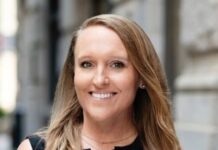
Bradley Taylor Podcast Transcript
Bradley Taylor joins host Brian Thomas on The Digital Executive Podcast.
Brian Thomas: Welcome to The Digital Executive. Today’s guest is Bradley Taylor. Bradley Taylor serves as the CEO and co-founder of ClareCast, a predictive workforce intelligence platform. He has spent twenty-five years at the intersection of employee benefits, insurance technology, and revenue operations, and he’s built his career around one recurring challenge: helping organizations make better decisions with better data.
This experience, navigating boardrooms with incomplete data, managing revenue tied directly to customer headcount, and forecasting without the right tools, is what eventually led Bradley to co-found ClareCast. He didn’t come to the problem theoretically. He lived it at scale across multiple organizations for over two decades. ClareCast is a tool he’d wished he’d had. Well, good afternoon, Bradley. Welcome to the show.
Bradley Taylor: Thank you, Brian. Great to be here.
Brian Thomas: Absolutely, my friend. I appreciate it. You’re hailing out of Grand Rapids, Michigan. I’m in Kansas City, so appreciate one time zone tr- leap here, and I, again, just so appreciate having the time and opportunity to speak with you today.
So Bradley, if you don’t mind, I’m gonna jump into your very first question. You founded Next Generation Enrollment. You grew it to serve over nine hundred clients, navigated its acquisition by PlanSource and then by Vista Private Equity, and stayed through both transitions in strategic and strategy leadership roles.
What did sitting in boardrooms with incomplete data for two decades across multiple ownership structures teach you that ultimately became the founding insight behind ClareCast?
Bradley Taylor: Yeah. Well, ultimately, I was tired of the feeling that comes from uncertainty and surprises and just wasting time, and I wanted a platform that would help me see what’s coming.
And I think I see it when I look at how you talk about your business, where you talk about consistency, building trust. And when you’re in a private equity-backed company, everybody’s working towards an exit and a desire to transact this business again. And that’s just the known playbook of why you’re there.
And so you spend a ton of time planning and preparing and researching, and it’s also just so many internal meetings. And when none of that works and it goes wrong, and gut feel at scale just isn’t good enough, then, then something needs to change. And so that’s really what I wanted to set out to do. And I think with AI today, you can do that because we can get through so much data quickly.
The businesses that I was a part of were all headcount dependent as well, and so all of our customers were the way we grow revenue. So a per employee per month fee might be five dollars, seven dollars, ten dollars, whatever the services were, the size of the business and so on. And so when we had all these lives on the system, we also struggled to forecast what are these customers gonna look like a year from now?
How big are they gonna be? Are they gonna grow? Are they gonna shrink? What’s our organic revenue gonna look like? And we had no forward-looking visibility into anything. Everything was always a reaction, a surprise. Well, last year we grew at three percent, so we’ll just assume that. But macroeconomic trends are growing at four percent, so maybe we’ll, maybe we’ll do three and a half percent for the book of customers.
Well, what if we find out that we didn’t know the industries of our clients and we actually grew at negative one percent for the quarter, and now we’re way short and the quarter’s over, and we’re reacting, and we’re trying to figure out what just happened to us, and that happens repeatedly. We’d hire a bunch of salespeople, and then we wouldn’t hit plan because we didn’t point them in the right direction.
And so I started to look into what’s out there for this. Is anybody offering a headcount forecasting service? And really didn’t find that. And so with– from this experience and just the desire to be not feeling that way anymore. I found a co-part– one co-founder, Jonathan, who came from Databricks and had a lot of the background that I needed.
And through Jonathan, we found Marvin, who’s our chief data scientist. First thing we did was build a headcount forecasting model to allow us to predict a company’s headcount within five percent of actual eighty percent of the time. We’ve since built a team. This was early last year. We’ve since built a team.
Now we’ve got sixteen people at the moment and having a lot of fun trying to get out, talk to customers about what it feels like to be certain versus uncertainty, using data to make decisions, and so on and so forth. So a lot of it was just the learned experience of the pressure working in these types of environments.
The goal that you have, which is to survive and add that to your, to your work resume, is being a part of an exit and helping a business transact and all of that. But the, the clock works against you, and when you’re not seeing the results, the growth rates, you can’t answer questions, then it all kind of changes and becomes highly pressure packed and oftentimes not so fun
Brian Thomas: Thank you.
Appreciate that. And you certainly had a pain point there. You found a gap in the market, actually. You’re tired of feeling this uncertainty, these surprises, a lot of wasted time, a lot of meetings. I get that. Been in a lot of board meetings myself and, and not having answers is not, not a good place to be in.
But you can’t… I liked how you said this, you can’t do the gut feel at scale, and assumptions don’t always work either. But I like the fact that again, that gap in the market, there was no head count forecasting service out there, so you built a model, you got an amazing team, and leveraging the data to make these decisions.
So I appreciate your insights. Bradley, you’ve described forecasting revenue tied to customer headcount without the right tools as one of the core frustrations that led you to ClareCast. What does predictability actually mean in practice for a CEO or board, and why do most companies still operate without it, even with so much data available to them?
Bradley Taylor: Yeah. I think when you think of what helps a business become worth a lot, it’s doing what you say you’re gonna do. Valuation is dependent on predictability, and I was in recurring revenue businesses where you’d think predictability was pretty common because we had customers under contract. We knew what was gonna happen.
We knew which clients were coming up for renewal. We had new business goals. We had certainly opportunities to sell new products to existing customers, and all of that stuff was part of the plan. But we missed so much of the signals that would lead to churn or the signals that would lead to just head count declining overall in these businesses.
And I think you can see it today with consumption-based businesses too, where fees are charged on usage. And if a business is declining, their usage may decline. We may see agents and things changing a lot of this as we, as we go, which is a lot of what our report was talking about. But I think for predictability, it’s so important.
You wanna sell a tech business on forward-looking revenues, pro forma revenues, and to do that, you need people to believe that that’s a plan you’re gonna hit. And when you don’t have data behind decisions, that’s back to the gut feel stuff, then you miss, and you might be in the middle of a diligence process, and you miss the quarter.
Obviously, we don’t want that to happen. So it felt like putting something together that allowed us to make the right decisions and defend those decisions with conviction would then let us have the data that helps make the best decisions and put the best plan together to not just do what we’ve used to do, but what we need to do in the future.
You hear so much of the, you know, every MBA city you need a, you need a salesperson. Well, why? Why? Why are you doing that? Why are you building those features in the product roadmap? Which customers are they gonna help you win? And so being able to explain stuff, be predictable, you get rewarded for that.
Now, in terms of why aren’t people doing it more, I just think it’s one of those you don’t know some of this stuff exists yet. We– When we launched our website initially, we did a keyword study with a… We hired an SEO consultant, and boy, the, the organic search for predictive company intelligence, predictive intelligence company int– It was super low, like single digits almost in terms of the number of people out looking for this.
And so we need to build awareness, get our brand out there, help people understand these tools are available, they can help now. And with AI, we, we’ve amassed six hundred billion rows of data at this point we sit on, and we can get through that with models and LLMs and things. We do all this work on Databricks, so we can process this data very quickly, which is a new thing.
You really couldn’t do this before. You couldn’t have millions of news articles and signals and millions of job postings and all of this stuff at scale to help understand what’s happening in an industry, a geography. Why would we do this? So I think times are changing, and we’ve gotta build, build our brand to get out there and make people know we exist.
But ultimately, if we can help people sit in these meetings and, and present their plans salespeople can be calling on the right customers where they’re compounding their, their pipelines because they’re forecasting into the right areas where customers need their services. Their– these clients are gonna grow over time.
You have built-in headcount growth, all of that stuff, or, or usage. It really becomes meaningful, and then boards reward that. When you’re predictable, you get so much more freedom. You get investment. You– They get– You build trust. It’s a winning culture. It just, oh, it just so much comes from that, and that, that I was so hungry for that and excited to be able to help bring that to other people.
Brian Thomas: That’s amazing. And thank you, Bradley. You talked a little bit about that predictability, right? You know, selling those performance based on future predictions that’s a tough business to be in. And so, you know, you’re actually using data to make these best decisions and, and I liked how you talked about a few other things, including your SEO and brand awareness strategy.
When you initially launched this, you could tell that there was just really not a lot of information about this out there, and you talked through that process of, of getting that brand awareness out there, and I think that’s important. Absolutely talk about that all the time here on the podcast, actually.
So thank you. Bradley, your recent report found that companies which later announced AI-driven workforce changes were nearly one point seven times more likely to have had a transformation hire in place than companies restructuring for other reasons. What does a transformation hire actually look like on an org chart, and why is bringing in that specific kind of leader such a reliable tell that headcount reductions are coming?
Bradley Taylor: Yeah, it’s a signal that we– that we’ve found and we’ve been looking for. So as a predictions business, we have a hypothesis. The report, we tried to be clear in the report that we don’t, we don’t have any insider knowledge about any specific events and things. But when you start to see a transformation– transformational AI hire, like a chief AI officer or somebody who’s put in charge To evaluate tools and create a unified approach, establish governance, security.
That right there is a clear level of sophistication where a business is serious about, about AI. You wouldn’t make that hire if you were just curious. You would hire a consultant you would prompt it into Claude. But to bring somebody on full-time as an experienced, seasoned executive, then that person’s going to bring what we’re seeing as likely change when it– and I think the Meta case study is a great example that we outlined where they had this individual in place.
And so we looked at that, and then we found, okay how many of these businesses that have announced had this role in place? And that was the– where the one point seven X figure comes from. And so I think it’s an important signal. I think, I think when you’re in a PE-backed business or when you’re a publicly traded company, then there’s already immense pressure to be efficient with the spend and all of that.
So here it’s, it’s a signal that makes it more clear that something might be coming. And I think for employees who are trying to figure out, how do I– what does this mean to me? How do I use insights to help me prepare for myself and plan ahead? You could look for things like, is my business backfilling people?
Do we have open roles right now? How sophisticated are we? What’s happening here? Oh, when we have one of these individuals in the business now, then we may be looking at either flattening our, our hiring patterns or leading us to an AI-driven layoff. So seeing that role come in is certainly a sign that you need, you need a baseline level of sophistication, which was another point we outlined in the report, where you need at least twenty.
We felt like twenty active technology mentions in job postings would lead to sophistication that you’d have the baseline to be able to do this. And then we looked at headcount patterns over the trailing twelve months and over the coming twelve months, and then you layer in this transformational hire, and it becomes pretty clear that’s a formula that could in fact lead to AI in the business, which may lead to layoffs.
Who knows? It may not, but that, that transformational role is an important signal.
Brian Thomas: Thank you. Really appreciate you going into this a little bit for our audience. And I– what I heard here is transformation hire is a signal that you’re looking for, and it’s important to recognize these signals as it’s an indication of an upcoming change.
And there’s things that you talked about, you look at staffing changes, headcount patterns, transformation changes, that sort of thing. But there’s that baseline sophistication you talked about that you definitely look to, so I appreciate those insights.
Bradley Taylor: Yeah.
BrianThomas: And Bradley, the last question of the day, you’ve said companies, government leaders, and individuals navigate disruption best when they can see it coming, and that your goal is to give business leaders, policymakers, and workers a fuller picture of labor disruption occurring now and in the future.
Where do you see predictive workforce intelligence heading over the next five years, and what would it take for tools like ClareCast to become as standard in corporate decision-making as financial forecasting is today?
Bradley Taylor: Yeah, we laugh around what– by what would it take in our marketing to change or replace the statement of what’s the forecast with what’s the ClareCast?
And that’d be cool if we could actually pull that off. Obviously, we, we would love to see that become a thing. And the difference is with the ClareCast, it’s It’s what’s that revenue or what’s the forecast look like a year from now, let’s say? If we actually brought these customers into the customer base, what happens?
What happens to our concentration? Whoa, we have way too much construction now or way too much life sciences or automotive or whatever the industry is. Or is this business tracking the industry at the level that they need to or the geography? When investors say, “Who are your 10 largest clients and how much revenue do they make up and who’s your single largest client and what industries?”
You have those answers. But when you think of the forecast, it’s the business today. How much revenue is it right now? What’s it bringing in? What is it– But what does it do to the client base? How does it blend in? Is it accretive? And then what’s the joint customer base of new and existing gonna look like a year from now or 20 months from now?
That’s what we can offer. Now you start to get a sense of, boy, if we could just write the right clients, we’re selling built-in growth, and our customer base is just gonna help us achieve the goal. And the goal might be multiple things. It could be… You know, these, these are– Another, this is another lesson of mine was we would– we really didn’t have unified goals in terms of what did it take to actually achieve the mission.
And the mission was build a good business that will transact again. But it became very profile driven, like hit EBITDA hit this revenue growth. Well, how are you gonna do that? And what’s it gonna take to do that? Is the product roadmap aligned with the new customers we need to sell to? Is customer success aligned to the price increasing strategy?
Well, we can’t just go give everybody a price increase who’s renewing, because if you’re a declining client, you’re gonna take us to market and you’re gonna shop the business, and then we may lose that customer. Well, how do we recontract the clients who are declining and go like crazy to win the customers who are clearly growing?
There was none of that stuff. And so I think Having this learned experience where you’ve been through this stuff and then you can– This is like the AI superhero stuff is we’ve been doing this a long time. You’ve got all these attributes. You were in the Marines, Brian. Y-y-you know what it takes to have grit and drive and leadership skills and all of that.
And then when you can layer AI into it, and you can have a plan, and you can act with conviction, now I feel like you’ve got the formula for world domination kind of thing. And so in the boardroom you just need to know it’s there. I feel like these sorts of tools are coming to light and are available and need to be used.
But once, once you have that feeling of this worked or now I know, or I’ve got that conviction and there’s less of that uncertainty, just the feeling in your stomach of, we’re gonna get blasted in here. This isn’t gonna go well, and that’s gonna lead to like how many more meetings? That’s the feeling we wanna avoid.
And so with these prediction tools available now I think awareness is such a key thing, but then just thinking differently and thinking outside the box to say, we don’t have to do it the way we used to do it. We can go find a way to do it differently, and then layer all this stuff in, look at the data, point the team in the right direction, start winning.
That stuff I think will help compound businesses to do it differently. And we’re really excited about that. There’s just a, such a different feeling when it comes to knowing and feeling like you’re the smartest person in the room. We’ve done the research, we’re prepared, and we can do it effectively and save ourselves a lot of time.
Then ultimately that’s a much better business to be a part of.
Brian Thomas: Absolutely. And just to highlight a few things, Bradley I, I thought it was cool and wouldn’t it be cool to build your brand so big that people say, “Hey, what’s the ClareCast?” Yeah. Much like the forecast, right? That’s awesome. And you talked about, you know, just looking at things, predictability.
What’s the revenue look like in twelve months from now? And you talked about some data points. You know, if you had the production roadmap, pricing structure, recontracting customers, et cetera. With all that structured data and AI, you can feel better about predictability. And when you’re sitting in a boardroom and you’re presenting, you know, your forecast or your ClareCast, there’s less anxiety in the room, and you feel good about what you’re presenting.
So I really appreciate your insights today. And Bradley, it was such a pleasure having you on today, and I look forward to speaking with you real soon.
Bradley Taylor: Thank you, Brian. Appreciate you having me on your show.
Brian Thomas: Bye for now.
Bradley Taylor Podcast Transcript. Listen to the audio on the guest’s Podcast Page.