Offices Changed Faster Than Security Did
For decades, corporate cybersecurity relied on a simple assumption: employees worked inside the office, devices stayed within a controlled environment, and sensitive data rarely moved beyond the corporate network. Firewalls protected the perimeter, IT teams monitored internal traffic, and access was tied to physical infrastructure.
That model no longer reflects reality.
Modern businesses operate across cloud platforms, remote workspaces, shared devices, and globally distributed teams. Employees connect from airports, coworking spaces, cafés, and home networks. Applications live in SaaS ecosystems instead of on local servers. The traditional network perimeter has effectively dissolved, yet many organizations still depend on security architectures designed for a completely different era.
This mismatch is forcing companies to rethink how enterprise security should function in a cloud-first world.
Key Takeaways
- Corporate cybersecurity must evolve as remote work and cloud platforms become the norm.
- Legacy security models create friction; they can’t adapt to today’s dynamic network environment.
- A shift to identity-centered security validates every user and device rather than relying on strict network perimeters.
- SASE simplifies security by merging networking and cybersecurity into a unified architecture.
- Organizations must treat cybersecurity as integral infrastructure, not just an add-on, to meet modern operational demands.
Table of contents
- Offices Changed Faster Than Security Did
- Why Legacy Security Models Are Breaking Down
- The Shift Toward Identity-Centered Security
- Why SASE Became a Strategic Priority
- Performance Matters as Much as Protection
- The Growing Importance of Secure Remote Access
- Cybersecurity as Infrastructure, Not Add-On
- Why the Next Decade of Enterprise Security Will Look Different
Why Legacy Security Models Are Breaking Down
Traditional corporate networks were built around centralization. Traffic flowed through company-controlled environments before reaching external services. Security tools inspected activity from a predictable location.
Today, that approach often creates friction rather than protection.
Remote employees using VPN concentrators experience latency because traffic is routed inefficiently through centralized gateways. Security policies become inconsistent across devices and regions. Meanwhile, IT departments struggle to maintain visibility over users accessing dozens of cloud services simultaneously.
Cybercriminals have adapted quickly to this fragmentation. Instead of targeting hardened infrastructure directly, attackers increasingly exploit identity systems, unsecured endpoints, and weak access policies. Compromised credentials now represent one of the most common entry points for large-scale breaches.
The problem is not simply that networks became more complex. It is that security frameworks failed to evolve at the same pace as business operations.
The Shift Toward Identity-Centered Security
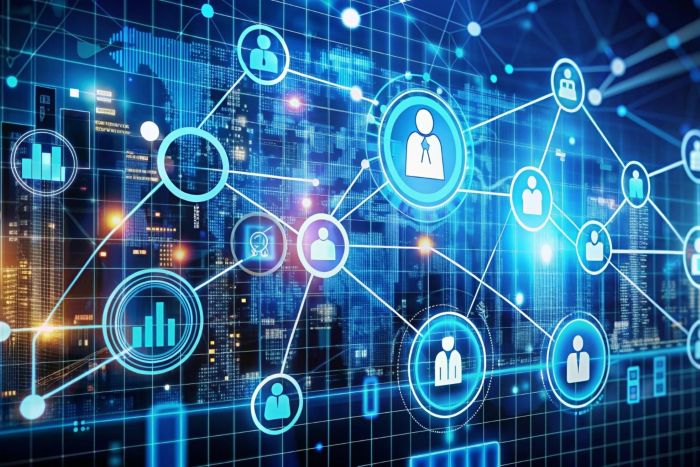
Modern cybersecurity increasingly focuses on identity rather than location. Instead of assuming that anything inside a corporate network is trustworthy, organizations now verify every user, device, and connection continuously.
This philosophy, often associated with Zero Trust architecture, changes how access is granted. Employees receive permissions based on context, device posture, role, and authentication strength rather than their physical location.
A finance manager accessing payroll systems from a secured company laptop may receive immediate approval. The same request from an unknown device in another country could trigger additional verification or complete denial.
This dynamic model reflects how modern organizations actually operate. Work is no longer tied to a building, so security cannot depend on one either.
Why SASE Became a Strategic Priority
As companies searched for ways to combine networking performance with modern security requirements, Secure Access Service Edge (SASE) emerged as a practical solution. Instead of separating networking tools from cybersecurity controls, SASE integrates them into a unified cloud-delivered architecture.
The appeal lies in consolidation. Businesses no longer need disconnected systems for VPN access, traffic filtering, cloud security, and identity verification. These functions operate together through a centralized framework designed for distributed environments.
Many organizations evaluating long-term infrastructure strategies for their corporate network are now comparing different SASE solution providers to reduce operational complexity while improving visibility across remote users and cloud resources.
This shift is particularly relevant for companies managing hybrid workforces, global operations, or rapid cloud adoption. Security policies can be enforced consistently regardless of where employees connect from.
Performance Matters as Much as Protection
One reason older security systems frustrate users is that they were not designed for modern traffic patterns. When every request must pass through a central corporate gateway, delays become unavoidable.
Employees notice this immediately. Video conferencing degrades, cloud applications slow down, and file transfers become inconsistent. Over time, productivity suffers and users begin circumventing security controls altogether.
Cloud-native security architectures attempt to solve this by inspecting traffic closer to the user instead of routing everything through headquarters. The result is lower latency and better user experience without sacrificing visibility or policy enforcement.
This balance between usability and protection is becoming increasingly important. Security systems that disrupt workflows often fail because employees seek easier alternatives outside official channels.
The Growing Importance of Secure Remote Access
Remote work is no longer a temporary adjustment. For many industries, distributed operations became permanent after businesses recognized both the flexibility and cost advantages involved.
However, long-term remote work fundamentally changes risk exposure.
Home networks rarely meet enterprise security standards. Personal devices may lack proper monitoring. Employees frequently move between trusted and untrusted environments throughout the day. In this landscape, organizations must secure connections without assuming control over every surrounding network.
Secure remote access solutions now focus less on simply “connecting to the office” and more on ensuring that access remains continuously verified and monitored. Device health, authentication signals, and behavioral patterns all contribute to risk evaluation in real time.
Cybersecurity as Infrastructure, Not Add-On
A major shift happening across enterprise IT is the recognition that cybersecurity cannot remain a separate layer added after systems are deployed. It must function as part of the infrastructure itself.
Cloud transformation accelerated this realization. Businesses adopting SaaS platforms, distributed applications, and remote operations discovered that fragmented security tools create blind spots. Every disconnected system increases administrative overhead and complicates incident response.
Integrated architectures simplify governance while reducing the likelihood of misconfigurations. They also allow organizations to scale faster because networking and security evolve together rather than independently.
This operational efficiency matters as much as technical protection. Security teams are under pressure to manage expanding environments with limited personnel and tighter budgets.
Why the Next Decade of Enterprise Security Will Look Different
The future of corporate network cybersecurity is moving away from static defenses and toward adaptive systems capable of responding dynamically to changing conditions. Identity verification, behavioral analysis, device trust, and cloud-native policy enforcement are becoming foundational components of enterprise infrastructure.
Organizations that continue relying entirely on perimeter-based models may find themselves increasingly vulnerable—not necessarily because older technologies stopped working, but because business operations changed faster than the systems protecting them.
Security is no longer about guarding a single network. It is about managing trust across constantly shifting digital environments where users, devices, and applications exist everywhere at once.