The Technology That Would Not Die
When QR codes surged in 2020, most observers assumed the adoption was pandemic-driven and temporary — a contactless menu replacement that would fade as dining rooms reopened. That prediction proved wrong. QR code scans increased 433% between 2021 and 2025, and the codes have entrenched themselves across retail, logistics, healthcare, and increasingly, consumer events. The wedding industry, worth approximately $70 billion annually in the United States alone, is emerging as one of the more surprising — and structurally important — footholds for this technology.
The mechanism is not complex, but the problem it solves is genuinely significant: for decades, there was no reliable way for couples to collect the hundreds of candid photographs their guests took during one of the most documented days of their lives.
Key Takeaways
- The wedding industry has embraced QR codes for photo sharing, increasing their usage significantly since the pandemic.
- QR codes provide a simple solution to collect candid photos from guests, surpassing traditional photography limitations.
- Modern QR photo sharing allows guests to upload images easily, avoiding friction from app downloads or account setups.
- The economic benefits of QR-based sharing are clear; it’s less expensive and faster than previous methods like disposable cameras.
- The success of QR sharing in weddings may influence broader event technologies, as it fulfills a universal need with minimal hurdles.
Table of contents
The Actual Problem QR Sharing Solves
The wedding photography market has evolved significantly. Professional photographers have become technically sophisticated, and the final galleries delivered to couples are often exceptional. What they cannot capture, however, is scale. A professional photographer, working alone or with one assistant, documents a fraction of what 150 guests with smartphones collectively observe throughout a six-to-eight-hour event.
The math is unambiguous. The average wedding hosts between 100 and 150 guests, the majority of whom carry a camera-capable smartphone. Collectively, those guests take thousands of photographs — candid table moments, speeches photographed from unexpected angles, children dancing, older relatives in rare good humor. These images are irreplaceable, and until recently, most of them disappeared into personal camera rolls within days of the event.
Prior solutions exposed the gap without filling it. Disposable cameras, a staple of weddings through the 1990s and early 2000s, offered 27 exposures per unit, required two weeks of development time, and routinely produced images where 30% or more were unusable. Digital alternatives — shared Google Photos albums, WhatsApp group threads, and early apps like WedPics — moved the medium to smartphones but introduced friction: links buried in group chats, inconsistent upload behavior, and guests who simply forgot to share.

How QR-Based Photo Collection Actually Works
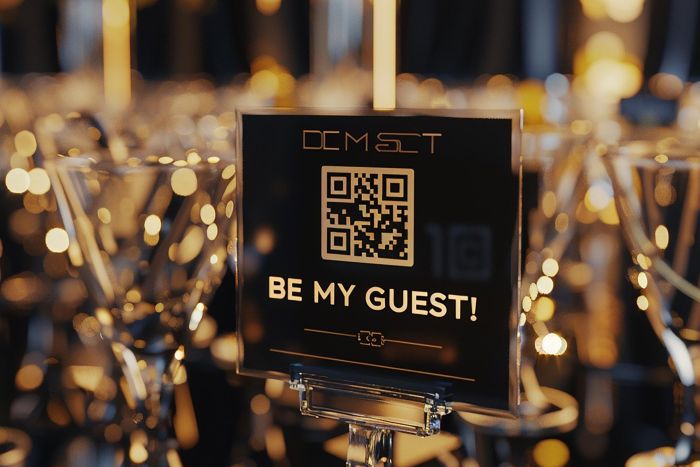
The technical architecture behind modern QR photo sharing is intentionally lightweight. Couples receive a unique QR code linked to a private, cloud-based gallery. The code is printed on table signage, place cards, or ceremony programs. Guests scan it using any smartphone camera — no app download required, no account creation, no authentication step — and are directed to a browser-based upload interface where photos move from their device to the shared gallery in real time.
The browser-native approach is the critical design decision. App-based predecessors created friction at precisely the wrong moment: asking a wedding guest to interrupt their experience to download software produces abandonment, not uploads. When the path to participation requires only a phone camera and a scan, adoption scales with guest count rather than fighting it.
The aggregate result is measurable. Weddings using QR-based sharing systems consistently see between 400 and 800 photos uploaded per event — a volume that would require a team of professional photographers to replicate and that captures a qualitatively different set of moments than any single lens can produce.
For couples evaluating the best wedding QR code for photos solutions currently available, the differentiating factors come down to three variables: upload friction (is an app download required?), gallery organization (are photos instantly accessible to the couple in real time?), and privacy controls (can the couple moderate content before it becomes visible to all guests?). These are the axes on which the product category is maturing.
Companies like WeddingSnap have built specifically around this use case, offering browser-based upload experiences where guests contribute to a centralized gallery the couple owns entirely. The category also includes more generalist tools — Google Photos shared albums and The Guest among them — though purpose-built solutions tend to outperform on the friction and moderation dimensions that matter most in live event contexts.
Why the Wedding Industry Use Case Has Proved Durable
The staying power of QR photo sharing in weddings reflects a structural fit that other consumer event technologies have failed to achieve. Three factors make this category particularly defensible.
First, the problem is universal and emotionally high stakes. Unlike corporate event photo sharing — which is nice to have — wedding photo collection carries genuine emotional weight. Couples are motivated to implement solutions, and guests are motivated to participate when participation is easy.
Second, the economics align for both consumers and vendors. Disposable cameras cost $15 to $30 per unit, and most weddings distributed three to six per table, adding several hundred dollars to a budget already under significant pressure. QR-based photo sharing operates at a fraction of that cost per guest, offers unlimited uploads rather than 27 exposures, and delivers results within minutes rather than weeks.
Third, the behavior is already there. Guests photograph weddings regardless of whether a collection mechanism exists. QR sharing does not ask guests to adopt a new behavior — it redirects an existing one. This is a meaningful distinction from technologies that require behavioral change as a precondition for adoption.
The Broader Event Technology Signal
The wedding use case is worth watching as a leading indicator for live event technology more broadly. Corporate event organizers, conference producers, and hospitality brands are all navigating the same fundamental tension: how to capture distributed, participant-generated content without creating friction that suppresses participation.
The solutions emerging in the wedding industry — browser-native, QR-triggered, zero-download — represent a design philosophy that translates directly to conferences, branded activations, sports events, and hospitality settings. The wedding industry, because of its emotional stakes and consumer willingness to pay, has functioned as an accelerated testing environment for interaction models that other event verticals are beginning to adopt.
QR codes were supposed to be a pandemic-era workaround. The evidence suggests they have become, in specific high-value contexts, exactly the right tool for a problem that predated COVID-19 by decades. For event technology investors and product leaders, the category meriting closest attention may not be the one with the largest enterprise contract — it may be the one with 150 guests, a QR code at every table, and 600 photos uploaded before the cake is cut.