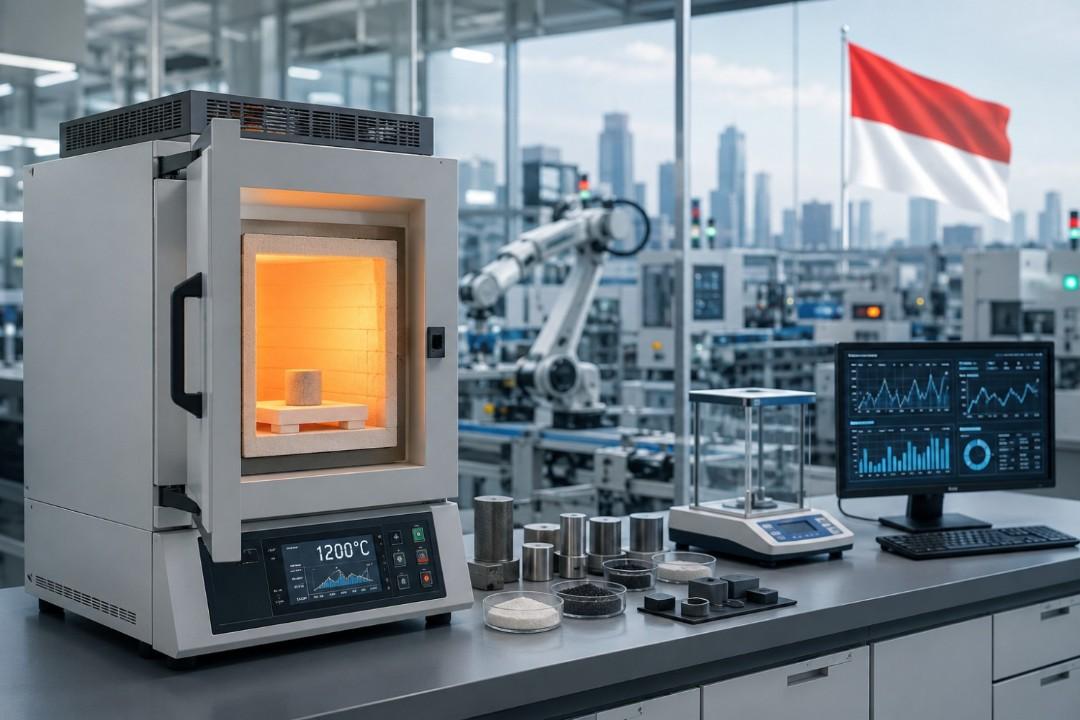
Indonesian manufacturers are facing tighter quality demands that need a testing infrastructure they can actually trust.
Picking a laboratory furnace isn’t just a technical call. It’s a business and technology decision. Inaccurate testing is expensive. Not in an obvious way, but in that slow, creeping way that only shows up later, when it’s already caused damage.
Here’s a real scenario. A materials lab is testing heat resistance for an automotive component. The testing environment isn’t stable, so the data looks fine, but it isn’t. The part passes. It goes into production. Then quality issues start showing up, and suddenly there’s an investigation, replacements, and maybe even a recall. Nobody wants that.
Many industries across Indonesia are feeling the pressure. Whether it’s automotive, electronics, metals, ceramics, mining, or construction, companies are being asked to deliver better quality, meet tighter standards, and keep costs under control all at the same time. Customers want consistency. Regulators want compliance. Global buyers want documented proof of quality and traceable testing records. This shift aligns with the principles of Quality 4.0, where manufacturers increasingly rely on real-time performance measurement, standardized quality systems, and data-driven decision-making to reduce defects and maintain consistent product quality. When your test data isn’t reliable, your decisions aren’t reliable either.
That’s where a laboratory furnace actually matters more than people usually give it credit for.
Table of contents
Temperature Control Isn’t a Small Thing
A lot of lab work comes down to heat. Material characterization, heat treatment analysis, ash content, and thermal stability all of it depends on temperature being accurate and consistent.
Cheaper furnaces often can’t hold uniform heat across the chamber. Temperature swings happen, and operators don’t always catch them right away. Over time, that inconsistency shows up in your results, even if you can’t immediately pinpoint why.
That’s the tricky part.
You run the same test a few times and get slightly different numbers each time. You start questioning your methods, your sample prep, your team. But the real problem is the equipment itself.
A quality laboratory furnace removes that uncertainty. Tests run under the same conditions every time, creating reliable data that can be confidently used across quality management systems, reporting platforms, and production workflows.
Problems Indonesian Labs Actually Deal With
Indonesian manufacturers work in competitive markets. Quality slips hit profitability fast.
Inconsistent material properties are a common headache. If your furnace can’t hold stable temperatures, you can’t accurately evaluate how materials perform under heat. Simple as that.
Then there’s retesting. When results seem off, you run it again. And maybe again. That eats labor, uses up lab time, and slows everything down. For factories running tight schedules, that delay creates real bottlenecks and disrupts data-driven decision-making.
Indonesia’s climate adds another layer of stress on equipment. Facilities need systems that perform consistently regardless of what’s happening outside. A well-built laboratory furnace handles that. It doesn’t skip a beat. Fewer surprises, more confidence, and more dependable operational data.
Better Data, Better Decisions
Here’s something that doesn’t get said enough: testing equipment is a business decision, not just a technical one.
When your data is solid, your team moves forward without second-guessing everything. Product development, process changes, raw material choices, and quality strategy all become easier when you trust what the lab is telling you.
Modern manufacturers are increasingly relying on digital quality systems, analytics platforms, and automated reporting tools. The value of those technologies depends entirely on the quality of the data being fed into them.
When data is shaky, you hesitate, you recheck, and you delay. Resources go toward verification instead of progress.
For companies working toward international certifications or supplying customers overseas, reliable testing isn’t just a nice thing to have. It’s part of doing business. Buyers expect consistency, auditors expect proof, and quality teams are expected to have answers.
The manufacturers that stay ahead are usually the ones with dependable processes and reliable testing data supporting their decisions.
Don’t Just Look at the Price Tag
It’s tempting to go with the cheaper option. Budgets are real, and nobody wants to overspend.
But lower-cost furnaces often come with higher hidden costs, more maintenance, more downtime, and less consistent results. None of that shows up on the quote, but it shows up later in lab bills, delayed decisions, retesting costs, and unreliable operational data.
A quality laboratory furnace costs more upfront. It also tends to last longer, need less repair, and produce more reliable results over its lifetime. When you’re thinking long-term, that math usually works in your favor.
Growing organizations especially need equipment that scales with them, supports evolving quality requirements, and integrates into increasingly digital manufacturing environments.
Indonesia’s Manufacturing Future Needs Better Testing
Indonesia is cementing its place as a serious manufacturing hub in Southeast Asia. Things are changing for manufacturers. Customers ask more questions, quality standards keep getting tighter, and competition isn’t slowing down either.
Because of that, the equipment sitting inside a testing lab often has a bigger impact on business performance than many people realize.
Laboratories aren’t just rooms where samples get tested. They’re where important decisions begin. The results generated there can influence production plans, product improvements, purchasing decisions, quality checks, and digital quality management systems across an entire company.
When the testing process is reliable, teams can move forward with confidence. When it isn’t, small doubts can turn into expensive problems. And really, it starts with the data. Better testing usually leads to better products. Better products build stronger customer relationships. Stronger relationships drive growth.
It’s a straightforward chain, but it’s one that gets broken the moment testing becomes unreliable.
As Industry 4.0 adoption continues across Indonesian manufacturing, the importance of accurate, traceable, and repeatable testing data will only increase.
Final Thoughts
Testing accuracy isn’t just a lab problem. It’s a business problem.
Companies that invest in reliable equipment make better decisions, catch issues earlier, and spend less time chasing down unexplained results. A high-quality laboratory furnace creates the consistency that dependable testing requires, and that consistency has real value across the entire business.
For Indonesian manufacturers, research labs, and quality teams looking for thermal testing solutions they can actually rely on, providers like Tempsens offer furnace technologies built for accuracy, durability, and long-term performance.
When your results need to mean something, your equipment has to earn that trust.