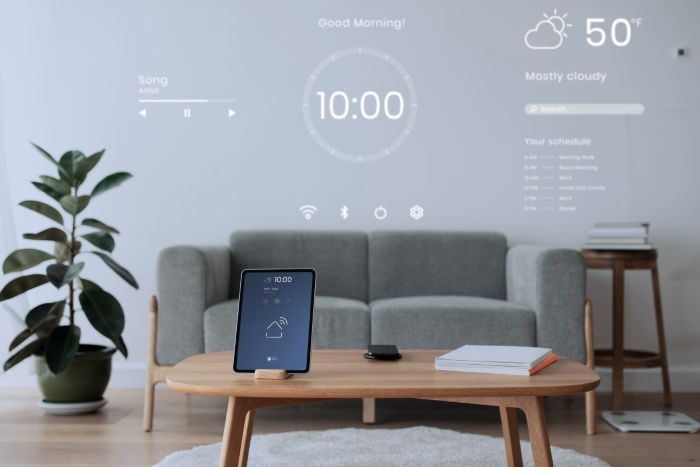
Contemporary life is growing increasingly digital, yet simultaneously less connected to the natural world. Human beings spend a major part of their time within the frame of houses with screens, sensors and smart devices, and the real contact with nature is becoming further and further. This expanding divide has raised a new question for technology: can the future of smart homes not only control appliances, but also reconnect us to nature?
The current smart homes are moving past the lighting and security cameras, as well as voice assistants. They are beginning to be symbolic of a new order of living, with technology being less about convenience and more about experience and health. The outdoor ecosystems in the smart home are becoming a significant component in this shift, particularly with innovations that bring the outdoors nature to everyday life.
The incorporation of birdwatching and biodiversity surveillance into smart living spaces is one of the new directions. This is a vision of a world where AI and IoT collaborate to make the lifestyle more connected, where nature and the home are not distinct, but rather one.
Key Takeaways
- Contemporary life is increasingly digital, causing a disconnect from nature, prompting a need for smart homes to reconnect individuals with the natural world.
- Smart homes evolve beyond basic functions, incorporating outdoor experiences and sustainability, particularly through initiatives like birdwatching and biodiversity surveillance.
- IoT serves as a bridge, allowing homes to interact with nature in real-time, while AI interprets data from devices like smart feeders to enhance user interaction with wildlife.
- Products like Birdfy symbolize this convergence, utilizing AI and IoT to enable users to engage with nature, contributing to citizen science and biodiversity awareness.
- The future of smart homes will focus on lifestyle intelligence, promoting harmony with nature and fostering sustainability alongside traditional home automation.
Table of contents
Current Limitations and New Opportunities in Smart Homes
The majority of traditional smart home systems are developed around simple features such as lighting, home security, and energy management. Although the features make life easier and more productive, they do not often contribute to emotional or environmental well-being. In most situations, smart homes continue to be closed to the natural world.
But there is the emergence of a new trend that links smart living to sustainability and experience-based in-nature activities. With increased focus on ESG objectives and mental health globally, individuals seek technologies that can do more than automate work. The desire to involve nature in daily life is gaining popularity with solutions like birdwatching, outdoor surveillance, and biodiversity awareness.
The trend is justified by the increased popularity of citizen science and wildlife observation societies all over the world. The number of people who are now engaged in bird tracking and provide data about the environment reaches millions, indicating an evident demand for technologies that can integrate smart homes with the natural ecosystems.
How Technology Enables the Convergence of Nature and Home
IoT as the Bridge Between Home and Nature
Internet of Things (IoT) will serve as the base of connecting nature in the future of smart home environments. Houses can now communicate with the external ecosystems in real time through attached sensors, cameras, and smart devices. IoT allows the real-time tracking of wildlife in nature-oriented applications, and it is possible to monitor birds and other species directly in the house.
AI for Understanding and Interpreting Wildlife
AI gives meaning to the information gathered by IoT devices. AI systems have the capability of identifying bird species, tracking movement patterns, and creating intelligent notifications using computer vision and machine learning models. That will convert raw visual input into something useful so that a user can have a better idea of the natural activity that occurs around their houses.
Edge and Cloud Systems for Real-Time Intelligence
An edge computing and cloud processing combination guarantees both speed and long-term functionality. Edge devices process real-time detection on demand, minimizing delays and enhancing responsiveness, and cloud system processes storage, updates, and more in-depth data analysis. The combination produces a fast, efficient, and scalable system to provide continuous nature monitoring.
Inside the Birdfy Experience: How Smart Bird Feeders Transform Home Living
A good example of this convergence can be found in gadgets such as Birdfy, which bridge the gap between nature and smart homes. Products such as Birdfy, which bridge the gap between nature and smart home environments, use AI-powered cameras which connect to the internet of things (IoT).
Birdfy is a smart feeder that is solar-powered and has an AI camera that recognises thousands of bird species in real-time. It supports HD live streaming, motion detection to capture activity and sends smart notifications instantly to users through its app. The solar power and the hardware design enable this to perform continuously on a sunny day with little or no maintenance.
In addition to personal pleasure, Birdfy also allows users to connect with nature more meaningfully. With the ecosystem of AI bird watching powered by Birdfy, people can view species, visit records, and add information that helps expand the knowledge of the ecology. Birdfy AI bird watching ecosystem In this sense, simple user interactions every day can make everyday users contributors to citizen science, contributing to biodiversity datasets at large scales.
Broader Impact and the Future of Smart Homes
To the person, nature incorporated in smart houses will make life more harmonious and complete. It minimises online burnout and heightens interaction with nature, despite being inside the house. This renders technology more human-friendly than functional.
To society, the trend contributes to an increased environmental awareness and reinforces the biodiversity conservation efforts. With increased interaction with wildlife, individuals become more aware of what is happening, which consequently encourages sustainability efforts. To the industry, it presents a new division in smart homes, which is lifestyle intelligence, a combination of AI and environmental intelligence.
In the future, smart home systems will probably be extended further than home automation into complete AI-enabled environmental systems. Devices will not only control homes but also track nature, examine biodiversity and link end users to real environmental information.
Conclusion
The future of smart homes is moving beyond automation and convenience. Technology is no longer a means to control devices; with the introduction of AI and IoT, technology is beginning to transform the way people engage with the world around them, including the natural world.
This change indicates that significant interactions with nature may also accompany smart living. New innovations are enabling the introduction of real-life experiences, such as birdwatching and biodiversity awareness, into the lives of ordinary people within their homes, rather than keeping them confined behind the walls of digital systems.
And finally, the coming era of smart homes will not just revolve around efficiency and well-being but also balance. Using technology as a catalyst to connect with nature brings us closer to the connected, aware and environmentally aligned lifestyle.