Smart climate control has become one of the most important upgrades in modern homes. Instead of old, always-on heating and cooling, today’s systems pay attention to patterns, adapt to real‑time conditions, and use energy only when it truly matters.
From smart thermostats to multi‑zone systems, homeowners are discovering that comfort and efficiency can work together.
Key Takeaways
- Smart climate control systems improve home efficiency by adapting to real-time conditions and household behaviors.
- Smart thermostats can learn routines and save energy by optimizing heating and cooling only when necessary.
- Zone mini-split systems provide customizable climate control for individual rooms, avoiding energy waste.
- AI-driven algorithms enhance accuracy in climate control, adjusting systems based on weather predictions and usage patterns.
- Smart water-heating and ventilation systems optimize energy use, ensuring comfort while reducing utility costs.
Table of contents
- Smart Thermostats Can Learn Household Behavior
- Zone Mini‑Split Systems Enable Room‑by‑Room Efficiency
- AI‑Driven Smart Climate Control Algorithms Ensure Accuracy
- Motion, Light, and Occupancy Sensors Can Reduce Waste
- Smart Water‑Heating Systems Can Optimize Hot‑Water Use
- Smart Ventilation Systems Can Improve Airflow and Efficiency
- The Future of Home Energy Management
Smart Thermostats Can Learn Household Behavior
Smart thermostats are no longer simple programmable gadgets. They can study household routines and adjust temperatures automatically.
According to insights highlighted in a study featured by Norwegian SciTech News, weather-aware heating controllers can help cut residential energy use significantly by anticipating outdoor changes before they happen.
Features that drive energy savings include:
- Auto‑scheduling that adjusts to daily routines.
- Sensors that detect occupancy.
- Weather‑prediction tools that fine‑tune heating and cooling.
These upgrades reduce wasted energy by heating or cooling only when someone is home, and only to the degree that comfort requires.
This approach to smart climate control has reshaped the way homeowners think about temperature control.
Zone Mini‑Split Systems Enable Room‑by‑Room Efficiency
One of the most transformative smart‑climate options is the rise of zone mini‑split systems. They allow each room to operate independently, which means you no longer need to heat or cool the entire home when you only use a few spaces.
For instance, 5 zone mini split systems can provide customized ductless heating and cooling to five separate areas of your home.
Multi‑zone optimization models are becoming central to smart‑home energy management. With each zone responding to its own sensors and scheduling, you can get personalized comfort without the energy waste of whole‑home conditioning.
AI‑Driven Smart Climate Control Algorithms Ensure Accuracy
AI tools are playing a major role in making home climate systems more accurate and less energy‑intensive.
Predictive algorithms can adjust heating and cooling based on expected disturbances such as sun exposure or sudden temperature shifts.
So, how does AI improve home efficiency? Well, it:
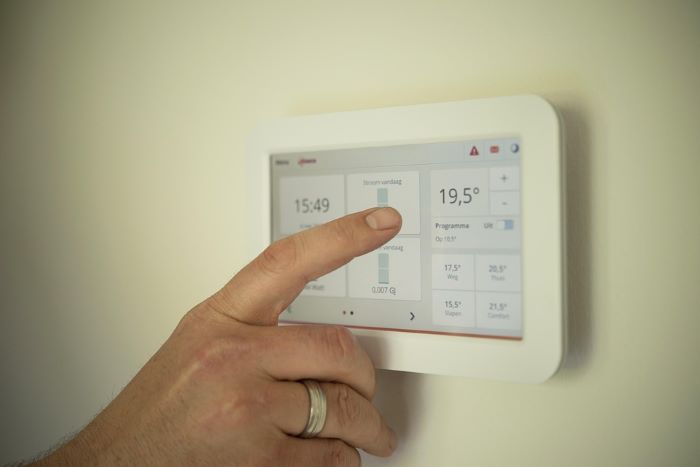
- Predicts changes instead of reacting to them.
- Balances comfort with energy demand.
- Reduces unnecessary cycling of HVAC equipment.
These systems adapt faster and more precisely than human‑controlled settings, and they can maintain comfort with less overall energy.
Motion, Light, and Occupancy Sensors Can Reduce Waste
Another major innovation comes from smart sensors that detect when rooms are empty or when sunlight is heating the space naturally.
Automated blinds, thermostats, and intelligent algorithms can combine to reduce energy use by up to half. By responding directly to real‑world conditions, these systems shut off or scale back heating and cooling the moment it’s no longer needed.
When combined with user preferences, sensors deliver a fine‑tuned balance between daily comfort and responsible energy use.
Smart Water‑Heating Systems Can Optimize Hot‑Water Use
Smart water‑heating systems are becoming a quiet but powerful way to cut home energy use.
Instead of keeping a full tank hot around the clock, modern heaters learn your household’s bathing, cooking, and cleaning habits. They heat water only when it’s likely to be needed, which avoids wasting energy on standby heat.
Many models use sensors and app controls to track usage patterns, adjust temperature settings, and identify unusual spikes that may signal leaks or inefficiencies. Some units even coordinate with solar panels to heat water during peak sunlight hours.
By using energy more intentionally, these systems deliver reliable hot water while lowering overall utility costs.
Smart Ventilation Systems Can Improve Airflow and Efficiency
Smart ventilation systems are changing how homes handle airflow, freshness, and temperature balance. Instead of running constantly, these systems adjust based on humidity, air quality, and room usage.
Sensors track pollutants, moisture, and carbon dioxide levels, then activate ventilation only when needed. This helps maintain a healthier indoor environment without wasting energy on unnecessary fan cycles.
Some systems integrate with climate control tools to balance heating and cooling demands more effectively. Others use variable‑speed motors to deliver just the right amount of airflow rather than running at full power.
By tuning ventilation to real‑time conditions, homeowners get cleaner air and better efficiency in one streamlined solution.
The Future of Home Energy Management
Smart climate control is moving beyond simple comfort settings.
Developers are creating systems that coordinate with utility‑grid prices, weather events, and even broader home‑automation features.
As these systems continue to evolve, homeowners can expect comfort that feels more natural and energy bills that trend lower without effort.
Modern climate control proves that efficiency doesn’t require sacrifice. As research and technology advance, these systems will keep reshaping how homes use energy, one smart upgrade at a time.