The modern entertainment business continues to evolve, choosing flexible and scalable formats. Among the key tools for growth and development in the laser tag industry are inflatable arenas, which represent a unique solution. With the capabilities of inflatable laser tag, a business can gradually expand without requiring significant investment in infrastructure, making it an ideal foundation for a scalable VR entertainment business.
At the same time, Virtual Reality (VR) is reshaping how entertainment experiences are created and delivered. Businesses are increasingly integrating VR into their offerings to stay competitive, attract new audiences, and unlock scalable growth models for a scalable VR entertainment business When combined with flexible physical setups like inflatable arenas, VR opens up new possibilities for immersive, tech-driven entertainment.
Key Takeaways
- Inflatable arenas offer a flexible, cost-effective solution for the laser tag industry and VR entertainment.
- Combining VR with inflatable arenas allows businesses to lower startup costs and increase operational efficiency.
- Mobility enhances VR experiences, enabling businesses to reach customers at various locations and events.
- The integration of VR and inflatable arenas creates new revenue streams and enhances player engagement.
- Overall, VR-driven entertainment supports scalable growth and diversification for entrepreneurs.
Table of contents
- Mobility as a Core Growth Driver in VR Entertainment
- Lower Startup Costs with Scalable VR Solutions
- Technology Integration and Immersive Flexibility
- Flexible and Scalable VR Business Models for a Scalable VR Entertainment Business
- Geographic Expansion with Portable VR Experiences
- Additional Revenue Streams Through VR Services
- Enhanced Player Engagement Through Immersion
- Conclusion on VR-Driven Entertainment Growth
Mobility as a Core Growth Driver in VR Entertainment
Mobility is becoming just as important in VR as it is in traditional entertainment formats. Portable VR setups, including wireless headsets and compact tracking systems, allow operators to deploy immersive experiences almost anywhere. When paired with inflatable arenas, these setups create controlled environments that enhance both safety and immersion.
This means VR experiences are no longer limited to fixed gaming centers. Businesses can bring VR directly to customers, whether at corporate events, schools, exhibitions, or private parties. The ability to run multiple events in different locations within a single day significantly increases operational efficiency and revenue potential for a scalable VR entertainment business.
Lower Startup Costs with Scalable VR Solutions
Launching a traditional VR arcade can require substantial investment in space, hardware, and maintenance. However, combining VR with inflatable arenas reduces many of these costs. There is no need for permanent infrastructure, and equipment can be scaled gradually based on demand.
Entrepreneurs can start with a small number of VR headsets and expand over time. This approach minimizes financial risk and allows businesses to test different markets and formats before committing to larger investments. Faster payback periods make this model especially appealing for startups entering the VR entertainment space.
Technology Integration and Immersive Flexibility
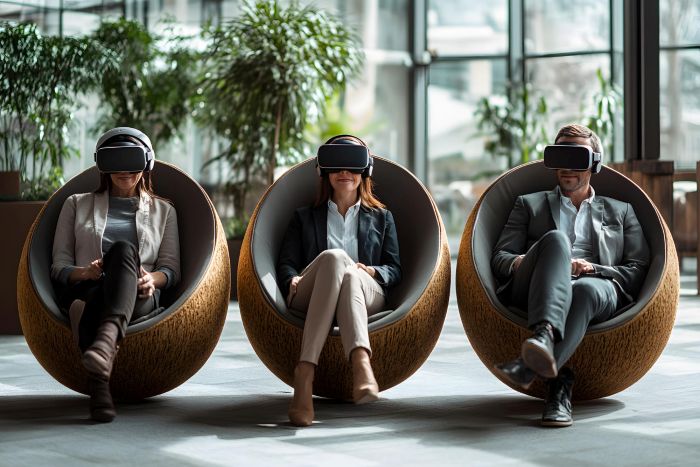
Virtual Reality thrives on technology, and modern systems offer far more than just visual immersion. Advanced tracking, multiplayer synchronization, and real-time analytics allow operators to create highly interactive experiences. Inflatable arenas complement this by providing physical boundaries that align with virtual environments.
This combination enables full-body movement and more engaging gameplay scenarios. Operators can easily switch between different VR games, themes, and difficulty levels without changing the physical setup. As a result, a single venue can host a wide range of experiences, from action games to educational simulations, strengthening a scalable VR entertainment business.
Flexible and Scalable VR Business Models for a Scalable VR Entertainment Business
VR-based entertainment businesses benefit from multiple revenue streams. In addition to event hosting, operators can offer premium VR experiences, themed sessions, and customized packages for corporate clients. Subscription models and recurring events are also becoming more common.
The flexibility of VR content allows businesses to continuously update their offerings without investing in new physical infrastructure. This supports both horizontal scaling into new locations and vertical scaling through higher-value services. Inflatable arenas make this even easier by removing the need for permanent venues.
Geographic Expansion with Portable VR Experiences
One of the biggest advantages of combining VR with mobile setups is the ability to expand geographically with minimal risk. Businesses can test new markets by organizing temporary events or partnerships in different cities and regions.
For example, VR experiences can be offered at festivals, shopping centers, or educational institutions. Inflatable arenas provide a consistent and controlled environment, ensuring quality regardless of location. Over time, this approach allows companies to grow from local operators into regional or even international brands.
Additional Revenue Streams Through VR Services
The integration of VR significantly increases monetization opportunities. Businesses can charge for premium gameplay, extended sessions, and exclusive experiences. Equipment rental, branded events, and collaborations with other organizers also add to revenue streams.
By combining VR with inflatable arenas, operators can offer bundled services that increase the overall value of each booking. This often leads to higher average transaction sizes and improved profitability without major additional costs.
Enhanced Player Engagement Through Immersion
Virtual Reality takes player engagement to a new level. Unlike traditional formats, VR fully immerses users in digital worlds, making the experience more memorable and interactive. When combined with a physical arena, this immersion becomes even more convincing.
Players can move freely, interact with their environment, and feel part of the action. This level of engagement encourages repeat visits and strong word-of-mouth promotion. For businesses, higher engagement directly translates into customer retention and long-term growth.
Conclusion on VR-Driven Entertainment Growth
Virtual Reality, especially when combined with flexible solutions like inflatable arenas, represents a powerful direction for the future of entertainment. It offers mobility, scalability, and immersive experiences that meet the expectations of modern audiences. For entrepreneurs, this approach provides a practical and efficient way to build, grow, and diversify a scalable VR entertainment business.