Warren Myers Podcast Transcript
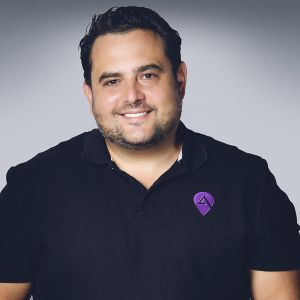
Warren Myers joins host Brian Thomas on The Digital Executive Podcast.
Brian Thomas: Welcome to The Digital Executive. Today’s guest is Warren Myers. Warren Myers is the co-founder and CEO of AURA, a life-saving technology company, transforming access to emergency response services through intelligent on-demand dispatch infrastructure. Under his leadership, AURA has built South Africa’s largest vetted response network, connecting users instantly to private security and medical responders via smart auto-dispatch technology.
The platform integrates seamlessly into partner ecosystems through APIs, mobile apps, WhatsApp, and IoT devices, enabling organizations and individuals to embed emergency response directly into their services. Well, good afternoon, Warren. Welcome to the show.
Warren Myers: Hey, great to be here, Brian. Thanks for having me.
Brian Thomas: Absolutely, my friend. I appreciate it. And traversing multiple time zones and calendars to get here. You’re in Johannesburg, South Africa. I’m in Kansas City, so I really appreciate that. And Warren, if you don’t mind, I’m gonna jump into your first question here. You co-founded Ora in 2017 in South Africa to address a deeply local problem: overstretched public safety infrastructure where emergency assistance is often delayed or ineffective.
What was the moment that convinced you this was solvable with technology, and how did that local insight set the foundation for what’s now a global expansion?
Warren Myers: So, Brian, when we, when we got started, we, we did know at that stage that only a tiny percentage of the population of South Africa were able to access and afford private security and private ambulance response.
And that was mainly linked to owning an expensive house with an alarm system or having medical aid or medical insurance, which is a tiny percentage of, developing market, about 5% only. And this is in a count- in a country where unfortunately the public sector and the services that citizens get from police and public ambulance service is almost non-existent.
So you have this, this, this dynamic where 95% of people in a country that’s ex- extremely dangerous are not able to get any public response in emergencies, and also cannot access and afford access to, to, to private. And because even before, like a few decades before we started, the public sector was already so broken they naturally built…
There was large amounts of private fleet security and ambulance networks that operated in very localized geographies and cities. And when we looked at this, we said, “Right, 95% of people can’t access these, the, these, these, these emergency response services.” But at the same time, those fleets were doing nothing 90% of the time.
So, you had all this demand and you had all this supply, and they just weren’t finding each other properly. And that’s where a technology platform like AURA was birthed, really coming out of marketplace technology platforms that, come out, okay, that already came out of America, like Uber, et cetera, where you, you’re really bringing supply and demand together in what’s called a shared value concept, where millions more people can access and afford a service while enabling idle ca- providers or suppliers who have idle capacity, who are able to make additional revenue on the existing fleet overhead.
So that’s how the whole thing sparked, where… And that’s why we have a triangle on our logos. We’ve built a shared value concept where m- millions more people can afford this basic human need, this safety need. The suppliers are making more money, and us as a platform are growing. So there’s this frictionless model that we’ve been lucky to, to jump on and scale.
And just to your point around why it applies in other regions is I mentioned earlier that there’s a gap between what a cit- what citizens need and what its government can provide. And granted, in emerging markets, that gap is massive. But in more developed markets like in Europe and America and parts of Asia and Australia, that gap is small, but it’s growing because- There’s far more, millions more connected devices that citizens are buying, handsets, IoT, connected homes, and the police have always been the response to that.
And it’s getting to a point now in Europe and America where we operate, where the police are saying, “Guys, we can’t do all of this triage and all of these responses to these, these alarms. We just don’t have the resources to manage all the false alarms,” because 95% of activations from home alarms and business alarms are false alarms.
So they’re moving to a world where they’re deprioritizing responding to fixed property alarms, and we’ve come in and built a private network of licensed, vetted, and insured guard networks that go out and do or, and provide a, an inspection or a triage at that property. So I think just to bring it home, every region has a gap between what its government can provide to their citizens.
That gap is growing, and we use our platform, the on-demand guard response platform, to fill that specific gap in that country
Brian Thomas: That’s amazing. I really like the story, too. You talked about that, and I know it’s, it’s g- this is a global issue, of course, even in the United States. But you talked about only a small percentage of people in South Africa were able to afford private security and safety, and that’s where you saw that gap.
And it certainly public sector is overstretched, broken in a lot of areas. But you built this shared value concept, which I really like. It’s a frictionless model where everybody can benefit and folks can make additional revenue through these shared platforms like Uber, et cetera. And there is, there are a lot of false alarms.
In fact, we have a lot here in the US, and fire, they start… and police, they start charging you for false alarms if they show up. So, I definitely see your value proposition here, and I’m just ex-excited to, to hear more. So Warren, Ora largely delivers its service through partnerships with companies like Uber, Samsung, FNB, insur-insurance providers, embedding emergency response as a value-added feature within their existing platforms.
Why did you choose to build primarily through partner ecosystems rather than a direct-to-consumer app? And what makes a partner integration successful versus one that fails flat?
Warren Myers: Yeah. So just to take a quick step back. In, in our emerging markets in Africa and, and in others around the world, we provide two services where one is we respond to people, individuals.
That’s almost like a private 911 service where they’re accessing private responders. As I mentioned, the public services, the 911 just doesn’t work. And we also respond to properties. But in Europe and America, our models are purely focused on responding to properties to verify why alarms have gone off.
Gladly, like, the 911 infrastructure in the, in Europe and America still is very good ’cause if you’re having a personal safety issue when you speak to a 911 operator, you, you, you typically would get a very good response. So that’s not broken, and we’re not trying to fix that. So just to lay the land of what we do in, in each region.
But in all, in all regions, no matter whether we’re responding to people or places, we decided to move on this or go with this B to B to C distribution strategy. And I’ve gotta say, there’s give and take or pros and cons doing that as opposed to going direct to consumer. The reason why initially we decided to do that was We, we, we quite rightly understood that the power and the moat within our model was to network and almost own or monopolize the response layer using our tech, and rather outsource the distribution to companies that already have engaged customers on apps or who where they already monitor their home alarms.
And like I said, there are cons, dealing through huge companies creates quite sales cycle lags. You know, they sometimes take six months, 12 months to get over the line. You’re working through companies like Samsung, they’re really big, so you have to manage those, those sale cycles.
But I think going back to the root cause of this is we… It was really a cost per acquisition and a, and a focus point when we launched the business, was we had limited capital initially, and going B2C, you have a, a very high initial cost per acquisition because no one knows who you are, and this is a safety brand, and that requires trust.
So, we decided to rather work through brands who already had trust with existing large subscriber bases that went and resold our service
Brian Thomas: Thank you. Really appreciate that. You serve the emerging markets around the world. You talked about that. You respond to two areas, individuals and properties, and you serve that B2B2C space.
And I know you’re not trying to solve that 911 or personal safety landscape, which you talked about, but again, leveraging these partnerships with these big players in the market and again, filling that gap especially in that area where there could be false alarms or, or property that might be in jeopardy.
So, I appreciate those insights. And Warren, AURA was initially built to address gaps in emergency response in emerging markets, as you talked about, where public safety infrastructure is often under-resourced. As the company has expanded into markets such as the US and the UK, you’ve encountered a different but related challenge: growing pressure on emergency services, longer response times for non-life-threatening incidents, and increasing demand for faster access to help.
How has AURA adapted its technology and model to solve these different problems across markets, and what have these experiences taught you about the future of emergency response, regardless of a country’s level of development?
Warren Myers: So, in, in the more developed markets like the UK and America we luckily didn’t have to re- rethink how our platform works because our platform effectively, if you boil it down to its really, like, core principles, is we’re getting the closest responder to machi- to respond to a location.
That location could be a person or it could be a property. So, in the UK and America, where we respond to alarms on behalf of alarm companies who monitor home and business alarms the platform was already really well entrenched. What was different and, and ready to, to deploy. What was different was kind of the distribution model and the partnerships model.
We, in the UK and America, we partner with alarm companies and dealers who already service homes and businesses who have alarms, and they go and bolt and, and add our, our subscription onto their monthly fee because most people are aware or are becoming aware that the police are either massively deprioritizing alarms, sometimes the response time’s an hour and a half, or they’re outright just have mandated that they will no longer respond to unverified alarms.
And I’m sure you can imagine anyone paying for an alarm, there’s no point having it if no one’s responding. Like, it’s a key complementary requirement when you, when you have a an alarm subscription. So, so going back to your point, like, te- technology-wise, most of what we had built in Africa was replicatable in new regions.
It was more about adapting it to, to sell through the existing alarm companies who now needed a private layer to dispatch before they could dispatch police. And I, and I have to stress we, we respond to a quarter of a million properties in these regions already, and what we’re seeing is most of them, ninety-five, ninety-seven percent of them are false alarms.
But the ones that are real, the police are great. You know, they come out there and they, they’re there quickly. They’re just not able to do all of that triage, that ninety-seven percent. And, and it makes sense if you’re a citizen to say, “My police force needs to be ready and responsive to deal with real serious crime.”
And, and I think that’s what the, these police forces are doing, is to say, “Right, we have all this demand, we don’t have enough supply. Where do we go and reprioritize our resources in order to be most effective for real life-threatening or threat to property crimes?” And that, that’s why they’ve deprioritized alarms, And I, I like to think of us as and we’re already getting recognition in the UK from police forces to say that Aura is doing such an amazing job because that 3% is still important to them.
That 3% of the– ’cause they would have never gotten to those. We’re helping them triage that and, and, and deploying them to that 3% that’s helping them store help, help their, their citizens and reduce crime. Because without a private layer, that 3% would have just gone un-undetected and unresponded to.
So we actually like to think of ourselves as enabling police to be more available and more responsive to do real police work, which is responding to life-threatening and property-threatening incidents.
Brian Thomas: Thank you. Really appreciate that. You know, you talked about this and, and you’re doing this again globally, but in the…
You talked about initially in developed countries, you didn’t have to really reinvent anything, really just help augment or fill those gaps in the US and the UK, for example. You work with alarm companies directly in these markets, and you manage a lot of those false alarms. Of course, you talked about this helps local law enforcement focus on personal safet-safety and critical events, enabling, again, that perception of safety, but also really augment the safety, allowing the prioritization of local law enforcement.
So I really love that. Appreciate that. Yeah. Warren, Ora has further rollouts planned for India, Sri Lanka, and Latin America in 2026, regions identified as high priority due to high rates of violence, under-resourced public services and growing urban populations. As you look out maybe five, 10 years, what does a world look like where rapid emergency response is truly universal, and what has to be true technologically, commercially and regulatory to get there?
Warren Myers: So the vision that I see for five years is a very interesting question as it pertains specifically to, to personal safety. This is people who are having life-threatening emergencies, is at the moment, the main modality is for you to pick up your phone and phone 911. And again, in, in a lot of developed markets, that really works well.
But there’s tons of scenarios where someone is just in such dire situation, they’re not even able to phone. And I think that the emergence of biometric triggers coming straight out of wearables activations, triggers like crash detection the OEMs that, that create these, which would be like your Whoops and your Apples and all wearable companies and even vehicle OEMs that can, can push crash detection, they’re gonna need one global partner that helps clear that into a global response in-in-infrastructure.
And we’ve built that already across fifty-two countries, where one integration with a global OEM can come t-into our environment, and we would then push that through to a control center in that region, even somewhere like the Philippines where they would have someone with a local dialect understanding the situation and dispatching police and ambulance out.
And- That’s a big part of our vision, is around enabling personal safety specifically for what I call autonomous triggers. I think that that is the future for massively reducing deaths linked to medical emergencies and motor vehicle accidents, where the trigger is coming automatically out of the human’s body or out of the OEM, out of the vehicle.
And the, the, the… Going back to regulatory, you mentioned, if you imagine like an OEM like Whoop or even a vehicle OEM, they don’t understand how to clear these emergencies in every region and understand the r- licensing requirement, the regulatory, and the liability. We take care of all of that. We like, we like to see ourselves in a year now to be like the main integration partner to help clear SOS emergencies across nearly every country in the world through one SLA, through one integration, and we take care of all of the local regulatory licensing and liability requirements.
That’s the vision.
Brian Thomas: That’s amazing. Really love that. And y- you talked about looking ahead in the future, you know, maybe five years. That main modal- modality right now is really picking up the phone, dialing 911, and we, we see that all the time, but there’s a lot of examples, and you talked about that, where and especially moving into the future, of having an autonomous and biometric triggers that will be important for those situations where maybe a phone isn’t available or a person may be in- incapacitated.
I really love that. And of course, having all these OEM providers and their smart devices connect with a global provider to ensure that everyone can feel safe and no matter what the situation or event that has happened. So I appreciate that. And Warren, it was such a pleasure having you on today, and I look forward to speaking with you real soon.
Warren Myers: Great, Brian. Thanks for having me. I really appreciate it.
Brian Thomas: Bye for now.
Warren Myers Podcast Transcript. Listen to the audio on the guest’s Podcast Page.