Tarek Saab Podcast Transcript
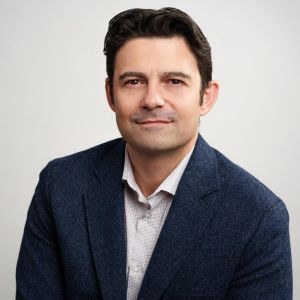
Tarek Saab joins host Brian Thomas on The Digital Executive Podcast.
Brian Thomas: Welcome to The Digital Executive. Today’s guest is Tarek Saab. Tarek Saab is the CEO of Texas Precious Metals, a Texas-based precious metals company operating at the intersection of capital markets, e-commerce, and physical asset custody. Under his leadership, the company has grown into one of the fastest-growing precious metal firms in the world and operates one of the largest precious metals depositories globally with more than 14 billion in holdings under custody.
Saab is leading the launch of Yall Street Gold ETF and Yall Street Silver ETF, initiatives focused on US-domiciled assets, custody jurisdiction, and financial infrastructure rather than market speculation. Well, good afternoon, Tarek. Welcome to the show.
Tarek Saab: Great to be with you.
Brian Thomas: Awesome. I really appreciate you making the time, and what’s nice is you’re in the same time zone as me.
Generally, I’m traversing all of North America or beyond, 54 countries, so I’m just so glad we can make this work out today. And Tarek, if you don’t mind, I’m gonna jump right into your first question here. You founded Texas Precious Metals back in 2011, and since grown into one of the largest bullion dealers and depositories in the world, safeguarding billions in client holdings.
Take us back to the beginning. What did you see in precious metals market in 2011 that convinced you to build this, and what were the pivotal moments that took the company from startup to custody of more than 14 billion in assets?
Tarek Saab: Well, the precious metals industry was very antiquated, even as late as 2011.
We were late to the online e-commerce space, largely because shipping metal all over the country, high-value packages, was very difficult logistically and challenging from an insurance standpoint. So we really pioneered some special re- relationships with UPS and FedEx to be able to create an environment where people could safely and securely order metals online.
The turning point for our company really occurred in 2018. That is when we launched our depository. We had a three-year goal to get 50 million in assets under custody, and within the first three years, we had 300 million. And then we decided we had no choice but to build a, a state-of-the-art facility, and we researched depositories all over the country, incorporated best practices, and today we have one of the most technologically advanced facilities in the world
Brian Thomas: That’s awesome.
And I was reading up on that. I just, I, I just can’t believe it. I think Fort Knox is jealous at this point, but-
Tarek Saab: No doubt …
Brian Thomas: and it’s amazing. I, I just, growing up as a kid, I saw a jeweler sailor owner, jeweler, he’d bring jewelry to the church or whatever, and he was always carrying a gun, and I was like, “Wow, this is interesting.”
But to do what you’re doing is amazing, and I know obviously technology and, and everything else has changed in that time. But really like how you did pioneer in this business. You brought this process to safely transport all these precious metals in a way that customers can actually participate in it.
Traditionally, it’s again, going back to Fort Knox, I know you know the deal, no pun intended, but you’ve done some amazing work, and this growth and scaling forced you to build your own facility, so I think that’s awesome. So thank you. Tarek, your central insight with the Yall Street ETFs is that many of the largest physically backed gold and silver ETFs custody the majority of their metal in London or some other foreign jurisdictions.
You’ve said for too long Americans who wanted physical bullion in an ETF had no choice but to store that metal in a foreign vault under a foreign law. Why does the location of the metal matter so much to investors who may have never thought about where their ETF’s gold actually sits?
Tarek Saab: I would say largely prior to, say, 2019, it mostly didn’t matter.
We lived in a very globalized world, and it’s certainly the world that you and I grew up in. I think what changed it started really with COVID and in the immediate aftermath with the supply chain disruptions and then certainly with the, the geopolitical wars that have broken out, both with Russia and Ukraine and the Middle East, and then recently is with the tariff issue in terms of getting metal from one country to another.
As you know, not every country can produce gold and silver. And we began realizing that there, there were certainly jurisdictional challenges with where the metal was located. What many people don’t realize is that more than 95% of all the metal backing US ETFs is actually held overseas, and more than 85% of that held in London.
And part of the reason is the infrastructure simply wasn’t in place to be able to effectively have the liquidity necessary to service the capital markets, and that’s what we’ve spent the last 15 months doing, is building out that infrastructure, building out the depository network, building out the relationships with the bullion banks to provide the necessary liquidity so that 100% of all the metal backing these ETFs is now domiciled in the United States. And for many investors, that’s a concern going forward.
Brian Thomas: Absolutely. We’ve seen a lot just in the last few years. You and I growing up, we saw some things, but we always felt we were in this protected in our bubble. But so much has happened with since COVID, geopolitical stability, all these wars that, as I call the forever wars that keep going on. You talked about where all this, the precious metals are stored overseas. I think you said 95%, which is crazy. But you-
Tarek Saab: If I might add also, simply that in 2022 when the United States kicked Russia off of the SWIFT system, it really was the financial shot heard round the world And it is the single event that precipitated an inordinate amount of central bank buying from countries around the world.
It was the, the first time that countries really began seeing that the integrated US system was potentially going to change in the future. And that’s why I say that the jurisdiction in our global markets today really matters more than it ever has.
Brian Thomas: Absolutely. That was a big shift back then, obviously, and that was a shot heard around the world. I’m surprised nothing worse ha- had happened at, at that point, ’cause that’s kinda like fighting words, as you, as you understand. So I appreciate that. You’ve done a lot really, again, to build this infrastructure out here, so I appreciate that. Tarek, your Texas depository is a 71,000 square foot facility, impressive, with all risk insurance underwritten by Lloyd’s of London, and you allow independent auditors to examine the metal twice a year with published bar lists investors can verify.
In a world where trust in financial institutions is fragile, how important is that verifiability, and what does it take operationally to stand behind that level of transparency?
Tarek Saab: Well, it’s extremely important, and investors who are buying precious metals are typically doing so because they view it as an insurance policy.
And so for that reason, having the, the auditing function is so vitally important. What many people don’t realize is that oftentimes, the, the facilities that lose metal, it’s not because of theft necessarily, it’s because of poor accounting practices. So one of the things that we implemented early on was a requirement for segregated storage.
So every single account in the facility is segregated from the other. There is no unallocated pool or any form of exposure to metal that is not individually held. That’s extremely important. Additionally, we have incorporated the latest technology in the marketplace to ensure that we have fast and accurate accounting measures.
So we, we think of our facility almost like a, a sports stadium where we know at any given time and what seat and what row and what location a particular bar is located in. All of these things are important. All of them build trust. We also have an eight-member SWAT team. We have motion sensors, facial recognition fog detectors, like all kinds of high-tech sort of mission impossible security features that also make people feel secure that their, that their metal is held in good hands.
Brian Thomas: That’s awesome. Don’t tell Tom Cruise that. You might have him show up- … at your facility. That’s impressive, really is, and, and, you know, I d- did kinda jokingly mention Fort Knox, but truly, that is just amazing. And I had no idea until I did the research, and I took a point away that you just said, you know, buyers, not necessarily…
They need to understand that and feel that they’re, that they have that some sort of insurance policy, that they know that that’s actually physically there. ‘Cause you mentioned it wasn’t really about so much the theft, it is more about that accountability and verifiability. I think that’s so important, and that’s what really gives people a peace of mind, so thank you.
Tarek, the last question of the day. Let’s wrap this up here. With macroeconomic uncertainty, inflation concerns, and questions about foreign jurisdiction risk all converging, where do you see demand for physical precious metals and domestic custody heading in the next, let’s say, five, 10 years? And what role do you want Texas Precious Metals and Yall Street to play in reshaping how Americans hold hard assets?
Tarek Saab: Sure, yeah. Speaking as the, the CEO of Texas Precious Metals, just expressing my view here in that capacity, we believe that we’re in the early innings of a major super cycle in all commodities, not just precious metals. Part of that is just the, the overall demand for base metals and the, the growth that we’re seeing in AI, et cetera.
But also, we believe that the financial world is changing, and the demand for physical metals is, is growing dramatically. That wasn’t the case from 2011 to 2021. You know, we were in largely a bear market, but now we see the, the early innings of, of this new super cycle, as I mentioned. You know, as far as portfolios go, I mean, we…
Many people don’t realize that over the last 25 years, gold has outperformed the total return on the S&P 500 by almost 2X, and there’s zero correlation between the two assets. And so we believe that gold has a role in every portfolio, and our place in, in the market today is really bridging the gap between the physical retail market and the capital markets, and providing easier access for people to gain exposure to metals as, as we look out into the future.
Brian Thomas: Awesome. Thank you. Certainly the period, the time that you and I grew up in certainly changed when, as you mentioned, you believe you’re in a different era, different space at this time. The financial world is certainly changing. All kinds of stuff going on, and obviously we’ve all seen it, and I’ve been part of that.
Demand of this precious metal just keeps growing. But you’re playing an important role here. Not only were you a pioneer, but you’re continuing to move us into the future. You’re bridging that gap between retail and financial markets. You’re helping there, and I, I really appreciate that and all your insights you’ve shared today.
Tarek Saab: Thank you.
Brian Thomas: It was… You’re welcome. It was such a pleasure having you on today, and I look forward to speaking with you real soon.
Tarek Saab: Thank you so much.
Brian Thomas: Bye for now.
Tarek Saab Podcast Transcript. Listen to the audio on the guest’s Podcast Page.