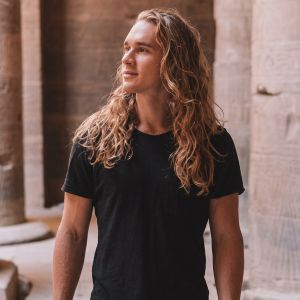
Max Anderson Podcast Transcript
Max Anderson joins host Brian Thomas on The Digital Executive Podcast.
Brian Thomas: Welcome to The Digital Executive. Today’s guest is Max Anderson. Max Anderson is the owner and CEO of OnlyFinder, a search and discovery platform focused on the creator economy. He specializes in creator discovery, ad technology, digital marketplace economics, consumer behavior, and the data shaping how audiences find and engage with creators online.
Through his work at OnlyFinder, Anderson offers a data-driven perspective on trends across the subscription-based creator economy, including search behavior, monetization, digital publishing, and audience engagement Well, good afternoon, Max. Welcome to the show.
Max Anderson: Great to be on, Brian.
Brian Thomas: Awesome, man. I appreciate it, and you’re making the time today.
I’m in Kansas City, you’re in Miami, and that’s not too bad. Normally, I’m traversing all over North America or the globe, so I appreciate you making the time. Max, let’s just jump right into your first question. Your path into the creator economy is an entrepreneurial one. You built up SEO authority across a network of sites, created a popular listicle ranking, top OnlyFans creators, and when people started paying to be included, that became the core of the business, eventually leading you to OnlyFinder.
Walk us through that evolution. How did a ranked list turn into running the largest discovery platform in this space?
Max Anderson: So I’ll, I’ll rewind a little bit. Before this business, I was at a, a venture-backed tech company in Seattle called Porch for about eight years. That company eventually went public on the Nasdaq.
But my job there was a really lucky one. I basically… The company raised over a hundred million dollars in venture capital, and I was given an eight-figure budget to go figure out SEO, quote, unquote. So that was like, years of basically lighting a bunch of VC money on fire doing SEO the wrong way to eventually figure out how to do it the right way.
So I came out of that really with probably one of the best educations in SEO you could get, just as a matter of kind of luck and getting to spend a lot of VC money on figuring that out. And then a- after Porch went public, I started kinda looking around for the next thing. I put a bunch of irons in the fire and just got random sites across a bunch of categories ranked number one in Google, and the one that led to this business was actually really random.
It was a website called Ready Set Cam that existed to refer webcam models to webcam sites, i- if that makes sense. That was number one in Google for that. And then when the pandemic happened in twenty twenty, I had sort of forgotten about this site. Just made it, got us number one in Google and wasn’t thinking about it.
And then one day, I looked in my bank account, and one of the affiliate payments from one of these cam sites was 10X what it should’ve been. And I went and looked at the traffic analytics, and the website stood still at number one in Google, but the traffic went 10X, and so the revenue went 10X. So I was like, “Oh, man, that’s interesting.”
And so kind of dug in there, kind of expanded Ready Set Cam, covering more of the, more keywords and more categories kind of in the webcam modeling industry. And then as we sort of capped that out, we were looking at tangential stuff, and it kind of became obvious that OnlyFans was this new emerging thing that had really high growing search volume.
So we started writing just some articles like, “Here’s the fifty best OnlyFans creators.” We got those to number one in Google, and then quickly the search volume and traffic on those just became the majority of the business to such an extent, and the growth was so fast there, that it was obvious the OnlyFans category was- 10 or 100 times bigger opportunity than what we were doing in the webcam model space.
So we just pivoted and went all in there. And so the evolution of the business was just rank high in Google for certain keywords, and we just published articles that were not customers. Just, we would just go do research and say, “Here’s the, X best OnlyFans creators in a given category,” and then we covered that across a bunch of categories.
And then the business formed organically. Creators would just go reach out and say, “Hey, can I pay to be at the top of this list?” And we started doing that really rudimentary. Like, a creator would just pay us a fixed monthly price to be on the list. And then over time, we started evolving that into a a CPC auction business model that’s very similar to Google Ads, where basically we can break down the space into keywords, creators can bid on those keywords, and then we run a CPC auction where based on bids, creators rank in different positions for different keywords.
And then we do that across a portfolio of a couple hundred sites today.
Brian Thomas: Wow, love that story. I mean, who wouldn’t, right? Getting into SEO, “Hey, go figure this out, kid,” and then, “Here’s a bunch of money you can spend.” I, I thought that was pretty interesting. But of course, over time you got really good at that, and you started in some other ventures as well.
You talked about the Ready Set Cam, and that affiliate account that 10X’d your bank account one day. You’re like, “What the heck happened here?” And the rest is history. And I, I just love what you’re doing, helping people market through these platforms. So I appreciate that. Max, OnlyFinder operates a search engine spanning millions of creator profiles, plus a network of other discovery sites, effectively becoming the discovery infrastructure that a massive platform deliberately doesn’t provide.
What’s it like building the search layer on top of an ecosystem that keeps discovery intentionally closed? And what are the technical and business challenges of indexing a world that doesn’t want to be easily indexed?
Max Anderson: Yeah. So it’s really interesting. Going back to w- how OnlyFans started it really focused on celebrities at first.
So you’d have these, like, A and B list celebrities who would basically treat OnlyFans like a premium paywall version of their Instagram that could have spicier content behind the paywall. And because of that way that it launched, the sort of implicit contract between OnlyFans and its creators was we provide the platform, but you bring the audience.
And that kinda makes sense because if a celebrity was going to, launch an OnlyFans and have some spicier content behind a paywall, they might not want to, announce to the world that they are offering that OnlyFans. They might wanna be selective with how they expose that to their audience, if that makes sense.
So OnlyFans has always not had search on the platform. There’s no search box. There’s no explore page. And it’s really up to the creator to bring their own audience. That creates, a really interesting opportunity. Like today, there’s over five million OnlyFans creators. There’s north of 400 million fans.
And so you can imagine there’s a lot of demand for those 400 million fans to find which of those five million creators, are relevant to them. And so practically speaking, all of that demand leaks over to Google today. So someone will be logged into OnlyFans. They’ll be wanting to find a new creator to subscribe to.
Because there’s no search box on the platform, Google is essentially the search box, and then they route back. And because, OnlyFans Has it really solved for that search use case? There’s no clear path to go from Google back to good OnlyFans profiles. Like, you might see an individual OnlyFans profile in the search results, but that’s not really what the user wants.
The user might search, like, what are the best blonde OnlyFans creators? Or what are the best German OnlyFans creators? Or what are the best Asian OnlyFans creators? Like, across a bunch of different categories. They wanna see a ranked list of creators, and they wanna see kinda thumbnail photos and some stats about the profiles.
And so that’s the experience we’ve been able to create. So from a technical challenge perspective, we do have to do a lot of work to go, assemble an up-to-date index on what are all the OnlyFans creators that exist, what’s all the data that we should rank them based on. This can include things like on-platform data that’s public, like OnlyFans will display the like count on the profile or the m- photo counts publicly.
But there’s some real challenges where because it’s a closed system, we don’t know a lot of really key info you wanna know, like what’s the earnings of an OnlyFans account? How many subscribers does it have? Because those are, those would be the best things to rank creators based off, and we don’t have that.
So you have to go through a lot of proxies you can think about. So you do have the things like the like counts on the profile, but then we have to go be a lot more creative and say, “Okay, maybe we can find external signals of importance.” For example, does this creator have, link bio trees that can link us from this OnlyFans profile to a bunch of other social media profiles on Instagram or TikTok or YouTube, things like that?
And maybe their follower counts on those platforms are helpful for us kind of understanding how popular a creator is. Or even things like what’s the search volume for this creator’s name in Google? You can kind of think about a lot of things like that. We have to kinda go all over the web to assemble data on who are these creators as people, not just their OnlyFans profile, but kind of this, this graph of what are all the linked social media profiles, like, what’s their full web presence, and then how important is this person And then we sort of were able to rank creators by importance, and then we also have to do a lot of work to basically tag creators against keywords, and that’s both looking at the profiles themselves in terms of like, what text does the creator use to describe themselves.
But it’s also things like image tagging, where it’s like, we can tag attributes like, “Hey, this, this creator has blonde hair in their profile photo, so they should show in a blonde search result.” And then lastly, one of the really kind of more sophisticated thing that’s been really fun to work on is everything I just described will kind of get you to a decent result.
You can kind of assemble, okay, here’s all the creators that exist. We can kind of loosely tag them against what keywords they’re relevant for. We can kind of loosely rank them by importance, but that’s obviously not optimal. What we’ve done is we kind of operate the same ranking infrastructure across not just OnlyFinder.com but hundreds of partner sites.
And for every single visit on any site, we sort of track what is the keyword of this visit, and it might be like a search in OnlyFinder search engine, or it might be the topic of an article, for example. Like, someone might go search cosplay in OnlyFinder’s search engine, or someone might go to Google and type in, best cosplay OnlyFans.
They might land on an article on a newspaper site, which is, “Here’s the twenty-five best cosplay OnlyFans creators,” and we’re returning a ranked list of creators within that article. We sort of treat those as the same. We measure, what creators are shown in what position, and then we use the click-through rate data to understand which creators users actually like for each keyword, if that makes sense.
And then that’s really what drives the magic where the rankings have gotten really good over time. Because across the hundreds of partner sites over the past five years, we’ve probably had over five hundred million visits that we’ve been able to train that system on, and so we get really, really good at knowing what creators have users found most relevant for certain keywords, and that’s sort of the secret sauce.
Brian Thomas: That is some secret sauce. Just listening to you unpack all that, obviously you’re in a tough spot trying to create your own indexes, basically jumping through a lot of hoops to get all this data off the web that can help really dial you in to build those search filters for e- top or popular creators.
I thought that was pretty cool. And then, of course, initially you mentioned how OnlyFans kinda got kicked off there with celebrities using OnlyFans, that platform, to expand their content or I should say spice your content behind a paywall. So thank you for sharing. Max, a big part of your work is making creator economy data more accessible and actionable.
Search patterns, monetization trends, and audience engagement. Who’s actually hungry for that data, and what’s the most counterintuitive or surprising trend you’ve spotted in how audiences search for and engage with creators?
Max Anderson: Yes I’d sort of separate that into two questions. Like one is who’s hungry for the data?
And then like two, what’s unique or surprising about how actually users en- search and engage with creators? On who’s hungry for the data, the answer there is simple. There’s really only one place that’s hungry for the data, and that’s journalists They’re across every mainstream media outlet, be it like newspapers, magazines.
Journalists love to write about OnlyFans because it’s just a really sensational topic. For some reason, OnlyFans has been able to thread this needle where they’re just inside of the Overton window where the mainstream media can kind of talk about it, but it’s just sensational enough that it generates a lot of clicks.
So across, every major mainstream media outlet, it’s shocking that like e-every name brand newspaper, name brand magazine you can think of, like even the most kind of institutional of them in the world, they’ll write thousands of articles a year related to OnlyFans. And so that’s really who’s hungry for the data.
And we’ve been able to really capitalize that– on that by having a PR-led growth strategy where we really partner with a lot of journalists to say, “Hey, you’re, you’re wanting to write stories about the OnlyFans category.” Whether it’s right now we’re, we’re doing a big PR campaign around slicing the OnlyFans spend by geography.
So like how much are certain cities or states or countries spending on OnlyFans? And there’s really interesting stories there. Like for example, in the past year, the number one state in the US for OnlyFans spend is Washington DC, and you can imagine that’s kind of a juicy or interesting headline to a lot of journalists.
And then we’ll also do things like there’ll be some news beat, like a teacher in Missouri gets fired for having an OnlyFans. And it’s really interesting to hydrate that story with like, “Hey, how much do we estimate that creator earned, and how does that compare to her teacher salary?” And that sort of thing.
So that’s really who’s hungry for the data. And then I’d say the most counterintuitive or surprising trend in how audiences search or engage for creators is just the sheer volume and quantity of search. So we operate on a segment in Google, which is a couple hundred million annual searches for OnlyFans related terms, and the breadth of what people search is just astounding.
It can be category level searches like, best OnlyFans creators in a given category. The categories could be things like hair colors, ethnicities, nationalities, ages, body types, body attributes, services offered, kind of like aesthetics, like goth or something like that, right? Even at the category level, there’s probably hundreds of those categories that we operate against.
And then there’s, searches for the individual creators by name. And then there’s for every single geography you can imagine, down to like the smallest towns in America, there’ll be search volume for like Bemidji, Minnesota OnlyFans. There’ll be search volume for that. So just like the sheer breadth of and volume that people search is really interesting.
And then in terms of how people engage with creators, you can sort of infer from how kind of long tail and exact those searches are. People are really looking for a, a super personalized experience, whether it’s a creator that, serves this super niche interest they’re interested in or, is in their local region.
People are looking for, very s- very specific things that are kind of indicative of one, a very mature market, right? Like when OnlyFans first comes out, a lot of the search volume is gonna be best OnlyFans, free OnlyFans, the k- those kind of like head terms. And then as the market matures, you get to these like much more sophisticated stuff.
So it kind of indicates, the four hundred million fans that are on OnlyFans are… It’s a pretty mature market in terms of, people can find, anything they want on there. I’d say that’s probably the most counterintuitive or surprising thing.
Brian Thomas: Thank you for sharing that. I was surprised though when we talked about, who’s hungry for the data journalists are.
They just like to get involved in those sensationalized types of content which was interesting. And then of course, you h- had to highlight number one place in the country for OnlyFans spend was DC. Yeah, that’s interesting. But I appreciate you sharing the amount of breadth, the volume, the quantity of search that you talked about just across this platform.
So thank you. And Max, the last question of the day, if you could briefly share the market for creator discovery tools is projected to grow dramatically over the next several years with specialized and geographically targeted platforms expected to thrive as general platforms saturate. As AI-powered search, personalization, and niche marketplaces all advance, where do you see creator discovery heading over the next five years, and what does OnlyFinder need to get right to stay at the center of that?
Max Anderson: It’s a great question. So, so I’d break it down into a couple things. One is, I’d say everyone on the internet who has a business that is largely based on organic search traffic has had multiple panic attacks over the past couple years as AI search has come out, and everyone’s wondering, “Is Google gonna die?”
All, all that kind of thing. What I’ve seen is you see a sort of segmentation based on the type of query. So for a query that is informational, like I have a question and I want an answer to that question, the experience that a LLM provides is much better ’cause it can just answer your question instead of you having to go see, 10 blue links, click a link, and go read and, like, look for your answer.
They can just, answer it directly, and you can go back and forth, and you can talk to it. So when you’re just trying to learn something or get a piece of information or get a question answered, the LLMs are a dramatically better user experience. But there’s a whole ‘nother class of queries which are more shopping oriented, which is like, “Hey, I, I want to buy something, and I wanna go browse the options, and I wanna go kind of look at pictures, compare prices, read reviews.”
In that context, the traditional search experience is actually still a much better user experience that, like- You don’t wanna shop on Amazon out of your ChatGPT UI, you don’t wanna, like, just have it recommend you a list of stuff. You’d rather go actually scroll through the Amazon search results and see the kind of rich content there of the, you know, different images, prices, reviews, that sort of thing.
And so we’ve gotten sort of lucky in that most of the search demand around OnlyFans is a lot more like shopping, and it’s a lot less like informational queries. So we have seen search volumes continue to grow related to OnlyFans in Google, so it– so AI really hasn’t disrupted our business in that regard, and I don’t expect it to meaningfully.
Like, overall, searches on Google are continuing to trend up even as the LLMs grow and the two things have their use cases. And so from that perspective, it’s really just been about staying in our lane. Like, how do we make sure we’re a great shopping experience for the shopping intent queries?
Because there’s really not a way for us to play in the LLM market because our core business is based on when someone does a search, we’ll serve a page with a bunch of OnlyFans creators. Those creators are bidding a CPC for keywords on those pages, right? And we have tracking links for each creator where we bill them per click, and if an LLM goes and scrapes one of our articles and goes and answers a question, they’re just gonna give a list of creators, and they’re not gonna use our tracking links, right?
So we can’t bill the creators for those clicks. So we’ve just seen that clearly that we just really need to go be the best solution for the shopping intent queries that are gonna stay on Google, where the core business model works. And we’ve not really seen a way to be able to port the business over into LLM world, and I’m sure that’s common for a lot of businesses that are dependent on the way the web, used to work LLMs sort of strip away a lot of the traditional monetization infrastructure around web ads.
I do have another kind of lens I can add on this. A-another lens on the same question is how is, like, AI and vibe coding impacting businesses like ours? Because it used to be very, very hard to go build something like a, a good OnlyFans search engine. It used to need an engineering team, and it would take years to build something like this.
And now someone can go build an OnlyFans search engine in a weekend with a vibe coding tool. And so we’ve seen a shocking explosion in competition, whereas, we used to have a couple of big competitors, now we’ll have 1,000 new competitors enter the market per month. And so that’s really pushed us to be much more focused on what are the things you can’t vibe code in a weekend, these sort of com- like, competitive advantages that compound with scale.
So these are things like scale economies, network effects. And so as AI coding tools have dramatically expanded the amount of competition in the market, it sort of changed the strategy on, on what you need to do to be able to survive that onslaught of competition.
Brian Thomas: Thank you. I really appreciate that.
Again, you unpacked a ton of things here, but again, I really like how you kind of broke apart, how LLMs are very helpful, very powerful these days. And of course, you talked about how they do a better job of answering questions, et cetera. But in your space, which is really like that shopping intent inquiries that people do, it’s still good that you’re in this space, and your platform has been fortunate to excel and capitalize on this, obviously, and your focus is to be the best in this space.
I thought that was pretty cool. I really appreciate that. And Max, it was such a pleasure having you on today, and I look forward to speaking with you real soon.
Max Anderson: Awesome. Thanks, Brian. Appreciate it.
Brian Thomas: Bye for now.
Max Anderson Podcast Transcript. Listen to the audio on the guest’s Podcast Page.