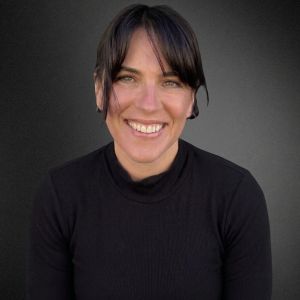
Mandi Bateman Podcast Transcript
Mandi Bateman joins host Brian Thomas on The Digital Executive Podcast.
Brian Thomas: Welcome to The Digital Executive. Today’s guest is Mandi Bateman. Mandi Bateman is the CEO and co-founder of Profile Health, a clinical intelligence platform for precision medicine built for the rapidly growing cash pay healthcare vertical. Profile Health aggregates longitudinal patient records through the health information exchange, and layers in whole genome sequencing analysis to give physicians a complete synthesized view of each patient’s health.
Well, good afternoon, Mandi. Welcome to the show.
Mandi Bateman: Thank you so much, Brian. It’s great to be here.
Brian Thomas: Absolutely, my friend. I appreciate it. You’re hailing out of San Francisco, just two time zones away from me. I’m in Kansas City. Love that you took the time out of your busy schedule to jump these time zones and calendars.
I know it’s, it’s tough, so thank you so much. Mandi, if you don’t mind, I’m gonna jump into your first question. You’re a three-time founder with a prior exit. You built LuvDub through to its 2021 acquisition, then co-founded N-of-One as COO out of the Stanford Health Care Innovation Lab, and now you’re building Profile Health.
What did those earlier chapters teach you that most directly shaped how you’re approaching Profile, and what convinced you that precision medicine for the cash pay market was the right problem to build your next company around?
Mandi Bateman: Mm-hmm. Oh, wow, so many lessons. I could talk for days and days about those, the lessons that I learned from all of the companies.
I would say from LuvDub, the biggest lesson that I learned is that the founder at the early stages needs to be directly in contact with the customer and with the product team. I am at my current startup Profile, the interstitial layer between every single one of our departments and talking to our customers, onboarding them, dealing with, any kind of bugs that happen, doing QA testing.
So really just essentially spinning a lot of plates and, you know, being the, the product owner as well as organization of, all of our onboarding with our customers. So I think that was my biggest takeaway at that startup. Super, super important for early stage companies. And then for N-of-One, which was a precision medicine company that was direct to consumer, what I saw while I was building that company was that precision medicine direct to consumer is often a race to the bottom.
And really when we’re working directly with consumers in that kind of environment, we want very low friction, right? So those two things, precision medicine and low friction, are at odds with one another ’cause there’s just so much that needs to be done. The human body is very, very complex, and so I just feel very strongly and am very bullish that the way to scale precision medicine and longevity is through the hands of physicians and giving them the tools that they need to be able to sift through all of the data-heavy diagnostics that they have and help them to save time, so they can actually practice that type of medicine and build rapport with their customers.
So that’s, that’s essentially our mission.
Brian Thomas: That’s awesome. I love that. I come from healthcare most of my career on the tech side, but love this space, really do, and I’m really excited to talk about some of the details around your, your startup here in a sec. But I love the fact that you really impact all the things that you have to do as a founder.
It’s, it’s tough, right? I come from Fortune 100, and you got disciplines everywhere, and you kinda stick to your discipline. But what you’re doing a- as a founder is sometimes very complex, very demanding, and you learn so much. So thank you for sharing those. Mandi, you deliberately built Profile Health for the rapidly growing cash pay healthcare vertical rather than the traditional insurance reimbursed system.
Mm-hmm. What makes cash pay the right beachhead for precision and longevity medicine, and what does building for that market let you do that you couldn’t do inside the constraints of insurance-driven care?
Mandi Bateman: Yeah, I mean, we are building for this vertical for personal reasons. My, I, I am a complex case.
I have an autoimmune disease. It was basically addressed and managed with this type of medicine. My co-founder is a naturopath physician. He has a very thriving practice up in the Seattle area, but he’s also out lecturing to different physicians and teaching physicians how to practice this type of medicine.
So we’re just all cut from the same cloth, but a different type of medicine. Our chief science officer is in traditional medicine. He’s molecular pathology over at UCSF and was previously at Johns Hopkins. He has built out our genetic pipeline, which is whole genome sequencing, looking at polygenic risk score, clinical variant annotations, and then also pharmacogenomics.
That type of test is really nonexistent in the traditional medicine space, and the way that a patient might be able to have their whole genome sequenced is already kind of happening within this ecosystem. So we feel that starting with genetics is a great way to be more efficient for patients.
Like, it’s much easier to know what to go after, what to watch. If I have a risk factor of Hashimoto, I can… my, my doctor knows what type of diagnostics to do with me rather than just, doing a whole series of diagnostics that might not be necessary. They also know what type of questions to ask their patients.
So it’s just, it’s apples to oranges traditional medicine versus CashPay and longevity. So it’s a great opportunity for us to use the opportunities that are out there right now around whole genome analysis and the type of practitioners who are already searching for those type of tools. But I do think that this, like you said, is a wedge, and h- we hope that traditional medicine will catch up to, these kind of more advanced diagnostic tools.
Brian Thomas: Absolutely, and I appreciate that. There’s always a backstory. You kind of weave that in there with your autoimmune disease. I appreciate what you’re doing for the world because obviously you were impacted by this, and I, and this gives you a big motivation to make things better. So I appreciate that.
Love healthcare like as I’ve been in it. My daughter studies genetics as well, by the way. So it’s just… This stuff’s amazing, but I’m glad that you’re doing it because I think traditional medicine does need to be disrupted somewhat. Yeah. You know, we, we get a lot of… At the end of the day, insurance companies and we know what happens.
Follow the money, and- … we just need to do the right thing and try to take care of people, and I really appreciate people that have that passion like yourself that gets on here and just goes for it. So thank you. Mandi, precision medicine tools only matter if physicians trust them enough to change how they practice, and patients trust them enough to share deeply personal genomic data. How do you think about earning that trust on both sides, the clinical rigor physicians demand, and the privacy and transparency patients need around their DNA?
Mandi Bateman: Yeah. That’s a great question. First of all, like I said, our chief medical officer is well-known in, in the space.
He’s teaching physicians, and so they really trust him. So when he says, “We’re building this tool,” they’re, like, very easy to adopt. So we’ve built that trust through his network that he’s been doing for decades, just being a great physician, and then also teaching really, really good medicine. And then when it comes to the patient trusting their physician, we’ve actually found that patients really want this type of testing.
So we don’t often hear from a patient that, that they’re nervous about doing genetic test at all. In fact, they’re asking for this type of thing from their physician. And once the, they build the rapport with the physician, and that’s what the, is recommended, they’re, they’re like, “Yes, please.” So, and we’re HIPAA compliant, so it’s much different than D2C.
When you’re, when you’re looking at other genomics companies, like, we have to keep patient privacy and security, like, at the very top. So really we’ve, we’ve found that the only time that patients do not want these types of test is when they’re scared about what they may find out. And so that is very real.
That, that’s definitely something that we’ve run into. But, you know, I would say probably 90% of the patients that I talk to are, like, very eager to have this type of testing, and they’re, they’re kinda like, once they know about it, they’re like, “Of course I would want something like that.”
Brian Thomas: Absolutely. And precision medicine is just really on everybody’s radar now.
They know that with precision medicine, you can actually pinpoint to a particular disease or, or address something. And, and like I said, I just really love this stuff. I eat it up, believe me. But you’re right about trust, and you’ve, you’ve hired the right people at your startup, people that are well-known in the industry, the pioneers in this space.
And again, trust goes a long way. And once you have that built, I think you’re gonna have just an amazing ecosystem around this precision medicine and the solutions you’re providing to make the world a better place. So thank you. And Mandi, the last question of the day, I kinda look to the future, right?
You describe building it towards a future where genomics and longitudinal clinical data combine to power precision and longevity medicine at scale. As sequencing costs keep, I should say falling, not failing yeah, it keeps improving, what does the future actually look like five years out? How does the everyday experience of healthcare change, and what has to be true for that vision to reach beyond early adopters into that mainstream?
Mandi Bateman: Yeah. Really great question. So when people get excited about longevity, there’s often this topic around treatments, right? Like peptides, for instance, or stem cells. And treatments are way more effective when the patient has done the preventative work When they have the right lifestyle habits, they are eating the right foods, their environment is clean.
They don’t have additional kind of burdens on the, on the system, so treatments actually work better. So when I think about longevity, I’m thinking mostly about preventative and, like, doing the work, and then, the other bit is, is around treatments, which I think is more fun to talk about, but they really go hand in hand with one another.
What our technology is able to do– So we do whole genome sequencing, as I stated before, but then we layer on top of that patient’s longitudinal data as well ’cause you need that one-time test, but then you also need the markers that are tracking over time, so your, normal blood markers, your wearable data, the patient’s signs and symptoms that are spanning across a time.
So I think that in the perfect scenario, as costs fall for whole genome, that becomes a lot easier for every patient to have, and they can start earlier, and we can track, through wearables and different biomarkers, and basically allow that patient to have access to the tools they need for preventative medicine.
And so, these downstream issues don’t happen. Less people have cancer, less people have metabolic disease, neurological disease, and of course, there are people who will need these types of treatments, but in combination with the good work that folks need to do to make these treatments more effective.
So yeah, that, that’s our big goal, and I think that the consumers are demanding this type of care, and they’re doing it, by biohacking. But there, I think, are better ways to address precision medicine by looking at genomics first and, having the right test at the right time, within a patient’s lifespan.
Brian Thomas: Thank you. You unpacked a ton there. But just to kind of highlight some things, I agree with you. When a student is interested in a subject, they excel in that, that particular subject, right? Same thing here, your health. When you’re interested, you talked about that, when the patient is actually involved in, in doing the, the maintenance that goes along with the stuff that you’re providing, right?
That makes it go so much further. And, and we’re seeing people now with AI- Yeah … and without AI, but people are going out there, and I see a lot of people, they’re, whether it’s AI or not, they’re, they’re on Reddit or whatever, and they’re really involved, and they’re asking questions- Yeah … to the community, and they’re asking their physician, and this is just amazing.
And you’re empowering these people to do better by themselves just with some basic research and being a team player with the healthcare provider- Yeah … you know, like yourself, so.
Mandi Bateman: Yeah, yeah. I mean, I think that the opportunity when, you have an autoimmune disease or, any kind of illness, is that there is medical, like, an increase in medical literacy, and knowing your physical body and understanding how it works, we weren’t given any kind of manual when we were born, like, so we actually have to study the body through injury and through disease.
But on the other side, when you get to learn about this complex system that we have the opportunity to, experience for a short time on the planet, it’s actually, it’s an amazing opportunity. So I’m, I, we’re, we’re not doing so much of the medical literacy for the patient, like, the, all of the large language models are doing a really great job of that, the Reddits, all that kind of stuff.
Like, hopefully we’re able to give the physicians more time to build rapport, answer questions, answer the right questions, have the research at their fingertips so they can empower their patients to work together with the physician. So, I do see this time with all of the biohacking out there, like, just an opportunity for people to learn about their health.
I think that’s a very cool inflection point happening right now.
Brian Thomas: Absolutely. There’s a another gentleman, and I don’t wanna steal your thunder, this is your podcast, but Brian Johnson, you know, the founder of Venmo, is out there. He’s big biohacker, right? He’s got a big- Mm-hmm … following now and actually working with his team.
It’s a potential episode here. So yeah, I love this stuff, I really do, and I just can’t believe how far we’ve advanced in the last just few years, and part of it’s emerging technologies. But people like you that are really pioneering this stuff is awesome, so thank you.
Mandi Bateman: Oh, thanks, Brian.
Brian Thomas: You bet. Mandi, it was such a pleasure having you on today, and I look forward to speaking with you real soon.
Mandi Bateman: Yeah. Great. Have a wonderful evening, and thank you. I appreciate your time.
Brian Thomas: Bye for now.
Mandi Bateman Podcast Transcript. Listen to the audio on the guest’s Podcast Page.