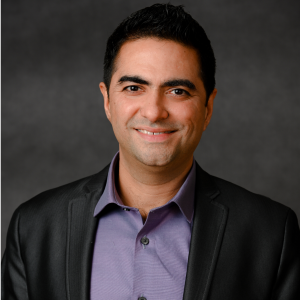
Mahesh M Thakur Podcast Transcript
Mahesh M Thakur joins host Brian Thomas on The Digital Executive Podcast.
Brian Thomas: Welcome to The Digital Executive. Today’s guest is Mahesh M. Thakur. Mahesh M. Thakur helps leaders navigate high-stakes career and organizational transitions with greater clarity, confidence, and influence. His proven framework has helped thousands of professionals step into bigger roles, lead stronger teams, and create meaningful growth inside or beyond their organizations.
Mahesh is a proven leader with over 20 years of experience driving success at some of the world’s most respected technology companies. His career is defined by a relentless pursuit of excellence and a keen ability to deliver results in highly competitive environments.
Well, good afternoon, Mahesh. Welcome to the show.
Mahesh Thakur: Thank you, Brian. Great to be here.
Brian Thomas: Absolutely, my friend. I appreciate it. You’re hailing out of San Jose, California. I’m in Kansas City, so I always appreciate when a guest takes the time out of their day to make this work between time zones and calendars. So, thank you. And Mahesh, if you don’t mind, I’m jumping right into your first question.
You spent over two decades as a product management executive at Microsoft, Amazon, Intuit, GoDaddy, launching products like Microsoft Bing, Amazon Workplace, and Intuit QuickBooks before moving into executive coaching and advisory. What was the turning point that made you decide to step away from operating at those companies to focus on developing other leaders, and what did you carry with you from those rooms?
Mahesh Thakur: Great question, Brian. I don’t think I ever really left leadership. I simply changed where I created leverage. During my career, I had the privilege of helping launch products like Bing at Microsoft, scaling initiatives at Amazon Marketplace, growing QuickBooks at Intuit, and leading product organizations at GoDaddy.
I loved building products that reach millions of customers, and in some cases, even billions of customers. But there was one experience that completely changed my perspective. I was working with a senior leadership team at a Fortune One Hundred technology company. Everyone in the room, Brian, was brilliant.
They had outstanding technology, plenty of resources, and a clear, clear market opportunity ahead of them. Yet project after project kept stalling. From the outside, it looked like an execution problem. After spending time with the team, I realized it wasn’t an execution problem at all. It was a leadership problem.
The product strategy was not broken. The trust between leaders was. Decisions were taking weeks because people weren’t aligned on priorities, and every function, optimized for its own success instead of the company’s success. That, Brian, was my turning point. I realized that products don’t transform companies, leaders do.
Today, instead of building one product at a time, I help leaders who influence thousands of employees and millions of customers. The biggest lesson I carried from those executive rooms is this: leadership is not about having the best answers. It’s about creating the conditions where the best decisions consistently emerge
Brian Thomas: That’s amazing. Thank you for sharing, by the way. And had some great guests on the show, talked about leadership, and really resonates with me here. But you talked about you really never left leadership. You just continued to leverage that skill set you had wherever you went beyond working at some of those big Fortune 100 companies.
And as you said, outside, it looked like there was a an execution problem or a platform or product problem, but really it was a leadership and trust problem, and that really resonates with me. And the last thing I wanna highlight, products don’t transform companies, leaders do. I think that’s important.
It’s a great message. Mahesh, you’ve described your approach as deliberately different from standing… standard coaching, calling it clinical and prescriptive rather than reflective, built around a structured 180-day roadmap. Why did you build it that way, and what’s the risk with the more open-ended, purely reflective style of coaching that’s common in the industry?
Mahesh Thakur: So, Brian, I’ll, I’ll first start by saying reflection is clearly valuable. Every coaching engagement begins with reflection, matter of fact. But reflection by itself rarely changes behavior. Let me give you an example, Brian, and this will hopefully also resonate with the audience. A senior engineering executive at a large tech firm came to me after being passed over for promotion to a vice president.
This person wanted to get… wanted to make it to a VP role, and he was passed over twice. Technically, he was exceptional, really strong technical chops. His performance reviews were strong. Yet every year, someone else was chosen. We could have spent months exploring how he felt about it, as a part of the reflection exercise.
Instead, we interviewed his stakeholders, gathered structured feedback, identified three specific leadership behaviors that were limiting his influence, and built a 180-day development roadmap around those behaviors. Every month we measured progress. Every month we checked back with stakeholders. Every month we made adjustments.
Less than a year later, he earned a promotion and significantly expanded his organization. That’s why I describe my coaching as clinical and prescriptive. If someone has high blood pressure, a doctor doesn’t simply ask thoughtful questions. They diagnose, they prescribe, monitor, and adjust. Executive coaching should n- should be no different.
Awareness starts a journey. Deliberate practice creates transformation.
Brian Thomas: Love that. And I really do love how you call your coaching clinical and prescriptive. Pretty cool. And just to talk about reflection, you… And again, I just highlight what you, you said here is reflection is valuable for sure, but you mentioned how reflection by itself, though, rarely moves that needle.
And, I think that’s important. An example you shared, obviously, was that leader that was passed over twice for promotion and, and you developed a 180-day plan for that person. And there were some three key leadership behaviors that were lacking. And helping him focus on that, working with stakeholders and the team he was able to get that promotion down the road, and I think that’s just really a testament to the work that you do in this space, so thank you.
Mahesh, you’ve said many CEOs mistake alignment for surface level consensus or a polite agreement when true alignment actually shows up in tough trade-offs, accountability, and candid conflict. So who is really your ideal customer, and what kinds of organizations or leaders see the greatest results from working with you?
Mahesh Thakur: There are two really– I mean, Brian, there are two groups of people that I love working with. The first is organizations that I know AI is going to reshape their business but don’t want another technology presentation. They want measurable business outcomes. Typically, they are companies with revenues between hundred million and several billion dollars that are asking questions like, “Hey, how do we move from AI experimentation to AI transformation?”
Or they may ask, “How do we get our leaders aligned? How do we create a culture where people embrace AI instead of fearing it?” Those organizations bring me in to keynote, advise their executive teams, or facilitate leadership off-sites. Now let me talk to you about the second group. The second group is senior leaders themselves.
These are directors, vice presidents, C-suite executives, and founders who have achieved tremendous success, but they are facing an inflection point. They may be stepping into a larger role, leading enterprise-wide transformation, preparing for the CEO position, or navigating the complexity that comes with scaling an organization.
One of my favorite clients was a senior executive at a Fortune hundred tech company. He was already technically outstanding. What he needed wasn’t more technical knowledge. He needed, needed greater executive presence, stronger, much stronger stakeholder relationships, and the confidence to influence across the enterprise.
Within a year, he had expanded his organization, increased his compensation significantly, and become one of the company’s most trusted leaders. What excites me is not helping people become slightly better. It’s helping leaders create these ripple effects that improve thousands of careers, delight millions of customers, and build organizations that people genuinely want to be a part of.
That’s where leadership becomes transformational
Brian Thomas: Love that. Really do. And just to highlight, you talked about the two groups of leaders you do like to work with. Obviously, leaders that want to leverage AI know that it’ll reshape their business, but they don’t want another technology platform. They want really to help lead the organization forward transformationally and embrace that AI.
And I know that you can help them there. And the other one you mentioned is those senior leaders who have, maybe have achieved some really great success in their past, but maybe they’ve hit an in- inflection point or they’re at a challenge in their current state. And I just love that when there are people that need help and you’re there, people like you that, that do this sort of thing really help people transform their leadership, which ends up transforming culture and, and organizations.
So appreciate that. And Mahesh, last question today. You’ve argued that in the agentic era, leadership is no longer about managing tasks, but about orchestrating velocity, and that the real shift is from coordination to judgment. As AI agents take over more of the coordination and execution work, what does the leader of the future actually do all day, and what skills should ambitious leaders be building right now to thrive in that world?
Mahesh Thakur: In order to thrive in this new world let me just first describe that. I think we are entering… Currently, we are entering the biggest shift in leadership since the internet transformed business, for decades, leaders spent most of their time coordinating work, status meetings, following up, escalation, chasing updates, and routing information.
AI agents will increasingly automate much of that coordination. That changes the job description of every leader involved. The leader of the future becomes the organization’s chief judgment officer. I would call them the CJO, chief judgment officer. Their job is deciding what deserves attention, where to place strategic bets, what risks are acceptable, and how to build a culture where humans and AI make each other better.
I’ll just double down on this point that I just said. Many organizations and many leaders still are struggling with how to improvise their culture. However, what is quickly happening is that these leaders not only need to think about humans or their people workforce, they also need to think about how they will build a culture where humans and AI can trust, collaborate, and make each other increasingly better because both their outputs, the outputs of their collaboration, their individual outputs, as well as the collaborative outputs, will translate and transform to organizational strength, initiatives, and finally revenues.
I often tell executives the competitive advantage won’t be who has the best AI. It’ll be who exercises the best judgment while using AI. That’s why I believe leaders should, should invest in four distinct capabilities. Number one, strategic judgment. Number two would be systems thinking. Number three is communication that creates alignment, not just at the C-suite, but across the organization.
Okay? And lastly, number four is adaptability. And adaptability is not just for in- the engineers or not just for R&D. This is in fact even for the C-suite, the chief financial officer, the chief people officer, the chief operations officer, and their respective organizations. The chief revenue officer, they all have to think about adaptability.
So for the audience, I’ll again clearly articulate there are four areas where they should be investing time and effort. Strategic judgment, systems thinking, communication that creates alignment, and lastly, adaptability. Technology will continue changing, Brian, but these capabilities will only become more valuable with time
Brian Thomas: Awesome. Thank you. Really do. I liked what you said right now ch- what you’re seeing is the biggest shift in leadership since the beginning of the internet, and I certainly agree with that. It’s probably way bigger, honestly. And you talked about that future leader, the CJO or the chief judgment officer. I think that was interesting.
Someone that can really build and shape that culture. And you talked about that person could bring collaboratively the machine and AI, or I’m sorry, machine and human together to, in a trustful, meaningful, collaborative way for the best outputs. And you talked about those four bul- bullets, those four items, those tenets as I would call them, is strategic judgment, systems thinking, communication that creates alignment, you said, and adaptability across the organization.
I think that’s so important, and I really appreciate your message there. And Mahesh, it was such a pleasure having you on today, and I look forward to speaking with you real soon.
Mahesh Thakur: Pleasure is mine. Thank you for having me on your show, Brian.
Brian Thomas: Bye for now.
Mahesh M Thakur Podcast Transcript. Listen to the audio on the guest’s Podcast Page.