Kurt Love Podcast Transcript
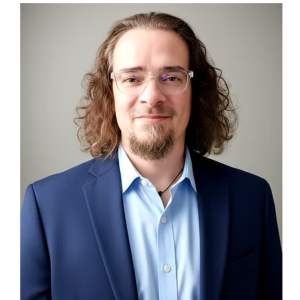
Kurt Love joins host Brian Thomas on The Digital Executive Podcast.
Brian Thomas: Welcome to The Digital Executive. Today’s guest is Dr. Kurt Love. Dr. Kurt Love is the founder and managing director of AINA Consulting and Educational Services, as well as an educator and management consultant. As the creator of the Human-Centric Leadership Model and Community Thriving Spectrum, he helps organizations move past basic compliance into true human thriving.
His data-driven, systematic approach transforms workplace culture, proving that employee well-being is a paramount condition, and least understood, that drives financial success. Well, good afternoon, Kurt. Welcome to the show.
Kurt Love: It’s a pleasure to be here. Thank you.
Brian Thomas: Awesome, Kurt. I appreciate it, and I know you’re hailing out of the Hartford, Connecticut area.
I’m in Kansas City. So again, appreciate the time navigating, traversing the globe today to make this happen. So Kurt, if you don’t mind, I’m gonna start with your first question. Let’s start with your journey. You’re an associate professor, an elected school board member, and now the founder of AINA Consulting.
How did your path as an educator lead you to building a consulting practice focused on workplace thriving?
Kurt Love: You know, this is something that’s been evolving over time for me, but it seems that there are a lot of areas where they’re overlapping between the world of education and, and business makes sense.
And I think a lot of times people have thought in one direction, how business can influence education. But it’s become more and more obvious to me that there’s some skill sets in education that make a lot of sense to have become more at the forefront of leadership within business. So a little bit of that is- Where we as teachers have to, I, I always joke about this, right?
But getting a, a bunch of 12 and 13-year-olds to do algebra, this is not something that 12 and 13-year-olds wake up to every morning and go, “Gee, I can’t wait to go do algebra.” So how, how does that actually happen, right? What we do as teachers is we’re, we become really, really very high tuned in how do we create relationships?
How do we create support? How do we sort of maximize and optimize somebody’s ability to be productive? And, and that just makes sense in the business world or in any organization really. It can be a nonprofit, it can be a government agency. And I think a lot of times when we become adults, you know, the a- adulthood can be quite a grind.
Every day can, be filled with challenges. And if it’s good stress, stress that’s helping us grow and feel accomplished and challenging us in ways that are just overall positive, that’s a good thing. But if it’s the kind of grinding down chronic stress that doesn’t seem to relent, it doesn’t seem to have, any goals in mind that can really bring us down.
And I think there’s something to be noticed and something that we can lean into in terms of management, in terms of leadership, and in just in terms of really supporting each other through, the, the different goals and the different projects that come with our, our jobs and, and our workplace.
So there’s, there’s a lot of, I think, learning that can happen that, that can be really, really profitable and make the workplace a lot better for everybody, leaders and staff included. So that’s kind of the overlap that I see
Brian Thomas: Thank you. I appreciate that. And you did highlight education and business do overlap.
They work hand in hand. Mm-hmm. And, and you went into stress a little bit which can be healthy, the good stress can be, and it’s positive for your advancement and growth in life and career, et cetera. But there is a lot of bad stressors out there, and, and we know that. But with your help with some learning here, we can learn how to tackle this and thrive in the workplace, and we’ll talk a little bit more about what you’re doing here in the next set of questions.
Kurt, a central idea in your work is quiet cracking, the slow erosion that drives up sick days and turnover. How is that different from quiet quitting, and what does it cost organizations that don’t catch it?
Kurt Love: Sure. Yeah, I think this is the, the very silent killer in a workplace, quiet cracking. So I think we’re…
a lot of us are very familiar with quiet quitting. Quiet quitting is a very… it’s a voluntary thing. It’s somebody deciding that this isn’t the right fit for them anymore but they’re not necessarily gonna make a big, to-do about it. They’re just looking for other avenues. So when the time comes, they find something they like, they leave, right?
And it’s, it’s not with any flag-waving. It’s not with any, bullhorns, right? It’s, it’s just simply, “Gotta go.” But what we have learned is that this quiet quitting really is led much earlier with something called quiet cracking. Quiet cracking is… it’s not voluntary. It’s involuntary. It’s something that’s happening under the surface, and it’s oftentimes happening with high performers, which is even really more risky when we think about it because these are the people who we really rely on for our projects and our teams to, to do well.
Quiet cracking is that invisible experience where people are pushing really hard to do well, but they’re hitting their limits, and they’re hitting their limits so often that it’s breaking them down. And that was sort of the grind that I was talking about before, and I think many of us can relate to that.
Quiet cracking is eventually gonna compound. It’s eventually gonna, become some sort of response, whether it’s quiet quitting, whether it’s, it’s going to HR for something. W- who knows, right? But it has a lot of avenues for things not going well. So it, it really behooves us, as people who are leaders and you know, working with our teams and managing, to, to dig in to find out what is going on mentally and emotionally with our team members on a very regular basis.
Not every day. That would be a lot too much. But to, to get into, I think, a, a good cycling of understanding What is happening? Are my team members are, are they okay? Are they burning out? Are they in this space of quiet cracking but not telling anybody? So, you know, we have ways of, of anonymously checking in, and it’s not about anything punitive, it’s not about anything that leads to a negative outcome somebody being dismissed or anything like that.
What it really is about is just getting that general sentiment deeply understood as a leader so that you can make really informed decisions that, you know, inform just sort of the trajectory of the business or the organization, but also taking really good care of the people who are doing all that heavy lifting on a regular basis.
Do they feel that they have the support? Do they feel that they have the recovery when they need it? Do they are they coming to work feeling drained already? Are they leaving work feeling even more drained? Right. Those are recipes for disaster within any company. And I just wanna remind people listening that it’s not that adults don’t want challenges.
Adults thrive in environments that provide the right kind of challenges. So it’s, it’s really about understanding that we can do the hard work. It’s just not pushing so much or, or adding so much to the pressure cooker that we then have that explosion down the road or, or just the breakdown down the road, right?
So that, that’s the idea. Quiet cracking is invisible until you start to check for it, then it starts to show up, right? But you gotta actually actively find out what’s going on within your own system, within your own people.
Brian Thomas: Great. Thank you so much. I appreciate that, and that’s, I think well, I know a lot of organizations struggle with that.
It’s really kind of part of the dynamics within a workforce and stressors, et cetera. But you mentioned silent, the, the silent killer is really that term quiet cracking. It’s involuntary. It’s under that surface. You don’t know it’s there. And that includes your top performers, as you mentioned. And eventually quiet cracking will eventually compound into some negative or maybe large event, and some examples are just, like, flat out, quitting or leaving the organization which we don’t wanna have happen, obviously, with, especially with some really good people out there.
So it’s important to do that, that healthy check-in with staff on a regular basis and, and kinda understand what’s pushing their buttons, good or bad. So thank you. Mm-hmm. Mm-hmm.
Kurt, the next question here, you make the case that employee wellbeing is a paramount but least understood driver of financial success, and you use employee net promoter score as a profit strategy.
How do you turn wellbeing from a soft idea into a measurable thriving ROI that a CFO takes seriously?
Kurt Love: Yeah. That’s a great question ’cause a lot of times the question is around how does this, financially benefit an organization, right? So I, I think businesses understand from a customer point of view the net promoter score concept, right?
Is another… Is a customer gonna recommend to another customer, “Hey, you know, you should use this product,” or, “You should buy this service,” something along those lines. Well, from the employee side of things, it’s do you wanna work here, and would you recommend working here to others? And that’s a really powerful, Sentiment that it, it, it’s a retainer in a lot of ways, right?
It retains people which saves a lot of money, onboarding folks, hiring going through the whole process, hiring a recruiter, if we’re talking about somebody at that level. These are all very costly things that are, are seen as investments during that time period. But if you have somebody who’s strong and you wanna keep them, or if you have a team of people who are strong and you wanna keep them what is their sentiment?
Right? What’s their employee net promoter score? And that’s something that can be tracked, right? We, we can have metrics around that that gives us a good sense of, do people wanna stay here? Are they recommending? And are they even… They may be doing their own sort of informal recruitment for you, which costs nothing.
When there is an opening, they may know somebody who’s really talented and would be a great fit for that business. So all of those things become just it’s actually quite measurable. Again, once you start to, to dig down into that within your company now you have a good sense of how much money are we actually saving by creating this really stable very workable environment that people want to come to.
So as a CFO, right, that’s the side that tends to be the blind spot that we’re not necessarily looking at, right? We’re, we’re looking at things that seem to be, quote-unquote, “more tangible,” which I get. But one of the, the biggest and most missed ROIs is this, how are we creating this environment that’s, that is optimizing the folks that w- are there, supporting them?
Are they feeling good about coming to work, and are they recommending it to other people? Especially when it comes time to look for new talent. So that, that pays for itself in dividends, right? I think there’s… Once you wrap your head around that, you go, “Yeah, right.” And as a CFO, if you don’t have a system in place to actually track that, it’s really hard to make the case that this is going on, right?
So again, this blind spot can be very costly. It, it can be something that, You may actually have something really good going on, but you’re not tracking it, so you don’t know, and then you can’t make the case for continuing along these lines. And then something happens, and all of a sudden you start to lose that, and you’re wondering, “Wait a minute.
What, what’s going on now?” Right? Well, you weren’t tracking it to begin with, and now something major happened. Maybe it was a change in leadership, right? Sometimes leadership can have a highly negative impact depending on who comes in. And all of a sudden this, this quiet cracking maybe starts to increase, right?
Just as an example. Or just the general sentiment becomes more negative. Well, as people start leaving, people start taking more sick days, people start turning over. So you get the idea here, right? But as a CFO, if you’re not tracking it, you have no way to say, “Hey, time out,” right? “We, we have seen a major trend change here within our organization.
What’s going on?” Well, we don’t know. So we’re gonna start guessing and throwing the darts at the dartboard until we think we hit the thing that’s causing all of that strife
Brian Thomas: Thank you. Really well put. You know, and you talked about how does this also financially impact an organization or benefit, right?
Negatively or positive here. You know, you talked about would current employees recommend others to work at that organization, what is employee sentiment? What’s their net promoter score? This is all positive things obviously. If you’re moving that needle in that right direction, your employees are absolutely gonna be a, a great case for an employee referral or a public relations that helps the organization’s p- bottom line and doesn’t cost a thing.
You talked about that. But really appreciate those insights. And Kurt, as the last question of the day, as we look ahead with digital exhaustion rising and the lines between work and life increasingly blurred, where do you see the future of workplace culture heading, and what should leaders be doing now to build organizations that bolster people rather than grind them down?
Kurt Love: Yeah, this is a great question. Thank you for asking it because I think there’s some significant headwinds coming our way that I, I don’t know that people are necessarily a- attuned to, right? I, I think right now we’re, we’re still struggling with trying to figure out where does I- AI sit within… where does it sit well within an organization?
How does it become an enhancement, not a replacement? Where, where are the efficiencies and so forth, right? There, there’s a lot of wobbling around, I think, trying to figure out what that looks like. That’s that’s sort of a current challenge, right? But I think future headwinds also include, like, we’re talking about major market slowdowns.
We’re talking about between you know, data centers and, and a lot of pushback from communities that are saying, “We don’t necessarily want this in our area. There’s too much of a environmental negative,” and, and so forth, right? There, there’s a lot of headwinds that are not always seen You know, ahead of time enough.
So my question– and I should add, too, you know, there’s a rising understanding that even with AI, there’s quantum computing. I’m not gonna get into too much detail there, but that actually might be a really good solution to the, the kind of problems that we’re seeing with data centers. But what that might end up doing is it might– Data centers may be a really bad investment, right?
And that could be its own headwind for companies that are putting billions of dollars into data centers, right? How’s that gonna affect the company when they start to realize that this money is not doing what it’s supposed to be doing? That’s a potential. So anyway, those, those headwinds are, are real. And it’s gonna have ripple effects down the road.
So my question to organizations is whether or not these things happen, right? I, I, my crystal ball’s only so good. I only get a certain number of miles at it. But what are you doing to prepare and stabilize your workplace for any headwinds that show up, for any challenges that show up, things that were predicted or things that were unpredicted?
How do you do that? Well, if you don’t have that kind of stable work environment to begin with, things are gonna get upended pretty quickly, and we’ve seen that in some big companies where thousands of people were laid off, right? Just and almost on the impulse or the whim of let’s see if AI can, take care of all this stuff, and it turns out it really can’t.
So this is crucial to any organization to have that kind of inner stability, that inner thriving going on because as problems arise, people really do step in and step up a lot of times to take on, you know, these, these challenges. And they’re willing to do that if they feel like there’s trust, if there’s– if they’re being valued.
And that’s, that’s all good. Again, if we’re not investing in that, though, if we’re not tracking that, if we’re not understanding the data around that as much as we understand the data with our customer data, then we’re really missing out on something crucial to the survival of an organization or a business.
So I think that’s, that’s- So important, and I think that there is a rising understanding that this has to be just as seen as just as important as other parts of what we’re already measuring within our business or, or organization.
Brian Thomas: Thank you. I think that was really important that we are measuring the people side of it, not just, you know, the bottom line or the…
We have all kinds of KPIs that we’re tracking as far as the company’s strategic direction, but people should need to be the, the center of that. Absolutely. You talked about some of the significant future headwinds coming down our way with AI, of course. I think there’s a lot of positive. It’s a double-edged sword.
Mm-hmm. A lot of negative. Mm-hmm. And maybe, as you said, quantum computing combined with AI could be the magic bullet, but as you talked about, on the flip side, there’s this massive, expensive envi- environmentally challenges that that go into this of course. But at the end of the day Kurt, as you mentioned, we need to create a stable work environment, build that inner stability, need to invest in people and their wellbeing, and I think that’s so important, so I appreciate the message.
And Kurt, it was such a pleasure having you on today, and I look forward to speaking with you real soon.
Kurt Love: Yeah, appreciate it. This was great. Thank you so much.
Brian Thomas: Bye for now.
Kurt Love Podcast Transcript. Listen to the audio on the guest’s Podcast Page.