
Is Bitunix legit? The only way to properly understand whether or not a CEX can be trusted is by carefully researching its trade security systems and reserves. The leading exchanges make this information easy to find, while many less trustworthy platforms either hide it or fail to provide it at all.
There are plenty of reasons to be cautious around CEXs. The past year alone has seen major incidents such as the Bybit and Upbit hacks, while the FTX disaster still remains one of the clearest examples of what can happen when an exchange lacks transparency and proper safeguards. Many users suffered major losses as a result.
This article will examine the legitimacy of Bitunix and the broader exchange market by looking at factors such as Proof of Reserves (PoR), transparency, fee structures, and long-term security track records.
Key Takeaways
- Researching security and reserves is crucial to determine if Bitunix is legit.
- Factors like transparent Proof of Reserves, strong security, clear fees, and user protections indicate exchange legitimacy.
- Bitunix offers a live Proof of Reserves system to verify asset backing, enhancing trust.
- Despite Bitunix’s strong track record, users should still prioritize cold wallets for complete security.
- CEX incidents such as Bybit, Upbit, and FTX highlight risks; however, Bitunix remains reliable with 4.2 million users.
Table of contents
What Makes an Exchange Legit for trade?
There are a few factors that generally indicate whether an exchange is legit or not:
- Transparent Proof of Reserves
Legitimate exchanges publicly show that user assets are fully backed. This allows traders to verify reserves rather than relying purely on trust. - Strong Security Track Record
An exchange with no major breaches over several years generally inspires more confidence. Past incidents often reveal weaknesses in internal systems and risk management. - Clear Fee Structure
Trusted platforms make trading fees easy to understand and publicly available. Hidden fees or unclear pricing structures are usually a red flag. - Large and Active User Base
Millions of active users and strong trading volume suggest that a platform has established credibility in the market. This also improves liquidity and execution quality. - Additional User Protections
Features such as reserve funds, withdrawal verification tools, and risk controls help demonstrate that an exchange is prioritizing user safety.
Proof of Reserves: The Ultimate Safeguard?
Since the FTX collapse, Proof of Reserves has become a leading indicator of legitimacy. A PoR system allows users to verify that an exchange has the required assets to cover withdrawals, even during periods of extreme market volatility.
Technically, Proof of Reserves works by combining wallet balance disclosures with cryptographic verification methods such as Merkle Trees. This allows exchanges to prove they hold sufficient assets without exposing sensitive user information.
PoR became essential after major exchange collapses revealed that some platforms were operating without enough reserves to cover customer balances. Traders now expect exchanges to provide transparent reserve data rather than relying purely on reputation.
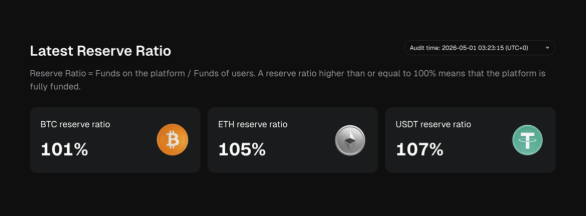
Bitunix offers a live PoR system where reserves are regularly updated and publicly visible. Users can also access verification tools that allow them to confirm their own balances are fully backed by the exchange’s holdings.
CEX Security Track Trade Records to Consider
It is important to understand the importance of exchange legitimacy. When your funds are held on an exchange, they are not protected by the state in the same way as money in a traditional savings account. For this reason, it is worth examining past exchange breaches and failures.
- Bybit Hack
The Bybit breach highlighted how even major exchanges remain targets for sophisticated attacks. Incidents like this reinforce the need for strong reserve systems and security infrastructure. - Upbit Exploits
Security incidents linked to Upbit, which saw around $35 million in SOL lost, demonstrated the risks surrounding wallet management and operational vulnerabilities. - FTX Collapse
FTX failed because customer funds were mishandled and reserves were insufficient. The collapse became one of the clearest examples of why Proof of Reserves and transparency are essential.
Since launching in 2021, Bitunix has maintained a strong security and trade track record without a major breach. This consistency has helped the exchange build trust with its growing user base.
Final Thoughts
The truth is that no one’s crypto is 100% safe when held on an exchange. For complete security, cold wallets are still necessary. However, some exchanges have proven more legitimate than others. The Bitunix track record, Proof of Reserves system, and the Bitunix Care Fund, which holds $30 million in USDC that can be deployed during periods of extreme volatility, have helped the platform build its user base to over 4.2 million users.