Joel Perez Podcast Transcript
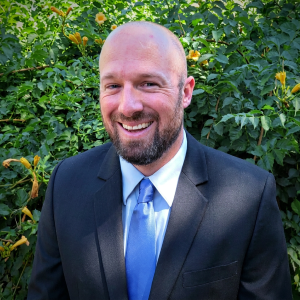
Joel Perez joins host Brian Thomas on The Digital Executive Podcast.
Brian Thomas: Welcome to The Digital Executive. Today’s guest is Joel Perez. Joel Perez is a full stack software engineer, technology leader, chief technology officer, and co-founder of Mindful Software, where he focuses on building human-centered technology that helps people create meaningful change in their lives. His career spans software engineering, IT leadership, infrastructure, and product development.
In his previous role with Rocket Communications, Joel created and led a team of engineers building a 3D-rendered satellite visualization tool used to train space operations teams. The platform combined real and user-generated satellite data to create realistic scenarios for testing space domain awareness.
Well, good afternoon, Joel. Welcome to the show.
Joel Perez: Thank you. It’s great to be here.
Brian Thomas: Awesome. I appreciate you making the time. I know traversing time zones, calendars, et cetera, to get on a podcast with me is challenging, but I appreciate it. You’re in Longmont, Colorado. I’m in Kansas City, so we’re just an hour apart, which is great.
But if you don’t mind, Joel, I’m gonna jump right into your first question. You started in systems and networking, ran IT infrastructure, kinda my background, for a two billion enterprise, then took a year off traveling with your wife, Amy, and came back as a software engineer. Kinda reverse roles what I did.
That’s not a career pivot most people would bet on. What happened during that year that made you confident enough to rebuild your professional identity from scratch?
Joel Perez: The one thing I find interesting about that idea, and I faced that while I was trying to find jobs in that job market, is that people don’t think it translates.
Those principles are, are overarching, there’s a lot of principles that translate incredibly well, and I think that’s led to why I’m so successful doing it, aI tooling even in the modern , 2026 era really emphasizes those principles and how important they are. And, the biggest one I think, especially for the modern age, is that my kinda last role in the IT space, I had no one over me.
I had no one I could go to. I had to be the ultimate resourceful answer. So when I faced problems I had never seen before and never faced, there was nobody I could ask, so I had to go find it and figure it out. And that resourcefulness to me is the key now in the modern technology space because it’s so important for us to explore and go to new routes and not be afraid to be a novice
Brian Thomas: That’s awesome.
Thank you. And I, I certainly appreciate that. I, again my career is a little bit flip-flopped. I started as a developer and went into infrastructure and ended up becoming a CIO. But I really love that resourcefulness and, and of course, obviously, you’re a very persistent person. I know I can just tell based on your profile and what you’ve done that there’s, there’s no wall for you that’s gonna stop you, and, and I appreciate you sharing what you’ve done to get there, so thank you.
And Joel, you and Amy both experienced the value of dream interpretation as a tool for reflection and personal guidance, and when AI reached a point where the idea fully felt possible, the pull to build it became hard to ignore. How did that personal experience shape the product philosophy, and what does My Dream do differently from apps than just match symbols to generic definitions?
Joel Perez: You know, it started really personal for us. We had made, and, and my wife especially made a career move based on a dream that she had, and it was so powerful that she couldn’t ignore it anymore. I had been trying to talk her out of this job for several years, but it hadn’t been working until she had this really powerful dream.
We had been doing dream interpretation on our own, but it’s really cumbersome. It takes forever. You don’t get any historical references for old dreams, trends, emotional states, and we really… Our North Star really is coming up with that deeper meaning and life connection, so when we started it, we know that UX is critical from the beginning.
We started and spent an entire year just doing research from dream experts that work with people every day to actual UX testing, user evaluation, the whole nine, and when it comes to the symbol meanings and generic symbols, that’s just a small part of the overall. We have emotion tagging, those symbol meanings.
It’s also not about just generic ones. There’s also a side of it where, I always say a fish is gonna mean something different to you than it would a fisherman. So it’s really, really important to grab that personal context, not just that personal context, but what’s happening in your life. What are you going through?
What are your struggles? What are your joys? Tying all that together is what your subconscious is doing because it knows everything you do, and it’s never gonna lie to you. So the ultimate goal is to be that translation layer for that. So we do that by essentially grabbing this information, saving it ourselves, anonymizing it, and for the AI ingestion, but then really tracking that and giving users the direct information to make their lives better, to understand themselves better, and, and make better choices
Brian Thomas: Thank you.
And I like the backstory. Your wife, I, I don’t know if you used the word plague or not, but she was in this dead-end job it seemed like or career, and you were talking her out of it, and, and this whole dream idea came about. And, and what… That’s what I love about humans is the curiosity that drives us to find meaning, right?
Especially in our dreams, and, and dreams meaning your career or your business or entrepreneurship goal. That’s also a, a dream, right? But I just love the story, really do, and the fact that you and your wife are partnered to do this together is just simply amazing. Joel-
Joel Perez: It’s, it’s really special for us, and I, I have to say that she was not in a dead-end job. She was running, the pandemic unemployment program for the state of Colorado. Oh.
Brian Thomas: Oh,
Joel Perez: wow. So I wouldn’t call it a dead-end job.
Brian Thomas: Yeah, yeah, yeah, yeah.
Joel Perez: But it was a job that means she was overworked and underpaid.
Brian Thomas: Absolutely. So thank you for sharing that.
Appreciate that. Joel, the mental wellness and self-reflection app market is crowded. Meditation apps, journaling apps, therapy platforms. Where does dream interpretation fit in that ecosystem, and how do you position My Dream for people who might not immediately see their dreams as a serious tool for personal growth?
Joel Perez: We see My Dream really as part of the next wave of self-reflection tools. People are really looking for meaning in their life, and it fits into wellness because this is our ultimate wellness. This is our happiness. This is understanding who we are, which I personally believe is the point of being a human and existing on earth.
So I know when I was first exploring this, I looked to… I first went into dreams because it’s something we all experience, and we’ve all had that, “What the heck was that?” moment, and we see it as well. If I’m gonna talk about the actual market signal, 81 per- percent of Americans believe their dreams carry deeper meaning.
60% of Americans have looked up dream meaning before, and even a full quarter to 25%, they’ve let… Its dreams have led them to make real life change. Leaving their job, ending a relationship. The b- the meaning is there. We’re trying to f- we are… I shouldn’t say trying. We are doing it, and we are serving as that translation for people.
We give people faster, easier ways to access insights that they may not get from journaling or meditation. You know, these therapy apps require users to consciously articulate what’s bothering them. We, we get your dream, and then we provide you with information that you can then take and self-reflect on.
And then that is serves as much different way because the user doesn’t need to come up with that on their own
Brian Thomas: That’s awesome. Thank you. And absolutely, and I know this just, I’m speaking from personal experience whether you know it or not, consciously, subconsciously your dreams impact your life in one way or another.
And I think having some sort of guide or meaning to your dreams would absolutely help people so much in their lives. I know people that are struggling in their own personal life, and I know people outside of their dreams, but then I know people that dream a lot, and they’re always just so curious about this.
So I’m totally excited about what you’ve w- built here and, and excited to get this out to the airwaves, honestly. So thank you. And Joel, the last question of the day, as AI becomes more embedded in personal and emotional spaces like therapy, reflection, creativity, relationships, where do you see the boundary between helpful and harmful?
And what principles do you think should guide builders who are creating technology that touches people’s inner lives?
Joel Perez: The real boundary is whether AI is supporting reflection or replacing someone’s judgment. In emotional spaces, AI should help people notice patterns, name emotions, and ask better questions.
It should not tell people what to do or make better life decisions for them. It’s all about giving them, giving the person the information, giving them a different perspective. When it- when we talk about therapy, ther- good therapists ask questions. They don’t tell people what to do. They ask them questions that help them better self-reflect.
So at least for us, the other side of that too is dreams are very subjective. There is no, “This is what everything means.” “This is what these things mean.” So we had to build it for that kind of self-reflective communication. It’s really all about not providing anything autor- authoritative.
It’s about asking that question of the user, and the other big thing that we do that makes sure that we’re not crossing that boundary is we have dream experts on staff We actually pay people to help us develop features, but also to tell us how we, how things could be a little better. Maybe it could even be, judging and refining the quality itself.
We actually gave them hundreds of dreams that users submitted to us that they loved for their evaluation, so that now we can come up with what we call a golden data set, and we can then use this golden data set and evaluate new interpretations around it. Then we can make tweaks, see if that still complies with this golden data set, and really leverage all of that together.
I think the, the dream expert side of things is so big for us. It’s where we started in research before we even wrote any code. The other thing that’s really big for us is privacy. We’re talking about inner world big work at the individual level. This is not something we will ever sell, and it’s noth- and it’s not anything that we even try to access.
We actually even blind ourselves from that dreams in our analytics tools. I think these are the qualities and the morals that are required in this day and age. I think more and more people are becoming aware of, digital surveillance and things like that, and it’s really, really important that we stick to this, this moral high ground.
And I, I hesitate to even call it high ground, but it’s, it’s really our principles that are gonna make the difference in 2026.
Brian Thomas: Absolutely. And yeah, I would call it a moral compass, so to speak, right? But you’re absolutely right. Privacy should be at the forefront of this, and I’m glad you’re doing that.
We just gotta make sure there’s enough guardrails in place for the humans, but now AI. We- we’ve seen some, some bad cases of AI getting ahold of some stuff and getting into some places and doing different things. But but I know you’re very cautious, and I appreciate you sharing that you embody that whole principle of, of compliance, governance, and, and also just privacy.
It’s a person’s life, right, that is theirs and it’s theirs personally. So, I, I appreciate that. And y- so much into this, I… and I can tell you’re so passionate about it, and that’s why this thing’s gonna be just the next big thing. I know it’s been successful already, so, so thank you. And Joel, it’s been such a pleasure having you on today, and I look forward to speaking with you real soon.
Joel Perez: Thank you so much, Brian. It’s been great.
Brian Thomas: Bye for now.
Joel Perez Podcast Transcript. Listen to the audio on the guest’s Podcast Page.