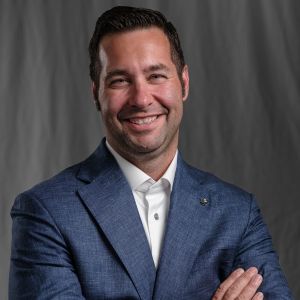
Galen Hair Podcast Transcript
Galen Hair joins host Brian Thomas on The Digital Executive Podcast.
Brian Thomas: Welcome to Coruzant Technologies, Home of The Digital Executive podcast.
Do you work in emerging tech? Working on something innovative? Maybe an entrepreneur? Apply to be a guest at www.coruzant.com/brand.
Welcome to The Digital Executive. Today’s guest is Galen Hair. Galen Hair, managing partner at Insurance Claim Headquarters, is a nationally recognized property insurance attorney known for aggressively representing policy holders across the US.
With thousands of families helped and a reputation for high-stakes litigation wins, he has been named a Super Lawyers Rising Star and one of the National Trial Lawyers Top 100.
Well, good afternoon, Galen. Welcome to the show.
Galen Hair: Thanks for having me. So excited.
Brian Thomas: Awesome, Galen. I appreciate it, my friend. I know you’re in New Orleans, Louisiana.
Great place. I’ve been there many times. And I’m in Kansas City, so I appreciate you making the time to traverse calendars. I think we’re in the same central time zone, believe it or not, but I appreciate that. So, Galen, let’s jump into your first question. Let’s start with your story. You built a reputation early in your career for getting the job done both inside and outside the courtroom.
What set you on the path to becoming the kind of go-getter entrepreneur and relentless litigator you are today?
Galen Hair: Yeah. So I, I think I figured out really early, kind of first generation, high school grad, you know, much less college or anything like that, that talent without hustle will always get lapped by hustle without talent, so I wasn’t gonna bet on talent alone.
And so I really spent every extra moment I had, for instance, just absolutely learning everything I could from successful business owners kind of knowing I might not be the smartest guy in any room I walk into, but that way I’d be the most prepared, and I’d always be the last one to leave.
Brian Thomas: Thank you. Appreciate that. I love the backstory. Again, you learned early on in high school that talent can get… You can get outlap- talent can get outlapped with hustle that maybe not has talent. I don’t know if I paraphrased that correctly, but- … I, I really do appreciate you sharing insights. And at the end of the day, a, a lot of I’d say 80% of it is work ethic.
A lot of just grinding and getting in there and getting it done is probably the most important thing. Talent’s great, but that’s, to me, kind of like the gravy on the potatoes. So, I appreciate your insights. And the next question I have for you, Galen, you say your clients become family to you, and it shows.
How does that personal investment change the way you litigate? And is it ever a challenge to balance with the discipline a case demands?
Galen Hair: Yeah. So, I think that statement often gets misconstrued, right? So when I say clients become family, I don’t mean I send them Christmas cards, right? What I mean is that I lose sleep over their cases.
I think about them in the morning when I’m in the shower. I think about them when I’m at my nephew’s soccer game. It’s not a marketing tagline for me. It’s really a, an emotional investment. And I think that’s good and bad, right? So, it changes what good enough means. When it’s a stranger’s case and you don’t care, good enough is whatever gets you to tomorrow, right?
But when it’s family, good enough is whatever lets them sleep again, not just you. So that makes it harder, I think. The discipline of a case sometimes demands that you make cold decisions. Settle here, don’t chase that motion, let that witness go. When you care about the client, every cold decision can feel like a betrayal.
So, I think the trick is remembering that that discipline is the love in and of itself, because indulgence loses cases, but discipline wins them
Brian Thomas: Interesting. I appreciate your thoughts and insights on that. Obviously discipline is the foundation, you talked about that. Not, not indulgence, but following that discipline is really important.
But you talked about that emotional investment in your clients. I think it’s really important. When you have that sort of investment, you want to go that extra mile to make sure that you are doing the right thing for your client. And I know it’s hard and, and sometimes, again, not to be cliche, but you say clients become family to you, and that’s sometimes how you have to re- relate to people in order to really invest in, in taking good care of them at the end of the day.
So I appreciate it, especially in your line of work. So, Galen, you’re known for attending continuing education just to brush up even when you don’t have to. Where does that drive for constant improvement come from, and how has it kept you sharp over the years?
Galen Hair: So, most lawyers go to CLEs, continuing educations, ’cause their bar card depends on it.
I go ’cause I’m paranoid. Somewhere out there is a lawyer who knows something I don’t, and the day we meet in court, I want that person to be me teaching them, not the other way around. So, the thing that I guess a lot of people don’t realize is the law changes under your feet. The lawyer who graduated in 2005 and stopped learning, today would be practicing law that might not even exist anymore.
So, I’d rather be uncomfortable in a classroom than blindsided in a courtroom. So, when someone trusts me with their case, they’re not gonna hire the version of me from three years ago. I want them to hire the most current version, and the problem is that version has to be built. It doesn’t show up on its own.
So, I think the brushing up, it’s not really humility, it’s strategy. I just want the other side to think they’re prepared, but then I want them to discover that they aren’t
Brian Thomas: Thank you. That’s interesting. And I, I think this goes back to foundationally your work ethic, of course, but you… It was, it’s interesting you said because you, you’re paranoid you’re competitive, of course.
You wanna have that leg up, and so you are prepared when you go to court, and you, as you said, you’d rather teach the opposing counsel a lesson versus them teaching you a lesson, and I think that’s interesting. But that, that really does make sense here, so I appreciate that. And Galen, the last question of the day, as we look ahead this is a technology podcast.
Technology is reshaping the legal field fast. With AI now embedded in research discovery and even claims evaluation, how do you see AI changing high-stakes litigation? What risks worry you, and how are you thinking about adopting these tools without losing the human judgment your clients count on?
Galen Hair: I think that’s a very timely question, right?
So, AI in litigation is real. It’s here. Pretending otherwise, I think, is legal malpractice, which is controversial, to say the least. But the lawyers running around saying it’s gonna replace us and the ones saying it’s snake oil, they’re both wrong. The truth is more interesting and more demanding. What it actually changes is discovery review that used to take 20 associates and three weeks now takes one lawyer and a really long afternoon.
Research that used to be a billable hour buffet for the big hourly firms can sometimes be instant. Claims evaluation models, they can flag patterns a human reviewer would miss when you scale that up to volumes and thousands of claims. But there are risks, right? Hallucinated citations are very real. If you c- wouldn’t trust a first assoc- your associate’s brief without reading it, why would you trust an AI model?
Confidentiality and privilege is huge, and it’s a very big concern. There’s a judgment gap, too, right? AI could look up a bunch of stuff and tell you what similar cases settled for, but it t- can’t tell you about this jury, this county, this judge, the differences in your case. And I think there’s a real, and this is, this is massive, there’s a huge erosion of skill risk.
I see young lawyers who never learned to grind through a record and thousands of pages of discovery already not developing skills that a lot of us had to develop on our own. So, I use AI the way I use a junior associate. It does the first pass. It never does the last pass. The client is paying for human judgment.
It’s paying for my judgment specifically, and the day I outsource that, I should hang it all up and quit. The lawyers who do survive the next decade, they’re not gonna be the ones who fear AI or the ones who worship it. They’re gonna be the ones who treat it like every other tool in a kit. Useful, fallible, but never in charge
Brian Thomas: Amazing. I appreciate that. Talk a lot about AI on the podcast here too, and y- what you just said parallels with what many of the previous guests we talked about. And of course you know, we need to embrace AI, but again, it’s, it’s all about that first pass and last pass. You talked about AI as like a junior associate at a firm who does the first pass, right?
But the lawyer always needs to do that last pass. It’s that validation, of course, that’s so important. But I liked how you highlighted some things around discovery and claims evaluation models. You know, discovery used to take a lot of a full team of lawyers several weeks, but now, as you mentioned, a single lawyer can do that in the afternoon with the help of AI.
So, I really like what your, what your insights around the legal space in, in with AI here, so thank you. And Galen, it was such a pleasure having you on today, and I look forward to speaking with you real soon.
Galen Hair: Likewise. Thanks for having me.
Brian Thomas: Bye for now.
Galen Hair Podcast Transcript. Listen to the audio on the guest’s Podcast Page.