Balaji Tammabattula Podcast Transcript
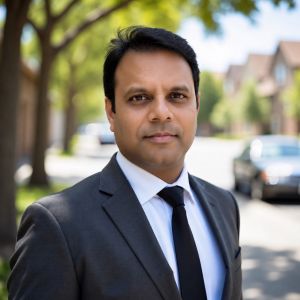
Balaji Tammabattula joins host Brian Thomas on The Digital Executive Podcast.
Brian Thomas: Welcome to The Digital Executive. Today’s guest is Balaji Tamabattula. Balaji Tammabattula is the founder and chief industrial architect of BaRupOn, a US-based company focused on building the energy and physical infrastructure needed for the next generation of AI, advanced manufacturing, and American industry.
He is leading the development of LAMP Texas, a large-scale innovation campus designed to bring dedicated power generation, AI data centers, and advanced manufacturing together all in one location. Barrupan is also developing multiple large-scale innovation campuses across the Permian Basin in Texas and Wyoming, with a focus on creating energy-rich locations where major industrial and technology projects can be built and scaled.
Well, good afternoon, Balaji. Welcome to the show.
Balaji Tammabattula: Thank you for having me, Brian.
Brian Thomas: Absolutely, my friend. I appreciate it, and you’re hailing out of my old stomping grounds, Orange County, California, in Irvine area. I’m in Kansas City, so I really appreciate you jumping on and having a conversation with me today. It’s amazing. And Balaji, let’s jump right into your first question.
Your path is remarkable and unexpected. Brupan started as a medical diagnostics manufacturer during COVID, supplying roughly 250 million test kits, then moved into chemicals. And while scoping a methacrylate manufacturing facility in Liberty County, power constraints became the defining risk. That’s how you ended up building AI infrastructure.
Walk us through that pivot. How did a diagnostics and chemicals company become one of the most talked about names in AI power infrastructure?
Balaji Tammabattula: Yeah, that’s an interesting question, Brian. And it’s actually a very interesting story as well. We never thought that we would g- gonna be in the AI power industry.
It all happened very organically. So we’ve been industrialists and manufacturers our entire life, and we were manufacturing various products pre-COVID as well. But during COVID we actually expanded very fast, very rapidly from manufacturing medical and healthcare diagnostic products.
Then we made a lot of these COVID test kits which the federal government shipped for free throughout the US to all the households. We made, like, one-fourth of those test kits. And as we were expanding, we were awarded a federal contract to make a key chemical needed for the US government.
There’s no manufacturing here in the US, so we were awarded this contract because of our experience. And after getting the contract, we were looking for places throughout the US for– and right location to manufacture, and we identified Liberty, Texas, because it was closer to downtown Houston, closer to the port right next to train tracks, and we needed a big property at a lower cost.
So it checked all the boxes. And after we acquired the property, we, we actually realized that- Power was the biggest challenge. We couldn’t just get power. We went to the grid, grid told us, you can’t get any power until 2029.” And we thought, okay, if we were not gonna get power, there were only two things that could happen.
One, lose the contract, or we have to figure out a way to make our own power. That’s when we brought in some really interesting knowledgeable people onto our board, and they started designing and developing the whole power game. So, we built a pipeline about two miles from a gas hub, brought it to our site, and then we started generating more power than we actually needed.
So that’s when the pivot happened when we were thinking like, how do we use the extra power we have? And all this data center and energy industry are, are struggling for more power. So our pivot from manufacturing to excess power to AI infrastructure, this was how we started as a chemical manufacturer and ended up as a power infrastructure developer.
Brian Thomas: That’s amazing. Love those stories when guests get in here on the podcast and talk about some of the challenges they run into, and out of that comes, a solution which is amazing. You’ve always been in manufacturing and, and that infrastructure space, and the story about getting a contract and needing to build a manufacturing facility, but gosh, there’s no power there, right?
So your pivot to bring in your own energy, you figured out how to do it yourself, and one thing led to another, and you’ve kind of really pivoted literally 180 degrees. So I appreciate the backstory. Balaji, your flagship LAMP campus in Liberty, Texas has grown to 700… 701 acres actually, with a master plan calling for as much as three gigawatts of on-site generation and around 4.5 million square feet of data center and innovation space, what you call a beyond giga site and sovereign infrastructure for the AI age.
Unpack that vision for us. What makes beyond giga fundamentally different from a conventional data center campus?
Balaji Tammabattula: So conventional data center campus, the, the way they’re being built right now are these massive data warehouses where only the data centers exist. Our vision is that there could be a lot more to that.
Data centers, manufacturing, technology, innovation. If all of that exists in one place, then it could revolutionize a lot of things. So that was our, our vision. Like, we thought why not just have the data centers alongside, like, manufacturing and have other industries co-locate in a single campus.
So that could be, one solution for what’s happening across the country right now. People are protesting, saying they, they don’t want a data center in their backyards because it’s not gonna bring in, like, a lot of jobs. Our vision is, like, what if a data center exists and brings the entire ecosystem around it?
Like, you know, the manufacturing, the technology, the innovation. So that’s how we started off as one thing, as a chemical manufacturer, then a data center, and then, like, this entire ecosystem. So LAMP has evolved very organically from a manufacturing site to an innovation hub where we have permanent magnets that are gonna be manufactured on-site.
The data center is gonna be there. There’s gonna be aeronautical manufacturer on there, and we’re also talking to a chips manufacturer. So on this 700 acres, these various industries are going to co-locate so- it started off as a small manufacturing hub to an innovation hub, and that’s what we see beyond Giga is that, one campus having multiple sources of power gas nuclear solar, and and, you know, all these different things come together and create this innovation campuses which we call beyond Giga
Brian Thomas: That’s amazing. I think, the quickest thing that comes to my mind is and you know this in California, I used to live there the car dealerships, they’re all together in one place, right? Same thing here in what you’re talking about, which I think is amazing. Your vision was to centralize and collate, b- basically co-locate various industries into one campus.
Your data centers, your technology, innovation, manufacturing. And doing that, and, and I liked how you highlighted not just your, your traditional energy, but you talked about nuclear and, and various means to power this grid and this co-located location. I think that’s amazing, and I just love the vision.
I wanna hear more about it, of course. Balaji, LAMP is designed to generate its own power and run fully off grid, natural gas, battery storage, and provisions for micro-nuclear. So as you put it, whatever you’re doing won’t impact the community’s power or their bills. Why did you bet on grid independence, and how does building your own power change the economics and speed of getting an AI campus online?
Balaji Tammabattula: I think, again, grid independence also came as a very natural thing to us when we were planning this campus, right? We never thought of running the, the whole beyond, beyond the meter story. So it actually happened that we went to the grid, we couldn’t get power, so we started generating our own power.
And then we realized how quickly we could, build this infrastructure. If we were to rely on the grid, then this whole campus would not come to fruition until twenty twenty-nine. Now, doing everything beyond the meter it’s not impacting anyone. It’s, it’s being done faster. We’re controlling our own destiny.
And then also when the community their concerns are when these large sites get connected to the grid the power bill goes up for everyone. And that’s like an un- unfortunate situation where the community is bearing costs for something that they are not getting any benefits. When we realized that beyond the meter is the solution, we started approaching all the other developers and hyperscalers, pitching them that we can do everything beyond the meter and all the issues that are being broadcast right now, like, everything that’s happening across the country that can be solved by doing beyond the meter.
And none of them were interested. Like twenty-five, when we told them we can do it beyond the meter and then connect to the grid as a backup, they said, “No. Behind the meter is a backup, grid is primary.” Fast forward to 2026 right now, everyone is talking about behi- behi- behind the meter because that’s the only way.
Like, no one wants to connect to the grid because of the issues. And with the government’s strict control over this like Texas, they don’t want any new connections or any new data centers connecting to the grid without any impact studies. And also they want the data centers to bring in their own infrastructure.
So now be- the behind meter is a really great option, and the only solution for all this infrastructure that’s being developed
Brian Thomas: That’s amazing. Thank you. The challenge obviously that you had initially, you talked about that whole challenge and then coming up with your own way to develop that energy.
But as you talk this behind the meter concept, your value prop essentially says, “Hey, we’re, we’re gonna manage it on our end independently. We’re not gonna put more strain on the grid.” But we also will keep the prices down and the community will be happier about that, I’m sure, because here in the Kansas area we had to deal with that as well with a lot of people on pushback on development of, of data centers.
So, thank you. And Balaji, the last question of the day, your goal over the next decade is to replicate the BeyondGiga model globally, and you’ve even weighed in on far-out ideas like gigawatt scale campuses and data centers in space. From your infrastructure and engineering vantage point, where do you see the power and physical backbone of AI heading over the next five, maybe even 10 years?
What’s realistic, what’s hype, and what does America need to get right to lead?
Balaji Tammabattula: I think, the data centers in space it is not hype. It is a, a reality. But I think that’s five to 10 years down the road because you know, we still have to have new technologies to be able to do that.
And looking at it, like how things are happening right now, space looks so much more safer to have a data center than on, on Earth. Like, there’s no community backlash, there’s no water problem, there’s no cooling problem. And also setting up a nuclear MMR or SMR in space is so much more easier because, even if there’s an incident, it’s still contained.
Plus there’s unlimited solar. So there’s like a lot of things that are very positive for data centers in the space, but still we have to figure it out. It hasn’t been done yet. Eventually it will happen. But on Earth realistically right now I think what’s happening is because of all those power challenges, something that has actually fast-tracked very aggressively over the last two years is nuclear.
Like all these SMRs and MMRs, we are heavily invested into, into the nuclear technology. And having that nuclear technology become reality is what will help us create this beyond giga campuses. And just because we are able to invest and put this nuclear into our story, our beyond giga campuses that we are planning actually has fast-tracked m- much more right now.
We’re building more campuses in Wyoming in North Dakota, in Louisiana. So we- we’re doing multiple sites at the same time. We started off as one site, and as we are innovating, as we are trying to solve these daily problems, we’re actually expanding much more faster. So I think in the next four or five years, there’s gonna be a lot of innovation.
I think the first innovation would happen in the nuclear space, and we’re all, like, waiting and, and excited for, for that to happen sooner.
Brian Thomas: That’s amazing. Awesome. Just to highlight a few things, Balaji data centers in space. It sounds kinda weird, but you know, when you laid it out there like that, it really is closer to reality than we think.
Obviously, there’s some more advancement and development that needs to happen, but you talked about unlimited solar out there, no community issues, no water consumption, unlimited cooling, et cetera, et cetera. Then you jumped into that nuclear technology, which is really gaining some traction here.
There’s many inter- interested industries that would like to do that. Obviously, it’s very efficient if you can produce nuclear energy, as but I think and I would agree with you, the innovation in the nuclear space is certainly the next thing probably on the docket, and I just really appreciate your insights today.
So, Balaji, it was such a pleasure having you on today, and I look forward to speaking with you real soon.
Balaji Tammabattula: Thank you for having me on, Brian.
Brian Thomas: Bye for now.
Balaji Tammabattula Podcast Transcript. Listen to the audio on the guest’s Podcast Page.