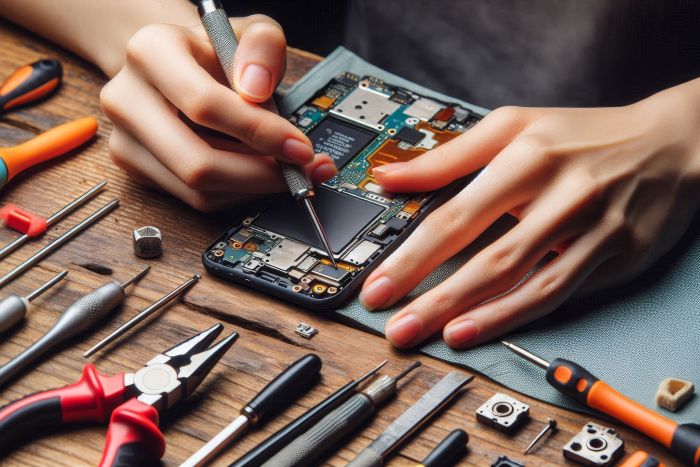
Replacing broken phones used to be the default move for most companies. However, that’s quickly becoming old news. Smart companies all over the world are reversing this trend by opting for mobile device repair rather than purchasing new replacements.
And the savings? Massive.
In this post you’ll see precisely why businesses are turning — and how yours can too.
Let’s get into it…
Key Takeaways
- Businesses are shifting from replacing broken phones to device repair for cost savings and efficiency.
- Device repair significantly reduces costs compared to replacement by cutting down on setup, provisioning, and lost productivity.
- Five key reasons for device repair include cost control, faster turnaround, sustainability, data security, and extended device lifespan.
- Companies should build a smart device repair strategy by inventorying devices, partnering with a reliable repair company, and establishing cost thresholds.
- A device repair first mentality not only saves money but also enhances employee productivity and satisfies modern customer values.
Table of contents
Inside this guide:
- Why Mobile Device Repair Is Beating Replacement
- The Real Cost Of Replacing Devices
- 5x Reasons Repair Wins For Businesses
- How To Build A Smart Repair Strategy
Why Mobile Device Repair Is Beating Replacement
There’s a big shift happening in how businesses handle broken phones and tablets.
The easy answer for years was clear — recycle the old one and purchase a new one. However, with increasing device costs and shrinking budgets, that is no longer feasible.
Why now? Increased device prices, mounting pressure to be sustainable, and just acknowledging that repair makes good business sense.
Mobile device repair is quickly becoming the smart choice for businesses of all sizes. Mobile repair saves money, minimizes downtime and extends service life of devices in the field.
Consider the math: The worldwide mobile device repair market reached $35 billion in 2024, and is expected to reach $58 billion by 2035. That means it will grow every year between now and then.
That’s not a small trend… it’s a full-blown business movement.
If you have 50 or 5,000 devices on your team, teaming up with an efficient cellular device repair company can save you big bucks and keep your operations flowing. Look for a partner that offers quick turnarounds and flat-rate pricing.
The Real Cost Of Device Repair
Here’s something most companies miss…
The sticker price on a new phone is only half the equation. When looking at the overall cost of replacement, consider:
- The new device itself
- Setup and provisioning time
- Data migration
- Lost productivity during the switch
- IT support hours
All of that adds up FAST.
Device replacement shouldn’t just be about spending money on hardware. There’s time involved too. Time that costs your business more than you might expect.
A repaired device, on the other hand:
- Gets your employee back to work the same day
- Costs a fraction of a brand new unit
- Keeps all settings and data intact
- Doesn’t need fresh provisioning
Why wouldn’t companies change their tune? Businesses built around repair and preventative lifecycle management save 20-40% on costs compared to companies who just replace by default.
That’s huge savings… especially for companies with large fleets of mobile devices.
5x Reasons Device Repair Wins For Businesses
Ok. But WHY are forward-thinking companies repairing instead of replacing? Here are 5 reasons why…
Let’s break them down…
Cost Control
This is the obvious one.
Screen replacements/battery swaps are about 10-20% of the cost of a new phone. $80-$150 for a screen repair versus $1,000+ for a new flagship device. Scale that across your entire employee base and the numbers become quite compelling, real quick.
When you’re managing hundreds of devices across your company, that adds up to a lot. It opens up your budget for other things you care about like security, training, growth.
Tip: Repair providers that charge a flat rate per device allow for easier budgeting than unpredictable replacement fees.
Faster Turnaround
Replacement isn’t quick.
You need to order the device, wait for it to ship, set it up, configure it, and then migrate everything. That could take days. Even weeks.
Mobile repair is unique. The majority of repairs (screen/battery/charging port) can be completed in a matter of hours. Instead of going without a device, your employee has their working device back that same day.
That’s a massive productivity win.
Sustainability And Brand Image
Customers care about sustainability more than ever.
Repairing devices instead of disposing of them demonstrates corporate environmental responsibility. Moreover, the statistics regarding e-waste are staggering — mobile phones alone account for millions of tonnes of worldwide e-waste annually.
Choosing repair over replacement helps your business reduce that footprint in a big way.
It’s a smart move for the planet AND your brand image.
Data Security
Every time you replace a device, you have to wipe the old one properly.
When that wipe isn’t successful, confidential business information could fall into the wrong hands. With repair, that risk is completely eliminated. You maintain possession of the device at all times, and only the damaged part is replaced.
It’s especially advantageous for sectors that deal with sensitive information — such as financial services, healthcare, and law.
Longer Device Lifespan
Newer doesn’t always mean better.
The majority of smartphones today can easily last 4-6 years with proper maintenance. Buying a new one every 2 years is ridiculous and costly. With smart repair you can keep your current gadgets functioning like brand new well past that 2 year threshold…
Which means you get way more value from your original investment.
How To Build A Smart Device Repair Strategy
Ready to make the switch? Here’s the simple approach companies are using right now:
Step 1: Inventory existing devices. Create an inventory of every mobile device type, age and condition.
Step 2: Locate a trusted partner. Someone who has quick turnaround times, flat rate pricing, and familiarity with your models.
Step 3: Establish a firm repair-vs-replace threshold. Thumb-rule 50%: If repairing costs more than 50% of replacing, toss. Otherwise, always try to repair first.
Step 4: Measure everything. Document repairs, expenses, and turnaround times. Use this data to tweak your approach.
Step 5: Train employees. Ensure your employees are aware of the process for damaged devices so you can operate efficiently.
This system can save your business tens of thousands of dollars annually. Businesses of all sizes can use it too, from 20 devices to 20,000.
Final Thoughts
The days of throwing out broken phones are over.
Profitable companies are starting to look into mobile device repair as the numbers just add up. Save money, lessen downtime, secure data, go green — do it all.
To quickly recap:
- Replacement costs way more than just the device price
- Repair saves 20-40% on device-related costs
- Faster turnaround keeps employees productive
- Sustainability matters to modern customers
- Smart repair extends device lifespans significantly
One of the easiest wins for any company who owns mobile devices is creating a device repair first mentality. Find yourself a quality repair partner, create some policies and watch your IT costs decrease as your teams productivity increases.
That’s a win-win-win.