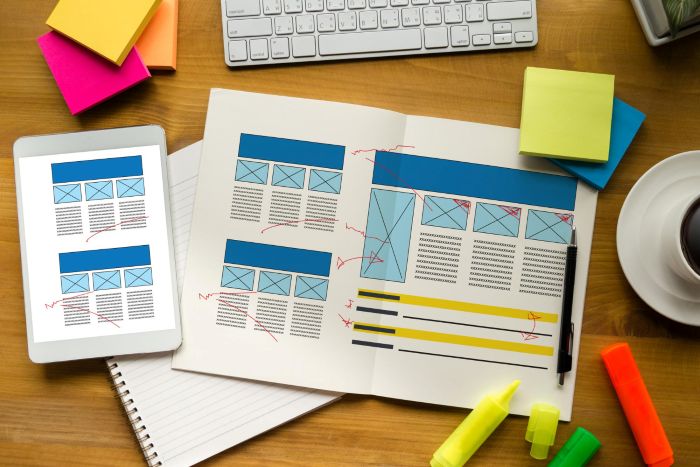
When your team is spread across time zones, a marked-up PDF often stands in for the meeting where everyone used to gather around one screen. The trouble is that most “best annotation tool” roundups list features without telling you which tool actually fits which kind of team, or how to stop five sets of comments from collapsing into noise.
What follows is a comparison built around how distributed teams really work, a workflow that keeps feedback organized once several reviewers are involved, and a warning about the one step teams get dangerously wrong: redaction. If you are still assembling your wider stack, it slots in alongside the right remote work tools you already rely on.
Pick the Tool That Matches Your Team, Not the Longest Feature List
There is no single best annotator. The right choice depends on what you mark up and where your team already works.
DocHub and Xodo
DocHub suits teams that live in Google Workspace. It runs in the browser, plugs into Gmail and Drive, and lets reviewers annotate and draw on any PDF and handle quick signing without anyone installing software. It is best for lightweight, fast-moving remote teams that don’t need heavy redaction.
Xodo is a strong free, cross-platform option with real-time collaboration and solid mobile apps, useful when reviewers are on phones and tablets as often as laptops. Drawboard PDF is the one to reach for if your reviewers use a stylus on a Surface or tablet and want handwritten markup that feels like ink on paper.
Adobe Acrobat Pro
Acrobat Pro is the default for formal document review – legal, finance, and contracts. It has the deepest comment toolset, a real audit trail, and true redaction that removes the underlying data rather than hiding it. The trade-offs are cost and weight: it is more than most casual reviewers need, and the per-seat subscription adds up across a large team.
Worth knowing: free Acrobat Reader lets reviewers comment and mark up, so not everyone needs a paid seat. Only the people who finalize and redact do.
Foxit and Bluebeam Revu
Foxit PDF Editor is the practical Acrobat alternative when budget matters. It covers the same core review and redaction ground, runs lighter, and tends to cost less per seat – good for teams that want Acrobat-class capability without the Acrobat invoice.
Bluebeam Revu sits in a category of its own for technical drawings. If your “documents” are blueprints, schematics, or construction plans, its Studio Sessions let several people mark up the same file in real time, and its measurement and callout tools are built for that work. It is overkill for plain text and a near-perfect fit for engineering, architecture, and construction teams.
If your review needs lean more toward summarizing, converting, or OCR than pure markup, it is worth scanning the best AI PDF editors before committing, since some now fold annotation into a wider AI-assisted workflow.
| Your situation | Reach for |
|---|---|
| Formal contracts and redaction | Acrobat Pro or Foxit |
| Technical drawings with live collaboration | Bluebeam Revu |
| Google-centric lightweight review | DocHub |
| Mobile or stylus-heavy review | Xodo or Drawboard |
The Annotation Types That Carry Most of the Signal
Whatever tool you land on, a small set of markup types does most of the work, and using them consistently is what keeps a document readable after fifty comments:
- Highlight, underline, and strikethrough for editorial changes, so a reviewer points at the exact words without rewriting them.
- Freehand pen, arrows, and shape callouts for visual feedback – circling an irregular element or linking a note to a specific spot on a diagram.
- Sticky notes and comment pins for longer feedback that would otherwise clutter the page, collapsed to an icon until clicked.
- Threaded replies so a discussion about one point stays attached to that point instead of scattering across Slack and email.
The discipline that matters more than the tool: agree as a team on what each marker means, and use status labels (“pending,” “resolved,” “approved”) so the lead editor can see at a glance what is still open. Treat it as part of your wider remote work etiquette rather than a one-off decision.
A Review Workflow That Survives Multiple Reviewers
The failure mode for remote review isn’t the annotating – it’s reconciling five marked-up copies into one. A workflow that holds up:
- One source of truth in the cloud. Keep the master in a shared Drive, SharePoint, or the tool’s own cloud (Acrobat’s Shared Review, Bluebeam Studio) so everyone marks up the same file instead of emailing copies around. If you routinely move large files between reviewers, a reliable way of sharing files across distances matters as much as the annotation tool itself.
- A naming convention if you must version. When real-time collaboration isn’t possible, lock a format like proposal_v3_KT.pdf so nobody guesses which file is current.
- Mentions to assign, status labels to close. Tag the person responsible for each comment and mark it resolved when done, so the open list shrinks visibly.
- A “Compare” pass before finalizing. Most pro tools can diff two revisions and surface subtle changes a reviewer might miss.
- Flatten only at the very end. Annotation layers sit on top of the original text and keep it searchable; flattening bakes comments in permanently, so do it once, for the final export, not before.
Redaction Is Not an Annotation – Don’t Treat It Like One
This is the mistake that causes real damage. Drawing a black box over sensitive text is an annotation: the data underneath is still there, and anyone who opens the file can select, copy, or remove the box to read it. Redaction permanently deletes that content.
If a document contains anything confidential, use a dedicated redaction tool (Acrobat Pro and Foxit both have one) that strips the underlying text, then confirm it is gone by trying to select the area afterward. For shared drafts, add permission controls and a watermark so an in-progress file with sensitive critiques can’t quietly circulate.
Frequently Asked Questions
What’s the best free PDF annotation tool for a remote team?
For browser-based collaboration, DocHub (especially with Google Workspace) or Xodo are the strongest free options. Free Adobe Acrobat Reader also handles comments and markup well – it just can’t redact.
Will annotations made in one app show up correctly in another?
Standard comment types (highlights, notes, shapes) follow the PDF specification and generally render across viewers and operating systems. Proprietary or app-specific markup can behave differently, so for mixed toolsets, stick to standard annotation types and test one file across your team’s devices before relying on it.
How do we stop reviewers from overwriting each other’s comments?
Use a tool with real-time shared sessions (Acrobat Shared Review, Bluebeam Studio) or a single cloud master, and set permission levels so only designated editors can delete or finalize markups.
Is a black box over text safe to send externally?
No. That’s an annotation, not redaction – the text underneath stays in the file. Use a true redaction tool and verify the content is actually removed before sharing.
Final Thoughts
For distributed teams, the annotation tool matters less than the fit and the discipline around it. Match the tool to your documents and where your team already works, agree on what your markup means, and keep one cloud master instead of a pile of versioned copies. Treat redaction as a separate, deliberate step rather than a black rectangle.
Get that right and PDF review becomes a dependable part of how remote work ships, instead of a thread nobody can follow.