Welding technology has evolved far beyond the traditional single-process welding machine. Modern inverter electronics, digital controls, pulse technology, synergic parameter management, high-frequency arc starting, and integrated plasma cutting are changing how welders approach fabrication. These advances are making increasingly sophisticated welding capabilities more accessible to DIY makers, hobbyists, and everyday welders working at home or in a garage.
One of the most significant developments is the multi-process welder. Rather than relying on separate machines for different welding methods, modern multi-process platforms combine several processes within a single electronically controlled system. The result is not simply a more compact welding machine, but a technology platform capable of adapting its power output and control characteristics to different fabrication processes.
This article examines the technology behind modern multi-process welders, how developments in digital power control are changing welding equipment, and how these technologies can expand what DIY makers and everyday welders can accomplish.
Key Takeaways
- Modern multi-process welders combine multiple welding methods in one unit, making them versatile and space-saving for DIY and home use.
- These machines include common processes like MIG, TIG, Stick, and flux-cored welding, along with plasma cutting options available.
- Advanced features like pulsed output and synergic MIG allow better heat control and user-friendly operation, especially for beginners.
- When choosing a multi-process welder, consider available processes, power options, handy features, and ease of use for optimal functionality.
- The future of multi-process welding emphasizes digitalization and intelligent control, with potential for AI integration to enhance performance and diagnostics.
Table of contents
What is a Multi-Process Welder?
As the name suggests, a multi-process welder is a machine that packs multiple welding processes in a single unit. Instead of buying several different tools, you get one machine that replaces them all.
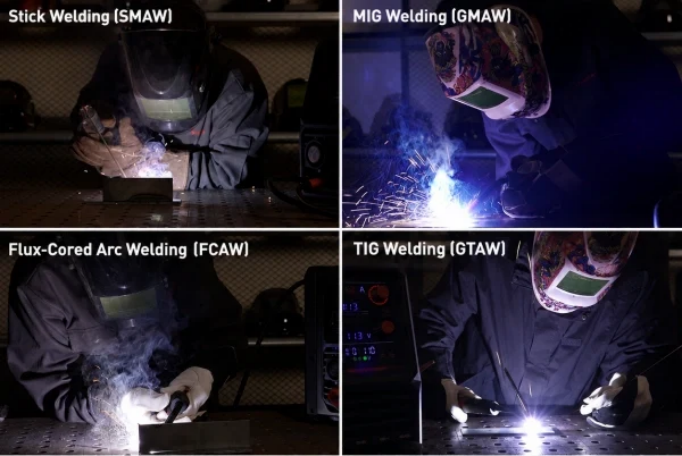
With the true multi-process welder, you get the most common arc-welding processes, including:
- MIG welding: Easy to master, quick, and convenient. Perfect for DIY and everyday work.
- Flux-cored welding: A self-shielded variant of MIG that uses gasless flux-cored wires. No shielding gas is needed, making it ideal for outdoor projects and repairs.
- TIG welding: A more challenging method, ideal for thin sheets and delicate work. It takes the most skill, but it yields some of the highest-quality results.
- Stick welding: The industry’s workhorse, favored for its low cost. It uses self-shielded electrodes, which work well outdoors and on dirty, rusty metal. Ideal for repairs, gates, farms, ranches, and everyday welding.
The exact combination depends on the machine. However, true multi-process welders, such as the YesWelder MP200 Pro Multi-Process Welder, include all of these, plus additions like plasma cutting and TIG cleaning.
How Does a Multi-Process Welder Work?
A multi-process welder combines a shared inverter power platform with an electronic control system to support different welding processes in one machine. When you select MIG, TIG, Stick, or flux-core welding, the machine adjusts the output characteristics, including current, voltage, and arc control, to match the selected process.
The process also requires the appropriate accessories. A MIG gun and wire are used for MIG and flux-core welding, while TIG requires a TIG torch and tungsten electrode, and stick welding uses an electrode holder and welding electrodes.
Some multi-process welders also integrate plasma cutting, adding dedicated cutting components to the same platform. This combination of electronic controls and interchangeable accessories allows one machine to handle a wide range of welding and fabrication tasks.
How Multi-Process Welding Technology Benefits DIY and Home Welding
Multi-process welding technology makes modern welders more versatile and flexible for DIY and home users, supporting a wide range of projects—from furniture, racks, gates, and outdoor equipment to automotive repairs—while combining multiple welding processes and, on some models, plasma cutting in one space-saving machine.
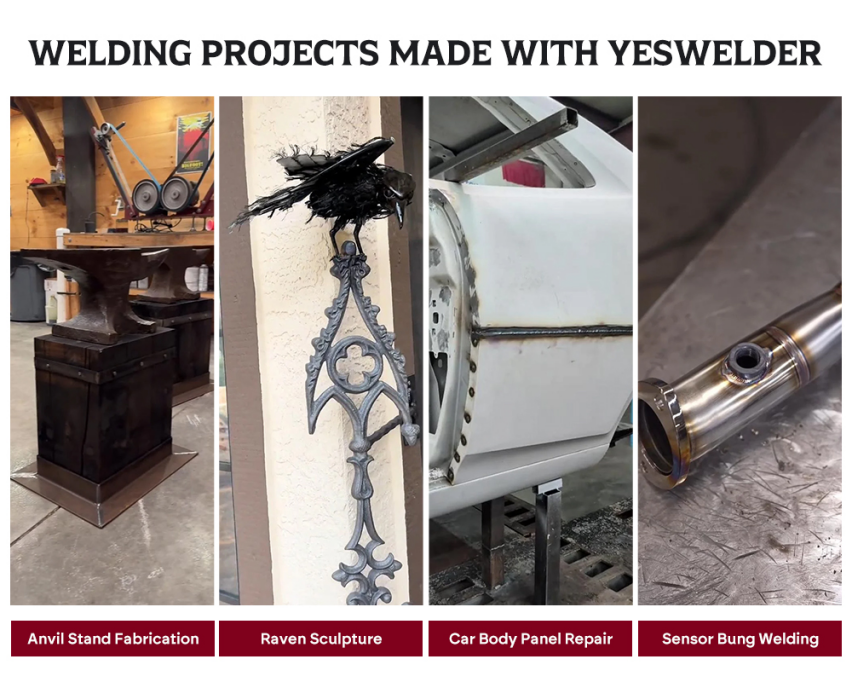
- Unmatched versatility and value: Combining several welding processes, or welding and cutting, into a single machine enhances versatility.
- Ability to weld virtually anything: Home projects often involve different metal types, and the right multi-process welder enables you to weld or even cut any of them.
- Saving your space and time: Combining several machines, welder and cutter, into a single unit saves space and time spent switching between each.
- Options for new and occasional welders: A multi-process welder is a perfect tool for new welders who don’t know what projects they’ll be working on, or which process they will start with.
New Welding Technologies that Empower Multi-Process Welders
Today, new technologies are shaping the welding industry. Multi-process welders are no longer just about offering multiple processes; they’re about new features.
The latest technologies that shape the multi-process market include:
- Combined welding and cutting
- MIG/TIG/Stick pulsed output
- Synergic (Smart) MIG
- High-frequency TIG
- Intuitive interface and upgradable firmware
These distinguish modern welding machines, and below is a detailed explanation of how they shape the multi-process welding market.
True Multi-process, All-in-one Technology
Multi-process welders usually offer all four most popular arc welding methods. That’s common on the market, but some manufacturers have gone further. They combined welding with plasma cutting to create an ultimate all-in-one welder and cutter.
A multi-process welder with a plasma cutter is a particularly versatile tool for home, hobby, and general metal fabrication applications. With it, you can weld or cut various metal projects without breaking the bank on multiple machines.
But that’s not all. Modern machines must provide consistent results without sacrificing arc stability or ignition behavior in any of the provided methods.
Pulsed MIG/TIG/Stick
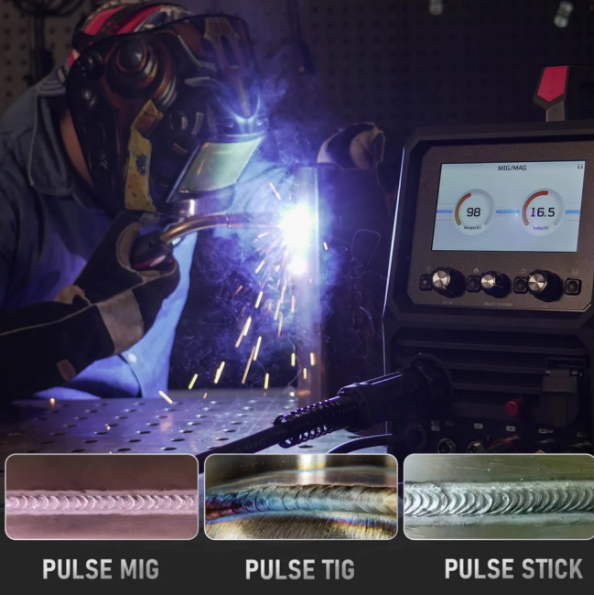
Pulsed output is ideal for heat control, especially on heat-sensitive, delicate, thin sheets. Most multi-process welders offer either pulsed MIG or TIG, but new technologies unlock more.
With welders such as the YesWelder MP200 Pro, you get all three: pulsed MIG, pulsed TIG, and pulsed Stick welding. Switching between pulsed MIG and TIG is perfect for home projects that require swapping methods.
But pulsed Stick is a big surprise in the multi-process market. It allows stick welders to get better heat control and fight gravity in out-of-position welding. Background amps promote puddle solidification, preventing it from dripping out of the joint.
Synergic (Smart) MIG
Smart MIG has become a must-have for beginners just getting into the trade. Adjusting parameters based on metal thickness, type, wire type, and shielding gas gives new welders a solid starting point.
Today, smart MIG is a feature on most multi-process welders. It makes multi-process welders ideal for beginners and new welders who need a head start.
That’s particularly helpful for home, DIY, and hobby applications, where ease of use matters. Multi-process welders are meant to be functional and easy to use for new welders, and Smart MIG offers that.
High-frequency TIG in Multi-Process Welders
Most basic multi-process welders offer TIG, but many come with lift TIG start. While lift TIG is better than scratch start, which is scarce today, it is not as clean as high-frequency TIG.
Newer technologies brought high-frequency starting to multi-process welders. Non-contact, high-frequency is a must-have for anyone looking for a clean, contamination-free start.
TIG welding is all about cleanliness. Not touching the base metal with the tungsten electrode keeps welds clean from start to finish.
Intuitive Interface and Firmware Upgrade
Because they pack so many features and processes, older multi-process welders were hard to use. But new technologies brought us improvements.
MP200 multi-process welders include a large LCD screen with an intuitive interface. These let you quickly browse through a menu, find setup guides, or access process guides.
As a result, operating a machine feels like using a modern smart device. Some machines even include upgradable firmware. You can download the latest updates to keep the machine’s software fresh and bug-free.
What to Look for in a Multi-process Welder as a DIY or Home Welder?
If you are considering a multi-process welder for home, hobby, or DIY use, you are on the right track. However, you should know a few key things before you choose.
To choose the right multi-process welder for DIY and home use, pay attention to:
- Available processes
- Power options
- Handy features
- Ease of use
Here is a detailed explanation.
Available Welding Processes
The more processes a welder offers, the more versatile it is. For home and DIY use, consider a multi-process welder that supports the processes you are most likely to need.
For greater flexibility, an all-in-one multi-process welder may combine regular and pulsed MIG, TIG, and Stick welding, flux-cored welding, and, on some models, plasma cutting. This combination can cover a wide range of home, garage, hobby, and DIY projects while reducing the need for multiple dedicated machines.
Power Options
To extend the versatility of multi-process welding technology, look for dual-voltage machines. A dual-voltage multi-process welder runs on 120/240V, so you can plug it anywhere: in the home or garage, or into a dedicated 240V outlet for maximum power.
Most multi-process welders are DC-only machines. But if you need to TIG weld thin aluminum for your home projects, look for an AC/DC multi-process welder.
Handy Features
If you are new to home and DIY welding, look for a multi-process welder with smart MIG or synergic MIG. These adjust parameters based on metal type and thickness, wire type, and shielding gas for a strong start.
Conversely, if you weld heat-sensitive, delicate metals prone to distortion, look for a multi-process welder with pulse. Pulsed output limits heat input, improves quality, and enhances weld aesthetics.
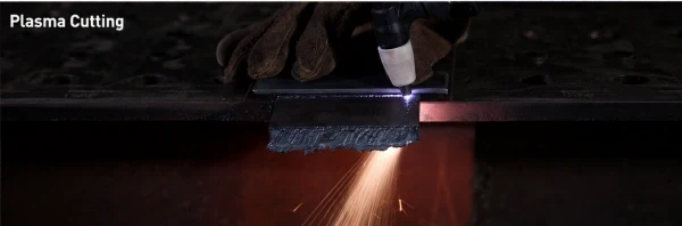
Added plasma cutting enhances the versatility of multi-process welders.
Ease of Use
The more a single unit packs, the more confusing it can be to use and control. But for home and DIY use, you want to keep it simple.
A multi-process welder with an intuitive interface and straightforward controls can make it easier to switch between welding processes and adjust settings. A large LCD screen can also make browsing through the menu and selecting the desired process or parameters more convenient.
Read Next
A few related pieces worth your time:
- BNC-SMA Angle Adapter Applications for RF and Antenna Systems
- How to Fix Error 0x80070306 in Windows 10 & 11
- Drone Components 101: A Beginners Guide To Understanding Drones
The Future of Multi-Process Welding Technology
The development of multi-process welders reflects a larger trend toward digitalization, integration, and intelligent control in welding technology.
Future systems are likely to focus on making welding equipment more connected and adaptive. Potential developments include more sophisticated parameter optimization, expanded digital diagnostics, remote monitoring, real-time welding data, and improved integration between welding equipment and other fabrication tools.
Artificial intelligence and machine-learning technologies may also eventually assist with parameter recommendations, process monitoring, and quality control. However, these technologies should complement rather than replace fundamental welding knowledge and proper safety practices.
The long-term direction is clear: welding machines are becoming more than power sources. They are increasingly software-controlled fabrication platforms capable of supporting multiple processes from a single system.