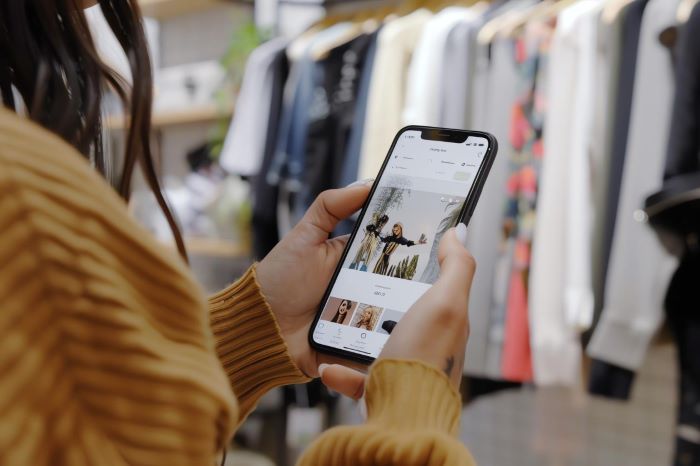
Instagram commerce is bigger than ever and works almost nothing like the version described in most guides written before 2025. US social commerce sales will pass $100 billion for the first time in 2026, growing 18% year over year (Source: eMarketer). Instagram sits close to the center of that number, with roughly 47% of US social buyers expected to shop on the platform this year against TikTok’s 51%.
What changed is the mechanics. Meta spent five years trying to own the transaction, then reversed course and handed checkout back to merchants. Now it is coming at the same problem from a different direction, through AI assistants and shopping agents rather than a payment button. If your Instagram strategy is still built around in-app checkout, it is built on a feature that no longer exists.
Key Takeaways
- Native in-app checkout was fully phased out across US merchants in 2025.
- The Shop tab left Instagram’s navigation in February 2023 and never returned.
- Product tags, catalog ads, and Advantage+ campaigns still drive the revenue.
- Meta’s 2026 push runs through AI review summaries and one-tap partners.
- Reporting points to an Instagram shopping agent targeted for late 2026.
The features most articles still describe are gone
Start with the subtractions, because they explain everything after.
The dedicated Shop tab left Instagram’s bottom navigation bar in February 2023. Live Shopping was discontinued, and product tags in live video stopped working. Those were the visible casualties.
The bigger one was native checkout. Meta began moving US merchants off in-app purchasing on 5 June 2025 and completed the transition across most shops by the end of that summer, with remaining platform integrations following through the autumn. Payment processing, order management, post-purchase handling, and dispute resolution all moved back to the merchant. Commerce Manager kept archived financial records and lost the operational tooling around them.
The advertising side changed with it. The hybrid “Website and shop” conversion location was retired. Shops ads lost View Content, Add to Cart, and Initiate Checkout as available conversion events, leaving Purchase as the only one. A new Shops-assisted purchases metric replaced the old Meta purchases figure in Ads Manager.
That is a considerable retreat from a company that spent 2021 through 2023 pushing merchants toward native checkout with fee waivers and, eventually, a requirement.
Why Meta walked away from owning the transaction
Three pressures converged.
Cost was one. Running payments, refunds, chargebacks, and customer service for millions of merchants is an operations business, not a software business, and the margins look nothing like advertising margins.
Regulation was another. Antitrust scrutiny in both the EU and the US made owning the full stack of discovery, storefront, and payment a harder position to defend. Loosening the grip on checkout removed one line of attack.
The third was that it did not work well enough. Merchants complained about attribution gaps, limited data, and a checkout flow they could not optimize. Plenty of brands quietly ran shoppable posts without a full Shop specifically to keep outbound links alive. Meta’s stated framing for the change was that merchants gain control of checkout and the post-purchase experience while keeping access to discovery surfaces. That framing is accurate. It is also an admission.
What survived, and what it is worth
The parts of Instagram commerce that generate revenue are still running.
Product tags work in feed posts, Stories, and Reels. A shopper taps and lands on a product page. Catalog ads and Advantage+ Shopping campaigns work. Shops function as a discovery and consideration surface with collections and product pages, and the sale completes on the merchant’s own store.
This is a referral model rather than a marketplace model, and it is worth being precise about the difference. Instagram never had a marketplace in the Facebook Marketplace sense. It has a business tool for tagging inventory, and a creator economy pointed at that inventory. US social media creator revenue will grow 16.2% to $20.6 billion in 2026, and 58% of US adults report having bought something because of an influencer endorsement. That second number is the actual engine. The tagging infrastructure only matters because creators are pointing at it.
The comparison worth watching is TikTok Shop, which is projected at $23.41 billion in US ecommerce sales for 2026, up 48% year over year (Source: eMarketer). That is a true marketplace with native checkout, growing fast, in the exact position Meta abandoned. Instagram’s advantage is reach and brand equity. Its disadvantage is that every purchase requires a handoff.
Meta’s second attempt runs through AI, not payments
At Shoptalk in March 2026, Meta introduced a set of AI shopping features designed to close that handoff gap without rebuilding checkout.
The central piece is an AI-generated overlay that appears when a user clicks an ad or visits a brand’s site from Facebook or Instagram. It summarizes customer reviews, surfaces product details, brand information, and active promotions, and offers an add-to-cart action in place. The review summaries work like the AI review roundups Amazon has run since 2023: a short synthesis followed by bullet points reflecting what buyers said.
Meta paired this with single-tap purchasing through Stripe and PayPal, with Adyen and Shopify integrations described as coming later. Features entered testing at announcement with broader rollout planned across 2026.
Read the design carefully. Meta is not taking payment processing back. It is inserting an AI layer at the moment of intent so the handoff to the merchant site carries less friction and less abandonment. The merchant keeps the transaction, the data, and the liability. Meta keeps the attention and the ad revenue. That is a more defensible position than the one it just exited.
There is a risk baked in, and it is worth naming. AI-summarized reviews inherit whatever is in the review corpus. If fake or incentivized reviews are present, summarization amplifies them and strips the signals a careful shopper would use to spot them. Amazon has not fully solved this. Meta is starting from a weaker position on review verification than Amazon had.
The agent layer is the actual bet
The more consequential development is still unannounced.
Reuters, the Financial Times, and The Information have reported that Meta is building an agentic AI assistant powered by a model family called Muse Spark, under an internal project reportedly codenamed Hatch. Multiple outlets report the company is targeting a shopping-focused agent inside Instagram, able to identify items a user sees in Reels and carry the purchase through, with a launch window reported as before Q4 2026.
Treat all of that as reporting rather than product documentation. Meta has not published a rollout plan, a developer API, or safety details, and the reported acquisition of Manus AI to accelerate the work was blocked by Chinese regulators. Timelines in this category slip.
The strategic logic is clear anyway. An agent collapses the conversion path that broke Instagram Shops. Instead of a shopper tapping a tag, waiting for a page, and bouncing, the shopper asks for a specific thing and the agent reads catalogs, evaluates fit, and returns a short list or a one-tap purchase. The friction Meta could not engineer away with a checkout button, it is now trying to route around with a model.
Meta is spending accordingly. The company raised its 2026 capital expenditure forecast to as much as $135 billion, up from roughly $72 billion in 2025.
What merchants should be doing now
The practical implications are less exciting than the headlines and more urgent.
Fix your product data first. Agents read catalogs, not campaigns. Attribute completeness, accurate variants, real inventory status, and clean structured data determine whether a model can recommend you. The Walmart pattern from earlier this year is instructive: when its assistant was surfaced through third-party AI, brands with clean structured catalogs got recommended and brands with messy data got skipped.
Own the post-click experience. Since checkout came back to you, page speed, mobile flow, and payment options are now your conversion rate rather than Meta’s. That is more work and more upside. Broader coverage of how automation and AI are reshaping US retail sits alongside this.
Rebuild attribution deliberately. Shops-assisted purchases is not the old Meta purchases metric. Anyone still benchmarking against pre-2025 ROAS figures for in-app conversions is comparing against a number that no longer describes anything.
Treat try-on and visualization as discovery, not gimmick. Social platforms are pushing product visualization into the feed itself, and AR in ecommerce has become a practical way to reduce return rates in categories where fit is the barrier.
Where subscriptions and delivery actually live now
One correction worth making, because it appears constantly in older coverage: automated reorder and subscribe-and-save are not Instagram features. They never were operated by Instagram, and after 2025 they cannot be. Subscription billing, fulfillment logic, and delivery tracking run on the merchant’s stack. Meta did add support for selling subscription products through Shops as part of the checkout transition, but the subscription itself is administered by the seller.
That matters for anyone planning a recurring-revenue play off social discovery. The social platform supplies intent. Everything after the click is your infrastructure, including the delivery layer, which is where a lot of the promised convenience actually gets delivered or lost.
Conclusion
Instagram commerce in 2026 is a discovery and referral channel with excellent reach and a handoff problem Meta has spent a year trying to solve without owning payments again. Product tags, creator content, and catalog ads carry the revenue. Native checkout, the Shop tab, and Live Shopping are history, and any strategy built on them needs rewriting.
What comes next depends on whether the agent layer ships and works. If it does, the brands that benefit will be the ones whose catalog data is clean enough for a model to read and whose checkout is fast enough to convert what the model sends. Neither of those is a social media task. Both are worth starting before the launch window that reporting points to closes.
Read Next
More on the commerce infrastructure behind social discovery:
- How to Turn Casual Shoppers into Lifelong Customers
- Best B2B eCommerce Platforms for Manufacturers and Distributors in 2026
- Top Custom AI Agent Development Companies in USA (2026 Edition)
Frequently Asked Questions
Not through native checkout. Instagram commerce moved to external checkout when Meta phased out in-app purchasing across US merchants during 2025, so tapping a product tag now sends you to the merchant’s own site to complete the order. Meta’s 2026 AI shopping features add a one-tap path through Stripe and PayPal at the point of intent, but the transaction still settles with the seller.
No. Instagram has never launched a peer-to-peer marketplace comparable to Facebook Marketplace. What people usually mean by the term is Instagram Shopping, a business tool that lets approved brands tag products in feed posts, Stories, and Reels. Meta Creator Marketplace is a separate product that connects brands with creators for paid partnerships and does not handle goods.
By buyer reach they are close, with roughly 47% of US social buyers expected to shop on Instagram in 2026 against 51% for TikTok. By transaction volume the gap favors TikTok, whose Shop is projected at $23.41 billion in US sales this year. The structural difference is that TikTok Shop completes the purchase in-app while Instagram commerce hands off to the merchant.
It is an AI assistant reported to be in development that would let users identify products in Reels and complete purchases with minimal steps. Reuters, the Financial Times, and The Information have described the underlying work, including a Muse Spark model family and an internal project reportedly named Hatch, with a target window before Q4 2026. Meta has not formally announced the product, so treat details as reporting.
Start with product catalog quality, because AI recommendation systems read structured data rather than creative. Then take ownership of checkout performance, since conversion is now your responsibility rather than Meta’s. Rebuild your attribution baselines around Shops-assisted purchases instead of retired in-app metrics, and keep creator partnerships central, since influencer endorsement remains the strongest driver of social purchase intent.